Son Fleming
Murderer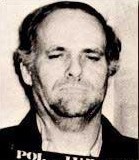 Ervil LeBaron
Murderer · USA · 1972
Ervil Morrell LeBaron (1925 to August 16, 1981) was the leader of a polygamous…
35 victims
Ervil LeBaron
Murderer · USA · 1972
Ervil Morrell LeBaron (1925 to August 16, 1981) was the leader of a polygamous…
35 victims
 Brian Kevin Rosenfeld
Murderer · USA · 1985
Brian Kevin Rosenfeld Brian Kevin Rosenfeld was sentenced to three concurrent l…
23 victims
Brian Kevin Rosenfeld
Murderer · USA · 1985
Brian Kevin Rosenfeld Brian Kevin Rosenfeld was sentenced to three concurrent l…
23 victims
 Marvin Gray
Murderer · USA · 1975
Marvin Gray was convicted killer who claimed responsibility for 23 slayings and…
23 victims
Marvin Gray
Murderer · USA · 1975
Marvin Gray was convicted killer who claimed responsibility for 23 slayings and…
23 victims
 Yahweh ben Yahweh
Murderer · USA · 1980
Yahweh ben Yahweh was born and legally named Hulon Mitchell Jr. (October 27, 19…
23 victims
Yahweh ben Yahweh
Murderer · USA · 1980
Yahweh ben Yahweh was born and legally named Hulon Mitchell Jr. (October 27, 19…
23 victims
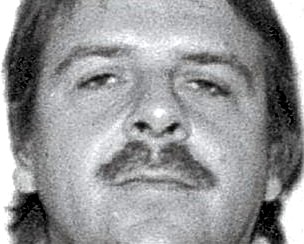 Ronald Lee Hoke
Murderer · USA · 1985
Ronald Lee Hoke Sr. was executed by lethal injection in Virginia on December 16…
1 victim
Ronald Lee Hoke
Murderer · USA · 1985
Ronald Lee Hoke Sr. was executed by lethal injection in Virginia on December 16…
1 victim
 Gary Ploof
Murderer · USA · 2001
Gary W. Ploof was a U.S. Air Force Staff Sergeant stationed with his wife, Heid…
1 victim
Gary Ploof
Murderer · USA · 2001
Gary W. Ploof was a U.S. Air Force Staff Sergeant stationed with his wife, Heid…
1 victim
 James Rodden
Murderer · USA · 1983
James Rodden (James Edward Rodden Jr.) · Terry Trunnel (victim) · Joseph Arnold…
2 victims
James Rodden
Murderer · USA · 1983
James Rodden (James Edward Rodden Jr.) · Terry Trunnel (victim) · Joseph Arnold…
2 victims
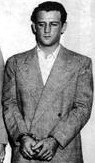 Ernest Ingenito
Mass murderer · USA · 1950
Ernest Ingenito (1924–1995) was an American mass murderer who shot nine people,…
5 victims
Ernest Ingenito
Mass murderer · USA · 1950
Ernest Ingenito (1924–1995) was an American mass murderer who shot nine people,…
5 victims
- Gender
- male
- Country
- USA
- Location
- Lanier County, Georgia, USA
- Date of birth
- 1929
- Age at first offence
- 47
- Characteristics
- —
- Victim profile
- Ed Giddens, 29 (Ray City Police Chief)
- Method of murder
- Shooting ( a nickel-plated .22 caliber revolver)
- Date(s) of murder
- February 11, 1976
- Years active
- 1976
- Date of arrest
- Next day
- Status
-
Sentenced to death
Sentenced to death in January 1978
Case record: Son Fleming
Background
Son Fleming was convicted in the Lanier Superior Court of the murder of Police Chief James Giddens of Ray City, Georgia. The jury imposed the death penalty. The Supreme Court of Georgia later addressed the case as FLEMING v. THE STATE (34192) (243 Ga. 120) (252 SE2d 609) (1979), involving resentencing for murder.
The offence
Son H. Fleming was convicted of the murder of Police Chief James Edward Giddens, a police officer, while he was engaged in the performance of his duties. The murder was also found to have been committed while the defendant was engaged in the commission of another capital felony: kidnapping of and bodily injury to James Edward Gidens.
In February 1976, Chief Giddens stopped a speeding car. The men inside had just pulled an armed robbery. Chief Giddens’ intended move to Florida was described in the case summary.
A grocery store in Adel (Cook County) was robbed on February 11, 1976, around 10:00 p.m. to 10:30 p.m. The robbery was carried out by two black males identified as Larry Fleming (appellant’s nephew) and Henry Willis. One robber was armed with a nickel-plated .22 caliber gun. The stolen money was stuffed in a paper sack, and a carton of Kool cigarettes was also stolen.
The red and white Ford that Son Fleming borrowed from a friend on February 11, 1976, passed through Ray City shortly after the robbery and aroused Chief Giddens’ suspicion. Chief Giddens had heard of the robbery over his radio and pursued the car, reporting a description including the license plate number by radio.
Minutes later, Giddens’ police car was found abandoned by a friend with whom he had been talking prior to the pursuit. Giddens’ disappearance was reported. At 12:30 a.m., the red and white car was stopped; its three black male occupants—Son Fleming, his nephew Larry Fleming, and Henry Willis—were arrested.
Giddens’ .357 magnum pistol, a nickel-plated .22 revolver, a brown sack of money, and a carton of Kool cigarettes were found in the car. Giddens’ body was found in a pond in Lanier County. He had been shot several times. Powder burns and the patterns of ratshot from the .22 pistol indicated that some wounds were made at a range of less than 18 inches. One bullet recovered from the body was fired from Giddens’ gun.
Investigation
Chief Giddens pursued the car after reporting its description by radio, including the license plate number. Giddens’ police car was found abandoned by a friend with whom he had been talking prior to the pursuit.
Evidence from the firearm examination included powder burns and patterns of ratshot from the .22 pistol, indicating some shots were made at a range of less than 18 inches.
Arrest
At 12:30 a.m., the red and white car was stopped, and its three black male occupants—Son Fleming, his nephew Larry Fleming, and Henry Willis—were arrested.
Trial
Son Fleming’s murder conviction was affirmed on direct appeal, but his death sentence was set aside because the court had failed to make clear to the jury that they could recommend a life sentence even if they found the existence of a statutory aggravating circumstance. On remand, Son Fleming’s motion for change of venue was granted, and his retrial on punishment was held in the Cook Superior Court before Judge Lott.
At retrial, the jury again sentenced the defendant to death. The jury found the same two statutory aggravating circumstances that were found at his original trial:
- The offense of murder was committed against Police Chief James Edward Giddens, a police officer, while he was engaged in the performance of his duties. Code Ann. 27-2534.1 (b) (5) (Ga. L. 1973, pp. 159, 163).
- The offense of murder was committed while the defendant was engaged in the commission of another capital felony, to wit: kidnapping of and bodily injury to James Edward Gidens, a human being. Code Ann. 27-2534.1 (b) (2).
In the sentencing phase, Son Fleming’s counsel presented no additional evidence of mitigating circumstances, relying on the evidence at the guilt phase.
The appellant presented evidence through his own testimony. His personal history sheet showed no convictions for serious or violent crimes and showed a long history of employment of more than twenty years in various jobs. Son Fleming was 46 at the time of the murder.
Appellant’s statements
After his arrest, Son Fleming made a number of statements.
- In his first statement, he said that his nephew and Willis had borrowed the car from him before the robbery, and that he did not see them again until they picked him up shortly before the arrest.
- In his next statement, he said he had been picked up after the robbery, but before the pursuit by Chief Giddens. He said the three were stopped by Giddens, and when the policeman attempted to search the car he was overpowered and abducted by the other two. He claimed he was forced to drive the car while his nephew and Willis held Giddens at gunpoint. He stated that after Giddens told them of his report of the license number of the car, they drove to a remote area and let him out. When Giddens ran in an attempt to escape, both Larry Fleming and Willis shot at him. Giddens fell wounded into the nearby lake, Larry Fleming and Willis followed him there, and Son Fleming heard additional shots.
- This statement also indicated that Son Fleming begged the other two not to kill Giddens and that he acted only out of fear of them.
Son Fleming’s testimony denied having shot Giddens as he stood helpless in the water. He denied making the last statement to the fellow inmate.
Testimony of a fellow inmate
The testimony of a fellow inmate at the Cook County Jail indicated that Son Fleming admitted driving the car while the others robbed the store, and that Son Fleming was the first to shoot at Giddens as he ran. At all times, Son Fleming denied having shot Giddens as he stood helpless in the water.
Sentencing
At retrial on punishment, the jury again sentenced Son Fleming to death, finding the same two statutory aggravating circumstances as at the original trial.
The Supreme Court of Georgia addressed arguments on appeal including insufficiency of the evidence to support the death penalty, alleged coercion of the jury by delaying the evening meal and keeping the jury beyond a normal working day, and arguments that the death penalty was cruel and unusual punishment.
The Supreme Court of Georgia found no evidence that the sentence of death was imposed under the influence of passion, prejudice, or any other arbitrary factor. It stated that the verdict was factually substantiated and considered cases appealed to the court since January 1, 1970, where death or life sentences were imposed and found similar cases listed in the appendix supported the affirmance of the death penalty in this case.
Appeals
Son Fleming’s original murder conviction was affirmed, but his death sentence was set aside because the court failed to make clear to the jury that they could recommend a life sentence even if they found the existence of a statutory aggravating circumstance (Fleming v. State, 240 Ga. 142 (240 SE2d 37) (1977)).
On remand, the punishment retrial occurred in Cook Superior Court before Judge Lott, where the jury again imposed a death sentence.
Son Fleming raised enumerations of error, including:
- Insufficient evidence to support imposition of the death penalty, specifically whether the evidence supported the jury’s finding of statutory aggravating circumstances. The Supreme Court found this enumeration without merit.
- An argument that the trial court coerced the jury into returning a verdict by delaying providing the jurors the evening meal and keeping the jury in session beyond a normal working day. The Supreme Court found no evidence substantiating this and found this enumeration without merit.
- An argument that the death penalty constituted cruel and unusual punishment. The Supreme Court found this without merit, citing Gregg v. Georgia, 428 U. S. 153 (96 SC 2909, 49 LE2d 859) (1976).
- An argument that only the jury trying the issue of guilt or innocence could sentence the accused to death under Code Ann. 27-2503 (Ga. L. 1974, pp. 352, 357), and that because the court set aside the death sentence imposed by the jury returning a verdict of guilty on the murder charge, he could not subsequently be given the death penalty. The Supreme Court rejected this argument, citing Miller v. State, 237 Ga. 557 (229 SE2d 376) (1976).
- An argument in the fifth and seventh enumerations of error that the trial court erred in failing to make clear to the jury that they could recommend a life sentence, for any reason whatsoever, without making a finding of mitigating circumstances.
- An argument in the sixth enumeration of error that the trial court erred in allowing the state to read to the jury testimony of a witness at the prior trial without showing that the witness was legally inaccessible under Code 38-314. The Supreme Court noted there was no objection at trial and found the enumeration without merit, citing Mallory v. State, 230 Ga. 657 (2) (198 SE2d 677) (1973), and Starr v. State, 229 Ga. 181 (190 SE2d 58) (1972).
- A determination of whether the sentence of death was imposed under the influence of passion, prejudice, or any other arbitrary factor (Code Ann. 27-2537 (c) (1)), and whether the death sentence was excessive or disproportionate to the penalty imposed in similar cases, considering both the crime and the defendant. The Supreme Court found no evidence of arbitrariness and found the sentence not excessive or disproportionate, citing consideration of similar cases.
The Supreme Court’s decision included procedural information: argued November 13, 1978; decided January 24, 1979; rehearing denied February 14, 1979. Justice MARSHALL delivered the opinion.
Other details
Related cases and outcomes for other individuals mentioned
- Son Fleming’s brother was sentenced to life in prison.
- Henry Willis, 36, was sentenced to death and executed May 18, 1989.
- The case described Son Fleming as the test case for the 1988 mental retardation exception for the death penalty.
- Son Fleming was returned to Lanier County in March 1991 for a new sentencing trial.
Trial court and jury findings
The Supreme Court described statutory aggravating circumstances under Code Ann. 27-2534.1 (b) (5) and Code Ann. 27-2534.1 (b) (2), and discussed the statutory requirements under Code Ann. 27-2537 (c) (2), Code Ann. 27-2537 (c) (1), and Code Ann. 27-2537 (c) (3).
Timeline
- February 11, 1976 — Son Fleming borrowed a red and white Ford car from a friend.
- February 11, 1976 (around 10:00 p.m. to 10:30 p.m.) — A grocery store in Adel (Cook County) was robbed by Larry Fleming and Henry Willis; a nickel-plated .22 caliber gun was used; money was stuffed in a paper sack and Kool cigarettes were stolen.
- February 11, 1976 (shortly after the robbery) — Chief Giddens heard of the robbery over his radio, pursued the red and white Ford through Ray City, and broadcast a description including the license plate number.
- February 11, 1976 (minutes later) — Chief Giddens’ police car was found abandoned by a friend.
- 12:30 a.m. — The red and white Ford was stopped; Son Fleming, Larry Fleming, and Henry Willis were arrested; a .357 magnum pistol, nickel-plated .22 revolver, a brown sack of money, and a carton of Kool cigarettes were found in the car.
- May 18, 1989 — Henry Willis was executed.
- January 24, 1979 — The Supreme Court decided FLEMING v. THE STATE.
- February 14, 1979 — Rehearing was denied.
- November 13, 1978 — The case was argued.
- January 1978 — Son Fleming was sentenced to death.
- March 1991 — Son Fleming was returned to Lanier County for a new sentencing trial.


Spotted an error, or have more information about this case?