
James Rodden
Murderer Brian Kevin Rosenfeld
Murderer · USA · 1985
Brian Kevin Rosenfeld Brian Kevin Rosenfeld was sentenced to three concurrent l…
23 victims
Brian Kevin Rosenfeld
Murderer · USA · 1985
Brian Kevin Rosenfeld Brian Kevin Rosenfeld was sentenced to three concurrent l…
23 victims
 Marvin Gray
Murderer · USA · 1975
Marvin Gray was convicted killer who claimed responsibility for 23 slayings and…
23 victims
Marvin Gray
Murderer · USA · 1975
Marvin Gray was convicted killer who claimed responsibility for 23 slayings and…
23 victims
 Yahweh ben Yahweh
Murderer · USA · 1980
Yahweh ben Yahweh was born and legally named Hulon Mitchell Jr. (October 27, 19…
23 victims
Yahweh ben Yahweh
Murderer · USA · 1980
Yahweh ben Yahweh was born and legally named Hulon Mitchell Jr. (October 27, 19…
23 victims
 Russell Ellwood
Murderer · USA · 1991
Russell Ellwood was a former taxi driver. Authorities suspected him of killing…
20 victims
Russell Ellwood
Murderer · USA · 1991
Russell Ellwood was a former taxi driver. Authorities suspected him of killing…
20 victims
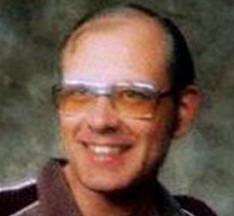 James Huberty
Mass murderer · USA · 1984
James Oliver Huberty was a 41-year-old unemployed security guard. He was born i…
21 victims
James Huberty
Mass murderer · USA · 1984
James Oliver Huberty was a 41-year-old unemployed security guard. He was born i…
21 victims
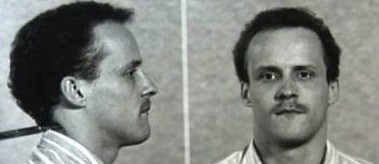 Michel Peiry
Serial killer · USA / France / Switzerland · 1981
Michel Peiry (born 28 février 1959), nicknamed “Le sadique de Romont (FR)”, was…
5 victims
Michel Peiry
Serial killer · USA / France / Switzerland · 1981
Michel Peiry (born 28 février 1959), nicknamed “Le sadique de Romont (FR)”, was…
5 victims
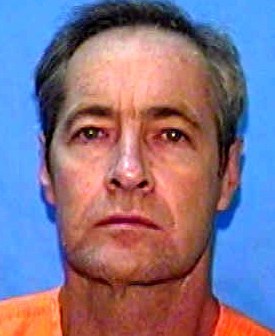 William K. Taylor
Murderer · USA · 2001
Name: William K. Taylor · Date of birth: 09/08/58 · DC#: 111640 · Thirteenth Ju…
1 victim
William K. Taylor
Murderer · USA · 2001
Name: William K. Taylor · Date of birth: 09/08/58 · DC#: 111640 · Thirteenth Ju…
1 victim
 Fletcher Mann
Murderer · USA · 1980
Fletcher Thomas Mann was executed by lethal injection in Texas on June 1, 1995.…
2 victims
Fletcher Mann
Murderer · USA · 1980
Fletcher Thomas Mann was executed by lethal injection in Texas on June 1, 1995.…
2 victims
 Jeffery Eugene Tucker
Murderer · USA · 1988
Jeffery Eugene Tucker was convicted of capital murder in connection with a robb…
1 victim
Jeffery Eugene Tucker
Murderer · USA · 1988
Jeffery Eugene Tucker was convicted of capital murder in connection with a robb…
1 victim
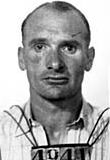 Elmer Brunner
Murderer · USA · 1957
Elmer David Brunner died on 3 April 1959. He was executed by electrocution on 3…
1 victim
Elmer Brunner
Murderer · USA · 1957
Elmer David Brunner died on 3 April 1959. He was executed by electrocution on 3…
1 victim
- Gender
- male
- Country
- USA
- Location
- Saline County, Missouri, USA
- Date of birth
- 1960
- Age at first offence
- 23
- Characteristics
- jealous rage, domestic violence
- Victim profile
- Terry Trunnel and Joseph Arnold
- Method of murder
- St abbing with knife
- Date(s) of murder
- December 6, 1983
- Years active
- 1983
- Date of arrest
- Same day
- Status
-
Executed
Executed by lethal injection in Missouri on February 24, 1999
Names
- James Rodden (James Edward Rodden Jr.)
- Terry Trunnel (victim)
- Joseph Arnold (victim; Rodden’s roommate)
- Fran Jones (Rodden’s girlfriend)
- Kent E. Gipson (Rodden’s attorney)
- Marshall City Police (responding police)
- Missouri Highway Patrol (investigated an accident in Purdin, Missouri)
- U.S. Court of Appeals for the Eighth Circuit (appellate court)
Timeline
- February 17, 1982 — Convicted of driving while intoxicated; fined $250.00.
- October 27, 1982 — Convicted of driving while intoxicated; fined $250.00 and sentenced to 15 days in the county jail.
- December 6, 1983 — Rodden was arrested in Saline County for the murders of Joseph Arnold and Terry Trunnel.
- December 6, 1983 — Around 11:00 p.m., Rodden offered acquaintance Terry Trunnel a ride home from a bar; on the way they stopped at Rodden’s apartment to smoke marijuana; Joseph Arnold was there; Rodden’s former girlfriend called about purchasing some furniture; Rodden went to her apartment after she refused to answer her door and called the police; when Rodden returned to his apartment at 2:00 a.m., he saw Arnold and Trunnel “making love”; Rodden claimed the events involved his bed and that a struggle ensued; Rodden said he stabbed Arnold in self-defense; Rodden stated Arnold had already stabbed Trunnel in Rodden’s bedroom; Rodden stated he spread lamp oil and set the apartment on fire “to ‘make it all go away.’”; Rodden stated he fled north in Arnold’s car around 6:00 a.m., bleeding from deep cuts in his right hand; Rodden stated he passed out from blood loss and crashed Arnold’s car into a house.
- December 6, 1983 — A maintenance man entered the apartment around 8:00 a.m. to install new cabinets and discovered the bloody bodies of Arnold and Trunnel and a smoldering fire.
- December 12, 1987 — Rodden’s conviction affirmed by the Circuit Court.
- January 29, 1999 — The Missouri State Supreme Court set Rodden’s execution date for February 24, 1999.
- February 24, 1999 — James Edward Rodden was executed on February 24, 1999.
- March 11, 1998 — Submitted in the U.S. Court of Appeals for the Eighth Circuit case No. 97-2100WM.
- May 4, 1998 — Filed in the U.S. 97-2100WM.
- December 12, 1996 — The petition for writ of habeas corpus was denied.
- May 4, 1998 — The U.S. Court of Appeals for the Eighth Circuit affirmed the District court’s denial.
- November 9, 1998 — The U.S. Supreme Court denied certiorari.
- September 11, 1990 — The Missouri Supreme Court affirmed the Circuit Court’s denial of the post conviction motion.
- April 15, 1991 — The U.S.
- April 25, 1990 — Rodden filed a petition for writ of habeas corpus in the U.S. District Court for the Western District of Missouri.
- August 31, 1989 — The Circuit Court of Clay County denied Rodden’s post-conviction motion.
- July 21, 1988 — Rodden filed a post conviction motion in the Circuit court of Clay County.
- April 14, 1987 — Rodden’s conviction was affirmed by the Circuit Court.
- June 26, 1985 — Rodden was formally sentenced to death.
- March 25-28, 1985 — Rodden was tried and convicted of capital murder for the murder of Terry Trunnel in the Clay County Circuit Court on a change of venue from Saline County; the jury recommended the death sentence.
- April 18, 1998 — Pasco M. Bowman became Chief Judge of the U.S. Court of Appeals for the Eighth Circuit.
Background
James Edward Rodden Jr. was convicted of the capital murder of Terry Trunnel. Rodden was sentenced to death for the 1983 murder of Terry Trunnel. He offered no last words.
The offence
On the evening of December 5, 1983, James Rodden took Ms. Terry Trunnel to his apartment. Upon arrival, they were greeted by Rodden’s roommate, Mr. Joseph Arnold. Rodden’s girlfriend, Fran Jones, called Rodden to discuss the purchase of some of his furniture prior to a trip that Rodden and Arnold were going to make to California. Rodden asked Jones if he could come over to her house at which time she told him “no.” Rodden became angry telling Jones that to spite her he was going to have sex with Ms. Trunnel.
About 30 minutes later, Rodden called Jones and said he was going to come over to her house if he had to kick the door in to get inside. Jones called the police. At 12:35 a.m. on December 6, 1983, a police officer arrived at Jones’ residence, but left since Rodden was not there. Sometime later Jones heard Rodden banging on her door and shouting for her to let him in the residence. Jones called the police and the officer returned to Jones’ residence at 1:39 a.m. The officer stopped Rodden as he was leaving the residence in his car. Jones spoke to the officer while Rodden was detained by another officer. Jones declined to prosecute and stated she wanted Rodden to leave. Rodden left the area and went back to his apartment. He was forced to leave his car at the scene since license plates were not attached to the vehicle.
Rodden later called Jones and told her that she and a friend of hers “wouldn’t live out the night.”
A neighbor testified that he saw Rodden leave Arnold’s apartment at 6:00 a.m.
Later that morning at 8:41 a.m., Marshall City Police responded to Arnold and Rodden’s apartment to investigate a “fire and body found.” Upon arrival the officer spoke to a man who stated he was there to do some repair work when he observed blood spots and a cardboard box on fire in the kitchen of the residence. A search of the apartment found the bodies of Arnold and Trunnel in two different bedrooms dead of apparent stabs wounds.
Autopsies of the victims revealed that Mr. Arnold and Ms. Trunnel died as a result of numerous stab wounds, described as requiring significant force.
- Terry Trunnel: time of death estimated as between 5:00 and 6:00 in the morning; Rodden’s head hair was found on the arm and wrist of Trunnel; Trunnel had been stabbed eleven times in the chest, back, arm, and leg; her faced was bruised and her arm was broken; cords were tied around her left wrist and right ankle; her body was blistered and charred in spots from being burned.
- Joseph Arnold: Arnold had been stabbed eight times in the face, head, chest, and back; he lay in a pool of his own blood on the floor of his bedroom.
Contrary to Rodden’s story, blood evidence showed Trunnel had been killed in Arnold’s bedroom and then dragged into Rodden’s bedroom. Rodden’s blood was on the knife Rodden carried in fleeing the scene.
Rodden’s account of events included that he returned to his apartment at 2:00 a.m. and saw Arnold and Trunnel “making love,” and that a struggle ensued; Rodden stabbed Arnold in self-defense. Rodden asserted Arnold had already stabbed Trunnel in Rodden’s bedroom. After killing Arnold, Rodden asserted he spread lamp oil around the apartment and on Trunnel’s body and set the apartment on fire, to “make it all go away.” Rodden stated he fled north in Arnold’s car around 6:00 a.m., bleeding from deep cuts in his right hand, which could have resulted from his hand slipping forward onto a knife blade as he stabbed someone, and that he later passed out from blood loss and crashed Arnold’s car into a house.
Investigation and arrest
The same morning the Missouri Highway Patrol investigated an accident in Purdin, Missouri. The vehicle involved in the accident was identified as being registered to Mr. Arnold. A man being carried from the scene on a stretcher identified himself as James Rodden. After Rodden was transported to a hospital in Brookfield, the officer found a blood stained butcher knife in the front seat, several beer cans and a bottle of brandy. Rodden was arrested at the hospital.
Trial
Rodden was arrested on 12-6-83 in Saline County for the murders of Joseph Arnold and Terry Trunnel.
The State brought separate charges against Rodden for the capital murders of Trunnel and Arnold. The State first prosecuted Rodden for Arnold’s murder. A jury convicted Rodden, and he was sentenced to life imprisonment without the possibility of parole for fifty years. Defended by the same attorney, Rodden was later tried for and convicted of murdering Trunnel. This time, Rodden received the death penalty.
Rodden was tried and convicted of capital murder for the murder of Terry Trunnel in the Clay County Circuit Court on a change of venue from Saline County. The jury recommended the death sentence.
At 6/26/1985, Rodden was formally sentenced to death.
The Missouri Supreme Court affirmed Rodden’s conviction and sentence for murdering Trunnel, State v. Rodden, 728 S.W.2d 212 (Mo. 1987). The Missouri Supreme Court also affirmed the denial of postconviction relief, Rodden v. State, 795 S.W.2d 393 (Mo. 1990).
Sentencing
A jury recommended the death sentence after the trial in the Clay County Circuit Court.
Rodden was formally sentenced to death on 6/26 (1985 per the chronology provided).
Appeals
U.S. Supreme Court
Rodden’s petition proceeded through multiple stages:
- 4/15/1991 — The U.S.
- 11/9/1998 — The U.S.
U.S. Court of Appeals for the Eighth Circuit (No. 97-2100WM)
James E. Rodden, Appellant, v. Paul Delo; William Webster, Appellees.
- Submitted: March 11, 1998
- Filed: May 4, 1998
- Appeal from the United States District Court for the Western District of Missouri.
The Eighth Circuit affirmed the denial of Rodden’s habeas petition attacking his conviction and sentence for the capital murder of Terry Trunnel.
Rodden contended:
- His death sentence violated double jeopardy because after hearing “substantially the same evidence,” the jury in the Arnold murder trial sentenced him to life imprisonment.
- His appellate attorney ineffectively represented him on direct appeal by failing to raise plain error challenges to the constitutionality of the prosecutor’s statements during voir dire and closing argument in the penalty phase.
- His appellate attorney should have claimed the State’s penalty-phase closing argument violated his right to due process.
- His trial attorney was ineffective because he failed to investigate and present mitigating evidence during the penalty phase.
- His trial attorney was ineffective because he did not call Angel Duffy, a fifteen-year-old girl, as a witness in the trial’s guilt phase.
- His Fifth Amendment rights were violated when the prosecutor used Rodden’s testimony from the Arnold murder trial as evidence in the State’s case-in-chief in the Trunnel murder trial.
Verbatim quotation from the record
Defense counsel referred to the prosecutor’s argument that the jury merely recommended a sentence to the judge and argued that each of the jurors would be responsible for Rodden’s death and that it was their decision, not “a decision of the judge or a decision of the Missouri Supreme Court or . . . anybody else.”
Prosecutor’s closing argument (verbatim quotation)
The opinion reproduced the prosecutor’s remarks during the penalty phase closing argument, including:
The judgment and sentence of the court and the jury in [the trial for killing Arnold] was for life in prison without probation or parole for fifty years. . . . Now, if James Rodden killed two people and he got fifty years in prison without parole for killing one person, does he get the murder of the second person free? Another fifty years without parole means nothing. . . . Now, defense attorneys say, they'll say, "Well, if you recommend that he die he may wind up in the gas chamber and he may languish there for as long as twenty or thirty minutes." Ladies and gentlemen, that's glitter. The ultimate decision on whether or not James Rodden will have to face his responsibility is in the hands of the judge. If you return a verdict recommending a death sentence, and it is important that at least at some point in his life or some fraction, if he never has to be executed in his life, years away, if he never does have to be executed in his life, years away, if he never does have to face it, the fact that he had to live under it for even between now and thirty days from now when he's sentenced, he deserves that if he's never executed, if he's never executed he deserves to sit down there with those people on death row. . . . Now, if [Rodden] gets fifty years in prison with no probation and parole for killing Joe Bob Arnold, my question to you is should he get the second one free? Should he not be punished for the murder of Terry Trunnel? For to return a verdict strapping the judge to, forcing him to consider only fifty years without parole, is no punishment whatsoever. . . . If a sentence, or at least a recommendation from this jury, saves one innocent life . . . a recommendation of the death penalty by you, whether the judge actually sentences him to death or not, sends a message. . . . I had a friend, a very good friend, who died in Viet Nam so that you . . . could be free from fear and violence. And I know some of you may have had friends who died in other wars. And if they died honorably so you could be free from fear, why is it so wrong that somebody like this should die dishonorably for the same reason? . . . [Y]ou've heard of the Bible story of the Good Samaritan. We all know it. The Good Samaritan is a story of a man who's brutally mugged and murdered and left on the side of the road to die. And along come a number of people who help this man . . . . But what the story doesn't tell you about is what kind of person mugged and raped and left that person on the side of the road to die. James Rodden is that type of person. . . . Now, in closing, ladies and gentlemen, . . . this is not an easy decision. But, I ask you, when you go back and you weigh, if he got fifty years for killing one person, if we give him fifty years for killing another one and don't let the judge even consider your recommendation of the death penalty, what punishment is there for murdering that girl, for murdering the second person? . . . [The Bible says,] "Blessed are the merciful for they shall receive mercy." It doesn't say, "Blessed are the wicked and the brutal and the mean and cruel for they shall receive mercy." And if even God didn't give mercy for that, why should you? . . . Please, don't let that American feeling of forgiveness [sic], just like Harry Truman, you're a public servant. The buck stops right here. (Trial Trans. at 740-51.)
Outcome
Rodden’s habeas petition was denied and the U.S. Court of Appeals for the Eighth Circuit affirmed.
A true copy. Attest: CLERK, U.S. COURT OF APPEALS, EIGHTH CIRCUIT.
Aftermath
Rodden was executed by injection in Missouri on February 24, 1999. He was the first prisoner to be executed since Gov. Mel Carnahan commuted the death sentence of Darrell Mease and reduced it to life in prison after a personal appeal by Pope John Paul II. Carnahan rejected a clemency plea from Rodden late Tuesday, clearing the way for his execution.
Less than 24 hours after Rodden’s execution, lawmakers weighed legislation that would repeal Missouri’s death penalty. Late Wednesday night, the House Criminal Law Committee considered a bill proposed by Rep. Mike Schilling, D-Springfield, that would require those convicted of 1st degree murder to serve life in prison without parole and would also commute existing death row inmates’ sentences to life in prison without parole. The committee took no action on the bill.
Attorney General Jay Nixon said Rodden’s lack of remorse convinced him the execution should go forth. Rodden’s attorney, Kent Gipson, told the committee it was unfortunate that Rodden was next in line to die after Mease. Rodden’s execution was the 27th carried out since Carnahan took office in 1993. Gipson said: “From beginning to end, Mr. Rodden's case depended more upon whims, politics and sheer luck than the severity” of the case, and “He died because of the luck of the draw.”

Spotted an error, or have more information about this case?