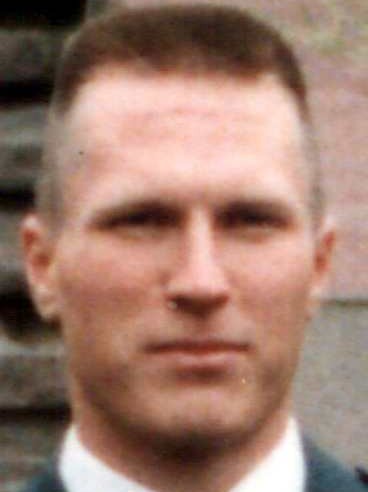
Mattias Flink
Mass murderer Tommy Zethraeus
Mass murderer · Sweden · 1994
Tommy Zethraeus and Guillermo Marques Jara had been refused to enter a night cl…
4 victims
Tommy Zethraeus
Mass murderer · Sweden · 1994
Tommy Zethraeus and Guillermo Marques Jara had been refused to enter a night cl…
4 victims
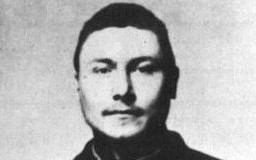 John Nordlund
Mass murderer · Sweden · 1900
John Filip Nordlund (also known as ”Mälarmördaren”, ”Mordlund”, ”Svarte Filip”)…
5 victims
John Nordlund
Mass murderer · Sweden · 1900
John Filip Nordlund (also known as ”Mälarmördaren”, ”Mordlund”, ”Svarte Filip”)…
5 victims
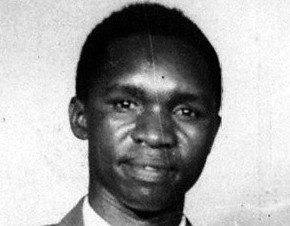 Joseph Kibweteere
Mass murderer · Uganda · 2000
Joseph Kibweteere led a breakaway sect known as the Movement for the Restoratio…
1000 victims
Joseph Kibweteere
Mass murderer · Uganda · 2000
Joseph Kibweteere led a breakaway sect known as the Movement for the Restoratio…
1000 victims
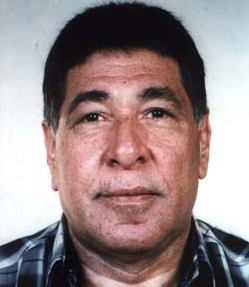 Gameel Al-Batouti
Mass murderer · USA · 1999
Gameel Al-Batouti (also rendered “Gamil ElBatouty” or “El Batouty” in U.S. offi…
216 victims
Gameel Al-Batouti
Mass murderer · USA · 1999
Gameel Al-Batouti (also rendered “Gamil ElBatouty” or “El Batouty” in U.S. offi…
216 victims
 Kim Dae-Han
Mass murderer · South Korea · 2003
Name: Kim Dae-Han · Age: 56 · Occupation/background: He was an unemployed forme…
198 victims
Kim Dae-Han
Mass murderer · South Korea · 2003
Name: Kim Dae-Han · Age: 56 · Occupation/background: He was an unemployed forme…
198 victims
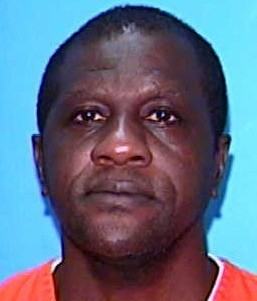 Lucious Boyd
Murderer · USA · 1998
Lucious Boyd was convicted in Broward County, Florida, in connection with the m…
1 victim
Lucious Boyd
Murderer · USA · 1998
Lucious Boyd was convicted in Broward County, Florida, in connection with the m…
1 victim
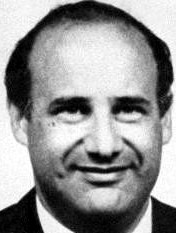 Jean-Claude Romand
Spree killer · France · 1993
Jean-Claude Romand (born February 11, 1954) was a French impostor and murderer…
5 victims
Jean-Claude Romand
Spree killer · France · 1993
Jean-Claude Romand (born February 11, 1954) was a French impostor and murderer…
5 victims
 Irving Davis
Murderer · USA · 2001
Name: Irving Davis · Also known as: Irving Alvin Davis · TDCJ Number: 999423 ·…
1 victim
Irving Davis
Murderer · USA · 2001
Name: Irving Davis · Also known as: Irving Alvin Davis · TDCJ Number: 999423 ·…
1 victim
 Sipho Dube
Serial killer · South Africa · 2001
Sipho Dube was convicted of seven murders and three rapes and was sentenced to…
7 victims
Sipho Dube
Serial killer · South Africa · 2001
Sipho Dube was convicted of seven murders and three rapes and was sentenced to…
7 victims
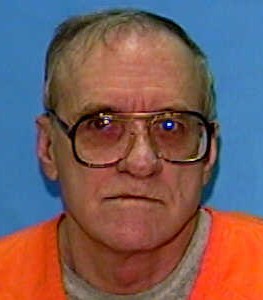 Lloyd Chase Allen
Murderer · USA · 1991
Lloyd Chase Allen was convicted and sentenced to death for the November 13, 199…
1 victim
Lloyd Chase Allen
Murderer · USA · 1991
Lloyd Chase Allen was convicted and sentenced to death for the November 13, 199…
1 victim
- Gender
- male
- Country
- Sweden
- Location
- Falun, Sweden
- Date of birth
- March 8, 1970
- Age at first offence
- 24
- Characteristics
- mentally ill, alcoholic
- Victim profile
- Karin Alkstål, 23 / Therese Danielsson, 20 / Helle Jürgensen / Lena Mårdner-Nilsson, 29 / Jenny Österman, 22 / Maths Bragstedt, 35 / Johan Tollsten, 26
- Method of murder
- Shooting (automatic rifle AK5)
- Date(s) of murder
- June 11, 1994
- Years active
- 1994
- Date of arrest
- Same day (wounded by police)
- Status
-
Imprisoned
Sentenced to life imprisonment; commuted to 32 years in prison on July 6, 2010
Case details
Mattias Flink (born March 8, 1970) was a Swedish army officer who killed 7 people and wounded two during a one-night rampage through the town of Falun on June 11, 1994.
Timeline
- June 11, 1994 — Mattias Flink consumed a large amount of alcohol, equipped himself with an AK5 automatic rifle and 150 bullets, and carried out shootings in Falun.
- 03:25 — Flink was apprehended and brought to Falu hospital after being shot by two policemen.
- January 2008 — Flink requested that his life sentence be limited to 24 years imprisonment.
- September 3, 2008 — Örebro municipal court rejected Flink’s request.
- May 2007 — Flink was granted unmonitored leaves from prison since he behaved well during his other leaves.
- June 9, (year not specified) — A court ruled that Flink must undergo a psychiatric examination to determine whether he was likely to be dangerous to others before a decision on parole could be made.
- July 7, (year not specified) — The psychiatric examination by the Swedish National Board of Forensic Medicine was expected to be finished.
- July 6, 2010 — Flink’s sentence was commuted to 32 years in prison.
Background
Flink was born and raised in Falun. His mother was a housewife and his father and grandfather worked as weaponry blacksmiths with their own shop. At the age of seven, Flink joined the Scout Movement. His parents divorced when he was nine years old, and the divorce was described as calm and sensible. Flink chose to stay with his father in the family house while his mother moved to an apartment a couple of hundred meters from the house.
According to psychological evaluations, his mother’s departure left deep scars within Flink. It was said that Flink developed some kind of alienation towards women. Flink attended high school with a focus on Electric Mechanical studies. After graduation, Flink enlisted as a conscript with Dalregementet. He committed himself to become an officer of the Swedish Army and was employed at Dalaregementet in 1993.
During the spring of 1994, Flink suffered severe problems with his mental health, resulting in aggression, severe jealousy, sleeping disorders and paranoia, which led to a total mental breakdown.
Flink was described as distraught over the impending break-up with his girlfriend.
The offence
On June 11, 1994, Second Lieutenant Mattias Flink consumed a large amount of alcohol. He went home to change his clothes and then dressed in his field uniform and walked to his regiment. He equipped himself with his AK5 automatic rifle and 150 bullets, 5.56 caliber.
Flink set out for a park in the centre of Falun where he shot down 6 members of the Women’s Auxiliary Services. The women were shot down randomly. Shortly thereafter, he shot down two men, one cyclist and one security officer, at a nearby road crossing.
One victim survived the attack. Six of the victims died immediately, while one woman died in hospital.
Flink later sought refuge in a nearby crane. He remained there for some time before he made his way down to walk home along an abandoned railway.
Victims
- Karin Alkstål, 23
- Therese Danielsson, 20
- Helle Jürgensen, (age not stated)
- Lena Mårdner-Nilsson, 29
- Jenny Österman, 22
- Maths Bragstedt, 35
- Johan Tollsten, 26
Investigation and arrest
Two policemen discovered Flink while he was walking home along an abandoned railway. Flink fired two rounds at the policemen. The policemen returned fire. Flink was hit in the hip and collapsed.
At 03:25, Flink was apprehended and brought to Falu hospital. His blood alcohol level was 1.69 at the time of the arrest.
Trial
In the district court, the defense never questioned the prosecutor’s description of the crime. The question for the defense was whether or not Flink was mentally ill at the time of the shooting.
Experts said Flink was in a self-inflicted temporary psychotic condition, triggered by alcohol, on the evening of the crime. It was stated that if Flink was found to be mentally ill, he would not be able to be sentenced to prison.
The final verdict came in the Swedish Supreme Court. Mattias Flink was sentenced to life imprisonment. It was stated that this precedent verdict made it possible for courts in Sweden to sentence people to prison for crimes stemming from and committed during an alcohol-induced psychosis.
Sentencing and prison
Flink was sentenced to life imprisonment.
He was placed in the Norrköping prison but was subsequently moved to Beateberg prison outside of Stockholm. When the prisoners of Beateberg learned of Flink’s move, they arranged a meeting to show their disgust towards his actions of killing innocent women.
Flink was allotted protected identity by Swedish authorities. He refused to give any interviews. During his years in prison, he was described as calm and well-behaved.
Parole and leaves
During the spring of 2008, Flink applied for parole to the District court of Örebro. On June 9, the court ruled that Flink must go through a psychiatric examination to determine whether he was likely to be dangerous to others before a decision on parole could be made. The examination by the Swedish National Board of Forensic Medicine (Rättsmedicinalverket) was expected to be finished by July 7.
The victims’ families strongly opposed the fact that Flink might be released.
Flink had been given several monitored short-term leaves from prison. In May 2007, he was granted unmonitored leaves because he behaved well during his other leaves. Relatives and families of the victims strongly opposed these leaves and expressed worries about the same thing happening again.
Conversion of the life sentence to a set time sentence
In January 2008, Flink requested that his life sentence be limited to 24 years imprisonment. On September 3, 2008, Örebro municipal court rejected the request with the motivation that the circumstances regarding the case were “exceptionally difficult” and that a set time punishment has to greatly exceed 24 years.
Outcome
Flink’s life sentence was commuted to 32 years in prison on July 6, 2010.
Other details
An officer held in 7 murders was described as a 24-year-old second lieutenant. He was charged with murdering five women and two men and was also charged with three accounts of attempted murder by the district court in Falun, where the June 11 shooting occurred. He faced a maximum sentence of life in prison if convicted. The shootings involved 146 rounds fired from an assault rifle.
One account described the officer as having quarreled with one of the women earlier in the night at a disco in the town, with the defense attorney stating: “Love trouble seems to have been the triggering factor,” and also quoted the defense attorney Gunnar Lundgren saying: “Love trouble seems to have been the triggering factor.” The army’s chief psychiatrist, Per-Olof Michel, said mental illness or drug abuse also might have played a role.
A journalist account described the gunman as walking out of his army base at Falun about 2:30 a.m. and opening fire indiscriminately on a group of party-goers. It described five of those killed as young women serving in an army auxiliary unit who had been on a one-week course at the base where the gunman was stationed. The victims had been attending an outdoor party close to the base. It described two policemen encountering the gunman shortly after the attack, the gunman opening fire on them, and the police shooting him. It also described the gunman as in stable condition in a hospital and questioned by police, with a police spokesman declining to reveal any motive, while other officers said he apparently was drunk. It stated that it was unclear how the gunman got his weapon past guards at the army base. It quoted an army spokesman, Tage Johansson, saying that all army officers were issued weapons, in this case a 5.56mm AK5 assault rifle. It quoted Col. Lars Walen as saying: “It’s completely meaningless and absurd.”
A separate account described a similar case in Finland in the same year involving an army deserter, Mika Muranen, who shot two of his neighbours with a crossbow and one man with an assault rifle.
Spotted an error, or have more information about this case?