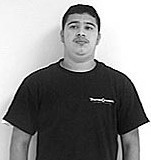
Gerardo Flores
Murderer Robert Martines Perez
Murderer · USA · 1994
Name: Robert Martines Perez · Other name used in proceedings: Robert Martinez P…
15 victims
Robert Martines Perez
Murderer · USA · 1994
Name: Robert Martines Perez · Other name used in proceedings: Robert Martinez P…
15 victims
 Robert Glen Jones
Murderer · USA · 1996
Defendant: Robert Glenn Jones (ADC#070566) · Co-defendant: Scott Nordstrom (ADC…
7 victims
Robert Glen Jones
Murderer · USA · 1996
Defendant: Robert Glenn Jones (ADC#070566) · Co-defendant: Scott Nordstrom (ADC…
7 victims
 Joshua Wayne Andrews
Murderer · USA · 2000
Joshua Wayne Andrews was a serial killer accused of killing several people in V…
5 victims
Joshua Wayne Andrews
Murderer · USA · 2000
Joshua Wayne Andrews was a serial killer accused of killing several people in V…
5 victims
 Juan Carlos Alvarez
Murderer · USA · 1998
Juan Carlos Alvarez, born on March 9, 1977, in San Luis, Mexico, was a Hispanic…
5 victims
Juan Carlos Alvarez
Murderer · USA · 1998
Juan Carlos Alvarez, born on March 9, 1977, in San Luis, Mexico, was a Hispanic…
5 victims
 Brian Keith Roberson
Murderer · USA · 1986
Brian Keith Roberson was convicted and sentenced to death for the August 1986 m…
2 victims
Brian Keith Roberson
Murderer · USA · 1986
Brian Keith Roberson was convicted and sentenced to death for the August 1986 m…
2 victims
 Jack Henry Abbott
Murderer · USA · 1965
Name: Jack Henry Abbott · Dates: January 21, 1944–February 10, 2002 · Known rol…
2 victims
Jack Henry Abbott
Murderer · USA · 1965
Name: Jack Henry Abbott · Dates: January 21, 1944–February 10, 2002 · Known rol…
2 victims
 Rick Allan Rhodes
Murderer · USA · 1991
Rick Allan Rhodes was born on 05/10/64. He was a white male with blonde hair. H…
2 victims
Rick Allan Rhodes
Murderer · USA · 1991
Rick Allan Rhodes was born on 05/10/64. He was a white male with blonde hair. H…
2 victims
 Debra Sue Tuggle
Murderer · USA · 1974
Debra Sue Tuggle was an African American woman born in Arkansas. She had a hist…
4 victims
Debra Sue Tuggle
Murderer · USA · 1974
Debra Sue Tuggle was an African American woman born in Arkansas. She had a hist…
4 victims
 Roderick Abeyta
Murderer · USA · 1989
Roderick Abeyta was executed in Nevada on October 5, 1998 for the murder of his…
1 victim
Roderick Abeyta
Murderer · USA · 1989
Roderick Abeyta was executed in Nevada on October 5, 1998 for the murder of his…
1 victim
 Elain Kay Young
Murderer · USA · 2006
Defendant: Elain Kay Young, 57, of Novinger, MO · Co-defendant: Katherine A. Mo…
1 victim
Elain Kay Young
Murderer · USA · 2006
Defendant: Elain Kay Young, 57, of Novinger, MO · Co-defendant: Katherine A. Mo…
1 victim
- Gender
- male
- Country
- USA
- Location
- Lufkin, Texas, USA
- Date of birth
- 1986
- Age at first offence
- 18
- Characteristics
- abuse, kidnapping, murder for hire, rape
- Victim profile
- His unborn twin sons
- Method of murder
- By stepping on his girlfriend's stomach
- Date(s) of murder
- May 5, 2004
- Years active
- 2004
- Date of arrest
- —
- Status
-
Life imprisonment
Sentenced to two concurrent life sentences without the possibility of parole for 40 years on June 6, 2005
Case overview
Gerardo Flores (1986- ) of Lufkin, Texas, was convicted of two counts of capital murder involving his unborn twin children. He received two concurrent life sentences without the possibility of parole for 40 years on June 6, 2005.
People
- Gerardo Flores (1986- ) — defendant
- E. B. — the pregnant teenage girlfriend; the mother of the two unborn children; she was taken by ambulance to the hospital emergency room after delivering twins prematurely at home
- Erica Basoria — named in connection with the girlfriend and her pregnancy; she was sixteen years old and five months pregnant at the time
- Ryan Deaton — Flores’ attorney
- Art Bauereiss — the prosecutor; Angelina County Assistant District Attorney
- Greg Abbott — Texas Attorney General
- Dr. Joe Pojman — executive director of Texas Alliance for Life
- David Gaultney — justice who authored the opinion on appeal
- Kreger and Horton — justices on the appellate panel
Timeline
- May 7, 2004 — E. B. delivered twins prematurely at home; an ambulance carried her to the hospital emergency room
- January 26, 2007 — a Ninth Court of Appeals decision upheld the 2005 conviction
- October 12, 2006 — a date given for submission of the appeal
- January 24, 2007 — an opinion delivery date for the appellate decision
- June 6, 2005 — Flores was sentenced to two concurrent life sentences without the possibility of parole for 40 years
The offence
In the early morning hours of May 7, 2004, E. B. delivered twins prematurely at home. Medical evidence revealed the twins had been dead in utero for at least twenty-four to forty-eight hours.
Flores was charged with capital murder of the two unborn children. The legal framework included:
- Texas Penal Code section defining capital murder as including murder of an individual under six years of age.
- Texas Penal Code definition of “individual” as “a human being who is alive, including an unborn child at every stage of gestation from fertilization until birth.”
- Texas Penal Code section providing that criminal homicide does not apply to deaths of an unborn child if the conduct charged falls within certain exemptions, including conduct committed by the mother and lawful medical procedures performed with requisite consent.
Flores’ conduct described in the record included that he stepped on E. B.’s abdomen on two different occasions during the week prior to delivery, according to Flores’ statement to police.
Investigation
At the hospital emergency room, nurses noticed bruises on E. B.’s arms and “massive bruising” on her abdomen, and the police were notified. Officers questioned Flores and E. B.’s boyfriend, who was the boyfriend with whom E. B. was living at Flores’ parents’ house.
In a hand-written statement, Flores stated that he and E. B. had argued that night and that he struck her. Flores also admitted that he had stepped on her abdomen on two different occasions in the seven days prior to her delivery.
Flores was further described as having stepped on E. B.’s abdomen several times during the week before she miscarried in narrative parts of the record, and the appellate opinion addressed issues including suppression of his statements and other trial rulings.
Arrest
The record describes police officers questioning Flores and references his videotaped interview with the police, including statements he made about stepping on E. B.’s abdomen.
Trial
Charges and conviction
A jury found Gerardo Flores guilty of the capital murder of his two unborn children. The appellate record referenced a conviction in 2005.
Prosecutors chose not to seek the death penalty, which resulted in an automatic life sentence as described in the narrative portions.
Evidence and medical observations
Medical evidence indicated the twins had been dead in utero for at least twenty-four to forty-eight hours before birth.
Nurses noticed bruises on E. B.’s arms and “massive bruising” on her abdomen.
Photos presented to the jury showed extensive beating and bruising marks across E. B.’s abdomen, arms, and legs from attacks by Flores in the days before the deaths.
Statements and defense position
Flores did not testify at trial, but earlier statements to police were discussed in the record.
The defense contended that E. B. punched herself while Flores was stepping on her, and that it was impossible to tell who caused the miscarriage.
E. B. told authorities that after about four months of pregnancy she regretted not getting an abortion, began jogging and hitting herself to induce a miscarriage, and when those efforts failed, she asked her boyfriend to help. She also acknowledged asking Flores to help end her pregnancy.
The girlfriend defended Flores in court, including testimony that she asked Flores to step on her stomach.
Flores’s letters to her from jail were read during the punishment phase, and the prosecutor described them as including “deeming, abusive and controlling language,” evidence of his domination over the young mother-to-be.
Witness and counsel statements
Prosecutor Art Bauereiss said most of Basoria’s family was pleased with the jury’s decision.
Flores’ attorney Ryan Deaton said:
- “It’s just tragedy all around”
- Deaton earlier called the case “tragic,” and he also described the couple as “kids in love making mistakes.”
Deaton also told jurors at trial:
- “She invited violence into the relationship,” he told jurors at trial.
Admissibility of bruising evidence
Flores argued on appeal that the trial court erred in allowing evidence of unindicted extraneous offenses during the guilt/innocence phase. He referenced prosecutor questions concerning bruises found on E. B.
The appellate opinion concluded the bruises evidence was admissible as same transaction contextual evidence and that:
- The evidence of bruises on E. B. was so intertwined with the charged offense that avoiding reference to it would make the State’s case difficult to understand or incomplete.
- The court concluded it helped explain why police were called and aided understanding of events in context.
- The trial court did not abuse its discretion in admitting the evidence.
Jury instructions and lesser-included offenses
The trial court submitted instructions on capital murder, injury to a child, and manslaughter.
Flores requested instructions on felony murder, criminally negligent homicide, deadly conduct, aggravated assault, and assault. The trial court denied the requests.
On appeal, the appellate court addressed multiple issues:
- The appellate court held there was no evidence that Flores did not intend the babies’ deaths when he stood on E. B.’s abdomen, so a felony murder instruction was not warranted.
- The appellate court held there was no evidence that Flores failed to perceive the risk involved in his conduct, and it concluded Flores was not entitled to instructions on criminally negligent homicide or deadly conduct.
- The appellate court addressed harm and concluded any error was harmless based on the jury’s rejection of manslaughter and injury to a child, and because the other submitted options were not the least plausible theories under the evidence.
- The appellate court also concluded refusal to submit requested aggravated assault and assault instructions was harmless given inclusion of manslaughter and injury-to-a-child options that the jury rejected.
Motions to suppress and statements
Flores challenged the trial court’s denial of his motion to suppress statements he made during interviews with police. The appellate opinion concluded that by affirmatively stating he had “no objection” to admission of the evidence during trial, Flores waived any error, and it overruled those issues.
Sentencing
Flores was sentenced to two concurrent life sentences without the possibility of parole for 40 years on June 6, 2005.
The narrative portion described the sentence as an automatic life sentence because prosecutors did not seek the death penalty, and it further stated that he would be eligible for parole in 40 years at age 59.
Appeals
Court and docket information
The appellate opinion addressed the case in:
- Court of Appeal: Ninth District of Texas at Beaumont
- NO. 09-05-292 CR
- Gerardo Flores, Appellant v. The State of Texas
- On Appeal from the 217th District Court, Angelina County, Texas
- Trial Cause No. 24959
The appellate issues concerned:
- constitutionality of various sections of the Texas Penal Code,
- the trial court’s refusal to submit certain “lesser-included” offenses for the jury’s consideration,
- and the trial court’s denial of motions to suppress evidence.
Outcome on appeal
The appellate court affirmed the trial court’s judgment:
- “We affirm the trial court's judgment.”
- “The judgment of the trial court is affirmed.”
- “AFFIRMED.”
Constitutional challenges addressed
Flores argued that:
- Texas Penal Code sections 1.07(a)(26) and 19.06 were unconstitutional,
- and raised equal protection, due process, and Establishment Clause arguments.
The appellate opinion addressed each argument and concluded:
- issues one and two were overruled,
- issue three was overruled,
- issue four was overruled,
- issue five was overruled,
- and issues six through ten, and issues eleven through thirteen, were overruled.
Other details
Statutory language and exemptions discussed
The appellate opinion quoted Texas Penal Code provisions including:
- the definition of “individual” as “a human being who is alive, including an unborn child at every stage of gestation from fertilization until birth,” and
- the exemptions in the chapter’s applicability, stating:
- “This chapter does not apply to the death of an unborn child if the conduct charged is: (1) conduct committed by the mother of the unborn child; (2) a lawful medical procedure performed by a physician or other licensed health care provider with the requisite consent, if the death of the unborn child was the intended result of the procedure; (3) a lawful medical procedure performed by a physician or other licensed health care provider with the requisite consent as part of an assisted reproduction as defined by Section 160.102, Family Code; or (4) the dispensation of a drug in accordance with law or administration of a drug prescribed in accordance with law.”
Texas Attorney General opinion and medical/abortion regulatory discussion
The narrative described that on the same day the Ninth Court of Appeals upheld the conviction, Texas Attorney General Greg Abbott issued an opinion supporting a state law barring doctors from performing third-trimester abortions, or abortions on minors without a parent's written permission, and that Abbott said doctors breaking the law should be given jail time and lose their licenses rather than being prosecuted for capital murder.
Pro-life group statement
Texas Alliance for Life filed a brief defending the conviction. Dr. Joe Pojman stated:
- “Clearly, the Constitution allows Texas to recognize unborn children as persons and protect them from murderers, exactly as the Legislature intended,” executive director Dr. Joe Pojman stated in an alliance press release issued Thursday.
Arrangement for residence and relationship context
E. B. was living with her boyfriend’s family at the time, and the police questioned Flores and E. B.’s boyfriend, described as her boyfriend with whom she was living at Flores’ parents’ house.
Family presence and court exit
The narrative described E. B. as sobbing as she left the Angelina County Courthouse and that she had stood by Flores. Prosecutor Art Bauereiss stated most of Basoria’s family was pleased with the jury’s decision.
Dates and factual specifics included in narrative
The narrative portion stated:
- E. B. was five months pregnant,
- she miscarried a week later after stepping attempts,
- and the babies were described as premature home stillbirths in a toilet two days later on May 7, 2004.
The appellate opinion established that the ambulance arrived early morning hours of May 7, 2004, and medical evidence indicated the twins had been dead in utero for twenty-four to forty-eight hours before birth.
Spotted an error, or have more information about this case?