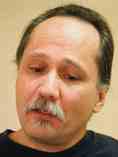
Roderick Abeyta
Murderer Brian Kevin Rosenfeld
Murderer · USA · 1985
Brian Kevin Rosenfeld Brian Kevin Rosenfeld was sentenced to three concurrent l…
23 victims
Brian Kevin Rosenfeld
Murderer · USA · 1985
Brian Kevin Rosenfeld Brian Kevin Rosenfeld was sentenced to three concurrent l…
23 victims
 Yahweh ben Yahweh
Murderer · USA · 1980
Yahweh ben Yahweh was born and legally named Hulon Mitchell Jr. (October 27, 19…
23 victims
Yahweh ben Yahweh
Murderer · USA · 1980
Yahweh ben Yahweh was born and legally named Hulon Mitchell Jr. (October 27, 19…
23 victims
 Russell Ellwood
Murderer · USA · 1991
Russell Ellwood was a former taxi driver. Authorities suspected him of killing…
20 victims
Russell Ellwood
Murderer · USA · 1991
Russell Ellwood was a former taxi driver. Authorities suspected him of killing…
20 victims
 Robert Martines Perez
Murderer · USA · 1994
Name: Robert Martines Perez · Other name used in proceedings: Robert Martinez P…
15 victims
Robert Martines Perez
Murderer · USA · 1994
Name: Robert Martines Perez · Other name used in proceedings: Robert Martinez P…
15 victims
 Lawrence Russell Brewer
Murderer · 1998
Lawrence Russell Brewer was a white male born 03/13/1967. His TDCJ number was 9…
1 victim
Lawrence Russell Brewer
Murderer · 1998
Lawrence Russell Brewer was a white male born 03/13/1967. His TDCJ number was 9…
1 victim
 Raymond Deleon Martinez
Spree killer · USA · 1983
Raymond Deleon Martinez was convicted and sentenced to death for the 1983 murde…
5 victims
Raymond Deleon Martinez
Spree killer · USA · 1983
Raymond Deleon Martinez was convicted and sentenced to death for the 1983 murde…
5 victims
 Rufus Franklin
Murderer · USA · 1938
Rufus Franklin was an American criminal who served a life sentence in Alcatraz.…
1 victim
Rufus Franklin
Murderer · USA · 1938
Rufus Franklin was an American criminal who served a life sentence in Alcatraz.…
1 victim
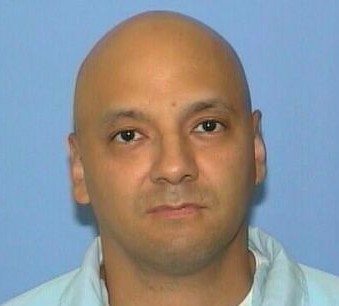 Andrew Urdiales
Serial killer · USA · 1986
Andrew Urdiales was in the Marines. While he was in the Marines, he was called…
8 victims
Andrew Urdiales
Serial killer · USA · 1986
Andrew Urdiales was in the Marines. While he was in the Marines, he was called…
8 victims
 Leung Ying
Mass murderer · USA · 1928
Leung Ying (also known as Loy Yeung, Wong Gay, and Lim Onn) pleaded guilty to k…
11 victims
Leung Ying
Mass murderer · USA · 1928
Leung Ying (also known as Loy Yeung, Wong Gay, and Lim Onn) pleaded guilty to k…
11 victims
- Gender
- male
- Country
- USA
- Location
- Clark County, Nevada, USA
- Date of birth
- 1954
- Age at first offence
- 35
- Characteristics
- drugs
- Victim profile
- Donna Martin, 38 (his former girlfriend)
- Method of murder
- Shooting
- Date(s) of murder
- October 1989
- Years active
- 1989
- Date of arrest
- —
- Status
-
Executed
Executed by lethal injection in Nevada on October 5, 1998
Case record: Roderick Abeyta
Background
Roderick Abeyta was executed in Nevada on October 5, 1998 for the murder of his former Las Vegas girlfriend. He had spent much of his adult life in prison in California and Nevada. He was raised near San Francisco, and he said he was abused by his father, after which he wound up in foster homes and eventually in California Youth Authority camps.
Abeyta said that at age 14 he began using methamphetamine. He said that at 17 he was caught driving a stolen car.
At the time of the offence in 1989, Abeyta was living with Donna Martin, 38. He had reconciled with his wife, Barbara, in 1989, and after a fight with Barbara, Abeyta and his half-brother, Casey Korsmo, started on a drinking spree. They wanted drugs, and they went to the Martin home where they broke a window to gain entrance.
Abeyta said he had been on death row only a short time, having been convicted by a jury in 1996 for the murder of Martin, 38, in October 1989. He chose to proceed with his execution rather than fight his sentence in the courts.
Abeyta said he voluntarily underwent a psychological examination to preclude the U.S. Public Defender's office from interceding on his or a family member's behalf to stop the execution, as had been done in other death penalty cases. Prison officials said that as a result, there were no last-minute appeals or court decisions that could have stayed the execution; only Abeyta himself could have stopped it.
Abeyta refused a sedative to relax him for the execution and was strapped to a table in what was formerly the gas chamber at the Nevada State Prison. Prison officials said he went to his execution voluntarily, saying it was morally wrong for him to fight his sentence.
“He wanted to meet his maker with a clear mind,” the prison director said.
“From the religious point of view, he (Abeyta) didn't want to escape accountability,” Bayer said.
The offence
Abeyta was living with Martin in 1989 when he reconciled with his wife, Barbara. After a fight with Barbara, he and his half-brother, Casey Korsmo, started on a drinking spree. They wanted drugs and went to the Martin home, broke a window to gain entrance, and found Martin apparently passed out from drug use.
When the two could not find any narcotics, Abeyta sat on her back, grabbed her hair, and shot her twice in the head. The killing was in Las Vegas in 1989. Martin was killed with two shots to the back of her head from a .25-caliber handgun.
Korsmo pleaded guilty in 1994 to first-degree murder in exchange for a chance at parole beginning in 2003. At Abeyta’s trial, Korsmo said that he heard gunshots shortly after the two men broke into Martin’s home.
Investigation
The jury evaluated Abeyta’s mental health during the trial, and Abeyta said he faked mental illness in an effort to avoid taking responsibility for Martin's death. He later decided he could not reconcile his use of the court system to delay his sentence with his Christian beliefs and decided to accept his punishment.
Arrest
No arrest details were provided.
Trial
Abeyta was convicted by a jury in 1996 for the murder of Martin, 38, in October 1989.
The trial took so long from the time of the crime because Abeyta’s mental health was being evaluated.
At his trial, Abeyta had an interview in which he spoke about his regret and accountability. He agreed to an interview because he wanted the Martin family to know the regret he felt for the murder.
“I would just basically like the Martin family to know truly how sorry I am,” he said.
“By my actions, I realize how much anguish and pain I caused them.”
Martin’s mother, Pearl, testified at Abeyta’s trial.
“There have been many, many tears, and there will be more,” she said.
Sentencing
Abeyta was placed on death row and was convicted by a jury in 1996. He agreed to proceed with his execution rather than fight his sentence in the courts.
Abeyta said his addiction to methamphetamine led him into the criminal world. He said his criminal behavior grew progressively worse. He served time in California for various crimes.
He also said he had been convicted in Nevada of robbery with a deadly weapon and battery with a deadly weapon in 1979, and he was in prison until his release on parole in March 1989.
Appeals
Abeyta did not pursue additional court appeals in his behalf, and prison officials said there were no last-minute appeals or court decisions that could have stayed the execution, because Abeyta had undergone an evaluation to preclude the U.S. Public Defender's office from interceding.
Outcome
Roderick Abeyta was executed by lethal injection in Nevada on October 5, 1998.
He mouthed the words “I'm sorry” to three members of Donna Martin’s family before being executed by lethal injection early that day.
Three members of the immediate family of Donna Martin stood as witnesses as Abeyta was strapped to a table and given an injection of three deadly drugs. The Martin family members were not identified, and they left by car without talking to reporters.
Prison officials said the chemicals started flowing into Abeyta’s left arm at 12:13 a.m., and he was pronounced dead at 12:15 a.m. Abeyta was declared dead two minutes after the chemicals started to flow into his veins.
Prison officials said the execution was delayed several minutes because of troubles locating a “good vein” for a backup needle in case the first injection failed. Abeyta had collapsed veins because of previous drug use. Bayer said Abeyta tried to assist in what vein might work, and that the inmate suggested the second needle go in his left arm also, flexing his hand to help in the process.
Abeyta never looked at the 24 people in the room who were witnessing the execution. He did not pursue additional court appeals in his behalf. Prison officials said he was resolute in wanting to be executed.
“Everything went smoothly,” Bayer said.
“He (Abeyta) tried to assist in what vein might work,” Bayer said.
“He was very calm throughout the process and just submitted to the process as he said he would,” Prison Director Bob Bayer said.
Abeyta did not request a special food for his last meal in one account, but another account described that his only special request was for vanilla ice cream. He ate Salisbury steak, stewed tomatoes, tossed salad, a potato, and iced tea.
Abeyta spent much of his final day on the telephone, including a call to a Reno television station. He had visits from Chaplain Al Fry of the prison in Carson City and from the Rev. Jim Kelly, chaplain of the prison in Ely where death-row inmates are housed.
Traditionally the inmate is sedated about an hour before execution so that he would not offer any resistance, but Abeyta requested that he not be given any drugs ahead of time. The prison director said Abeyta wanted to meet his maker with a clear mind and did not want to escape accountability.
Abeyta’s last words were described by state Prison Director Bob Bayer as expressions of true remorse and hope that his death would help in the healing process for the family.
Outside the Nevada State Prison, where the execution took place, about 30 protesters gathered, some carrying candles and others holding signs that said, “Stop The Violence” and “Stop the Killing.” The group was led by the Rev. Chuck Durante, a Catholic priest from Reno, in chanting hymns and praying for Abeyta, the victim, and both families.
Just hours before the execution, about 2 dozen people from area Catholic churches held a candlelight vigil near the prison grounds, protesting Abeyta’s death. The vigil included signs that said, “Jesus was executed. What would he say?” and “We pray for those who carry out the execution.” Minden resident Dirk Wunderlich said protesters were urged at weekend church services to come out Sunday evening and peacefully object to the execution.
Bishop Phillip Straling of the Catholic Diocese of Reno protested the execution and said that it denied the sacredness of life, which mandates that no human life can be taken away as punishment. Abeyta, who was Catholic, said the Bible told him he had to submit to the rule of the state even if it meant his execution.
“You would have to be some kind of superhuman not to have some kind of thoughts about it. But I also know I'm not going to let my instinct for survival kick in.”
Aftermath
State Archivist Guy Rocha said Abeyta was the 69th person executed in Nevada since 1860. Rocha also said Abeyta was the seventh person to die since 1977 after the death penalty was reinstated.
The most recent prior execution was March 30, 1996, when Richard Moran of Las Vegas was put to death.
At the execution, five guards led Abeyta into the cream-colored death chamber on the second floor of the prison. He wore jeans, a light-colored shirt, and white Nike basketball shoes. His hands and legs were strapped to the table, and there were four other straps over the rest of his body. He stared at the ceiling, and the shades to the three windows in the chamber were drawn after Abeyta was secured.
Eight media representatives, nine witnesses, and several prison officials observed the execution through a glass partition. There were nine official witnesses, eight members of the news media plus prison staff and a representative of the office of Gov. Bob Miller. Also present were Michael Pescetta, a deputy federal public defender who was ready to file an appeal to stop the execution if Abeyta gave the word, Sen. Lawrence Jacobsen, R-Minden, and Gordon Absher, press secretary for the governor. Prison officials said the official witnesses also included two prosecutors and a member of the staff of Attorney General Frankie Sue Del Papa.
Department of Prisons spokesman Glen Whorton said Abeyta was moved to the “last night” cell, just across from the execution chamber, at about noon. The prison director Bob Bayer said Abeyta was 44, and another account described the inmate as 46-year-old and stated he was strapped to the table and given an injection; those descriptions were part of the execution coverage.
Other details
Abeyta admitted he killed Donna Martin, 38, in Las Vegas in 1989.
As prison officials led Abeyta into the death chamber, he looked at three members of Ms. Martin's family and said: “I'm sorry. I'm sorry.''
In a September interview, Abeyta said he tried after his conviction to avoid execution, but eventually decided he did not wish to “manipulate the system.”
“I'm seeking to be held accountable for my actions,” he said.
“I did a terrible wrong and I recognize that.”
Abeyta wrote a judge to say he wanted to be executed.
Abeyta said he was abused as a child by his father while growing up in the Bay area, but he said he did not blame either his drug habit or his family for the murder.
“I've got no one to blame,” he said.
“It's not because of my culture or my family. There are always dysfunctional families. Everything I ever did was always of my own choosing. Not that I wanted to do what was wrong. You just kind of give up on life when you're on the wrong path and there's nothing to change it.”
Abeyta said he lived with Martin for about 6 to 8 weeks in the spring of 1989 just after his parole from prison on a robbery charge. Martin asked Abeyta to move out because of a concern he was stealing from her landlord. Abeyta returned to Martin's home in October with his half-brother Casey Korsmo to steal property to finance what he described as a five-day drug binge.
Abeyta executed for “'89 LV murder” was mentioned in the coverage alongside CARSON CITY reporting connected to the execution.

Spotted an error, or have more information about this case?