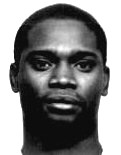
Brian Keith Roberson
Murderer Brian Kevin Rosenfeld
Murderer · USA · 1985
Brian Kevin Rosenfeld Brian Kevin Rosenfeld was sentenced to three concurrent l…
23 victims
Brian Kevin Rosenfeld
Murderer · USA · 1985
Brian Kevin Rosenfeld Brian Kevin Rosenfeld was sentenced to three concurrent l…
23 victims
 Yahweh ben Yahweh
Murderer · USA · 1980
Yahweh ben Yahweh was born and legally named Hulon Mitchell Jr. (October 27, 19…
23 victims
Yahweh ben Yahweh
Murderer · USA · 1980
Yahweh ben Yahweh was born and legally named Hulon Mitchell Jr. (October 27, 19…
23 victims
 Russell Ellwood
Murderer · USA · 1991
Russell Ellwood was a former taxi driver. Authorities suspected him of killing…
20 victims
Russell Ellwood
Murderer · USA · 1991
Russell Ellwood was a former taxi driver. Authorities suspected him of killing…
20 victims
 Vincent Johnson
Serial killer · USA · 1999
Vincent Johnson was an American homeless crack addict. He was born January 6, 1…
6 victims
Vincent Johnson
Serial killer · USA · 1999
Vincent Johnson was an American homeless crack addict. He was born January 6, 1…
6 victims
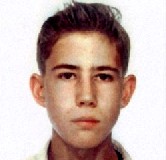 Hampus Hellekant
Murderer · Sweden · 1999
Karl Helge Hampus Hellekant was later known as Karl Svensson. He was born Janua…
1 victim
Hampus Hellekant
Murderer · Sweden · 1999
Karl Helge Hampus Hellekant was later known as Karl Svensson. He was born Janua…
1 victim
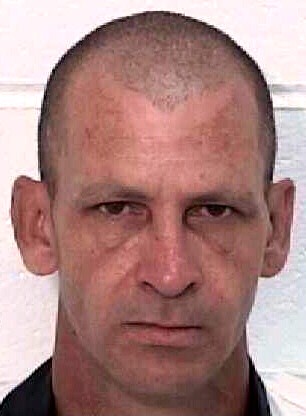 Robert Karl Hicks
Murderer · USA · 1985
Robert Karl Hicks was a white male. His inmate number was 82092. His date of bi…
1 victim
Robert Karl Hicks
Murderer · USA · 1985
Robert Karl Hicks was a white male. His inmate number was 82092. His date of bi…
1 victim
 Brenda Bratschi
Murderer · USA · 2004
Brenda Bratschi was convicted of murder in the 2004 death of Randy Bratschi and…
1 victim
Brenda Bratschi
Murderer · USA · 2004
Brenda Bratschi was convicted of murder in the 2004 death of Randy Bratschi and…
1 victim
 Nathaniel Bar-Jonah
Murderer? · USA · 1993
Nathaniel Benjamin Levi Bar-Jonah was also known by the name David Paul Brown.…
1 victim
Nathaniel Bar-Jonah
Murderer? · USA · 1993
Nathaniel Benjamin Levi Bar-Jonah was also known by the name David Paul Brown.…
1 victim
- Gender
- male
- Country
- USA
- Location
- Dallas County, Texas, USA
- Date of birth
- October 8, 1963
- Age at first offence
- 23
- Characteristics
- robbery
- Victim profile
- James Louis Boots, 78, and his 75-year-old wife, Lillian Wallace Boots
- Method of murder
- St abbing with knife
- Date(s) of murder
- August 30, 1986
- Years active
- 1986
- Date of arrest
- Next day
- Status
-
Executed
Executed by lethal injection in Texas on August 9, 2000
Case information
Brian Keith Roberson was convicted and sentenced to death for the August 1986 murder of 79-year-old James Louis Boots. He was executed by lethal injection in Texas on August 9, 2000.
Timeline
- May 12, 1993 — Texas Court of Criminal Appeals affirmed Roberson's conviction and death sentence.
- Nov. 8, 1993 — U.S. Supreme Court denied certiorari review.
- Jan. 22, 1997 — Habeas Trial Court entered findings of fact and conclusions of law denying Roberson relief.
- June 4, 1997 — Court of Criminal Appeals affirmed denial of state habeas relief.
- June 19, 1997 — A Federal District Court stayed Roberson's execution scheduled for June 24, 1997.
- June 3, 1998 — Roberson filed a petition for writ of habeas corpus.
- July 28, 1999 — Federal District Court denied habeas relief.
- Sept. 15, 1999 — Federal District Court denied Roberson permission to appeal.
- April 5, 2000 — U.S. Fifth Circuit Court of Appeals denied Roberson permission to appeal.
- June 30, 2000 — Roberson filed certiorari petition with U.S. Supreme Court which was currently pending.
- August 9, 2000 — Roberson was executed by lethal injection. He was pronounced dead at 6:17 p.m.
Background
Roberson was 22 years old when police arrested him within a day of the killings. He was 36 at the time of execution. His twin brother, Bruce, watched the execution. Roberson had a mother and aunt; he also had a grandmother and an uncle.
Roberson’s father was stabbed to death by a drug addict. Prosecutors did not seek the death penalty in that case, and Roberson’s father’s murderer was paroled after 6 years in prison.
Bettye Roberson stated she remained convinced of her son’s innocence.
A grandson of the Boots’ family, Mike Fleming, told reporters that his grandfather had loaned Roberson some money and that Roberson still owed him that money when he went over to borrow some more. Fleming believed James Boots refused to lend Roberson any more money and that Roberson became enraged.
Randy Fleming described the execution as closure for “this grim and gruesome situation.”
The offence
Roberson knocked on the door of the Boots’ home, which was across the street from his own house. When James Boots answered the door, Roberson gained entry. Roberson then stabbed both James Louis Boots and his wife, 75-year-old Lillian Wallace Boots, to death with a knife.
Before Roberson left the Boots’ home, he ransacked the house and took jewelry, including a necklace.
Investigation and evidence
A day after the killings, Roberson was arrested and police found jewelry belonging to the Boots in his possession.
Roberson’s bloody fingerprints were found inside the victims’ home.
Roberson gave a written confession to police admitting that he ransacked the house and stabbed both Mr. and Mrs. Boots. The confession was admitted into evidence at trial.
Police found that Roberson was wearing a gold necklace that belonged to Mr. Boots when he was arrested.
At the time of his arrest, Roberson told a reporter and stated: “I was walking home yesterday, and I went up to the Boots' front door. I knocked on the door, and he came to the door. He opened the door, and I pushed my way in. I started fighting with Mr. Boots. The lady came up from behind him. I started stabbing them. After I stabbed them, I went through the house, and then I went out the front door. I don't remember why I was there,”
Roberson also said: “But I remember some violence coming over me.”
In connection with his arrest, Roberson added: “I had a gold necklace on my neck I must have took from them, and my right hand was cut up.”
He expressed remorse the day after the killings: “I know I did it, but I don't know why. I was just juiced up. It don't make sense.”
Roberson said he had come off a night of drinking liquor and smoking PCP mixed with formaldehyde.
Trial
The Texas Court of Criminal Appeals stated that at approximately 7:00 A.M. on August 30, 1996, Roberson, who lived directly across from the Boots residence, knocked on their door. When Mr. Boots answered the door, Roberson gained entry into the house. He then stabbed both Mr. and Mrs. Boots to death with a knife. Before exiting the residence, Roberson ransacked the house and took a necklace that was found in his possession when he was arrested approximately one day later. Roberson’s bloody fingerprints were found inside the deceased’s home, and Roberson gave a written confession admitting he ransacked the house and stabbed both occupants.
Sentencing
Roberson was convicted and sentenced to death.
Evidence was introduced during the punishment phase of Roberson’s trial about his involvement in multiple burglaries, arson, sexual assault, possession of marijuana, and the use of inhalants.
Roberson’s trial included a dispute over whether an “afterthought” instruction was available. The magistrate judge and state trial court addressed an afterthought defensive theory. The state trial court made findings including: “This Court further finds that an afterthought defensive theory was not plausible with the amount of blood found in different areas of the home and the disheveled condition of the home. Blood from the victims and applicant's own injuries was found at the scene of the murders and in the front bedroom, where applicant had placed the bloody murder weapon on the vanity and taken things from the jewelry box on that vanity. An additional knife with a bent blade was found in the master bedroom, but no blood was found on that knife. Further, the drawers of the chest in the master bedroom were pulled out. The house appeared to be ransacked. The position of the victim's bodies, the condition of the house, and the trail of blood throughout the house made an afterthought defensive theory incredible; applicant's trial counsel tried instead to negate the aggravating element of burglary by asserting that applicant had entered the house with the effective consent of the victims. Applicant has therefore failed to rebut the presumption that his trial and appellate counsel performed in the furtherance of sound trial strategy. (Findings of Fact, Conclusions of Law, and Order, 292nd Judicial Dist., pp. 45-46.)”
The magistrate judge stated: “[t]here is nothing which indicates that he committed theft at the decedent's residence as an afterthought after fatally stabbing them.”
A Texas state district judge named Janice Warder was identified as one of the prosecutors at the murder trial and said: “This was a horrible murder of very nice people,” and “They were nothing but kindly neighbors. He killed both of them, stabbed them brutally to death.”
Judge Warder also stated: “It's appeared that he knew what he was doing,” and “I didn't see any credible evidence of diminished capacity.”
Judge Warder further said: “I just remember that the Bootses were a kindly couple who tried to help Brian Roberson. They had invited him into their home before. This shouldn't have happened to them.”
Judge Warder also made a statement directed to death-penalty opponents: “Judge Warder said opponents of the death penalty should pick another prisoner to promote the cause.”
Appeals
May 12, 1993 — Texas Court of Criminal Appeals
Texas Court of Criminal Appeals affirmed Roberson’s conviction and death sentence.
Nov. 8, 1993 — U.S. Supreme Court
The U.S.
January 22, 1997 — State habeas findings
Habeas Trial Court entered findings of fact and conclusions of law denying Roberson relief.
June 4, 1997 — Texas Court of Criminal Appeals
Court of Criminal Appeals affirmed denial of state habeas relief.
June 19, 1997 — Federal district court stay
A Federal District Court stayed Roberson’s execution scheduled for June 24, 1997.
June 3, 1998 — Petition for writ of habeas corpus
Roberson filed a petition for writ of habeas corpus.
July 28, 1999 — Federal district court
Federal District Court denied habeas relief.
Sept. 15, 1999 — Federal district court denial of permission to appeal
Federal District Court denied Roberson permission to appeal.
April 5, 2000 — U.S. Fifth Circuit Court of Appeals
U.S. Fifth Circuit Court of Appeals denied Roberson permission to appeal and denied his application for a certificate of appealability.
In the U.S. Court of Appeals for the Fifth Circuit case, the court stated that Roberson applied for a certificate of appealability on six claims of error. Roberson contended that:
- the district court erred by denying a request for an evidentiary hearing;
- the district court erred by holding that certain evidence supporting his ineffective assistance of trial counsel claim to be procedurally barred;
- he was denied his Sixth Amendment right to effective assistance of counsel at the punishment phase of his trial;
- the admission of a psychiatric report at the punishment phase violated constitutional due process;
- and (6) the prosecutor’s conduct violated his rights by striking all but one of the African-American members of the venire and for striking for cause an individual based on his views on the death penalty. The Fifth Circuit stated: “Therefore, the certificate is denied.”
The Fifth Circuit described the magistrate judge’s findings and adoption by the district court, and it addressed Roberson’s ineffective assistance of counsel claims, including his arguments about affidavits of four witnesses, failure to request an “afterthought” charge, and admission of a psychiatric report.
The Fifth Circuit also addressed jury-selection issues involving:
- Roberson’s claim under Batson v. Kentucky regarding Ms. Terri Jackson, describing the prosecutor’s racially neutral reasons.
- Roberson’s claim under Witherspoon v. Illinois regarding juror Stanley Allen, describing the trial court’s excusal based on responses about the death penalty.
The Fifth Circuit concluded that because Roberson was unable to demonstrate merit to any assertions of error, his application for a certificate of appealability was denied, stating: “D E N I E D.”
June 30, 2000 — Certiorari petition
Roberson filed certiorari petition with the U.S.
Outcome
Roberson’s conviction and death sentence were affirmed by the Texas Court of Criminal Appeals and upheld through subsequent proceedings described in the timeline.
Roberson was executed by lethal injection in Texas on August 9, 2000. In one execution report, the lethal injection was described as a cocktail, he died at 6:17 p.m., and the report stated he was five minutes after lethal drugs were injected.
At his execution, Roberson addressed his family first. He then said: “To all of the racist white folks in America that hate black folks and to all of the black folks in America that hate themselves, the infamous words of my famous, legendary brother Nat Turner - y'all kiss my black ass. Let's do it.”
He also taunted the victim’s family before receiving the lethal injection.
Another execution report included the following statements attributed to Roberson: “You ain't got what you want,” and “You ain't got what you want,” followed by: “You all can kiss by black a**. I'm ready. Let's go. I'll see you when you get there.”
Aftermath
Randy Fleming said the execution “has brought closure to this grim and gruesome situation.”
Bruce Roberson was quoted as saying: “When God comes, he's going to kick ass and take names,” and “And justice system: You can kiss my a**.”
Texas execution information included that Roberson became the 27th condemned inmate to be put to death in Texas that year and the 226th overall since the state resumed capital punishment on Dec. 7, 1982. It also stated he became the 57th condemned inmate to be put to death in the USA that year and the 655th overall since America resumed executions on Jan. 17, 1977. It further stated he became the 139th condemned inmate to be put to death during the tenure of Governor George W. Bush, who took office in Jan. 1985.
The execution report described back-to-back lethal injections as the first multiple executions in Texas since June 1997 and marked the third time since capital punishment resumed in the state in 1982 that more than one inmate was executed in one day.

Spotted an error, or have more information about this case?