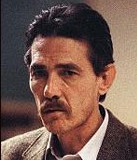
Jack Henry Abbott
Murderer
2known / alleged victims
Similar offenders
 Ervil LeBaron
Murderer · USA · 1972
Ervil Morrell LeBaron (1925 to August 16, 1981) was the leader of a polygamous…
35 victims
Ervil LeBaron
Murderer · USA · 1972
Ervil Morrell LeBaron (1925 to August 16, 1981) was the leader of a polygamous…
35 victims
 Marvin Gray
Murderer · USA · 1975
Marvin Gray was convicted killer who claimed responsibility for 23 slayings and…
23 victims
Marvin Gray
Murderer · USA · 1975
Marvin Gray was convicted killer who claimed responsibility for 23 slayings and…
23 victims
 Charles Manson
Murderer · USA · 1969
Charles Milles Manson (born November 12, 1934) was an American criminal and mus…
9 victims
Charles Manson
Murderer · USA · 1969
Charles Milles Manson (born November 12, 1934) was an American criminal and mus…
9 victims
 Robert Reldan
Murderer · USA · 1974
Name: Robert Reldan Robert Reldan was sentenced to life in prison on two counts…
8 victims
Robert Reldan
Murderer · USA · 1974
Name: Robert Reldan Robert Reldan was sentenced to life in prison on two counts…
8 victims
 Dennis Duane Webb
Murderer · USA · 1973
Defendant: Dennis Duane Webb · Victims: John Rainwater and Lori Rainwater · Cou…
7 victims
Dennis Duane Webb
Murderer · USA · 1973
Defendant: Dennis Duane Webb · Victims: John Rainwater and Lori Rainwater · Cou…
7 victims
 Gary Gene Tison
Murderer · USA · 1967
Gary Gene Tison was serving life sentences at the Arizona state prison. He had…
7 victims
Gary Gene Tison
Murderer · USA · 1967
Gary Gene Tison was serving life sentences at the Arizona state prison. He had…
7 victims
Random profiles
 Gabriel Garza Hoth
Serial killer · Mexico · 1991
1991 — Soledad Valdez, Gabriel Arturo Garza Hoth’s first wife, died; doctors be…
3 victims
Gabriel Garza Hoth
Serial killer · Mexico · 1991
1991 — Soledad Valdez, Gabriel Arturo Garza Hoth’s first wife, died; doctors be…
3 victims
 Richard Dadd
Homicide · United Kingdom · 1843
Richard Dadd was found unfit to plead and was sent to Bethleham Hospital at Sou…
1 victim
Richard Dadd
Homicide · United Kingdom · 1843
Richard Dadd was found unfit to plead and was sent to Bethleham Hospital at Sou…
1 victim
AM
Amardeep Sada
Homicide · India · 2006
Amardeep Sada was described as “India’s youngest serial killer” after he was ch…
3 victims
 Shawn Tyson
Homicide · USA · 2011
Shawn Tyson was a 16-year-old resident of Sarasota, Florida at the time of the…
2 victims
Shawn Tyson
Homicide · USA · 2011
Shawn Tyson was a 16-year-old resident of Sarasota, Florida at the time of the…
2 victims
 David Lee Holland
Murderer · USA · 1985
David Lee Holland was convicted for the capital murder of Helen Barnard while i…
2 victims
David Lee Holland
Murderer · USA · 1985
David Lee Holland was convicted for the capital murder of Helen Barnard while i…
2 victims
 Carolyn Warmus
Murderer · USA · 1989
Name: Carolyn Warmus Status: Warmus was sentenced to 25 years to life in prison…
1 victim
Carolyn Warmus
Murderer · USA · 1989
Name: Carolyn Warmus Status: Warmus was sentenced to 25 years to life in prison…
1 victim
Case Facts
- Gender
- male
- Country
- USA
- Location
- Utah/New York, USA
- Date of birth
- January 21, 1944
- Age at first offence
- 21
- Characteristics
- —
- Victim profile
- : A fellow inmate / Richard Adan, 22
- Method of murder
- St abbing with knife
- Date(s) of murder
- 1965 / 1980
- Years active
- 1965–1980
- Date of arrest
- —
- Status
-
Died in custody
Sentenced to fifteen years to life on April 15, 1982; hanged himself in his prison cell on February 10, 2002
Case Summary
Identity
- Name: Jack Henry Abbott
- Dates: January 21, 1944–February 10, 2002
- Known roles: American criminal and author
Timeline
- April 15, 1982 — Sentenced to fifteen years to life.
- February 10, 2002 — Hanged himself in his prison cell.
Background
- Jack Henry Abbott (January 21, 1944–February 10, 2002) was an American criminal and author.
- He was released from prison after gaining praise for his writing and lauded by high-profile literary critics, but almost immediately he committed a murder and was locked up for the rest of his life.
- He was born on a U.S. Army base in Michigan to an American soldier and a Chinese woman.
- As a child, Abbott was in trouble with teachers and later the law; by the age of sixteen he was sent to a reform school.
- In 1965, aged twenty-one, Abbott was serving a sentence for forgery in a Utah prison when he stabbed a fellow inmate to death.
- Abbott was given a sentence of three to twenty years for the stabbing.
- In 1971, Abbott’s sentence was increased by a further nineteen years after he escaped and committed a bank robbery in Colorado.
- Behind bars, Abbott refused to obey guard's orders and spent a lot of time in solitary confinement.
- In 1977, Abbott read that author Norman Mailer was writing about convicted killer Gary Gilmore; Abbott wrote to Mailer and offered to write about his time behind bars and the conditions he was in.
- Mailer agreed and helped to publish In the Belly of the Beast, Abbott's book about life in the prison system consisting of his letters to Mailer.
- Mailer supported Abbott's attempts to gain parole, which were successful in June 1980 when Abbott was released.
- After his release, Abbott went to New York City and was the toast of the literary scene for a short while.
- Norman Mailer was subjected to some criticism for his role in getting Jack Abbott released and was accused of being blinded by Abbott's talent for writing, without taking into account Abbott's propensity for violence.
- In a 1992 interview in The Buffalo News, Mailer said that his involvement with Abbott was “another episode in my life in which I can find nothing to cheer about or nothing to take pride in.”
- Abbott published another book in 1987 titled My Return, which was not a success; it contained a great deal of self-pity but no remorse for his crimes.
- Abbott blamed his crimes on the prison system and the government, and said he wanted an apology from society for the way he had been treated.
- In 2001, Abbott appeared before the parole board; his application was turned down due to his failure to express remorse and his lengthy criminal record and disciplinary problems in prison.
The offence
- On the morning of July 18, just six weeks after getting out of prison, Jack Abbott went to a small cafe called the Binibon in Manhattan.
- He clashed with 22-year-old Richard Adan, son-in-law of the restaurant's owner, over Adan's telling him the restroom was for staff only.
- Abbott stabbed Adan in the chest, killing him.
- The following day, unaware of Abbott's crime, The New York Times ran a positive review of The Belly of the Beast.
- After some time on the run, Abbott was arrested and charged with murdering Richard Adan.
- At his trial in January 1982, he was convicted of manslaughter and given fifteen years to life.
Investigation and arrest
- On July 19 (the day after the killing), The New York Times Book Review published a review of In the Belly of the Beast, unaware of Abbott’s crime.
- That same day, police announced they were searching for Abbott for killing the waiter; federal authorities joined in the manhunt.
- Abbott chose to represent himself in court.
- Abbott testified about his harrowing experiences in foster care and in prisons and admitted to the killing.
- On Sept. 23, 1981, Abbott was seized in Louisiana.
- He was indicted on Oct. 7.
Trial
- Another account states that on Jan. 21, 1982, he was convicted of first-degree manslaughter.
- The sentencing date stated is April 15, 1982, with a sentence of fifteen years to life in prison.
- In court, Abbott maintained that his attack on Richard Adan had been so quick that there was no suffering.
- Again representing himself, he cross-examined the widow, at one point berating her for weeping.
Sentencing
- Abbott was sentenced to 15 years to life in prison on April 15, 1982.
- The account also states that because of his previous record, Abbott received the maximum sentence: 15 years to life.
Appeals
- No appeals are described in the provided material.
Outcome
- On February 10, 2002, Abbott hanged himself in his prison cell using a makeshift noose constructed from his bedsheets and shoelaces.
- He left a suicide note, whose contents have not been made public.
- Another account states he was found dead in his prison cell in Alden, N.Y., near Buffalo, and that he had committed suicide.
Aftermath
- One report states that at first his family was convinced he’d been murdered.
- “He wouldn't have killed himself that way,” his sister told a reporter.
- The report says two coroners, one hired by the state and the other hired by the family, have called it suicide and the prison authorities say they have a suicide note.
- The report says the note has not been released and why it was not released has not been stated.
- Another included New York Times article notes: “His life was tragic from beginning to end,” Norman Mailer said in a prepared statement after he learned of the suicide. “I never knew a man who had a worse life.”
- Mailer and the Murderer article states that Mailer’s role in helping to win parole for Jack Henry Abbott in 1981 was a low point; Abbott committed another murder within weeks of his parole.
- Another quoted statement from Henry Howard, the waiter’s father-in-law:
- “I’m not angry at Mailer or Random House. It’s their job to recognize writing talent and they saw it in Jack Abbott. My quarrel is with the prison authorities, with the Establishment. It’s their job to decide who goes out of prison, and not because of some pressure from great writers or publishers.”
- Civil damages were described regarding Richard Adan’s death:
- In 1990, Adan’s widow filed a civil lawsuit against Abbott seeking $10 million in damages.
- On June 15, 1990, a jury awarded Adan’s family $7.57 million in damages.
- Another account states that Richard Adan's widow successfully sued him for $7.5 million in damages, meaning she received all the money from the book's sales.
- The record references that Abbott was barred from using any money he earned from the Adan murder under the so-called Son of Sam law, a New York statute that prevents criminals from profiting from any crimes they commit.
Other details
- Additional biographical and legal details included in the source:
- He spent the nine years before his eighteenth birthday in Utah reformatories.
- He was free for six months, then was sent to the Utah penitentiary to do time for writing bad checks.
- He got more felony time three years later when he stabbed one inmate to death and injured another in a prison brawl.
- He robbed a bank during a brief escape in 1971, earning him a nineteen-year federal sentence on top of the state time.
- In 1978, Abbott began a lengthy correspondence with Norman Mailer; Mailer was writing The Executioner’s Song (1979), a fictionalized biography of executed murderer Gary Gilmore.
- Mailer got some of Abbott’s letters published in The New York Review of Books, leading to publication of Abbott’s first book, In the Belly of the Beast (1982).
- When Abbott came up for parole, Mailer wrote a strong letter on his behalf, saying he was fit for release and that Mailer could guarantee him gainful employment in New York.
- Abbott was transferred to a New York halfway house on East Third Street in early June 1981.
- The source mentions a letter from “one of them” about the letters in prison (“they're the kind of letters somebody on the inside writes somebody on the outside who doesn't know jack-shit about the penitentiary and never will.”).
- The source reports that Mailer met Abbott at the airport in June and that Abbott was admitted to a halfway house on East Third Street.
- A New York Times account includes further background from an interview/profile:
- It states Abbott was born on Jan. 21, 1944, in Michigan.
- It describes his father as in the armed forces and of Irish descent; his mother of Chinese.
- It states he spent most of his early childhood in foster homes and was placed in a school for delinquent boys at age 12.
- It states that in 1963, after being accused of breaking into a shoe store and stealing some checks that he made out to himself, he was sentenced to a maximum of five years in prison at the Utah state penitentiary.
- It states that in 1966, while serving that term, he was given a concurrent sentence of three to 20 years for the fatal knifing of a fellow inmate.
- It states that in 1971, he escaped from prison and robbed a savings and loan association in Denver.
- It states he was convicted of armed robbery and given a 19-year federal sentence.
- It states that he became an avid reader and started a correspondence with Jerzy Kosinski while at a federal penitentiary in Marion, Ill.
- It states that he sent a letter to Mailer after noticing in a newspaper article that Mailer was writing The Executioner’s Song.
- It quotes: “Mr. Mailer was deeply impressed with the literary quality of Mr. Abbott’s subsequent letters, written by hand and often 20 pages or more,” Mr. Farber wrote in The Times.
- Book and publishing details included:
- In 1980, The New York Review of Books published a selection from the letters, with a brief introduction by Mailer.
- Erroll McDonald, a young Random House editor looking for new talent, signed Abbott to a book contract with a $12,500 advance.
- The book would be made up of excerpts from the letters to Mailer, who would write a longer introduction.
- It states that In the Belly of the Beast is made up of excerpts from the letters to Mailer.
- Restaurant and immediate incident details included:
- The restaurant is described as being in the East Village.
- Another account states that Abbott got up from his table and asked Richard Adan, a 22-year-old waiter and aspiring actor, to direct him to the toilet.
- Richard Adan explained the toilet could be reached only through the kitchen and that because the restaurant did not have accident insurance for customers, only employees could use the bathroom.
- Abbott argued with him; they took their dispute outside; Abbott stabbed Mr. Adan to death, early in the morning of July 18.
- Review and quotations included:
- A reviewer, Terrence Des Pres, wrote in The New York Times Book Review that the work was ‘’awesome, brilliant, perversely ingenuous; its impact is indelible, and as an articulation of penal nightmare it is completely compelling.'
- A New York Times account includes an additional mention of Robert Silvers:
- It states that many people blamed not only Mailer but also Abbott’s book editor and even Robert Silvers, the editor of The New York Review of Books, for having supported his release from prison.
- The source includes additional commentary text attributed to a different reporter/author voice:
- It contains discussions about how Abbott’s letters were seen, tv appearances such as “Good Morning, America,” and references to meeting “Gary Gilmore” and pet convict comparisons, without adding further court/legal outcomes beyond those already captured.
- A different narrative source includes additional named individuals:
- Sewell Chan is identified as the author of the New York Times piece “By Sewell Chan - The New York Times November 12, 2007”.
- M. A. Farber is identified as having written a detailed profile.
- Michiko Kakutani is described as having written an extended essay about themes in Abbott’s book and their relation to Abbott’s crime.
- Lawrence Schiller is identified as having hired to work on Executioner’s Song after Gilmore’s execution.

Spotted an error, or have more information about this case?