George Foster
Murderer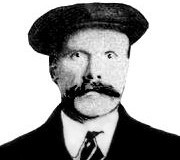 Albert Burrows
Murderer · United Kingdom · 1920
Albert Burrows (also named Albert Edward Burrows): married farm labourer who to…
4 victims
Albert Burrows
Murderer · United Kingdom · 1920
Albert Burrows (also named Albert Edward Burrows): married farm labourer who to…
4 victims
 Dale Cregan
Murderer · United Kingdom · 2012
Dale Christopher Cregan (born 6 June 1983) was convicted in the United Kingdom…
4 victims
Dale Cregan
Murderer · United Kingdom · 2012
Dale Christopher Cregan (born 6 June 1983) was convicted in the United Kingdom…
4 victims
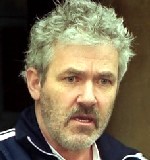 John Cooper
Murderer · United Kingdom · 1985
John Cooper was a serial killer from Milford Haven, Pembrokeshire. Cooper was c…
4 victims
John Cooper
Murderer · United Kingdom · 1985
John Cooper was a serial killer from Milford Haven, Pembrokeshire. Cooper was c…
4 victims
 Rahan Arshad
Murderer · United Kingdom · 2006
Rahan Arshad (born 1970) was a taxi driver. He lived at Turves Road, Cheadle Hu…
4 victims
Rahan Arshad
Murderer · United Kingdom · 2006
Rahan Arshad (born 1970) was a taxi driver. He lived at Turves Road, Cheadle Hu…
4 victims
 Angelina Rodriguez
Murderer · USA · 2000
Angelina Rodriguez was a Latina. She was 32 years old at the time of the crime.…
1 victim
Angelina Rodriguez
Murderer · USA · 2000
Angelina Rodriguez was a Latina. She was 32 years old at the time of the crime.…
1 victim
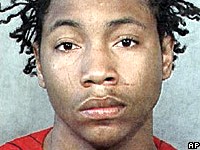 Ronell Wilson
Murderer · USA · 2003
Ronell Wilson was federally sentenced to death on January 30, 2007. Ronell Wils…
2 victims
Ronell Wilson
Murderer · USA · 2003
Ronell Wilson was federally sentenced to death on January 30, 2007. Ronell Wils…
2 victims
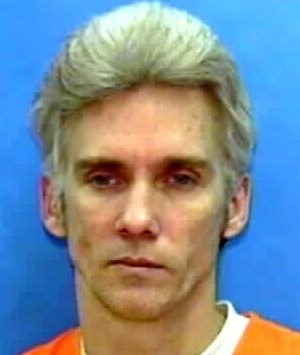 Robert Lester Patton
Murderer · USA · 1981
Robert Lester Patton Robert Lester Patton previously had been adjudicated not g…
1 victim
Robert Lester Patton
Murderer · USA · 1981
Robert Lester Patton Robert Lester Patton previously had been adjudicated not g…
1 victim
 Robert Peernock
Murderer · USA · 1987
Robert John Peernock (born c. 1937) was convicted of murdering his wife, Claire…
1 victim
Robert Peernock
Murderer · USA · 1987
Robert John Peernock (born c. 1937) was convicted of murdering his wife, Claire…
1 victim
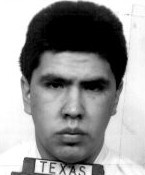 Oswaldo Soriano
Homicide · USA · 1992
Oswaldo Soriano Oswaldo Soriano was sentenced to death on May 6, 1994. His deat…
1 victim
Oswaldo Soriano
Homicide · USA · 1992
Oswaldo Soriano Oswaldo Soriano was sentenced to death on May 6, 1994. His deat…
1 victim
 Kelley Gann
Murderer · USA · 2012
Kelley Lynn Gann was a 32-year-old Rosenberg woman. Kelley Gann caused the deat…
1 victim
Kelley Gann
Murderer · USA · 2012
Kelley Lynn Gann was a 32-year-old Rosenberg woman. Kelley Gann caused the deat…
1 victim
- Gender
- male
- Country
- United Kingdom
- Location
- London, England, United Kingdom
- Date of birth
- ???
- Characteristics
- parricide
- Victim profile
- His wife and child
- Method of murder
- Drowning
- Date(s) of murder
- December 5, 1802
- Years active
- 1802
- Date of arrest
- Next day
- Status
-
Executed
Executed by hanging at Newgate on January 18, 1803
Case record: George Foster
Background
George Foster (or Forster) was a husband accused of murdering his wife and child by drowning them in Paddington Canal, London.
Foster’s mother-in-law, Jane Hobart, stated that she lived in Old Boswell-court. She said her daughter and infant had lived with her for some time, and she generally went on Saturday nights to stay with the prisoner, who was her husband.
Hobart testified that she left Hobart before four o’clock on the evening of Saturday 4 December 1802, taking her infant child with her, and that she never heard of her from that time until she was found drowned in the Paddington canal.
Hobart also testified that the prisoner had four children by her daughter: the child mentioned above, another was dead, and two were in the workhouse at Barnet.
Joseph Bradfield, in whose house Foster lodged in North-row, Grosvenor-square, said Foster lodged with him and that the couple stayed together that night, then went out at about ten o’clock on Sunday morning. Bradfield said Foster returned by himself between eight and nine o’clock at night.
Bradfield did not consider their relationship to have been on very good terms, because he believed the deceased wished to live with Foster. Bradfield said his wife used to call at Foster’s lodgings once or twice in the week, besides the Saturdays, on which nights she always waited to get some money from him. Bradfield said that on the Sunday following, Foster and another person went with him to see his mother at Highgate, and on their return Foster asked if his wife had been at his lodgings, which Foster admitted on cross-examination might be due to being surprised she had not come as usual.
Margaret Bradfield, the wife of Joseph Bradfield, corroborated Bradfield’s testimony and added that on the Wednesday she saw the child which had been found in the Paddington canal and said she was positive it was the same child the deceased had taken out with her on Sunday morning.
Four witnesses testified to Foster’s character and all agreed he was an industrious and humane man. James Bushwell, a coachmaker, said Foster was one of the most diligent men he had ever employed and that, upon hearing Foster was in custody, Bushwell went to see if he could render service.
Elizabeth Southall kept the Green Dragon.
A coroner’s examination involved George Hodgson, Esq., coroner of the county, who had before whom an inquest on these bodies had been taken.
The offence
Foster was charged with murdering his wife and child. The bodies were found in the Paddington Canal in London.
The bodies were described in the trial evidence as the woman who had been found drowned in the Paddington canal and the child whose body was also found in the canal.
George Hodgson, Esq., stated that there was not the least mark of violence upon either the woman or the child, and that “the report of the latter’s arm being broken was false.”
In his confession, Foster acknowledged he had taken his wife to the Paddington canal twice before with the intent of drowning her, but his resolution had failed both times and she returned unhurt. At the time of his confession he also said he regretted more the loss of his infant than the destruction of the woman.
Investigation
John Atkins, a boatman employed on the canal, said that about eight o’clock on the morning of Monday, he found a child’s body under the bow of the boat at a distance of a mile from the Mitre. He said that, in consequence of directions which he received from Sir Richard Ford, he dragged the canal for three days, and that on the last of these days he pulled up the woman’s body close under the window of the Mitre, entangled in a loose bush.
Atkins said he had before then felt something heavy against the drag near 200 yards towards London from the house, but he could not ascertain whether that was the body or not.
Hannah Patience, landlady of the Mitre tavern, said the prisoner had been at her house on Sunday 5 December with a woman and child. She said they had been there a good while before she saw them, and that she served them with a quartern of rum and a pint of beer after it. She said they left the Mitre about half past four as far as she could judge because there was no clock.
Patience recollected Sarah Daniels came to buy a candle to take to her master. She said that when Patience saw they were going out, “the woman threw her gown over the child, saying, ‘This is the last time I shall come here.’”
Patience said that after a minute or two Foster came back to look for the child’s shoe, which could not be found, and then followed the woman.
Hannah Patience also thought she had seen the prisoner at her house two or three times before.
Arrest
Sir Richard Ford produced the examination which the prisoner signed at Bow-street office after being questioned as to its being the truth and cautioned as to the consequences it might produce.
W. Garner, a shopmate of the prisoner, said he called upon Foster at the Brown Bear in Bow-street after Foster was taken into custody. Garner testified that Foster told him he was “as innocent of the charge as the child unborn” and said: “if any one would come forward to say, or swear, that he was at such a place on that night, he should be cleared immediately.”
Garner understood Foster to refer to the Green Dragon at Highgate.
James Bushwell testified that, after he offered to help, Foster replied that if it was not too much trouble Bushwell should go to the Green Dragon at Highgate and enquire if a man was not there on the Sunday evening who had a glass of rum and asked after Mrs. Young. Bushwell complied, but said the rules of evidence would not admit Bushwell’s giving the answer.
Elizabeth Southall said she “perfectly recollected such a circumstance,” but could not exactly say what Sunday it was. Southall also said that besides the man who enquired had a woman with an infant in her arms, and that the man turned around and said: “That is Bradfield’s mother.”
Trial
Foster was tried at the Old Bailey on the charge in January 1803. The trial proceedings included witnesses and character evidence, and the jury delivered a verdict of guilty.
The Chief Baron, in summing up to the jury, said the case almost entirely depended upon circumstances, but that in some cases those might be the best evidence, as it was certainly the most difficult, if not impossible, to fabricate. He instructed the jury to judge how far they believed the charge was brought home to Foster so as not to leave any doubt on their minds before they pronounced him guilty.
The Chief Baron noticed inconsistencies in the written paper Foster had signed, observing that in one part of the story Foster was contradicted by several witnesses and that it was scarcely to be presumed Foster could walk such a distance from the Mitre to Whetstone in such a short time. The Chief Baron also described other traits of Foster’s story as extremely dubious.
The jury pronounced a verdict of guilty after some consultation. The Recorder then proceeded to pass sentence.
Witnesses and evidence at trial
Jane Hobart stated that her daughter and infant left her for Foster on Saturday 4 December 1802 and that she never heard of her from that time until she was found drowned in the Paddington canal.
Joseph Bradfield said Foster and his wife went out together about ten o’clock on Sunday morning, then Foster returned by himself between eight and nine o’clock at night.
Margaret Bradfield corroborated Joseph Bradfield and said she was positive the child found in the Paddington canal was the same child the deceased had taken out with her on Sunday morning.
Eleanor Winter, who kept what was usually called the Spotted Dog (now the Westbourne Green tavern), swore that she recollected Foster coming to her house on the morning of 5 December with a woman and a child. Winter testified they stayed at her house with “beefsteaks, beer, and two glasses of brandy” until near one o’clock. Winter said she observed the woman crying and heard her say: “she had been three times there to meet a man who owed her husband some money, and that she would come no more.”
Winter also testified she had seen the body of the woman found in the canal and was certain it was the same woman who was with Foster at her house on the morning of 5 December.
John Goff, waiter at the Mitre tavern, testified that Foster, with a woman and child, came to their house some time about two o’clock on Sunday 5 December. Goff said they had “two quarterns of rum, two pints of porter,” and that they went away about half past four. Goff described the Mitre being situated on the opposite side of the canal to the towing path and said that when Foster and the woman went away, they turned towards London on that side though there was no path-way and it would take them at least a quarter of an hour to get to the first swing-bridge to cross over. Goff said there was a way to pass through Mr. Fillingham’s grounds leading to the Harrow-road and that it would be nearer than the side of the canal; he believed they went beyond the spot leading through those grounds. Goff testified they had no clock in the house but he had no doubt as to the time because it was very near dark when they went away.
When questioned by one of the jury, Goff said that besides the place Goff alluded to for passing through Mr. Fillingham’s ground, there was a gate about one hundred yards farther on and that Foster and the woman had not got over it when Goff lost sight of them.
Charles Weild, a shopmate of Foster, said he met Foster a little after six o’clock in Oxford-street on the evening of Sunday 5 December, and they went together to the Horse Grenadier public-house, where they continued till after eight.
John Atkins testified to finding the child body and dragging the canal for three days under directions received from Sir Richard Ford.
Sarah Daniels, aged nine years, was examined by the court regarding her knowledge of the sanctity and solemnity of an oath, and after being sworn she said she met a man following a woman with a child walking by the canal as Daniels was going from Mr. Fillingham’s to the Mitre. Daniels said, given the time near their tea, she was sure it could not want much of five o’clock.
The waitcr at the Mitre was contradicted in parts of Foster’s account, and Foster’s defence relied on contradictions of the waiter’s evidence.
Foster’s written examination and statements
Sir Richard Ford produced Foster’s signed examination at Bow-street office.
Foster’s account was recorded as follows: “My wife and child came to me on Saturday se’nnight, about eight o’clock in the evening, and slept at my lodgings that night. The next morning, about nine or ten o’clock, I went out with them, and walked to the New Cut at Paddington; we went to the Mitre tavern, and had some rum, some porter, and some bread and cheese. Before that we had stopped at a publichouse near the first bridge, where we had some beefsteaks and some porter; after which she desired me to walk further on by the cut, so I went with her. I left her directly I came out of the Mitre tavern, which was about three o’clock, and made the best of my way to Whetstone, in order to go to Barnet, to see two of my children, who are in the workhouse there. I went by the bye lanes, and was about an hour and a half walking from the Mitre to Whetstone. When I got there, I found it so dark that I would not go on to Barnet, but came home that night. I have not seen my wife nor child since; I have not enquired after them, but I meant to have done so to-morrow evening, at Mrs. Hobart’s. -- I came home from Whetstone that evening between seven and eight o’clock; I saw no person in going to Whetstone; nor did I stop any where, at any publichouse, or elsewhere, except the Green Dragon, at Highgate, where I had a glass of rum. My wife had a black gown on, and a black bonnet; the child had a straw bonnet, and white bedgown. My wife was a little in liquor. (Signed) ‘GEORGE FOSTER. ‘Witness, Richard Ford, December 27, 1802.’”
The examination also recorded: “Prisoner says, before he left the Mitre Tavern, on the said Sunday his wife asked the mistress of the inn whether she could have a bed there that night, which the prisoner afterwards repeated; that she asked half a crown for one, which the prisoner and his wife thought too much, and the latter said she would go home to her mother.”
This part was contradicted by the landlady, not a single word about a bed having passed between her and the deceased.
Foster made no other defence than contradicting some parts of the evidence of the waiter at the Mitre.
Sentencing
The Recorder sentenced Foster to be hanged by the neck next Monday morning until he be dead, and that then his body be delivered to be anatomized, according to the law in that case made and provided.
Appeals
No appeal information appeared.
Timeline
- 4 December 1802 — Hobart’s testimony placed the departure of the deceased and her infant from Old Boswell-court before four o’clock on Saturday 4 December 1802.
- 5 December 1802 — Witnesses testified that Foster, with a woman and child, visited public houses near Paddington Canal on Sunday, including the Spotted Dog/Westbourne Green tavern in the morning and the Mitre tavern around two o’clock.
- Monday (after 5 December 1802) — Atkins found the child’s body about eight o’clock in the morning and began dragging the canal for three days.
- 18 January 1803 — Foster was executed at Newgate by hanging.
- December 27, 1802 — Foster signed the Bow-street examination recorded as “Witness, Richard Ford, December 27, 1802.”
Outcome
Foster was found guilty by the jury and was executed pursuant to his sentence on January 18, 1803.
At three minutes after eight, Foster appeared on the platform before the debtor’s door in the Old Bailey. After passing a short time in prayer with Dr. Ford, the ordinary of Newgate, “the cap was pulled over his eyes,” and when the stage fell he was launched into eternity.
The narrative described that from the time of condemnation to the moment of death Foster had scarcely taken the smallest nourishment, and he was obliged to be supported from the prison to the gallows because he was wholly incapable of ascending the staircase without assistance.
The narrative described that Foster fully confessed prior to his decease, acknowledged having conceived an inveterate hatred for his wife, and confessed he had taken her twice before to the Paddington canal with the intent of drowning her, but that his resolution had failed and she returned unhurt. It also described that at the moment of confession he seemed to regret more the loss of his infant than the destruction of the woman.
When Foster was questioned if jealousy had worked him to commit the act, the narrative said he made no reply “except saying, ‘he ought to die';” and then dropped into a settled and fixed melancholy.
Aftermath
After hanging the usual time, Foster’s body was cut down and conveyed to a house not far distant, where it was subjected to the galvanic process by Professor Aldini, under the inspection of Mr Keate, Mr Carpue and several other professional gentlemen.
The experiment was described as a demonstration of galvanism, linked to Luigi Galvani and Aldini, who was described as the nephew of Luigi Galvani. On the first application of the process to the face, the jaws of the deceased criminal began to quiver, the adjoining muscles were contorted, and “one eye was actually opened.” In the subsequent part of the process, the right hand was raised and clenched, and the legs and thighs were set in motion.
Mr Pass, the beadle of the Surgeons’ Company, was described as alarmed and said to have died of fright soon after leaving.
The narrative recorded that some bystanders believed Foster was being restored to life and that, if this had been so, it would have been necessary to re-execute him because his sentence was to “hang until he be dead.”
The narrative also explained that the object of the experiment was to show the excitability of the human frame when animal electricity was applied. It suggested it could have been of use in cases of drowning or suffocation by reviving the action of the lungs, and also in cases of apoplexy or disorders of the head.
The narrative further stated that the professor had made use of galvanism in cases of insanity “and with complete success.”
The note at the end described a separate experiment on a convict named Patrick Redmond, who was hanged for a street robbery on the 24th of February 1767, and said: “an experiment was made on a convict named Patrick Redmond, who was hanged for a street robbery, on the 24th of February, 1767, in order to bring him to life.”
It continued: “it appeared that the sufferer had hung twenty-eight minutes when the mob rescued the body and carried it to an appointed place, where a surgeon was in attendance to try the experiment bronchotomy, which is an incision in the windpipe, and which in less than six hours produced the desired effect.”
It also said: “A collection was made for the poor fellow, and interest made to obtain his pardon, for it will be remembered that the law says the condemned shall hang until he be dead; consequently men who, like Redmond, recovered, were liable to be again hanged up until they were dead.”
Other details
The narrative stated that Foster’s trial included reconstruction of events and said “the Lord Chief Baron” charged the jury that Foster’s conviction was “most entirely upon circumstantial evidence.” It also stated that various witnesses saw Foster with his wife and child in public houses near Paddington Canal during the day on Sunday.
The narrative described that the jury found Foster guilty even though the evidence was entirely circumstantial.
The narrative stated that Foster claimed he set out alone for Barnet to see his other two children who were in the workhouse there but that he was forced to turn back at Whetstone due to failing light, and said this was contradicted by a waiter at the Mitre who said the three left the inn together.
The narrative also stated skepticism about whether Foster could have walked to Whetstone in the time he claimed.
The narrative described that after Foster’s execution his body was given to Giovanni Aldini for experimentation. It also stated that Aldini was an enthusiastic proponent of Luigi Galvani’s method of stimulating muscles with electric current, known as Galvanism.


Spotted an error, or have more information about this case?