Richard Hemming
Murderer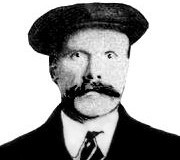 Albert Burrows
Murderer · United Kingdom · 1920
Albert Burrows (also named Albert Edward Burrows): married farm labourer who to…
4 victims
Albert Burrows
Murderer · United Kingdom · 1920
Albert Burrows (also named Albert Edward Burrows): married farm labourer who to…
4 victims
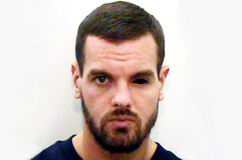 Dale Cregan
Murderer · United Kingdom · 2012
Dale Christopher Cregan (born 6 June 1983) was convicted in the United Kingdom…
4 victims
Dale Cregan
Murderer · United Kingdom · 2012
Dale Christopher Cregan (born 6 June 1983) was convicted in the United Kingdom…
4 victims
 John Cooper
Murderer · United Kingdom · 1985
John Cooper was a serial killer from Milford Haven, Pembrokeshire. Cooper was c…
4 victims
John Cooper
Murderer · United Kingdom · 1985
John Cooper was a serial killer from Milford Haven, Pembrokeshire. Cooper was c…
4 victims
 Rahan Arshad
Murderer · United Kingdom · 2006
Rahan Arshad (born 1970) was a taxi driver. He lived at Turves Road, Cheadle Hu…
4 victims
Rahan Arshad
Murderer · United Kingdom · 2006
Rahan Arshad (born 1970) was a taxi driver. He lived at Turves Road, Cheadle Hu…
4 victims
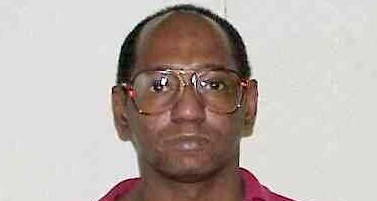 James Earl Slaughter
Murderer · USA · 1983
James Earl Slaughter (DOB 2-3-63) was sentenced to death on December 2, 1983. S…
1 victim
James Earl Slaughter
Murderer · USA · 1983
James Earl Slaughter (DOB 2-3-63) was sentenced to death on December 2, 1983. S…
1 victim
 Chante Mallard
Murderer · USA · 2001
Chante Jawan Mallard was convicted of murder and tampering with evidence in Tar…
1 victim
Chante Mallard
Murderer · USA · 2001
Chante Jawan Mallard was convicted of murder and tampering with evidence in Tar…
1 victim
 Christine Adewunmi
Murderer · USA · 2012
Christine Adewunmi killed herself by shooting herself the same day. Christine A…
3 victims
Christine Adewunmi
Murderer · USA · 2012
Christine Adewunmi killed herself by shooting herself the same day. Christine A…
3 victims
 Josh Gilchrist
Homicide · USA · 2007
26 January 2007 — Police responded to the family home in Huron, South Dakota an…
1 victim
Josh Gilchrist
Homicide · USA · 2007
26 January 2007 — Police responded to the family home in Huron, South Dakota an…
1 victim
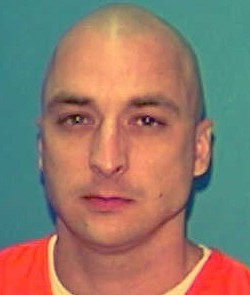 Johnny Kormondy
Murderer · USA · 1993
Name: Johnny Shane Kormondy DOB: 05/20/72 DC#: 200754 Case number: 93-3302 Cour…
1 victim
Johnny Kormondy
Murderer · USA · 1993
Name: Johnny Shane Kormondy DOB: 05/20/72 DC#: 200754 Case number: 93-3302 Cour…
1 victim
 Wanda Jean Aallen
Murderess · USA · 1981
Wanda Jean Allen was born on August 17, 1959 and was executed on January 11, 20…
2 victims
Wanda Jean Aallen
Murderess · USA · 1981
Wanda Jean Allen was born on August 17, 1959 and was executed on January 11, 20…
2 victims
- Gender
- male
- Country
- United Kingdom
- Location
- Oddingley, Worcestershire , England, United Kingdom
- Date of birth
- ???
- Characteristics
- murder for hire, history of mental illness, fugitive
- Victim profile
- Reverend George Parker
- Method of murder
- Shooting
- Date(s) of murder
- June 24, 1806
- Years active
- 1806
- Date of arrest
- —
- Status
-
Beaten to death the same day by those who had contracted The story of Richard Hemming is one that spans over 25 years and proves that it is never too late to solve a murder.
Background
Richard Hemming was a wheelwright and carpenter from nearby Droitwich. He was hired by local farmers to remove Reverend George Parker, the rector of Oddingley in Worcestershire, who collected village tithes or taxes.
The offence
On 24 June 1806, a shot was heard in the rectory garden. Villagers ran into the garden and found Reverend George Parker lying dead on the ground.
After the shot, Hemming was chased by a villager and then stopped, turned around, and fired at his pursuer. Hemming then gave up the chase but was identified as the killer. Hemming entered and emerged from Trench Woods and then disappeared.
A fierce quarrel over tithes had broken out between Rev Parker and local farmers led by Captain Evans from nearby Church Farm. Captain Evans declared furiously that “there is no more harm in shooting him than a mad dog”.
Investigation
Twenty-five years passed before Hemming’s fate was known. In January 1830, during the demolition of a barn at Netherwood Farm, Oddingley, a shallow grave was found containing a skeleton with a fractured skull. Hemming’s wife, who had remarried, identified him by his clothes and a carpenter’s rule found with the body. An inquest was opened at the Talbot Inn in The Tything, Worcester.
Arrest
Thomas Clewes was taken into custody and held on suspicion of Hemming’s murder. Crewes made a statement disclaiming all responsibility for the murder but implicating Captain Evans and a man named Taylor, who were both now dead.
Trial
The trial created interest throughout the county. Crowds jostled for admission to the Guildhall where the case was being heard by Mr. Justice Littledale.
After 13 hours the jury returned a verdict that Crewes was guilty as accessory after the fact. The judge declined to accept the verdict because Crewes had not been charged with that offence. The jury then found Crewes not guilty.
When news of the acquittal reached Oddingley the church bells were rung in celebration.
Outcome
The principal point established was that Hemming had been hired by local farmers to remove Reverend Parker and had been paid, but had then decided to blackmail them into paying him more. The farmers then decided to kill him. The narrative stated that, out of six original farmers, only three were still alive and were influential members of the village, and it was thought best to let the matter drop.
It also stated that Hemming was beaten to death the same day by those who had contracted the murder.
Other details
A reward of fifty guineas was offered for the capture of Hemming, but no one seemed willing to claim it and the crime remained unsolved for many years.
In 1806, Hemming was first seen running away across the fields towards Trench Woods immediately after the shot, and he was later seen to enter and emerge from the woods.
The narrative described the rector as “a pleasant man, well-known for his generosity to the poor but perhaps a little too astute in business affairs for the liking of some of his parishioners,” and as “a hard and an uncompromising man” and “a stickler for rules.”
It further described Reverend Parker being shot and then bludgeoned to death in broad daylight on Midsummer Day, 1806, while walking in the fields, and also described him as first shot and then bludgeoned to death.
After the discovery of the remains, Taylor had died and the others could not be charged because the principal was dead, resulting in them being found to be not guilty.
The narrative stated that at the local pub The Fir Tree Inn, Thomas Clewes became landlord, and it connected this to the naming of “The Murderers Bar.”
Spotted an error, or have more information about this case?