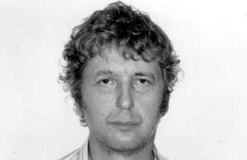
Robert Peernock
Murderer Brian Kevin Rosenfeld
Murderer · USA · 1985
Brian Kevin Rosenfeld Brian Kevin Rosenfeld was sentenced to three concurrent l…
23 victims
Brian Kevin Rosenfeld
Murderer · USA · 1985
Brian Kevin Rosenfeld Brian Kevin Rosenfeld was sentenced to three concurrent l…
23 victims
 Yahweh ben Yahweh
Murderer · USA · 1980
Yahweh ben Yahweh was born and legally named Hulon Mitchell Jr. (October 27, 19…
23 victims
Yahweh ben Yahweh
Murderer · USA · 1980
Yahweh ben Yahweh was born and legally named Hulon Mitchell Jr. (October 27, 19…
23 victims
 Russell Ellwood
Murderer · USA · 1991
Russell Ellwood was a former taxi driver. Authorities suspected him of killing…
20 victims
Russell Ellwood
Murderer · USA · 1991
Russell Ellwood was a former taxi driver. Authorities suspected him of killing…
20 victims
 William Morva
Murderer · USA · 2006
William Morva was sentenced to death on June 23, 2008. William Charles Morva (b…
2 victims
William Morva
Murderer · USA · 2006
William Morva was sentenced to death on June 23, 2008. William Charles Morva (b…
2 victims
 Takeyia Guthridge
Murderer · USA · 2012
Takeyia Guthridge was accused and convicted of killing her mother, Deloise “Dee…
1 victim
Takeyia Guthridge
Murderer · USA · 2012
Takeyia Guthridge was accused and convicted of killing her mother, Deloise “Dee…
1 victim
 Carlton Akee Turner
Murderer · USA · 1998
Carlton Akee Turner was a Black male who was 19 years old on August 8, 1998 whe…
2 victims
Carlton Akee Turner
Murderer · USA · 1998
Carlton Akee Turner was a Black male who was 19 years old on August 8, 1998 whe…
2 victims
 Alexander Sukhovo-Kobylin
Murderer? · Russia · 1850
Alexander Vasilyevich Sukhovo-Kobylin (Russian: Александр Васильевич Сухово-Коб…
1 victim
Alexander Sukhovo-Kobylin
Murderer? · Russia · 1850
Alexander Vasilyevich Sukhovo-Kobylin (Russian: Александр Васильевич Сухово-Коб…
1 victim
 Georges-Alexandre Sarret
Serial killer · Franc e · 1925
April 10, 1934 — Georges-Alexandre Sarret was executed by guillotine at Aix-en-…
4 victims
Georges-Alexandre Sarret
Serial killer · Franc e · 1925
April 10, 1934 — Georges-Alexandre Sarret was executed by guillotine at Aix-en-…
4 victims
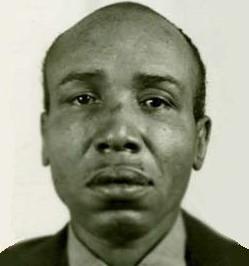 Jake Bird
Serial killer · USA · 1930
October 30, 1947 — Jake Bird broke into the home of Bertha Kludt and her daught…
44 victims
Jake Bird
Serial killer · USA · 1930
October 30, 1947 — Jake Bird broke into the home of Bertha Kludt and her daught…
44 victims
- Gender
- male
- Country
- USA
- Location
- Los Angeles, Los Angeles County, California, USA
- Date of birth
- 1937
- Age at first offence
- 50
- Characteristics
- parricide, financial gain
- Victim profile
- Claire Laurence Peernock, 45 (his wife)
- Method of murder
- Beating with a blunt instrument
- Date(s) of murder
- July 22, 1987
- Years active
- 1987
- Date of arrest
- September 4, 1987
- Status
-
Life imprisonment
Sentenced to life in prison without parole on October 24, 1991
Case details
Robert John Peernock (born c. 1937) was convicted of murdering his wife, Claire Laurence Peernock, and for attempting to hire a fellow prison inmate to kill his daughter, Natasha Peernock Sims, and her attorney.
Peernock was from the Los Angeles district of Tarzana. He worked as a former pyrotechnics engineer and as a California state employee with the Department of Water Resources. He claimed he was framed because he was about to publish a book exposing state corruption.
Timeline
- July 21, 1987 — Natasha Peernock Sims testified that an incident began when her father accused her of wasting electricity.
- July 22, 1987 — Claire Laurence Peernock and Natasha Peernock Sims were found after a car crash near Tuxford Street in Los Angeles; the car struck a utility pole, and the interior was found soaked with gasoline.
- December 22, 1987 — Natasha Peernock Sims testified at a preliminary hearing where Peernock was being held without bail on one count each of murder, attempted murder, arson and kidnapping, and on additional soliciting charges.
- July 9, 1991 — The murder trial began in San Fernando Superior Court, with opening statements and testimony described as part of the trial proceedings.
- October 23, 1991 — Peernock was convicted of the charges of murder.
- October 24, 1991 — Peernock was sentenced to life in prison without parole.
- November 18 — Peernock was scheduled to be sentenced, but sentencing was moved up to Wednesday.
- In August 1987 — A warrant for Peernock’s arrest was issued.
- September 4, 1987 — Peernock was apprehended, and his girlfriend was charged with accessory to murder.
- When Peernock attempted to fire his attorney during the trial — Peernock attempted to fire his attorney, Donald J. Green, saying Green was "working to rig a conviction."
Background
Peernock was a former pyrotechnics engineer and a California state employee with the Department of Water Resources.
A family member told authorities that Peernock and Claire had been in the process of separating and that Claire had sought protective custody from Peernock for herself and her two children.
The offence
Victims
- Claire Laurence Peernock (45), Peernock’s wife.
- Natasha Peernock Sims (18 at the time of testimony; also described as 11-year-old sister mentioned as part of the family custody context).
Circumstances of the crash and injuries
Claire and Natasha were discovered in the early morning of July 22, 1987 near Tuxford Street in Los Angeles. Claire was driving Peernock’s car, a 1971 Cadillac, when the car struck a utility pole. The interior of the car was found soaked with gasoline, and Claire and Natasha were also covered with the fluid.
The vehicle was found to have been staged. An explosive device had been placed on the gas tank and rigged to explode, but it failed to detonate. Claire died from head wounds that were termed “inconsistent” with a traffic accident. Natasha was severely injured but survived.
A medical examiner testified at the hearing and later described during the proceedings that Claire died prior to the car crash from head wounds similar to those suffered by Natasha. During the preliminary hearing, Natasha testified that her injuries were probably inflicted with a blunt instrument.
Natasha’s testimony about the night
Natasha testified that the incident began early on the night of July 21 when her father accused her of wasting electricity. She testified that Peernock frequently visited the Catala Street residence though he had not lived with her, her mother, and her 11-year-old sister for three years.
Natasha testified that the argument escalated and that Peernock choked her by putting his hands around her neck. She testified:
“he flipped out like that all the time.”
She testified that he apologized before leaving her on the floor of the family room, then returned shortly, handcuffed her, and slipped a hood over her head. She testified that he took her in her mother’s bedroom, force-fed her alcohol and a white pill, and told her he was going to “blow her brains out” with a gun unless she and Claire Peernock signed some papers. She testified:
“blow her brains out”
She testified that after Peernock left the bedroom, she could hear voices and “banging around” in the living room. Natasha testified that hours later Peernock put her in the back seat of his car next to her mother, and that Claire was breathing at the time but did not respond to Natasha’s nudges.
Natasha testified that the last thing she remembered before passing out was Peernock getting out of the car and tinkering with something at its rear.
Arson and rigging evidence described
A Los Angeles paramedic, Clyde Piephoff, testified that the strong smell of gasoline and the existence of a singed rope attached to the rear trailer hitch led him to suspect arson and to call police.
Michael G. Camello, an arson investigator with the Los Angeles Fire Department, testified that Peernock’s vehicle had been rigged to crash and then burst into flames in “the most elaborate way I’ve ever seen.” Camello described an L-shaped metal bar bolted to the rear axle with the end facing the gasoline tank honed to a sharp point designed to pierce the gasoline tank upon impact. A rope was tied to the rear trailer hitch, wrapped around the metal bar, and fires were set shortly before the car was put into drive: one in the trunk and one at the rear end of the rope leading to the metal bar. Camello testified that the plan was unsuccessful because the front end of the car was out of alignment, causing it to crash before it picked up enough speed for the impact to force the metal bar into the tank.
Charges described during the proceedings
Peernock was described as charged with:
- murder for financial gain,
- attempted murder,
- kidnaping,
- arson,
- two counts of soliciting murder based on an attempt to hire other prisoners to kill his daughter and her attorney.
The murder charge carried a mandatory sentence of life in prison without the possibility of parole.
Investigation and pre-trial events
Peernock fled shortly after his wife’s death and a warrant for his arrest was issued in August 1987. He was apprehended the following month.
A preliminary hearing occurred in December 1987, where Natasha testified and the case was set for trial. At that time, Natasha’s testimony included that Peernock restrained her with handcuffs and force-fed her “large quantities of liquor” about 12 hours before the crash. She also testified she was semiconscious and could hear voices and “banging around.”
Peernock’s girlfriend, Sonia Bianca Siegel (43), was charged with aiding Peernock while he was being sought by authorities. She was charged with accessory to murder for assisting him with his finances between July 30 and his arrest on September 4, 1987. The charge against her was later dropped.
Allegations of threats and attorney removal during trial
During the trial in 1991, Peernock attempted to fire his attorney Donald J. Green, stating that Green was “working to rig a conviction.” This occurred in the middle of the trial. During the trial, Peernock was also removed from the courtroom several times due to outbursts, and the judge ordered him to be handcuffed and gagged with duct tape while in the courtroom.
Arrest and custody
Peernock was apprehended in September 1987, with September 4, 1987 described in connection with his girlfriend’s accessory-to-murder charge. He was held in jail for nearly four years before the 1991 trial and was held without bail before trial during the preliminary proceedings.
Trial
Competency and psychiatric examinations
The case went to trial in 1991 after Peernock underwent several psychiatric examinations to determine whether he was competent to stand trial.
Court personnel and legal representatives
- Judge Howard J. Schwab presided over sentencing and made courtroom orders during the trial described.
- Prosecutor Craig R. Richman prosecuted the case.
- Defense attorney Donald J. Green represented Peernock.
- Supervising Judge David M. Schacter suggested juror safety concerns after the jail-cell discovery.
Opening and prosecution theory described
In the opening statement described during the trial proceedings on July 9, 1991, Deputy Dist. Atty. Craig R. Richman told jurors that Peernock beat his victims, doused them with gasoline, and staged a car crash in Sun Valley to obtain sole title to three houses and more than $200,000 in cash belonging to the couple who were divorcing. Authorities said Peernock, within weeks of divorcing his wife, and his then 18-year-old daughter, were found after the staged crash.
Richman also said that Peernock force-fed his victims alcohol, soaked them in gasoline, placed them in his car, and somehow caused the vehicle to crash into a telephone pole about 4:30 a.m. on July 22, 1987. Richman described the gas tank rigged to explode as “the most elaborate way I’ve ever seen” when describing the method earlier by an investigator, and described the evening as an “evening of terror at the hands of her father.”
Richman stated:
“only the wicked flee when no one pursues,”
and said Peernock fled to Las Vegas under an assumed name and had plastic surgery to change his face.
Defense theory described
In his opening argument, defense attorney Donald J. Green steered clear of revealing the full defense strategy. Green planned to challenge Natasha’s credibility. Green promised jurors that he would introduce evidence that someone wanted to “make it appear as if Robert Peernock had killed his wife and bludgeoned his daughter. . . .” Green also sought a more lenient sentence after earlier court actions, described as Peernock actions as those of a “desperate man.”
Green said:
“desperate man.”
Green also said:
“He professes to me his innocence,”
and:
“I still believe in my client.”
Green pleaded unsuccessfully for a more lenient sentence.
Conviction
On October 23, 1991, Peernock was convicted of the charges of murder. During the reading of the verdict, Peernock was removed from the courtroom due to outbursts.
He was also sentenced for attempting to hire a fellow prison inmate to murder his daughter and her attorney.
Sentencing quotes and courtroom statements at hearing
As Peernock was brought into the courtroom at San Fernando Superior Court on October 24, 1991, he began shouting that he was innocent and wanted a new trial, and he ignored requests to be quiet. Peernock shouted:
“I am innocent. I was not given a fair trial,”
Judge Howard J. Schwab called Peernock “one of the most dangerous men I have ever dealt with in my career.”
At sentencing recommendations, Schwab said Peernock should be kept imprisoned in a high-security area with “as little contact with humanity as possible,” and that no governor should ever pardon him. Schwab said:
“It is my steadfast recommendation that Mr. Peernock never be allowed back into society,”
Deputy Dist. Atty. Craig R. Richman apologized for not seeking the death penalty to friends and family of Peernock’s deceased wife, Claire. Richman said:
“If there is an afterlife, if there is a heaven and a hell, I hope that Claire has the opportunity to look down and see Mr. Peernock fry in hell,”
Juror list discovery and comments
During sentencing proceedings, it was described that an unrelated search of Peernock’s jail cell uncovered a list of names and addresses of jurors. This prompted Los Angeles County Supervisor Mike Antonovich to request a ban on juror contact.
Supervising Judge David M. Schacter suggested the situation, although not illegal, could have “put the entire jury system at risk” due to potential harm Peernock could have caused the jurors.
Sentencing
In October 1991, Judge Howard J. Schwab sentenced Peernock to life in prison without parole for the murder of his wife. On October 24, 1991, Peernock was sentenced to life in prison without the possibility of parole.
Schwab also made recommendations that:
- Peernock should be kept imprisoned in a high-security area with “as little contact with humanity as possible,” and
- no governor should ever pardon Peernock, and Schwab said:
The sentencing also included a sentence for attempting to hire a fellow prison inmate to murder his daughter and her attorney.
Schwab moved up sentencing because he said he did not want Peernock creating any more “mischief.”
A motion was filed by Peernock arguing Schwab should be removed from the case because he was prejudiced. Orange County Superior Court Judge James L. Smith ruled that Schwab was not prejudiced, clearing the way for Wednesday’s sentencing.
After sentencing, Schwab said the Peernock case revealed that two changes should be made in state law:
- making it a felony for anyone to contact criminal trial jurors outside the courthouse without court permission after the case has ended, and
- allowing a judge to proceed with a case while a motion to remove him is being reviewed so proceedings were not unnecessarily delayed.
A spokesman for state Sen. Ed Davis (R-Santa Clarita) said Davis was considering sponsoring such legislation.
Appeals and related disputes
Peernock accused Judge Schwab of conspiring with several others to gain access to Peernock’s finances, including Peernock’s daughter, his deceased wife’s lawyer, police investigators and prosecutors. The motion seeking removal of Schwab was ruled on by Orange County Superior Court Judge James L. Smith, who ruled Schwab was not prejudiced.
Outcome
Peernock was convicted of murdering his wife and was convicted of trying to hire a fellow inmate in County Jail to kill his daughter and her attorney. He received a sentence of life in prison without parole on October 24, 1991.
Aftermath
A later civil trial against Peernock resulted in a court order that he pay $11 million in damages to his daughter for the wrongful death of her mother.
In popular culture, Peernock was the subject of the book A Checklist for Murder by Anthony Flacco, published by Random House. The murder was also described as being the subject of a 2001 episode titled “Short Fuse” in the Discovery Channel series “Prosecutors: In Pursuit of Justice.”
Peernock was described in connection with a report that he threatened jurors from jail and that a court-ordered search found a list of names and addresses of jurors.
Spotted an error, or have more information about this case?