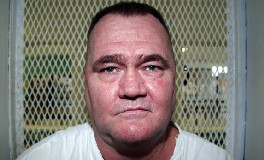
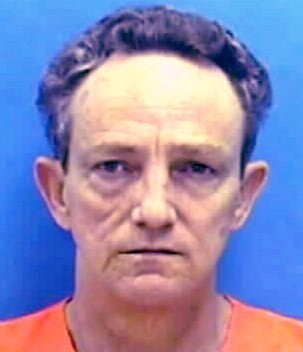
Cleve Foster
Murderer Russell Ellwood
Murderer · USA · 1991
Russell Ellwood was a former taxi driver. Authorities suspected him of killing…
20 victims
Russell Ellwood
Murderer · USA · 1991
Russell Ellwood was a former taxi driver. Authorities suspected him of killing…
20 victims
 Robert Martines Perez
Murderer · USA · 1994
Name: Robert Martines Perez · Other name used in proceedings: Robert Martinez P…
15 victims
Robert Martines Perez
Murderer · USA · 1994
Name: Robert Martines Perez · Other name used in proceedings: Robert Martinez P…
15 victims
 Billy Frank Vickers
Murderer · USA · 1993
Billy Frank Vickers Vickers was executed by lethal injection in Texas on Januar…
14 victims
Billy Frank Vickers
Murderer · USA · 1993
Billy Frank Vickers Vickers was executed by lethal injection in Texas on Januar…
14 victims
 Rex Allan Krebs
Murderer · USA · 1998
Rex Allan Krebs was a 33-year-old registered sex offender. He had served ten ye…
2 victims
Rex Allan Krebs
Murderer · USA · 1998
Rex Allan Krebs was a 33-year-old registered sex offender. He had served ten ye…
2 victims
 Donell Okeith Jackson
Murderer · USA · 1993
Donell Okeith Jackson was convicted of capital murder and was sentenced to deat…
1 victim
Donell Okeith Jackson
Murderer · USA · 1993
Donell Okeith Jackson was convicted of capital murder and was sentenced to deat…
1 victim
 Joe Hill
Murderer · USA · 1914
Joe Hill was a Swedish-American labor activist, songwriter, and member of the I…
2 victims
Joe Hill
Murderer · USA · 1914
Joe Hill was a Swedish-American labor activist, songwriter, and member of the I…
2 victims
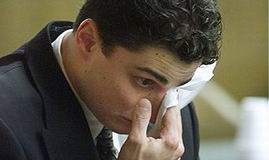 Raffi Kodikian
Murderer · USA · 1999
Raffi Kodikian Raffi Kodikian and David Coughlin were best friends since colleg…
1 victim
Raffi Kodikian
Murderer · USA · 1999
Raffi Kodikian Raffi Kodikian and David Coughlin were best friends since colleg…
1 victim
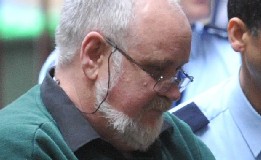 John Coombes
Serial killer · Australia · 1984
John Leslie Coombes was convicted of murdering and dismembering childcare worke…
3 victims
John Coombes
Serial killer · Australia · 1984
John Leslie Coombes was convicted of murdering and dismembering childcare worke…
3 victims
- Gender
- male
- Country
- USA
- Location
- Tarrant County, Texas, USA
- Date of birth
- October 24, 1963
- Age at first offence
- 38
- Characteristics
- rape, convicted rapist
- Victim profile
- Rachel Urnosky, 22 / Nyanuer “Mary” Pal, 28
- Method of murder
- Shooting
- Date(s) of murder
- December 18, 2001 / February 14, 2002
- Years active
- 2001–2002
- Date of arrest
- February 24, 2002
- Status
-
Executed
Sentenced to death on March 1, 2004; executed by lethal injection in Texas on September 25, 2012
Cleve Foster
Status
Cleve Foster was sentenced to death on March 1, 2004. He was executed by lethal injection in Texas on September 25, 2012.
Timeline
- February 13, 2002 — Cleve Foster and Sheldon Ward met Nyanuer “Mary” Pal at Fat Albert's, a Fort Worth bar where all three were regular customers.
- February 21, 2002 — Police searched the motel room shared by Foster and Ward; only Foster was present. Foster directed police to a dresser drawer containing a gun Ward had purchased from a pawn shop in August 2001. Foster voluntarily went to the police department to give a statement and to provide a DNA sample.
- February 22, 2002 (early morning hours) — Sheldon Ward called a friend to ask if he could stay with him, telling the friend that he killed someone.
- February 22, 2002 — Foster gave another written statement to police on March 22, 2002 (see below); on February 22 Ward’s audiotaped statement was given at 7:30 a.m. to Detective Cheryl Johnson.
- March 22, 2002 — Foster gave another written statement to police claiming a different account of events leading up to the killing.
- February 2004 — Foster was convicted of the rape and capital murder of Mary Pal.
- January 2004 — The record references that Foster received stays of execution from the U.S. Supreme Court in January and April 2011.
- April 12, 2006 — The Court of Criminal Appeals delivered an opinion in Foster’s direct appeal, affirming the conviction and sentence.
- March 21, 2007 — Ex parte Foster, No. WR-65799-01, 2007 WL 841611, denied Foster’s state habeas petition.
- Dec. 2, 2008 — The U.S. District Court for the Northern District of Texas denied Foster’s petition for a federal writ of habeas corpus in Foster v. Quarterman, No. 4:07-CV-210-Y, 2008 WL 5083078.
- January 21, 2009 — The district court denied Foster’s motion for a COA.
- September 25, 2012 — Foster was executed by lethal injection in Texas.
- 2010 — Sheldon Ward died of brain cancer while on death row.
Background
Cleve Foster was associated with the military and had an identified TDCJ number of 999470. His date of birth was 10/24/1963 and he was reported as 48 at the time of execution. Foster was described as a former Army recruiter who spent nearly two decades in the Army.
The record described court martial proceedings being started against a sergeant first class and denial of re-enlistment after allegations that he gave alcohol to underage students as a recruiter in Fort Worth and had sex with an underage potential recruit. Foster’s defense during mitigation argued that he had post-traumatic stress disorder from being in the Army and that he was abused by his alcoholic father.
Foster was convicted with an accomplice, Sheldon Ward. Ward died of brain cancer on death row in 2010.
The offence
Mary Pal (also referred to as Nyanuer “Mary” Pal or Mary Pal) was murdered after being shot in the head. Her naked body was discovered in a ditch in Tarrant County, far off a road, with a wadded-up piece of bloody duct tape next to her body.
Events leading to the offence (as described in trial evidence)
The evidence showed that Foster and Sheldon Ward were close friends and regulars at a bar named Fat Albert's located in Fort Worth. On the night of February 13, 2002, Mary Pal arrived at Fat Albert's at around 9:00 or 10:00 p.m. A bartender testified that the three socialized and that toward closing time Ward and Mary engaged in suggestive “dirty dancing.” The bartender testified that Ward had the most interaction with Mary during the evening and that at times he, but not Foster, behaved inappropriately toward her.
When the bar closed at 2:00 a.m., Foster, Ward and Mary walked out together. They talked in the parking lot for a few minutes. Mary left in her car followed closely by Foster and Ward driving in Foster’s truck. The bartender testified that Foster’s truck was right on Mary’s bumper, which the bartender thought was unusual, and that going across a road with an intersection and light, “you couldn’t have put anything between the two bumpers,” and it was “odd” for the cars to be together.
Approximately eight hours later, Mary’s nude body was discovered in a ditch “quite a ways off the road.” Mary had been shot in the head and there was a wadded up piece of bloody duct tape next to her body.
Mary’s unlocked car was later found in the parking lot of the apartment complex where she lived. A cell phone was described as sitting on the front seat of her vehicle.
Sexual assault and DNA evidence described at trial
DNA testing established that semen containing Foster’s DNA was found inside Mary’s vagina, and semen containing Ward’s DNA was found inside Mary’s anus. Ward could not be excluded as a minor contributor of semen found inside Mary’s vagina.
The trial record included the following DNA expert testimony (verbatim as quoted):
Q. [PROSECUTION]: Okay. In looking at the vaginal swab, I take it you did the same testing on that?
A. [DNA EXPERT]: I did.
Q. Can you tell the jury what the results were?
A. The profile obtained from the sperm fraction from the vaginal swab was a mixture of a major male contributor and at least one minor contributor. The major contributor, the profile was the same as [appellant]. And the minor contributor, I could not exclude [Ward].
Investigation
Police focused on Foster and Ward after learning they had been seen following Mary out of Fat Albert’s parking lot.
On the early morning of February 15th, Mary’s unlocked car, with her cell phone sitting on the front seat, was found in the parking lot of the apartment complex where she lived.
On February 21, 2002, police arrived at the motel where Foster and Ward shared a room (room 117). Ward was not there. Police found various items soaking in a cleaning fluid in a cooler in the back of Foster’s truck, including three pairs of shoes, bungee cords, black gloves, a bicycle pump, a hatchet, a sheathed knife, two slingshots, a trailer hitch, coat hangers, a brown strap, a bleach bottle, and a liquid detergent bottle. The DNA expert testified that items soaked in cleaning fluids containing bleach could make DNA recovery almost impossible.
DNA testing established that blood and tissue on the gun were Mary’s.
Police also found bloody clothes in Ward’s car, with the blood on the clothes being Mary’s.
A police detective and medical examiner testified that Mary was not shot where her body was found because there was no blood splatter around the area, and that it was possible only one person could have carried Mary’s body even though the detective was “very comfortable” with saying two people carried it to the location. McCaskill testified that based on the raised-arm position of Mary’s body, she may have been carried by her feet and hands.
The trial record also described the relative sizes of those involved: Mary was five-seven and 130 pounds; Ward was roughly five-six and 140 pounds; and Foster was six feet tall and approximately 225 pounds. McCaskill testified it was “very comfortable” with the view that two people carried Mary’s body.
A Whataburger cup in good condition was found no more than 30 to 40 yards from Mary’s body, and McCaskill testified it appeared not to have been out long.
Arrest and statements
Foster was arrested in March 2002 after DNA results came back.
During an interview on February 21, 2002, Foster spoke to Detective McCaskill. McCaskill testified that Foster made several inconsistent statements:
- Foster initially denied that Mary had been inside his truck.
- Foster later stated that she may have leaned inside his truck.
- Foster ultimately stated that “they” went cruising, but that “they” brought Mary back to her vehicle at Fat Albert’s.
McCaskill testified that he did not believe Foster’s latter statement about dropping Mary off at her vehicle at Fat Albert’s after “they” went cruising because Mary’s vehicle was found outside her apartment.
During four separate interviews, Foster never admitted to having vaginal sex with Mary.
Foster voluntarily went to the police department on February 21, 2002 to provide a DNA sample.
Co-defendant account
Ward called a friend in the early morning hours of February 22, 2002 and told the friend that he was in trouble because he killed someone. The friend arrived at the motel around 2:00 or 2:30 a.m. to pick Ward up.
While in the truck, Ward told his friend that he followed a girl home from a bar, forced her into a truck at gunpoint, took her out to the country, raped her, and shot her, and Ward did not mention Foster to his friend.
The friend stopped at a store and got the police to arrest Ward.
Ward then told police that he had been drinking heavily and using cocaine the night of the offense. Ward claimed that he and Mary arranged to meet after Fat Albert's closed. Ward told police that he drove alone to Mary’s apartment complex in Foster’s truck to pick up Mary, and that he and Mary had consensual vaginal and anal sex on the front seat of Foster’s truck before driving back to the motel room where Foster was “pretty much passed out” on the bed. Ward claimed that he and Mary had consensual vaginal sex again in the motel room before they left to drive around.
Ward recalled standing over Mary’s body lying on the ground with a gunshot wound to her head and a gun in his hand, and Ward claimed not to remember firing the gun.
Ward stated he stripped Mary’s body and dumped her clothes in a dumpster that he could not recall. Ward explained he left a note in the motel apologizing to Foster for involving him. Ward also stated that he told his friend that he had sex with a girl and killed her.
Detective Cheryl Johnson testified that Ward gave an audiotaped statement to police at 7:30 a.m. on February 22, 2002.
Foster’s March 22, 2002 written statement
On March 22, 2002, Foster gave another written statement to police in which he claimed:
- Foster and Ward followed Pal to her apartment after meeting her at Fat Albert’s.
- Pal voluntarily went with them to their motel room in Foster’s truck.
- After taking sleeping pills and drinking beer, Foster fell asleep watching television while Ward and Pal kissed.
- Foster awoke to Pal performing oral sex on him.
The written statement included the following quoted language (verbatim as provided):
I laid down and started watching T.V. [Ward] and [Mary] were over there kissing and making out on the bed. I wake up and I go to sleep. The next thing I remember that she is giving me a blow job. I'm doing everything I can to wake up. Because if I'm going to get FANKed I want to enjoy it. I'd fall asleep and I wake up the same shit. The next thing I remember him telling me that he was going to take her home.
This March 22, 2002 statement was admitted only during the punishment phase of trial.
Trial
Conviction and sentence
In February 2004, a jury convicted Foster of capital murder. The appellate decision described the governing statute as Texas Pen. Code § 19.03(a), and referenced Texas Pen. Code § 19.03(a)(2) in describing capital murder elements involving murder in the course of committing or attempting to commit kidnapping or aggravated sexual assault.
The appellate decision stated that, pursuant to the jury’s answers to special issues under Texas Code of Criminal Procedure Article 37.071, sections 2(b) and 2(e), the trial court sentenced Foster to death.
Evidence and sufficiency rulings on direct appeal
The Court of Criminal Appeals affirmed the conviction and sentence.
The court addressed legal and factual sufficiency, concluding that the evidence supported findings that during the eight hours from when Fat Albert’s closed and Mary’s body was discovered, Mary was abducted from her apartment complex, sexually assaulted, murdered, and her body was moved to the location where it was found.
The appellate court discussed:
- Foster’s DNA in Mary’s vagina.
- the unusual manner in which Foster followed Mary out of Fat Albert’s parking lot.
- Ward’s statement to Thomas that Mary was forced into Foster’s truck at gunpoint.
- evidence supporting involvement in the abducting, sexually assaulting, murdering, and disposing of Mary’s body.
- inconsistent statements made by Foster to police, particularly regarding cruising with Mary and Ward and earlier denials.
- items in Foster’s truck soaking in bleach that could make DNA recovery almost impossible.
- the inference from Foster’s failure to admit to having had vaginal sex with Mary in light of DNA evidence.
The court also addressed challenges to special issues on punishment phase findings, including future dangerousness and anti-parties.
Admission and suppression rulings on direct appeal
The Court of Criminal Appeals overruled Foster’s complaints about the trial court’s denial of:
- a motion to suppress evidence seized pursuant to search warrants (eleventh point of error),
- a motion to suppress Foster’s audio-taped statement (twelfth point of error),
- and other evidentiary and procedural claims described by points of error.
Jury argument issues (verbatim quoted portions)
The appellate opinion included quoted jury-argument excerpts and trial-court rulings on objections and instructions.
Prosecutor argument using the word “whore”
The record included the following challenged portion (verbatim):
[THE STATE]: And the solicitude - and John is a sincere guy and I think he meant it. The solicitude, though, that he showed for [Mary] really flies in the face of the defensive theory, which means she is nothing but a whore. [APPELLANT]: Objection, Your Honor. [TRIAL COURT]: Sustained. [APPELLANT]: I would ask for the jury to be given an instruction to disregard. [THE COURT]: The jury will disregard the last statement by counsel. And when you're instructed to disregard, it is as if it has not happened. That means you don't discuss it and you don't talk about it, and you don't use it in your deliberations. [APPELLANT]: We feel that an instruction is insufficient to cure the harm. We would ask for a mistrial at this time. [TRIAL COURT]: That's denied.
The appellate court held the instruction to disregard cured the harm and overruled the thirteenth point of error.
Prosecutor argument about “not enough” mitigation
The appellate opinion included the following contested argument (verbatim):
[THE STATE]: And I expect, when you look into your heart of hearts, you'll understand that while there may be some evidence that -- no one has tried to say that this person is utterly worthless, but you must remember the evidence of mitigation must be sufficient, must be enough. Enough. How is there ever enough? How is there ever enough? That's no more Christmas, empty seat at the birthday table.
After an objection and overruling, the State added:
[THE STATE]: In this case, under the evidence, there is not enough, I suggest to you.
The appellate court overruled the sixteenth point of error.
Correlated unrelated content excluded as artefact
The record contained an extended commentary section labeled as “Associated Content” that criticized counsel, evidence handling, and trial fairness, but it did not add a separate, distinct legal outcome beyond the appeals discussed above.
Sentencing
The trial court sentenced Foster to death based on jury findings during the punishment phase.
During the punishment phase, prosecutors linked Foster to:
- a 1984 robbery, and
- the killing of another woman (Rachel Urnosky).
In mitigation, the defense argued Foster suffered from post-traumatic stress disorder from being in the Army and was abused by his alcoholic father.
The appellate court referenced punishment-phase testimony from Foster’s ex-wife about alleged verbal and physical abuse and hitting her head against a wall, a shove attempt out of a car, and assault in front of their son.
The appellate court also discussed a doctor’s opinion that Foster had a high risk for future acts of violence, including that it would be especially true under a life sentence with no parole eligibility for forty years.
Appeals
Direct appeal
Foster’s direct appeal to the Texas Court of Criminal Appeals resulted in an affirmation of the conviction and sentence.
The appellate opinion was delivered April 12, 2006 and the court affirmed.
State habeas
Foster’s state habeas petition was denied by a summary order in Ex parte Foster, No. WR-65799-01, 2007 WL 841611 (Tex.Crim.App. Mar.21, 2007).
Federal habeas and certificate of appealability
A petition for a federal writ of habeas corpus was denied by the U.S. District Court for the Northern District of Texas in 2008 WL 5083078.
On January 21, 2009, the district court denied Foster’s motion for a COA.
Foster sought a COA from the U.S. Court of Appeals (5th Cir.), and the court denied a COA. The per curiam included that the court denied a COA and held that trial counsel did not provide ineffective assistance of counsel. The COA denial referenced Foster v. Thaler, 369 Fed.Appx. 598 (5th Cir. 2010).
The per curiam summarized that:
- Foster’s claims were largely procedurally defaulted,
- Foster did not make the threshold showing for the miscarriage of justice exception,
- and reasonable jurists would not find the district court’s assessment debatable or wrong.
Other details
Victim information and related linked murder
Rachel Urnosky was described in the record as:
- 22 years old,
- magna cum laude graduate from Texas Tech,
- an officer with the Baptist Student Mission,
- and having recently gotten engaged. Her father was Terry Urnosky and her mother and family traveled to Huntsville for execution events described in the material.
The appellate opinion discussed Foster’s involvement in evidence presented during punishment about Rachel Urnosky’s murder at the Canyons apartment complex in Fort Worth, and stated that police recovered a bullet from Urnosky’s pillow which came from the gun seized from Foster’s motel room.
The record also described Foster’s claim to police regarding the earlier murder: Foster admitted being in Urnosky’s apartment with Ward for a sexual tryst, but claimed they left when Urnosky asked them to leave. When she did not report for work at Buckle (a clothing store at a local shopping mall), her manager called police; the door was open and Rachel was found shot to death in her bed.
Final statement and final words (verbatim)
Foster’s final statement included the following veratim quotes:
“I love you all. I’m looking to leave this place on wings of a homesick angel. Ready to go home to meet my maker. What a friend we have in Jesus, oh my God I lay in awe cause I love you God.”
In addition, the record included the following quoted statements attributed to Foster during the execution period:
“When I close my eyes, I'll be with the father,” “God is everything. He's my life. Tonight I'll be with him.” “I don't know what you're going to be feeling tonight. I pray we'll all meet in heaven.”
Spotted an error, or have more information about this case?