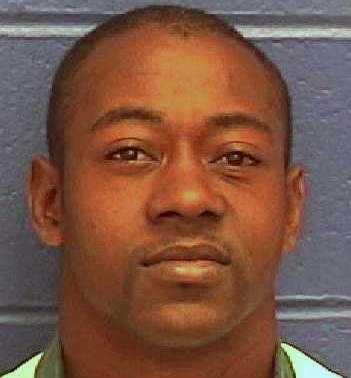
Timothy Tyrone Foster
Murderer Brian Kevin Rosenfeld
Murderer · USA · 1985
Brian Kevin Rosenfeld Brian Kevin Rosenfeld was sentenced to three concurrent l…
23 victims
Brian Kevin Rosenfeld
Murderer · USA · 1985
Brian Kevin Rosenfeld Brian Kevin Rosenfeld was sentenced to three concurrent l…
23 victims
 Yahweh ben Yahweh
Murderer · USA · 1980
Yahweh ben Yahweh was born and legally named Hulon Mitchell Jr. (October 27, 19…
23 victims
Yahweh ben Yahweh
Murderer · USA · 1980
Yahweh ben Yahweh was born and legally named Hulon Mitchell Jr. (October 27, 19…
23 victims
 Russell Ellwood
Murderer · USA · 1991
Russell Ellwood was a former taxi driver. Authorities suspected him of killing…
20 victims
Russell Ellwood
Murderer · USA · 1991
Russell Ellwood was a former taxi driver. Authorities suspected him of killing…
20 victims
 Veronica Cirella
Murderer · USA · 2011
Veronica Cirella was 31 and lived in Plainview, New York. She was the mother of…
1 victim
Veronica Cirella
Murderer · USA · 2011
Veronica Cirella was 31 and lived in Plainview, New York. She was the mother of…
1 victim
 Lindsay Beckett
Murderer · Australia · 1997
Lindsay Hoani Beckett (born 27 March 1974) was convicted of the murders of scho…
2 victims
Lindsay Beckett
Murderer · Australia · 1997
Lindsay Hoani Beckett (born 27 March 1974) was convicted of the murders of scho…
2 victims
 Richard Valenti
Murderer · USA · 1973
Richard Raymond Valenti was identified as a suspect from Navy photos. Investiga…
3 victims
Richard Valenti
Murderer · USA · 1973
Richard Raymond Valenti was identified as a suspect from Navy photos. Investiga…
3 victims
 John William Byrd
Murderer · USA · 1983
John William Byrd, Jr. was executed by lethal injection for the murder of conve…
1 victim
John William Byrd
Murderer · USA · 1983
John William Byrd, Jr. was executed by lethal injection for the murder of conve…
1 victim
 Raymond Rowsey
Murderer · USA · 1992
Name: Raymond Rowsey · Sex: Male · Race: White · Date of birth: 04/11/1971 · DO…
1 victim
Raymond Rowsey
Murderer · USA · 1992
Name: Raymond Rowsey · Sex: Male · Race: White · Date of birth: 04/11/1971 · DO…
1 victim
 Elizabeth Woolcock
Murderer · Australia · 1873
Elizabeth Woolcock — defendant; wife of Thomas Woolcock; later executed for his…
1 victim
Elizabeth Woolcock
Murderer · Australia · 1873
Elizabeth Woolcock — defendant; wife of Thomas Woolcock; later executed for his…
1 victim
- Gender
- male
- Country
- USA
- Location
- Floyd County, Georgia, USA
- Date of birth
- December 2, 1967
- Age at first offence
- 19
- Characteristics
- rape, robbery
- Victim profile
- Queen Madge White (female, 79)
- Method of murder
- Strangulation
- Date(s) of murder
- August 27, 1986
- Years active
- 1986
- Date of arrest
- September 26, 1986
- Status
-
Sentenced to death
Sentenced to death on May 6, 1987
Case record: Timothy Tyrone Foster
Background
Timothy Tyrone Foster was 29 when he was sentenced to death in Floyd County in May 1987.
Queen Madge White was 79 years old and lived by herself in Rome, Georgia, before her death.
Foster had a juvenile record including armed robbery.
In July 1991, Foster’s case was sent back to the trial court on the issue of mental retardation. A later proceeding on mental retardation ended with a jury determination that Foster was not mentally retarded.
The offence
Early in the evening of August 27, 1986, a friend took White to choir practice and brought her home at 8:30 p.m. White talked to her sister by telephone at 9:00 p.m., and everything was normal.
However, when the sister stopped by early the next morning, she discovered that White’s house had been broken into and ransacked.
White’s body was found by police lying on the floor in her bedroom covered to her chin by a blanket. Her face was coated with talcum powder. Her jaw was broken. She had a severe gash on the top of her head.
White had been sexually molested with a salad-dressing bottle and strangled to death.
A number of White’s possessions were missing from her home. Foster had confessed that on the night of Aug. 27, 1986, he broke into the home of Queen Madge White, 79. He confessed that her jaw was broken, she had gashes on the top of her head, and she had been sexually assaulted and strangled.
Investigation
On the day the crime was discovered, an investigator equipped with a video camera filmed the crime scene.
The videotape depicted:
- the exterior of the victim’s home, including the window through which the defendant entered;
- the path which he apparently took from the house, dropping things along the way and leaving footprints;
- the interior of the victim’s home and the extent to which it had been ransacked;
- and finally the victim’s body before and after the removal of the blanket covering her.
The trial court overruled Foster’s objection that the videotape was inflammatory and duplicative of still photographs introduced in evidence. The videotape was held to be relevant.
Foster was arrested a month after the murder when he threatened his live-in companion and she responded by turning him in.
The victim’s possessions were recovered from White’s home and from Foster’s two sisters.
Foster was interrogated and confessed.
Arrest
Foster was arrested about a month after White’s murder.
Confessions and interrogation
Foster was interrogated by police on the afternoon of the day he was arrested.
Mike Reynolds, the lead investigator, testified it was “the first time I had ever talked with [Foster] . . . [and] I really didn’t expect a confession, [so] I didn’t turn any of the video equipment on.”
After being advised of his rights, Foster confessed. Reynolds “didn't want to stop him . . . to go turn everything on,” so the first confession was not recorded.
After giving the above statement, Reynolds tried to persuade Foster to confess a second time with video recording equipment turned on. Reynolds testified Foster “was a little hesitant about confessing a second time.”
Foster and the officers discussed recording and repetition of the confession, including the following verbatim exchange fragments:
Craft: Just tell us again on tape one more time. It ain't going to hurt nothing.
Foster: Why can't we just leave it at that?
Reynolds: If. . . you want to leave it at this and not put it on tape, that is fine with me. . . . Let's just leave it.
Craft: Yeah. But if we put it on tape can't nobody change what the tape says, you know. Okay? This is -- this is as much for your benefit as it is ours . .so let's just go through it right quick one more time and get it over with . . . Okay?
Reynolds: Tim, I haven't lied to you through the whole night, and I haven't tried to trick you through the whole night, and I am not trying now. . . . [Y]ou [sat] in here and told two police officers everything about it. . . . I am not trying to push you or bluff you or anything. It will just make it a lot easier on all of us. . . .
Craft: Tim, let's go ahead and get this thing over with tonight. You told us about it already one time. Okay? Hey, let's run back through it right quick and get it over with and be done with it. Okay? . . . Do you want to do that? It ain't going to hurt, not a thing. . . .
Craft: [Y]ou told us about it one time already. It ain't going to hurt, you know. I mean I think you will agree that it ain't going to hurt, you know, for us to run back through it again right quick. . . .
Foster was interviewed a second time on videotape. His second confession was identical in all material respects with the first.
Trial
Charges and verdicts
A jury convicted Foster of malice murder and burglary and sentenced him to death.
The appeal described the case as a death-penalty case in Floyd Superior Court.
Jury selection issues
Foster first contended the trial court erred by excusing one prospective juror and by failing to excuse eight prospective jurors.
Prospective juror Black was excused because of her views against capital punishment. The test for excusal was described as “whether the juror's views [on capital punishment] would 'prevent or substantially impair the performance of his duties as a juror in accordance with his instructions and his oath.'”
The trial court’s finding that Black was disqualified was held not clearly erroneous.
Foster also contended prospective juror Tate should have been excused. The court held Tate was confused at first and that further questioning showed no disqualification. The previously-formed opinion as to guilt was held not so fixed and definite as to necessitate excusal for cause.
Foster complained about the refusal to excuse additional prospective jurors on grounds of bias, including jurors who knew the victim. The court held the trial court did not err by overruling Foster’s challenges for favor.
Batson issue in jury selection
The voir dire examination concluded on a Friday afternoon and the jury was selected Monday morning.
The qualified panel from which the jury was selected included four blacks. The district attorney exercised peremptory challenges against each of the four black jurors. Foster timely raised an issue of racial discrimination in the prosecution’s exercise of peremptory challenges under Batson v. Kentucky.
The trial court ruled that a prima facie case had been established and required the prosecutor to explain his exercise of peremptory challenges.
The decision described the prosecutor’s explanations for the four black prospective jurors in order as follows:
- The first juror had a son the same age as the defendant convicted of a misdemeanor theft offense, the juror’s wife worked at the Northwest Georgia Regional Hospital, and the juror’s brother was once a drug consultant; during Witherspoon questioning the juror appeared reluctant to impose a death sentence and was a member of a church whose members, in the experience of the prosecutor, tended to be very reluctant to impose the death penalty.
- The third juror claimed to be the half-sister of the district attorney’s chief investigator (who is black), but the investigator denied being related; the juror denied having a friend or relative accused or convicted of a crime of violence and denied knowing anyone with a drug or alcohol problem notwithstanding her brother was a repeat offender whose crimes involved theft by taking, burglary and drugs, and her husband had been convicted for carrying a concealed weapon.
- The fourth juror was a social worker involved with low-income, underprivileged children; her first cousin was arrested by the Metro Drug Task force on serious drug charges and the cousin lost her job as a consequence. The prosecutor did not want social workers on the jury in a death penalty case and preferred not to allow anyone closely related to someone with a drug or alcohol problem because Foster planned to blame the crime on his own drug and alcohol problem. The prosecutor also stated he could not trust someone who gave materially untruthful answers on voir dire as did the third juror. The prosecutor further stated he would be prepared to challenge peremptorily any juror reluctant to impose the death penalty as a matter of conscience where the juror’s opposition did not rise to the level justifying disqualification for cause.
The trial court ruled that the state successfully rebutted the prima facie case. The reviewing court found no reversible error in that ruling.
Week-long voir dire
The court found no abuse of discretion in the court’s conduct of the week-long voir dire examination of prospective jurors.
Change of venue
The court addressed Foster’s motion for change of venue and found that the evidence in support of the motion did not show such an inundation of pretrial publicity as would give rise to a presumption of prejudice. The voir dire and qualification of prospective jurors supported the determination that a change of venue was unnecessary.
Evidence: videotape and photographs
The trial court overruled Foster’s objection to the admission of the videotape as inflammatory and duplicative of still photographs. The videotape was found to be relevant.
Sentencing
The case was a death-penalty case.
A type-written verdict form was submitted to the jury.
The verdict form included these aggravated circumstances as to Murder to be proved beyond a reasonable doubt before a verdict recommending the death penalty was authorized:
- “The offense of murder was committed while the offender was engaged in the commission of Burglary.”
- “The offense of murder was outrageously or wantonly vile, horrible, or inhuman in that it involved torture, depravity of mind or an aggravated battery to the victim.”
The jury filled in the verdict form by writing “yes” after the first question. For the second question, the jury wrote:
- “Torture -- powdered body, eyes & nose, salad bottle in vagina, strangulation”
- “Depravity of mind -- powdered body, salad bottle in vagina, strangulation”
- “Aggravated battery -- hit with stick (log) disfigured face, strangulation”
The jury checked “yes” to 3 (A) and drew a line through 3 (B).
The jury convicted Foster of burglary and answered “yes” to the question whether it had found beyond a reasonable doubt the proffered “aggravated circumstances” (plural), one of which was burglary. However, the jury failed to list burglary in the space provided under the second question.
The reviewing court held it could not be sure the jury intended to treat burglary as a statutory aggravating circumstance supporting the death sentence and did not consider burglary as a statutory circumstance supporting imposition of a death sentence under OCGA 17-10-30 (c).
The decision then addressed the b (7) circumstance and found the jury intended to find the b (7) circumstance in its entirety and to follow the trial court’s instructions by specifying that it found each of the three principal elements of b (7). The court found the evidence supported the jury’s b (7) finding.
The death sentence was found not imposed under the influence of passion, prejudice or other arbitrary factor, and it was not excessive or disproportionate considering the crime and the defendant, under OCGA 17-10-35 (c) (1) and (c) (3). The decision referred to similar cases listed in an Appendix supporting the imposition of a death sentence.
Appeals
Direct appeal
In the direct appeal proceedings, Foster asserted multiple grounds including jury selection errors, Batson errors, voir dire conduct, denial of in camera review of jury-selection notes, change of venue, admission of videotape, and issues relating to confessions and intoxication instructions.
The reviewing court discussed the following:
- Confessions: Foster argued his confessions were induced by a hope of benefit because he was informed he would not be charged with rape. The court found no merit, stating he was told no rape would be charged based on his statement that no rape occurred.
- Confessions: Foster contended it was error to admit the second statement because he was told repeatedly it was not going to hurt “a thing,” and that it would be “as much for your benefit as ours.” The court agreed this was not consistent with Miranda’s warnings but found no reversible error, holding the videotaped confession was cumulative to the first confession and the remaining evidence overwhelmingly established guilt; any error was held harmless beyond a reasonable doubt.
- Psychiatric testimony and the denial of a mistrial: Foster’s defense psychiatrist testified about intoxication and anti-social personality disorder. The court addressed a question about whether prison populations would be entitled to walk out as found acquitted on the basis of insanity. The trial court denied a mistrial, sustained the objection, and instructed the jury to disregard the question. The reviewing court found no error.
- Intoxication instructions: the court charged voluntary and involuntary intoxication principles as set out, and refused an additional requested charge about incapacity to form intent. The reviewing court found refusal proper because the requested charge was misleading and implied intoxication defense involved lack of intent, while intent was treated separately; it held the trial court did not err by refusing the additional instruction.
- Verdict form: the court addressed the jury’s aggravated circumstances findings and concluded it could review the jury’s intent sufficiently for the b (7) circumstance, while not considering burglary as the statutory aggravating circumstance supporting the death sentence.
The decision was “Decided November 22, 1988” and “Reconsideration denied December 14, 1988.”
Habeas corpus and mental retardation proceeding
The court later addressed Foster’s claim seeking a writ of habeas corpus based on mental retardation, referencing Zant v. Foster.
Pursuant to remand, the trial court conducted a trial on the mental retardation issue. A jury determined that Foster was not mentally retarded.
Foster appealed from that determination.
In that appeal, the reviewing court held:
- Foster had the burden to prove mental retardation by a preponderance of the evidence.
- Evidence showed IQ tests administered to Foster when he was ten and nearly seventeen years old showed he was not mentally retarded; subsequently lower IQ scores resulted from depression or malingering; school grades and class assignments did not reflect signs of mental retardation; and Foster’s interaction with others, letter writing, newspaper reading, and sports activities indicated he did not meet the statutory definition of mental retardation.
- The trial court did not err in denying a motion for new trial on the ground that the verdict was contrary to the evidence.
- The trial court did not err by denying Foster’s motion for change of venue in the mental retardation trial.
- The trial court did not err by introducing into the proceeding the fact that a crime had been committed when it instructed the jury, because challenged instructions did not impede the jury from focusing strictly on Foster’s mental condition.
- The record did not show abuse of discretion regarding the amount of time counsel was provided to review completed juror questionnaires prior to voir dire.
- The trial court overruled Foster’s Batson objection after concluding the state set forth racially neutral reasons for striking three prospective African-American jurors.
The reviewing court addressed the strike of prospective juror Shropshire and stated Foster failed to carry his burden by showing pretext, noting the prosecutor’s reasons included Shropshire’s extensive medical knowledge, Shropshire’s wife being a psychologist who worked in the field of mental retardation, Shropshire having worked with her in the past regarding her patients, and Shropshire having a relative who was mentally retarded.
Witness testimony in mental retardation trial
The reviewing court addressed expert and witness testimony:
- Dr. Anthony Stringer testified about diagnosis of Foster’s father as mentally retarded and studies indicating likelihood in offspring. On cross-examination, the prosecutor questioned Dr. Stringer about anti-social personality disorder. The court held the discussion was cumulative of relevant testimony and any error was harmless.
- Dr. Robert Shaffer was called regarding results of intelligence testing. The court found no abuse of discretion in the allowance of questioning on depression and the diagnosis of anti-social personality disorder to obtain Dr. Shaffer’s analysis of impact on IQ test results.
- The transcript did not support Foster’s claim the trial court improperly restricted a witness or expressed an opinion in violation of OCGA 9-10-7.
- The court held no error in admission of testimony by State’s witness Dr. Perri that Foster’s depression during admission of an IQ test may have stemmed in part from incarceration; it also held no error resulted because correctional officers wearing uniforms indicated incarceration.
The appeal decision was “Decided January 18, 2000” and “Reconsideration denied February 11, 2000.”
Other details
The decision provided procedural notes about the original case:
- The crime occurred August 27, 1986.
- Foster was arrested September 26.
- Foster was indicted on October 17, 1986.
- The case was tried April 20 through May 1, 1987.
- A motion for new trial was filed May 28, 1987 and heard November 24, 1987.
- The trial court denied the motion on February 3, 1988.
- A notice of appeal was filed March 3, 1988, and the case was docketed in this court on March 21, 1988.
- Oral arguments were heard June 6, 1988.
Regarding the death-qualification voir dire issues:
- Black gave inconsistent answers to several attempts to ask questions in the exact language of the Witt test; the court noted that the Witt standard is the test for excusal but the voir dire questions need not be framed exclusively in the language of Witt.
- Tate “was not alone”; many prospective jurors initially stated they would vote automatically for both a death sentence and a life sentence.
Regarding Foster’s own psychiatrist testimony:
- Foster’s own psychiatrist testified that although Foster was incapable of distinguishing between right and wrong at the time of the crime, he was capable of forming the intent to do the acts he committed.
Regarding jury strikes in the mental retardation trial:
- Foster did not challenge striking prospective jurors Crowder and Ragland, and the reviewing court agreed with the trial court that the prosecutor presented racially neutral reasons for those strikes: Crowder claimed she would have a heart attack if forced to serve; Ragland slept through voir dire and had a grandson charged in a drug case.
Timeline
- August 27, 1986 — White talked to her sister by telephone at 9:00 p.m.; Foster later confessed that on the night of Aug. 27, 1986, he broke into her home.
- September 26 — Foster was arrested.
- October 17, 1986 — Foster was indicted.
- April 20 through May 1, 1987 — The case was tried.
- May 6, 1987 — Foster was sentenced to death.
- May 28, 1987 — A motion for new trial was filed.
- November 24, 1987 — The motion for new trial was heard.
- February 3, 1988 — The trial court denied the motion for new trial.
- March 3, 1988 — A notice of appeal was filed.
- March 21, 1988 — The case was docketed in this court.
- June 6, 1988 — Oral arguments were heard.
- November 22, 1988 — The direct appeal decision was decided.
- December 14, 1988 — Reconsideration was denied.
- July 1991 — Foster’s case was sent back to the trial court on the issue of mental retardation.
- January 18, 2000 — The mental retardation appeal decision was decided.
- February 11, 2000 — Reconsideration was denied.

Spotted an error, or have more information about this case?