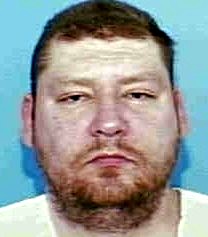
John William Byrd
Murderer Brian Kevin Rosenfeld
Murderer · USA · 1985
Brian Kevin Rosenfeld Brian Kevin Rosenfeld was sentenced to three concurrent l…
23 victims
Brian Kevin Rosenfeld
Murderer · USA · 1985
Brian Kevin Rosenfeld Brian Kevin Rosenfeld was sentenced to three concurrent l…
23 victims
 Marvin Gray
Murderer · USA · 1975
Marvin Gray was convicted killer who claimed responsibility for 23 slayings and…
23 victims
Marvin Gray
Murderer · USA · 1975
Marvin Gray was convicted killer who claimed responsibility for 23 slayings and…
23 victims
 Yahweh ben Yahweh
Murderer · USA · 1980
Yahweh ben Yahweh was born and legally named Hulon Mitchell Jr. (October 27, 19…
23 victims
Yahweh ben Yahweh
Murderer · USA · 1980
Yahweh ben Yahweh was born and legally named Hulon Mitchell Jr. (October 27, 19…
23 victims
 Russell Ellwood
Murderer · USA · 1991
Russell Ellwood was a former taxi driver. Authorities suspected him of killing…
20 victims
Russell Ellwood
Murderer · USA · 1991
Russell Ellwood was a former taxi driver. Authorities suspected him of killing…
20 victims
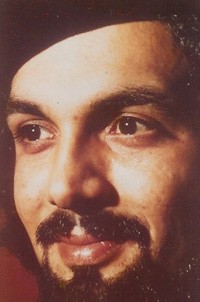 George del Vecchio
Homicide - Murderer · USA · 1965
Name: George del Vecchio · Current status: Executed by lethal injection in Illi…
2 victims
George del Vecchio
Homicide - Murderer · USA · 1965
Name: George del Vecchio · Current status: Executed by lethal injection in Illi…
2 victims
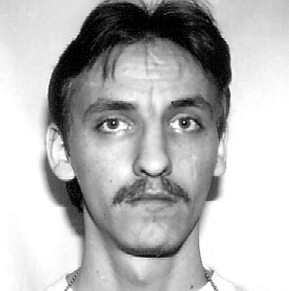 Richard Dillon
Murderer · USA · 1981
Richard Dillon · March 8, 1981 — Richard Dillon and another person committed a…
2 victims
Richard Dillon
Murderer · USA · 1981
Richard Dillon · March 8, 1981 — Richard Dillon and another person committed a…
2 victims
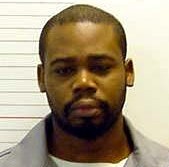 Terrance Anderson
Murderer · USA · 1997
Terrance Anderson Terrance Anderson was sentenced to death May 16, 2001. In Feb…
2 victims
Terrance Anderson
Murderer · USA · 1997
Terrance Anderson Terrance Anderson was sentenced to death May 16, 2001. In Feb…
2 victims
 John Parish
Mass murderer · USA · 1982
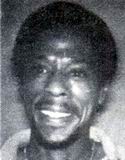
John Parish (July 4, 1933 – August 9, 1982) was an American mass murderer. He s…
6 victims
John Parish
Mass murderer · USA · 1982
John Parish (July 4, 1933 – August 9, 1982) was an American mass murderer. He s…
6 victims
 Claude Eric Maturana
Murderer · USA · 1990
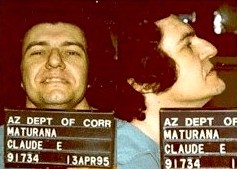
Claude Eric Maturana was a French national in Arizona. He was held as an inmate…
1 victim
Claude Eric Maturana
Murderer · USA · 1990
Claude Eric Maturana was a French national in Arizona. He was held as an inmate…
1 victim
 Hiroshi Maue
Serial killer · Japan · 2005
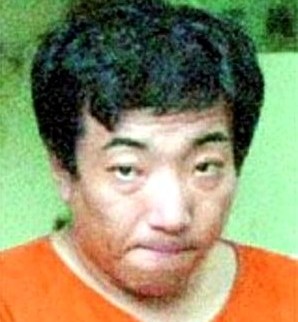
Hiroshi Maeue ( 前上 博 , Maeue Hiroshi ) was born August 8, 1968. He was a Japane…
3 victims
Hiroshi Maue
Serial killer · Japan · 2005
Hiroshi Maeue ( 前上 博 , Maeue Hiroshi ) was born August 8, 1968. He was a Japane…
3 victims
- Gender
- male
- Country
- USA
- Location
- Hamilton County, Ohio, USA
- Date of birth
- December 18, 1963
- Age at first offence
- 20
- Characteristics
- robbery
- Victim profile
- Monte Tewskbury, 40 (convenience store clerk)
- Method of murder
- St abbing with knife
- Date(s) of murder
- April 17, 1983
- Years active
- 1983
- Date of arrest
- Same day
- Status
-
Executed
Executed by lethal injection in Ohio on February 19, 2002
Case record: John William Byrd
Other details
John William Byrd, Jr. was executed by lethal injection for the murder of convenience store clerk Monte Tewksbury.
Byrd protested his innocence up until his execution and had spent 18 years and 6 months on Ohio’s death row. His case was described as the third execution since Ohio reintroduced the death penalty in 1981 and as one of the most contentious capital cases of the first three executions.
Byrd’s final meal was steak plus A1 sauce, chef salad with bleu cheese dressing, and all the grape soda he wanted. If he ordered breakfast, he would receive pancakes and grits.
Before execution, Byrd told his family he loved them and that they should keep fighting the death penalty. He said: “The corruption of the state shall fall. Governor Taft, you will not be re-elected. The rest of you, you know where you can go.” Byrd was also described as saying: “You should keep fighting the death penalty,” and “The corruption of the state will fall.” After the injection process began, Byrd was described as dead.
Byrd’s execution time was described as 10:09 a.m.
Background
Monte B. Tewksbury worked full-time at Procter & Gamble and moonlighted at a convenience store as a second job.
On the evening of April 17, 1983, Tewksbury was working alone as the night clerk at a convenience store in Hamilton County, Ohio.
Tewksbury was married and was the father of three children.
The offence
At approximately 11:00 p.m., two robbers entered the store in masks. One robber carried a bowie knife with a five-inch blade.
The robbers removed all of $133.97 from the cash register. They took Tewksbury’s Pulsar watch, wedding ring, and his wallet containing cash, credit cards, and an automobile registration slip.
After Tewksbury stood with his hands raised and his back to the robbers, Byrd plunged the bowie knife to the hilt in Tewksbury’s side. The wound resulted in a puncture wound to the liver that caused massive internal bleeding.
The two robbers ripped the inside telephone out of the wall and fled.
At approximately 11:10 p.m., a witness driving by the store observed two men run from it and enter a large red van parked nearby, and the van then drove off.
A short time after the assault and robbery at Tewksbury’s store, a clerk at a nearby convenience store was behind his cash register while a customer played a video game near the front door. Two robbers entered that store wearing masks. The clerk realized what was happening and fled to a room in the rear of the store. One of the robbers chased after him with a knife and tried unsuccessfully to force open the door. The other robber pushed the video-gaming customer back when he attempted to leave, but the customer was able to dodge and get out. The robbers were unable to open the cash register, so they took it with them.
A resident of an apartment located near the store was disturbed by noise from a loud muffler. The resident looked outside and saw two people getting into a large red van parked in the lot. The van had a defective tail light.
Although severely injured, Tewksbury managed to exit the store and get to the outside telephone. He called his wife, Sharon, told her he had been robbed and hurt, and that she should call the police and an ambulance. A customer arrived at the store and found Tewksbury standing outside the building and leaning against the wall next to the telephone, bleeding from his side. The customer helped Tewksbury back into the store, went back to the telephone which was still off the hook, and spoke briefly to Sharon.
Tewksbury told the customer: “I’m going to die”, and that he had been robbed and cut with a knife. He described his assailants as two white men wearing stocking masks.
Sharon arrived and held her dying husband in her arms as he repeated his statements.
Tewksbury was transported to a hospital. During transportation, he made statements that he did not understand why he had been stabbed because he had been cooperative and had given the robbers everything they requested. He also made a statement: “Thank God I didn’t see it coming”, supporting a conclusion that his back was to his assailants when he was stabbed.
Almost immediately after he was taken to the emergency room, Tewksbury’s heart stopped and he was pronounced dead at 1:15 a.m., April 18, 1983.
Investigation and arrests
As doctors were working to save Tewksbury’s life at the hospital, two police officers from Forest Park in Hamilton County were seated in a marked police cruiser in a K-Mart parking lot eating their lunch. They had been advised approximately forty-five minutes earlier by their supervisor about the incident at Tewksbury’s store.
The officers watched a red cargo van drive by at a slow rate of speed. The van pulled into the K-Mart lot and its headlights were turned off. After the van left the lot and returned within five minutes, the officers became suspicious and followed the van into a parking lot near another convenience store.
The officers pulled behind the van after summoning back-up assistance. One of the passengers, John Eastle Brewer, exited the van and approached the police car. Brewer identified himself as “David Urey” and told the police he had no identification. Brewer provided inconsistent stories about why he was in the area.
An officer asked Brewer to remain in the cruiser while the officer approached the van. The van’s driver, William Danny Woodall, and Byrd provided the officer with identification, which was called in to the dispatcher. Although there were no current warrants for either man, the dispatcher reported that both had prior felony convictions.
The officer shined a flashlight inside the van and saw coins on the floor. There were stocking masks and a knife located in a tray on the dashboard. A credit card in Sharon Tewksbury’s name was lying on the floor under the passenger seat. Fresh blood was found on the interior side of the driver’s seat. A drawer from a cash register was in the back of the van.
On the basis of this evidence, Byrd, Brewer, and Woodall were arrested.
Trial
Charges and co-defendants
In an indictment returned on May 26, 1983, Byrd, Brewer, and Woodall were charged with aggravated murder and three counts of aggravated robbery.
Byrd also was charged with two death penalty specifications:
- That Byrd was the “principal offender” who committed the aggravated murder of Monte Tewksbury while committing or attempting to commit the aggravated robbery of the convenience store.
- That Byrd was also the principal offender who committed the aggravated robbery of Monte Tewksbury himself.
Separate trials of co-defendants
Brewer and Woodall were separately tried and convicted of aggravated murder and three counts of aggravated robbery. They were both sentenced to life terms.
Woodall died of cancer in prison on April 8, 2001.
Brewer was tried in August 1983 and testified in his own defense.
Byrd’s trial posture and witnesses described
Byrd was tried as the principal offender, which under Ohio law meant “the actual killer”.
A chief witness against Byrd was Ronald Armstead, who claimed that Byrd had confessed to him.
Byrd denied having anything to do with either the robbery or Tewksbury’s death. He claimed he was passed out in the van from a day-long drinking binge.
Substantial circumstantial evidence described in the record pointed toward Byrd’s guilt, including blood on Byrd’s pants; blood on the right side of the back of the driver’s seat where Byrd was crouching when police pulled the van over; an absence of blood on Brewer’s clothes; Byrd’s possession of Tewksbury’s watch; and Byrd’s behavior at the second robbery where, armed with a knife, he attacked a door behind which the clerk had taken refuge. The prosecution also argued that Brewer’s shoe print on the counter showed Brewer retrieved the money while Byrd went after Tewksbury.
Byrd was found guilty of aggravated murder with death penalty specifications.
The jury recommended capital punishment and Byrd was sentenced to death on August 19, 1983.
Appeals
Byrd’s direct appeal claimed that he was “actually innocent” of the murder of Monte Tewksbury. He argued that he was not the principal offender in Tewksbury’s murder and that Brewer was the one who stabbed Tewksbury.
Byrd supported his claim with two affidavits executed by Brewer on May 16, 1989, and January 24, 2001.
The record described disputes around affidavits executed by Brewer, including a federal evidentiary hearing and subsequent appellate proceedings.
Subsequent appeals to state and federal appellate courts and review by the United States Supreme Court were ultimately unsuccessful, with the process described as having postponed the execution.
The record stated that on March 15, 1995, Byrd came within 45 minutes of execution before the Sixth Circuit Court of Appeals overruled Ohio Supreme Court’s decision to allow the state to carry out the sentence.
It was stated that Byrd’s case was reviewed on appeal more than 10 times at the state level and a dozen times in federal courts, and that during his 18 years of appeals, his case was examined by more than 70 judges and Supreme Court justices.
Sentencing and clemency
On August 23, 2001, the Ohio Parole Board voted 10-1 to reject Byrd’s request for a positive clemency recommendation and urged Governor Bob Taft not to grant executive clemency.
The board rejected Byrd’s innocence claim, finding that Brewer’s post-trial confession that he, and not Byrd, was Tewksbury’s killer “lacks any credibility whatsoever”.
Governor Taft denied clemency on February 16, 2002 after accepting the board’s recommendation.
The record also described opposition to the execution by Arthur M. Schlesinger Jr., who wrote: “a friend half a century ago of (U.S.) Sen. Robert A. Taft,” and wrote that capital punishment “should be reserved for cases where there is absolutely no shred or tremor of doubt . . . The case of John Byrd is, to say the least, shrouded in doubt.”
Outcome
John William Byrd, Jr. was executed by lethal injection on February 19, 2002 in Ohio for the murder of convenience store clerk Monte Tewksbury.
Spotted an error, or have more information about this case?