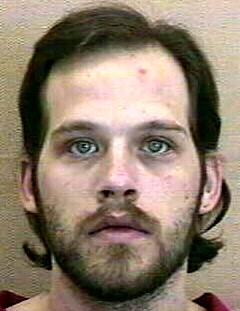
Raymond Rowsey
Murderer Brian Kevin Rosenfeld
Murderer · USA · 1985
Brian Kevin Rosenfeld Brian Kevin Rosenfeld was sentenced to three concurrent l…
23 victims
Brian Kevin Rosenfeld
Murderer · USA · 1985
Brian Kevin Rosenfeld Brian Kevin Rosenfeld was sentenced to three concurrent l…
23 victims
 Russell Ellwood
Murderer · USA · 1991
Russell Ellwood was a former taxi driver. Authorities suspected him of killing…
20 victims
Russell Ellwood
Murderer · USA · 1991
Russell Ellwood was a former taxi driver. Authorities suspected him of killing…
20 victims
 Robert Martines Perez
Murderer · USA · 1994
Name: Robert Martines Perez · Other name used in proceedings: Robert Martinez P…
15 victims
Robert Martines Perez
Murderer · USA · 1994
Name: Robert Martines Perez · Other name used in proceedings: Robert Martinez P…
15 victims
 Billy Frank Vickers
Murderer · USA · 1993
Billy Frank Vickers Vickers was executed by lethal injection in Texas on Januar…
14 victims
Billy Frank Vickers
Murderer · USA · 1993
Billy Frank Vickers Vickers was executed by lethal injection in Texas on Januar…
14 victims
 Zhang Yongming
Serial killer · China · 1979
Zhang Yongming (1956 – January 10, 2013) was a Chinese serial killer. Little wa…
12 victims
Zhang Yongming
Serial killer · China · 1979
Zhang Yongming (1956 – January 10, 2013) was a Chinese serial killer. Little wa…
12 victims
 Denard Manns
Murderer · USA · 1998
1998-11-18 — Denard Manns entered the home of Michelle Robson in Killeen and se…
1 victim
Denard Manns
Murderer · USA · 1998
1998-11-18 — Denard Manns entered the home of Michelle Robson in Killeen and se…
1 victim
 Martha Place
Murderer · USA · 1899
Martha Place was born in New Jersey. Her brother said she was struck in the hea…
1 victim
Martha Place
Murderer · USA · 1899
Martha Place was born in New Jersey. Her brother said she was struck in the hea…
1 victim
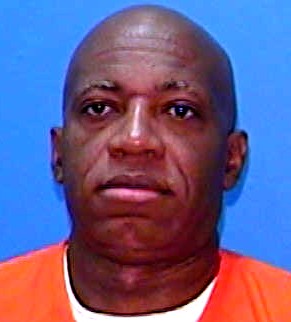 Meryl Stanley McDonald
Murderer · USA · 1994
Meryl Stanley McDonald was convicted in a Florida case involving a murder-for-h…
1 victim
Meryl Stanley McDonald
Murderer · USA · 1994
Meryl Stanley McDonald was convicted in a Florida case involving a murder-for-h…
1 victim
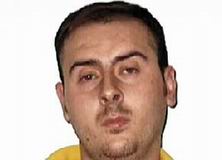 Alfredo Galán
Serial killer · Spain · 2003
Alfredo Galán Sotillo (born April 5, 1978) was a Spanish serial killer. · Janua…
6 victims
Alfredo Galán
Serial killer · Spain · 2003
Alfredo Galán Sotillo (born April 5, 1978) was a Spanish serial killer. · Janua…
6 victims
- Gender
- male
- Country
- USA
- Location
- Alamance County, North Carolina, USA
- Date of birth
- April 11, 1971
- Age at first offence
- 21
- Characteristics
- robbery
- Victim profile
- Howard Rue Sikorski, 20 (convenience store clerk)
- Method of murder
- Shooting (handgun)
- Date(s) of murder
- March 24, 1992
- Years active
- 1992
- Date of arrest
- April 1992
- Status
-
Executed
Executed by lethal injection in North carolina on January 9, 2004
Case information
- Name: Raymond Rowsey
- Sex: Male
- Race: White
- Date of birth: 04/11/1971
- DOC Number: 0353653
- Final meal: Pizza, chicken wings, two packages of peanut M&M candy and a Pepsi
- Final words: None
Timeline
- 1990 — Rowsey was convicted of fifteen counts of injury to personal property.
- 1990 — Rowsey was convicted of one count of possession of a malt beverage by a minor.
- 1991 — Rowsey was convicted of two counts of misdemeanor larceny.
- 10/01/1993 — Rowsey was sentenced to death in Alamance County Superior Court; the sentencing judgment followed a capital trial for the murder of Howard Rue Sikorski.
- 7/31/1996 — The NC Supreme Court affirmed Rowsey’s conviction and sentence of death.
- 11/3/2003 — The U.S. Supreme Court denied Rowsey’s petition for a writ of certiorari.
- 12/1/2003 — Correction Secretary Theodis Beck set the execution date for Jan. 9, 2004.
- 1/7/2004 — U.S. District Court judge Terrence Boyle stayed Rowsey’s execution.
- 1/7/2004 — Witnesses were named for Rowsey’s execution.
- 1/8/2003 — Governor Mike Easley denied clemency.
- 1/8/2003 — U.S. Supreme Court voted 5-4 to lift stay, allowing execution to proceed.
- 1/8/2003 — U.S. Fourth Circuit Court of Appeals panel splits 2-1, upholding Judge Boyle’s stay.
- 1/9/2003 — Raymond Dayle Rowsey executed at 2:00 a.m.
Background
Raymond Dayle Rowsey was scheduled for execution by lethal injection. He was on death row for the March 24, 1992, shooting death of 20-year-old Howard Rue Sikorski in Alamance County. Rowsey was also convicted of Robbery with a dangerous weapon and sentenced to 40 years in prison.
Rowsey was convicted in the Superior Court, Alamance County, Brannon, J., of first-degree murder and sentenced to death. The trial court entered judgment sentencing him to death for the murder and imposed a consecutive term of forty years in prison for robbery with a dangerous weapon.
At sentencing, Rowsey introduced evidence indicating that he had come from a broken home and suffered a difficult childhood. The State introduced evidence that Rowsey had broken into a church and stolen $900 worth of items only weeks before the murder.
The offence
Victim
- Victim: Howard Rue Sikorski
Location and circumstances
Raymond Rowsey and his half brother, Raymond Lee Steele, wrestled, played cards, and listened to the radio at Steele’s house. Shortly after midnight, the two men decided to walk to a local Circle K convenience store. They arrived at the store around 1:00 a.m. and obtained some change from the store clerk, Howard Rue Sikorski, and played several dollars worth of video games.
They went to the back of the store to look at the movie display. Rowsey decided he wanted to buy a snack. Steele gave Rowsey two dollars; Rowsey picked up two bags of M&M’s and paid for them at the counter. Rowsey then pulled a gun out of his coat, pointed it at Sikorski, and clicked the gun without firing it. He turned and smiled at Steele, telling Steele that he had scared the store clerk with a water gun. The gun was not a water gun.
Rowsey turned back towards the victim and shot him in the face. After the victim fell to the floor and turned his back, Rowsey leaned over the counter and shot him again. Rowsey then ran around the counter, fired at least two more shots, and kicked the victim three or four times in the back of the head. Steele ran out of the store and Rowsey ran out after him, still carrying the gun in one hand and something else underneath his arm.
Statements after the shooting
During the walk home, Steele asked Rowsey why he shot the victim. Rowsey said he was initially just playing, but he thought he saw the victim reaching underneath the counter for a gun. Rowsey later told Steele that he kicked the victim to ensure that the victim died. Rowsey told Steele, however, that the victim was still alive and gasping for air when Rowsey ran out of the store.
Back at Steele’s house, Rowsey counted the cash taken from the Circle K cash register. He told Steele that he had grabbed the money to make the shooting look like a robbery and to make the shooting worthwhile. In total, Rowsey took $54.00 in cash and several adult magazines from the store.
Steele declined half the money, but did accept a two-dollar bill that had been taken from the register. Steele also saw adult entertainment magazines, including Penthouse, Playboy, and Oui, in defendant’s possession.
Steele cleaned the murder weapon for Rowsey and provided Rowsey with .25-caliber bullets so that Rowsey could return the gun loaded. Rowsey examined the murder weapon, a .25-caliber automatic handgun, and indicated that it was dirty. The handgun had been taken from a locked trunk in the home of his girlfriend’s mother.
Robbery evidence and missing items
Store managers determined that $57.54 in cash and several adult entertainment magazines were missing from the store. Among the missing cash was a two-dollar bill. The store kept a two-dollar bill in the cash register and a record of the bill’s serial number; the store had a record of the serial number of that bill, which allowed police to track it.
The victim’s body was discovered at approximately 2:00 a.m. on 24 March. There was a large quantity of blood on the floor running from the victim’s head to his right foot.
Investigation
An autopsy of the victim’s body revealed six gunshot wounds: one to the face, one to the back of the neck, one to the right side of the head, and three to the back. The autopsy also revealed several blunt-force injuries to the victim’s head and neck area. One of the gunshot wounds pierced the victim’s left lung and resulted in massive bleeding; this wound alone would have caused the victim’s death.
Mildred Holder, who helped manage the Chapel Hill Road and Mebane Street Circle K, arrived at the store early that morning and identified the victim’s body. Mildred Holder closed out the cash register and determined that $57.54 was missing.
At approximately 2:30 p.m. on 24 March, Steele and his girlfriend made a purchase at a Burlington store with the missing two-dollar bill. Steele was arrested shortly thereafter. Steele initially made several false statements denying any involvement, but he subsequently admitted he was present during the murder.
Rowsey was arrested later that evening and subsequently charged with first-degree murder and armed robbery.
A letter from Steele to Rowsey concluded with the phrase, "even though you didn't do it." Steele admitted writing the letter but denied writing "even though you didn't do it."
A shoeprint found near the victim’s head was matched to Mr. Rowsey.
Arrest and charges
Steele was permitted to plead guilty to second-degree murder and robbery with a dangerous weapon in exchange for his truthful testimony at trial.
Rowsey was subsequently charged with first-degree murder and armed robbery.
Trial
Charges and verdict
Raysey was tried capitally on an indictment charging him with the first-degree murder of Howard Rue Sikorski (“victim”). The jury returned a verdict finding defendant guilty as charged on the bases of both premeditation and deliberation and felony murder. The jury also found defendant guilty of robbery with a firearm. Following a capital sentencing proceeding, the jury recommended that defendant be sentenced to death for the murder; the trial court entered judgment accordingly.
The trial court sentenced defendant to a consecutive term of forty years in prison for robbery with a dangerous weapon.
Evidence at trial
During the trial, Rowsey tried to finger Steele as the shooter. He questioned Steele regarding the letter that Steele wrote to Rowsey, which concluded with the phrase "even though you didn't do it." Steele acknowledged writing the letter but denied writing the concluding line.
Two inmates testified for Rowsey that they overheard conversations between Rowsey and Steele during which Steele acknowledged that he, not Rowsey, had killed the victim. The State countered this testimony with substantial evidence indicating that Rowsey was the shooter.
The State introduced evidence including Rowsey’s shoe prints in the blood around the victim’s head and evidence that Rowsey possessed the murder weapon both before and after the murder. Steele also provided extensive testimony recounting the events of the murder and bolstering the State’s claim that Rowsey was the shooter.
Sentencing
At sentencing, Rowsey introduced evidence regarding his broken home and difficult childhood. The State presented rebuttal evidence that Rowsey broke into a church and stole items valued at approximately $900.0 just weeks prior to the Circle K murder. The State also introduced evidence of Rowsey’s prior criminal record: fifteen counts of injury to personal property in 1990, one count of possession of a malt beverage by a minor in 1990, and two counts of misdemeanor larceny in 1991.
The jury returned a recommendation of death. On October 1, 1993, the trial judge entered judgment and sentenced Rowsey to death.
Appeals
State appeal (Direct Appeal)
State v. Rowsey, 472 S.E.2d 903 (N.C. 1996) (Direct Appeal)
Raymond Dayle Rowsey was convicted in Superior Court, Alamance County, Brannon, J., of first-degree murder and was sentenced to death. Defendant appealed as of right. The Supreme Court, Parker, J., held that:
- prospective juror was properly excused for cause;
- codefendant's testimony was not inconsistent with his guilty plea to second-degree murder and did not amount to perjured testimony;
- trial court did not err during sentencing proceeding by submitting, over defendant's objection, statutory mitigating circumstance that defendant had no significant history of prior criminal activity;
- jury was required to unanimously answer either "yes" or "no" to issue asking whether jury unanimously found that aggravating circumstances were sufficiently substantial to call for death penalty;
- juror's response during jury poll as to whether she assented to death verdict was not ambiguous;
- even assuming that instructing jury that evidence was "what came forth from that witness stand" precluded jury from considering defendant's demeanor in courtroom, instruction was not plain error; and
- death penalty was not disproportionate.
Result: No error. Frye, J., filed opinion concurring in part and dissenting in part.
The United States Supreme Court denied certiorari, Rowsey v. North Carolina, 519 U.S. 1151, 117 S.Ct. 1087, 137 L.Ed.2d 221 (1997).
Federal habeas
Rowsey v. Lee, 327 F.3d 335 (4th Cir. 2003) (Habeas)
After exhausting state remedies, Rowsey petitioned for a writ of habeas corpus under 28 U.S.C. § 2254. The district court denied the petition, and the case was appealed. The Court of Appeals, Wilkinson, Chief Judge, held that:
- certificate of appealability (COA) would be granted on issue whether trial judge's alleged bias denied petitioner a fair trial;
- trial judge's alleged bias did not deny petitioner a fair trial; and
- COA was not warranted on issues whether prosecutor used unarticulated criteria to seek the death penalty in violation of petitioner's equal protection rights, whether trial counsel was ineffective for failing to object to the poll of juror who did not initially answer trial court's question whether death sentence was her verdict and who became emotional before answering "yes," and whether jury did not return a unanimous death verdict, as required under state law, because the one juror did not intend to assent to such a verdict.
Result: Affirmed in part and dismissed in part.
Certiorari denials
Rowsey v. Lee, 124 S.Ct. 484 (2003) (Cert. Denied). Rowsey v. Lee, 123 S.Ct. 276 (2002) (Cert. Denied). Rowsey v. Lee, 117 S.Ct. 1087 (1997) (Cert. Denied).
Sentencing
On October 1, 1993, the trial judge sentenced Rowsey to death.
At sentencing, the trial court also imposed a consecutive term of forty years in prison for robbery with a dangerous weapon.
Execution and aftermath
Gov. Mike Easley denied clemency.
U.S. Supreme Court order in pending case 03A576: Beck, Sec., NC DOC, ET AL. V. Rowsey, Raymond D., ET AL. The application to vacate the stay of execution of sentence of death entered by the United States District Court for the Eastern District of North Carolina on January 7, 2004, presented to the Chief Justice and by him referred to the Court, is granted. Justice Stevens, Justice Souter, Justice Ginsburg, and Justice Breyer would deny the application to vacate the stay of execution.
Witnesses named for the execution of Raymond Dayle Rowsey included:
- Official Witnesses: Robert F. Johnson – District Attorney, Alamance County; Chief Michael Gauldin – Burlington Police Department; Kevin Crowder – deputy chief, Burlington Police Department; Capt. David Hedgecock – Alamance County Sheriff’s Department (former SBI agent); Jerry Webster – State Bureau of Investigation (Retired).
- Note: Family members of murder victim Howard Rue Sikorski indicated they do not wish to witness the execution.
- Media Witnesses: John Harbin – The Alamance News; Graham Sharon Hodge – The Times-News; Burlington; Debra Morgan – WRAL-TV; Estes Thompson – Associated Press.
On January 9, 2004, Raymond Rowsey was executed by lethal injection. He was pronounced dead at 2:23 a.m. following the lethal injection at Central Prison in Raleigh, according to Department of Correction spokeswoman Pam Walker.
Other details
Prison and family visitation
During the day Thursday, Rowsey visited with his lawyers and relatives. During the visitation, Rowsey was able to hold his 11-year-old daughter for the first time since he entered prison. Rowsey’s mother, Barbara Thompson, said the family had been hopeful that courts would spare her 32-year-old son’s life. Thompson said: "He has never touched her," and "This is a major event. He lit up like a Christmas tree."
Rowsey’s last meal was pizza, chicken wings, two packages of peanut M&M candy and a Pepsi.
Statement attributed to Governor Mike Easley
"Given the facts and circumstances of this case, I find no compelling reason to invalidate the sentence recommended by the jury and affirmed by the courts," said Easley.
Defense and district attorney characterizations
Defense lawyers asked Easley to block Rowsey’s execution by using clemency power to change the death sentence to life in prison without parole, contending one juror did not intend to vote for the death sentence and that Rowsey didn’t get state help he needed to compensate for a childhood centered around alcohol and drugs.
Alamance County District Attorney Rob Johnson urged Easley to let Rowsey’s execution go forward. Johnson said: "I don't think that we ought to forget about the victim."
Jewelry store/other categories
No additional offenses beyond the murder of Howard Rue Sikorski and robbery with a dangerous weapon were stated in the case narrative provided.
Spotted an error, or have more information about this case?