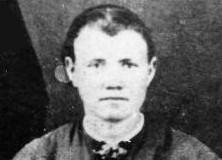
Elizabeth Woolcock
Murderer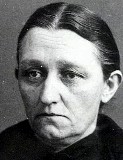 Sarah Makin
Murderer · Australia · 1892
Sarah Makin was also known as Sarah Jane Makin. John Makin (14 February 1845 –…
12 victims
Sarah Makin
Murderer · Australia · 1892
Sarah Makin was also known as Sarah Jane Makin. John Makin (14 February 1845 –…
12 victims
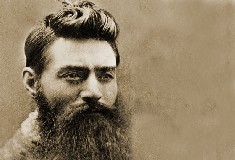 Ned Kelly
Murderer · Australia · 1878
Edward “Ned” Kelly (June 1854 or 1855 – 11 November 1880) was an Irish Australi…
6 victims
Ned Kelly
Murderer · Australia · 1878
Edward “Ned” Kelly (June 1854 or 1855 – 11 November 1880) was an Irish Australi…
6 victims
 Kathleen Folbigg
Murderer · Australia · 1989
Kathleen Megan Folbigg (née Donovan) was an Australian child killer. She was co…
4 victims
Kathleen Folbigg
Murderer · Australia · 1989
Kathleen Megan Folbigg (née Donovan) was an Australian child killer. She was co…
4 victims
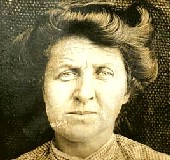 Martha Rendell
Murderer · Australia · 1907
Martha Rendell was executed by hanging at Fremantle Prison on October 6, 1909.…
3 victims
Martha Rendell
Murderer · Australia · 1907
Martha Rendell was executed by hanging at Fremantle Prison on October 6, 1909.…
3 victims
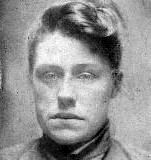 Frances Knorr
Murderer · Australia · 1891
Frances Lydia Alice Knorr (also known as Minnie Thwaites) was born in 1868 in L…
2 victims
Frances Knorr
Murderer · Australia · 1891
Frances Lydia Alice Knorr (also known as Minnie Thwaites) was born in 1868 in L…
2 victims
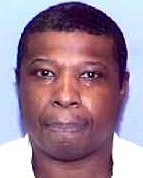 Denard Manns
Murderer · USA · 1998
1998-11-18 — Denard Manns entered the home of Michelle Robson in Killeen and se…
1 victim
Denard Manns
Murderer · USA · 1998
1998-11-18 — Denard Manns entered the home of Michelle Robson in Killeen and se…
1 victim
 Lillie Stanton
Murderer · USA · 2012
Lillie Stanton was 49 and lived at a house on Vaught Road in Winchester, where…
2 victims
Lillie Stanton
Murderer · USA · 2012
Lillie Stanton was 49 and lived at a house on Vaught Road in Winchester, where…
2 victims
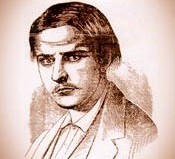 Vincenzo Verzeni
Murderer · Italy · 1869
Vincenzo Verzeni was born in Bettanuco, in the Bergamasco region, in 1849. He m…
12 victims
Vincenzo Verzeni
Murderer · Italy · 1869
Vincenzo Verzeni was born in Bettanuco, in the Bergamasco region, in 1849. He m…
12 victims
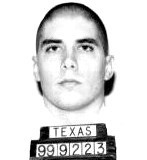 Daniel Reneau
Murderer · USA · 1996
Daniel Earl Reneau was convicted of capital murder in connection with a robbery…
1 victim
Daniel Reneau
Murderer · USA · 1996
Daniel Earl Reneau was convicted of capital murder in connection with a robbery…
1 victim
 John Ausonius
Murderer · Sweden · 1991
John Ausonius (born Wolfgang Alexander Zaugg on July 12, 1953), also known in t…
1 victim
John Ausonius
Murderer · Sweden · 1991
John Ausonius (born Wolfgang Alexander Zaugg on July 12, 1953), also known in t…
1 victim
- Gender
- female
- Country
- Australia
- Location
- Moonta-Moontera, South Australia, Australia
- Date of birth
- April 20, 1848
- Age at first offence
- 25
- Characteristics
- parricide, domestic violence
- Victim profile
- Her husband Thomas Woolcock
- Method of murder
- Poisoning (mercury)
- Date(s) of murder
- September 4, 1873
- Years active
- 1873
- Date of arrest
- Next day
- Status
-
Executed
Executed by hanging in Adelaide Gaol on December 30, 1873
Case record: Elizabeth Woolcock
People
- Elizabeth Woolcock — defendant; wife of Thomas Woolcock; later executed for his murder.
- Thomas Woolcock — victim; husband of Elizabeth Woolcock.
- Elizabeth Snell — Thomas Woolcock’s cousin; suggested to Dr Dickie that Thomas may have been poisoned with “Morphia”.
- Hannah Blight — Elizabeth’s friend; wrote a journal describing Elizabeth supplying Opium to prostitutes.
- Henry Powell — Elizabeth’s father’s friend; was killed by police after the Eureka Stockade rebellion; Elizabeth witnessed his death.
- Dr Bull — one of the doctors who treated Thomas Woolcock; prescribed syrup and pills laced with a third of a grain of Mercury each.
- Dr Dickie — one of the doctors who treated Thomas Woolcock; initially diagnosed “pure exhaustion from excessive and prolonged vomiting and purging”; later inquest and trial figure.
- Dr Herbert — one of the doctors who treated Thomas Woolcock; treated him for a sore throat with excessive salivation.
- Mr Opie — chemist; testified regarding Elizabeth’s attempts to get Morphine; gave evidence at the inquest.
- Reverend James Bickford — Methodist minister; received a letter from Elizabeth on the day of her execution to be opened after her death.
- Allan Peters — police historian; applied for a posthumous pardon; commented on aspects of the case.
- Michael Atkinson — State Attorney general; was considering Peters’s posthumous pardon application.
- Samuel Way — later Chief Justice of South Australia; wrote letters to relatives in England commenting on a lost report into the hanging; quotation included.
- Dr Edward Way — Samuel Way’s brother; concurred with the analytical chemist that evidence on administration of poison was “unreliable” and medical evidence mistaken.
- Katarina Urban — author of an article included in the material.
- Leeza — Peters’s artist daughter; inspired to write a play based on Elizabeth’s saga.
- Pauline — Peters’s wife; quoted regarding Elizabeth being “part of our family after all these years”.
- Elizabeth Crane — identified in the included material as living in the Moonta cottage named Serenity.
Timeline
- January 1852 — A flash flood washed away Elizabeth and her family’s Kooringa creek dugouts home.
- October (year not stated) — Elizabeth’s family, along with their babysitter, moved to the Victorian goldfields and took residence in a tent on the goldfields.
- 1854 — Following the Eureka Stockade rebellion, Elizabeth witnessed the death of her father’s friend Henry Powell at the hands of police.
- 1855 — Seven-year-old Elizabeth was raped and left for dead by an itinerant Indian.
- 2 February 1857 — Elizabeth’s father died of consumption.
- 1865 — Elizabeth travelled to Moonta-Moontera in South Australia to live with her mother and stepfather; Thomas Woolcock’s family situation is described as beginning in 1865.
- 1866 — Elizabeth was put into service with the family of a pharmacist in Melbourne (described as giving her easy access to Opium); later the household relative took over her job leading to dismissal; Elizabeth applied for a housekeeper job in Moonta described as occurring when Thomas Woolcock advertised and Elizabeth applied.
- 3 am on 4 September 1873 — Thomas Woolcock died.
- 30 December 1873 — Elizabeth gave a letter to Reverend James Bickford and walked to the gallows; executed by hanging in Adelaide Gaol.
- 3 January 1874 — The letter and confession were published with attribution “—Adelaide Observer, 3 January 1874”.
- August 2004 — An article described debate and included a “Fast-forward 131 years to May 22, 2004” mock trial and a verdict of not guilty in the re-enacted trial setting.
- May 22, 2004 — A mock trial was arranged; after deliberation the verdict was “found not guilty”.
- January 2009 — Allan Peters applied for a posthumous pardon.
- 2010 — Peters distributed petitions for a posthumous pardon; Moonta and District Progress Association urged people to sign.
- February 13, 2009 — A further article was included that discussed uncovered evidence and a ghost story around the cottage.
Background
Elizabeth Woolcock was born Elizabeth Lillian Oliver on 20 April 1848 in Burra Burra. Her family lived in the Kooringa creek dugouts until a flash flood washed their home away in January 1852. With no home and having lost all possessions, her father joined the Victorian gold rush and moved to Ballarat; the rest of her family, along with their babysitter, joined him in October and took residence in a tent on the goldfields.
Elizabeth’s mother disliked Ballarat and described it as " this horrid, sin stained colony of scoundrels and villains ". Following the death from dysentery of Elizabeth’s younger sister not long after their arrival, her mother moved to Adelaide with another man, leaving Elizabeth raised by her father with help from neighbours.
After the Eureka Stockade rebellion in 1854, Elizabeth was traumatised after witnessing the death of her father’s friend Henry Powell at the hands of police. Henry Powell was slashed across the head with a sabre by a policeman, then shot by several more policemen, and the body was trampled for some time with horses.
In the following year, seven-year-old Elizabeth was raped and left for dead by an itinerant Indian in an attack that left her “both psychologically disturbed and unable to have children due to gynaecological damage.” Her doctors gave her Opium for pain, and she subsequently became addicted.
On 2 February 1857, Elizabeth’s father died of consumption. She was put into service with the family of a pharmacist in Melbourne, which gave her easy access to the Opium needed to feed her drug habit. At age 15, she left that household and moved into Ballarat township, where she obtained work in a guest-house, with a large quantity of Opium accumulated. According to a journal written by her friend Hannah Blight, during this time Elizabeth supplied Opium to prostitutes for use as revenge on abusive clients in order to punish and rob them.
In 1865, Elizabeth travelled to Moonta-Moontera (described as “Aboriginal for dense scrub”) in South Australia, moved in with her mother and stepfather, and worked as a housekeeper. On weekends she taught Sunday school. There was evidence she had even managed to kick her addiction because opiates required a prescription in South Australia, unlike the eastern states where they were freely available.
In 1866, a relative of the family she worked for arrived from England, took over her job, and led to Elizabeth’s dismissal.
Other details from background
Elizabeth’s confession and letter described details of her upbringing and family names and movements. It stated that she was born in the Burra mine in Provence of South Australia in the year 1847, that her parents were John and Elisabeth Oliver, and that they were Cornish; it further described coming to “this Couleney in 1842” and going to Victoria in 1851. The letter claimed she was left without the care of a mother at four and never saw her again until 18, and it claimed her father died at nine.
It also stated that she gave up her situation and came to Adelaide, and that her mother and stepfather received her kindly and she had “a good home for 2 years”. It further described her mother and stepfather as members of the Wesleyan Church and that she became a Teacher in Sunday school for 2 years.
The offence
Domestic relationship and abuse context
The included material described Elizabeth as living with Thomas Woolcock, her husband. It characterised Thomas Woolcock as “a heavy drinker, a bully and a wife-beater.” Elizabeth attempted to leave him several times but failed. She attempted suicide by hanging herself in the stable, and the rafter broke sparing her life. She became addicted again, this time to Morphine.
The material described a boarder being taken in, which lessened the abuse suffered, but disputes between the men arose and the boarder left. Not long after, the family dog died after being poisoned, and the boarder was suspected. Around that time Elizabeth ran out of Morphine, suffered severe withdrawal symptoms, and the chemist refused to prescribe any more. The material described Elizabeth’s desperation to acquire drugs becoming common knowledge in the community; it described her sending her stepson to pharmacies with notes and claiming she needed it to “get ink stains out”.
Mercury poisoning and death
The material stated that Thomas Woolcock became ill with stomach pains and nausea, and Elizabeth called in three doctors over the following weeks who each diagnosed different illnesses and prescribed different medications.
- Dr Bull prescribed syrup and pills laced with “a third of a grain of Mercury each (21 mg)” for a sore throat, and Thomas Woolcock became “considerably worse.”
- Elizabeth then called Dr Dickie, who diagnosed a gastric disorder and prescribed rhubarb tablets and cream of tartar, which had no effect.
- Finally, Dr Herbert treated him for a sore throat with excessive salivation. The material stated that Dr Herbert’s treatment worked and Thomas Woolcock was improving.
- Two weeks later, it stated that Thomas Woolcock decided Herbert’s treatment was too expensive and returned to Dr Dickie, who resumed treatment for a gastric problem.
The material included a quoted exchange attributed to Thomas Woolcock when neighbours and friends testified later:
- " I certainly don't want Dr Bull again, as it was his medicine that made me bad in the first place "
At 3 am on 4 September 1873, Thomas Woolcock died. Dr Dickie initially stated his patient had died from " pure exhaustion from excessive and prolonged vomiting and purging " .
The material described rumours of foul play beginning, including a suggestion made by Thomas Woolcock’s cousin Elizabeth Snell to the doctor that as everyone knew Elizabeth Woolcock had been getting “Morphia”, she could have poisoned him with it. Dr Dickie ordered an inquest largely to quash rumours.
Investigation
Inquest proceedings
The inquest was opened in the front parlour of Woolcock’s cottage with 14 jurors. Dr Dickie testified on the drugs taken by the deceased. The chemist Mr Opie testified regarding Elizabeth’s attempts to get Morphine. Elizabeth also testified.
An autopsy was ordered and performed in the cottage that night while Elizabeth waited outside. The next day the inquest resumed at the Moonta courthouse. Dr Dickie described the state of the body and suggested that Mercury poisoning was a strong probability, and Dr Herbert concurred.
Dr Bull admitted prescribing pills with Mercury but insisted Woolcock only took one. Police told the inquest they had found a Mercury-rich powder used to treat the Woolcock’s dogs Ringworm.
The jury decided Woolcock was poisoned by his wife, and Elizabeth was arrested.
Arrest
After the inquest jury decided Woolcock was poisoned by his wife, Elizabeth was arrested.
Trial
Court proceedings and publicity
Elizabeth pled not guilty. The trial in Adelaide was described as a sensation, with crowds filling Gouger Street outside the Supreme Court.
The material stated that at this time defendants were barred from testifying on their own behalf, so Elizabeth was unable to answer accusations.
Crown Solicitor allegations
The Crown Solicitor argued that Elizabeth had poisoned the dog as an experiment, that the ringworm powder was the means, and that motive was an affair with the boarder.
Verdict and recommendation
Following a three-day trial, the jury, after deliberating for 20 minutes, found Elizabeth guilty, with a recommendation for mercy. She was sentenced to death.
Sentencing
Elizabeth was sentenced to death.
Execution and confession
On 30 December 1873, dressed in a white frock and carrying a posie of fresh flowers, Elizabeth gave a letter to be opened after her death to her minister, the Reverend James Bickford, and then walked calmly to the gallows.
Letter and confession (verbatim)
The material included the full text of the letter as “The last Statement and confession of Elizabeth Woolcock to Mr. Bickford.” The letter included the following verbatim text:
The last Statement and confession of Elizabeth Woolcock to Mr. Bickford. Sir i was Born in the Burra mine in Provence of South Australia in the year 1847 my parents names were John and Elisabeth Oliver they were Cornish they came to this Couleney in 1842 but they went to Victoria in 1851. I was left without the care of a Mother at the age of 4 years and i never saw her again until i was 18 my father died when i was 9 years old and i had to get my living until i was 18 and then i heard that my Mother was alive and Residing at moonta mine she wrote me a letter asking me to come to her as she had been very unhappy about me and she was very sorry for what she had done i thought i should like to see my Mother and have a home like other young girls so i gave up my Situation and came to Adelaide my mother and my stepfather received me very kindly and i had a good home for 2 years my Mother and Stepfather were members of the Wesleyan Church and i became a Teacher in the Sunday school for 2 years at the End of that time I first saw my late husband Thomas Woolcock i believe my stepfather was a good man but he was very passionate and determined my late husband was a widower with two Children his Wife had been dead about 8 months when i went to keep house for him against stepfathers wishes I kept house for him for 6 Weeks when some one told my stepfather that i was keeping Company with Thomas Woolcock he asked me if it was true and i told him it was not but he would not believe me but called me a liar and told me he would Cripple me if i went with him any had not been with the man but i would go with him now if he asked me if the Divel said i should not this took place on the Thursday morning I saw my husband in the evening and he asked me what was the matter and i told him what had taken place the following Sunday he asked me to go with him for a walk instead of going to Chapel i went and my stepfather missed me from the Chapel and came to look for me and found us both to gether so i was afraid to go home for has he had said he would break both of my legs i was afraid he would keep his word as i never knew him to tell a willful lie so i went to a cousins of my husbands and stopped and my husband asked me if i would marry him and for my words sake i did we were marride the next Sunday morning by lience after the acquantance of 7 weeks i was not married long before i fownd out what sort of a man i had got and that my poor stepfather had advised me for my good but was to late then so i had to make the best of it i tried to do my duty to him and the children, but the more i tried the worse he was he was fond of drink but he did not like to part with his money for any thing else and god onley knows how he illtreated me i put up with it for 3 years during that time my parents went to melbourn and then he was worse than ever i thought i would rather die than live so i tried to put an end to my self in severl different ways but thank the Lord i did not succied in doing so as he did not treat me any better and I could not live like that I thought I would leave him and get my own liven so I left him but he would not leave me alone he came and fetched me home and then I stopped with him twelve months and I left him again with the intention of going to my Mother I only took 6 pounds with me i came doun to Adelaide and I stopped with my sister i was hear in Adelaide 6 weeks when he came an fetched me back again but he did not behave no better to me i tried my best to please him but i could not there is no foundation at all for the story about the young man called Pascoe he was nothing to me nor i did not give the poor dog any poison for i knew what power the poison had as i took it my self for some months and i was so illtreated that i was quite out of my minde and in a eviel hour i yealded to the temptation he was taken ill at the mine and came home and quarreled with me and satan tempted me and i gave any poison for i more and i being very self willed i told him that i knew what power the poison had as i took it my self for some months and i was so illtreated that i was quite out of my minde and in a eviel hour i yealded to the temptation he was taken ill at the mine and came home and quarreled with me and satan tempted me and i gave him what i ought not but thought at the time that if i gave him time to preapre to meet his god i should not do any great crime to send him out of the World but i see my mistake now i thank god he had time to make his peace with his maker and i hope I shall meet him in heaven for i feel that god has pardoned all my sins he has forgiven me and washed me white in the precious blood of Jesus i feel this evening that i can rejoice in a loven Saviour i feel his presence hear to night he sustains me and gives me comfort under this heavy trial sutch as the world can never give. Dear friend if i may call you so i am mutch obliged to you for your kindness to a poor guilty sinner but great will be your reward in heaven i hope i shall meet you their and i hope that god will keep me faithfull to the End o may be abl to say that live is Christ but to Die will be gain Bless the Lord he will not turn away any that come unto him for he says come unto me all ye that labour and are heavy laden and I will give you rest I feel i have that rest i hope to die singing Victory through the Blood of the lamb I remain sir Yours truly a sinner saved by grace Elizabeth Woolcock. —Adelaide Observer, 3 January 1874
Appeals
No formal appeals were described. A posthumous pardon application was later described as being considered.
Outcome
Elizabeth Woolcock was executed by hanging in Adelaide Gaol on 30 December 1873.
Aftermath
The material stated that since her execution, flowers had been placed by her grave regularly, a tradition continued despite closure of the Gaol, and that she was buried between the outer and inner prison walls. It also stated she remained the only woman ever executed in South Australia.
Evidence and innocence arguments in the included material
The included material included multiple claims contesting the conviction and describing alternative explanations:
- It stated that experts agreed her “confession” was religiously inspired and prompted by a desire for salvation, with an exaggeration of her sins.
- It included a claim by Allan Peters that she was “ more interested in impressing the Reverend than setting the record straight ”.
- It described it as unlikely she was having an affair and that she had nothing to gain from Woolcock’s death.
- It described evidence of care via the lack of bed sores and witnesses testified she showed no ill will.
- It stated that the dog was treated for Ringworm with Mercury-laced powder and could have died from Mercury poisoning after licking the powder on its body.
- It stated that Woolcock’s symptoms were consistent with Tuberculosis and Dysentery, both found at autopsy, and also mentioned Typhoid though it was not found.
- It stated that Woolcock’s organs removed at autopsy had been left unattended and exposed to the air for 24 hours, potentially compromising the diagnosis.
- It stated it was never proven at trial that Woolcock had died of Mercury poisoning or that Elizabeth had administered it.
- It stated Dr Bull prescribed Mercury-laced syrup and tablets, and that he would have killed Woolcock only if he had taken more than Bull testified to.
- It stated Dr Bull had been a drug addict for 30 years, consuming Atropine, Sulphuric Ether, Chloroform and Opium, and was reportedly in a “drug be-fuddled state” when treating Woolcock, with witnesses stating Thomas told them it was Bull’s medicine that made him sick.
- It stated Dr Bull was committed to a psychiatric hospital after the trial and committed suicide several months later.
- It stated that two letters sent by Samuel Way to relatives in England shortly before he was appointed Chief Justice were commentary on the now lost report into the hanging commissioned by the government of the day and headed by his brother Dr Edward Way.
- It stated that Dr Edward Way wrote that the evidence on administration of the poison was “unreliable” and that “the medical evidence mistaken”.
Posthumous pardon application
The material stated that Police historian Allan Peters, in January 2009, applied for a Posthumous Pardon, and that it was being considered by the State Attorney general Michael Atkinson. It further stated that in 2010 Peters distributed petitions throughout the Copper Coast requesting a posthumous pardon, with the Moonta and District Progress Association urging people to sign.
Mock trial described in the included material
The material also described a mock trial and result from May 22, 2004. It stated that witnesses including Drs Bull and Dickie took the stand and that they were possibly misdiagnosed the late Thomas Woolcock’s condition. It stated Elizabeth was not permitted to testify. It further stated that after the re-enacted trial a jury was dismissed and 12 new members were picked out from the audience, and that jurors found Elizabeth Woolcock not guilty for the “wilful and premeditated murder of Thomas Woolcock” in the mock trial setting.
Spotted an error, or have more information about this case?