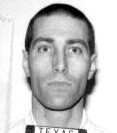
Robert Alan Fratta
Murderer Brian Kevin Rosenfeld
Murderer · USA · 1985
Brian Kevin Rosenfeld Brian Kevin Rosenfeld was sentenced to three concurrent l…
23 victims
Brian Kevin Rosenfeld
Murderer · USA · 1985
Brian Kevin Rosenfeld Brian Kevin Rosenfeld was sentenced to three concurrent l…
23 victims
 Russell Ellwood
Murderer · USA · 1991
Russell Ellwood was a former taxi driver. Authorities suspected him of killing…
20 victims
Russell Ellwood
Murderer · USA · 1991
Russell Ellwood was a former taxi driver. Authorities suspected him of killing…
20 victims
 Robert Martines Perez
Murderer · USA · 1994
Name: Robert Martines Perez · Other name used in proceedings: Robert Martinez P…
15 victims
Robert Martines Perez
Murderer · USA · 1994
Name: Robert Martines Perez · Other name used in proceedings: Robert Martinez P…
15 victims
 Billy Frank Vickers
Murderer · USA · 1993
Billy Frank Vickers Vickers was executed by lethal injection in Texas on Januar…
14 victims
Billy Frank Vickers
Murderer · USA · 1993
Billy Frank Vickers Vickers was executed by lethal injection in Texas on Januar…
14 victims
 Yvonne Hiller
Murderer · USA · 2010
Yvonne Hiller was sentenced to two consecutive life terms without parole on Sep…
2 victims
Yvonne Hiller
Murderer · USA · 2010
Yvonne Hiller was sentenced to two consecutive life terms without parole on Sep…
2 victims
 Maninder Pal Singh Kohli
Murderer · United Kingdom · 2003
Maninder Pal Singh Kohli murdered Hannah Foster, a 17-year-old British student,…
1 victim
Maninder Pal Singh Kohli
Murderer · United Kingdom · 2003
Maninder Pal Singh Kohli murdered Hannah Foster, a 17-year-old British student,…
1 victim
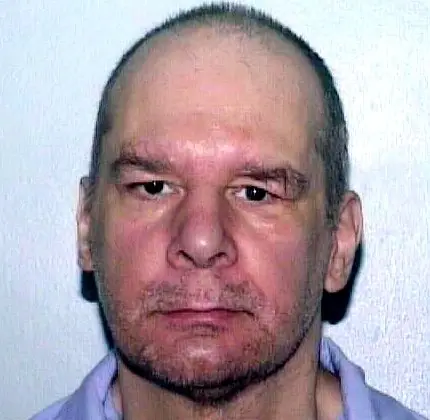 Joseph Geist
Murderer · USA · 1986
Joseph Geist was a neo-nazi cab driver. Sex: M Race: W Type: T Motive: PC-extre…
2 victims
Joseph Geist
Murderer · USA · 1986
Joseph Geist was a neo-nazi cab driver. Sex: M Race: W Type: T Motive: PC-extre…
2 victims
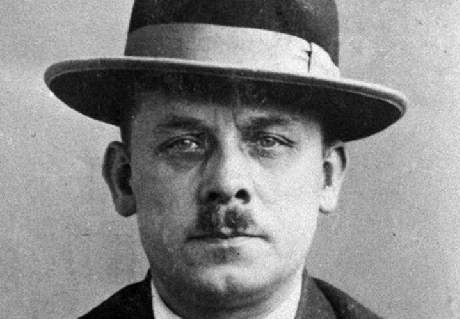 Friedrich Haarmann
Serial killer · Germany · 1918
Friedrich "Fritz" Haarmann (October 25, 1879 – April 15, 1925) was a serial kil…
27 victims
Friedrich Haarmann
Serial killer · Germany · 1918
Friedrich "Fritz" Haarmann (October 25, 1879 – April 15, 1925) was a serial kil…
27 victims
 Brenda Nicholas
Murderer · USA · 2011
Brenda Nicholas was sentenced to 34 years in prison for the robbery and stabbin…
1 victim
Brenda Nicholas
Murderer · USA · 2011
Brenda Nicholas was sentenced to 34 years in prison for the robbery and stabbin…
1 victim
 Bill Douglas Gates
Murderer · USA · 1999
Bill Douglas Gates was sentenced to death on February 21, 2001. Gates had a TDC…
1 victim
Bill Douglas Gates
Murderer · USA · 1999
Bill Douglas Gates was sentenced to death on February 21, 2001. Gates had a TDC…
1 victim
- Gender
- male
- Country
- USA
- Location
- Harris County, Texas, USA
- Date of birth
- February 22, 1957
- Age at first offence
- 37
- Characteristics
- parricide, murder for hire, history of mental illness, domestic violence
- Victim profile
- Farah Fratta, 34 (his wife)
- Method of murder
- Shooting
- Date(s) of murder
- November 9, 1994
- Years active
- 1994
- Date of arrest
- —
- Status
-
Sentenced to death
Sentenced to death on May 3, 1996
Case summary
Robert Alan Fratta was convicted of hiring hitmen to kill his estranged wife, Farah Fratta, in 1994. A jury in Houston convicted 52-year-old Robert Fratta of capital murder in his retrial. Prosecutors said Fratta was motivated by money and a custody battle over the couple’s three children during the divorce. The life-or-death sentencing phase began May 26.
It was the second time Fratta was convicted for his role in the shooting death of Farah Fratta. He originally was sentenced to death, and he was granted a retrial after jailhouse confessions of his co-conspirators were ruled inadmissible. The status in the case record stated that he was sentenced to death on May 3, 1996.
Timeline
- March 1, 1995 — Harris County Sheriff Department investigator Danny Billingsley placed the focus of the investigation on Howard Guidry after Guidry was arrested on March 1 for robbing a local bank.
- May 3, 1996 — Robert Fratta was sentenced to death.
- May 26, 2009 — The life-or-death sentencing phase began.
Background
Robert Fratta worked as a public safety officer in Missouri City, Texas, in 1983. Public safety officers in Missouri City were cross trained as police officers and firefighters. Fratta married Farah in 1983 and the couple had three children.
The marriage soon soured as Farah learned of Fratta’s sexual demands. Fratta’s perversions were documented at his first trial by a psychologist, friends of Farah, and friends of Fratta. By March 1992 Farah filed for a divorce because she could no longer endure the physical, emotional and sexual abuse Fratta was inflicting.
A divorce trial was set for November 1994. The couple underwent psychological evaluations to determine the parent most suited to be named conservator of the children.
The offence
Farah Fratta was shot and killed in Harris County, Texas. Her body was found in the garage of her home.
Investigation
Neighbors heard gunshots at Farah’s house. One neighbor heard a shot, rushed to the window, and saw Farah fall to the ground next to her vehicle. A few moments later the neighbor heard a second shot. Several minutes later the neighbor saw either a black man or someone dressed in black standing beside Farah’s house. Another witness reported seeing a similar type person. A few minutes later a car drove up in front of Farah’s house, the killer got into the vehicle, and the vehicle sped away.
Neighbors called 911 and Farah was rushed to Hermann Memorial Hospital where she was pronounced dead in the emergency room.
One of the first officers who arrived noticed that Farah’s purse had not been touched, and the officer knew it was not a robbery or a car jacking.
After Fratta’s arrival at the house, Fratta told one officer that “he was in a hurry and … wanted to expedite the matter” because he had his children with him.
With Fratta’s consent, a detective searched Fratta’s vehicle and found more than a one thousand dollars in cash and a 9mm pistol. Fratta was detained in the homicide division at the police station for fourteen hours. He was questioned by several detectives, and they let him go because they did not have probable cause to hold him.
The next day Fratta went to a tanning salon where a man named Prodhorsky worked and told him: “if everybody keeps their mouth shut everything will be all right … [but] if shit ever hits the fan, just tell them that you went over there to scare her and the first bullet you shot that went by her head actually grazed her and then you got scared and that’s when you fired the second shot.”
While the investigation into Farah’s murder remained active, it was not until March 1995 that investigator Danny Billingsley placed the focus on Howard Guidry after Guidry was arrested on March 1 for robbing a local bank. The arresting officers found a .38 caliber pistol in Guidry’s back pack.
A few days after Guidry’s arrest, a woman named Mary Gipp told a sheriff department investigator that Guidry had been involved in Farah’s murder. The detective ran a registration check on the .38 and learned the pistol had been purchased by Fratta in 1982. Farah’s father identified the weapon as the one Fratta had given him in 1993 for safekeeping and retrieved it in 1994.
A ballistic expert told investigators that one of the bullet fragments recovered in Farah’s garage had been fired by the .38, and while another fragment had been too damaged to link to a specific weapon, it was identified as the remnant of a .38 slug.
Guidry confessed to Billingsley about the killing. He said that on the afternoon of November 9, 1994, he and a man named Joseph Prystash drove to Farah’s house in Prystash’s vehicle, then went to a nearby grocery store. They made calls to a pay phone located at the store to determine if it could receive calls. Having determined that it could receive calls, Prystash drove Guidry back to Farah’s house and dropped him off. Guidry carried the .38 and a cell phone given to him by Prystash, climbed a fence in Farah’s backyard, and waited in a play house for Farah to return home. When Farah did not return, Guidry became nervous and called Prystash at the pay phone. Prystash instructed the triggerman to stay put.
Farah returned home and pulled into the garage. Guidry exited the play house and tried to open a side door to the garage. The door was locked, so he stood outside until Farah exited the garage. When Farah opened the door, Guidry stepped inside and shot her in the head, and then shot her a second time in the head because she was still moving after the first bullet struck her. Guidry walked back to the play house, called Prystash, told him the job was done, and climbed back over the fence and hid behind a bush near the garage until Prystash arrived. Guidry expected to receive $1,000 as soon as the killing was done.
Guidry’s confession led to Prystash’s arrest, and Prystash also confessed. Prystash’s confession tracked what Guidry told the police. The cell phone that Prystash gave Guidry belonged to Mary Gipp. Prystash confirmed that Guidry was supposed to get $1,000 for carrying out the contract killing while Prystash was supposed to get a couple thousand and a Jeep.
The detectives had enough evidence to arrest Fratta, who was subsequently indicted for capital murder. The State’s case was that Fratta made arrangements through Prystash to have Farah killed, and Prystash secured Guidry’s services.
Mary Gipp knew Fratta and Farah from the gym where Gipp and Prystash worked out. Gipp lived next door to Guidry and knew about the murder plot but did nothing about it.
Arrest
Fratta was detained in the homicide division at the police station for fourteen hours and was released because detectives did not have probable cause to hold him.
Later, detectives arrested Fratta based on evidence developed after Guidry’s confession and Prystash’s confession.
Howard Guidry was arrested on March 1 for robbing a local bank and officers found a .38 caliber pistol in his back pack.
Trial
Fratta was convicted of capital murder in his retrial. The conviction occurred in Houston.
The triggerman, Howard Paul Guidry, was convicted and was on death row. Joseph Prystash also was on death row.
Prystash and Guidry were tried separately and convicted of capital murder and sentenced to die, but they did not testify against Fratta. Gipp testified.
Fratta’s confronting rights were violated because Danny Billingsley testified about portions of Guidry and Prystash’s confessions without Fratta having an opportunity to cross examine them. The Fifth Circuit reversed Fratta’s capital murder conviction and death sentence.
Former Harris County prosecutor Kelly Seigler refused to cut a deal with Prystash to have him testify against either or both Fratta and Guidry.
Sentencing
Robert Fratta had originally been sentenced to death.
Appeals
The Fifth Circuit Court of Appeals reversing Fratta’s capital murder conviction and death sentence is referenced as a July 22, 2008 decision. The jury verdict in the 2009 retrial resulted in another capital murder conviction for Fratta.
Outcome
Robert Fratta was convicted of capital murder in his retrial and was sentenced to death on May 3, 1996.
Other details
Fratta was described as having threatened to kill Farah to several people, including statements about killing her and being out in five years and getting his kids back, but not paying child support. A witness testified that Fratta made comments about “putting some [9mm] slugs into Farah” after a fight with his wife. Another Missouri police officer testified about threatening comments Fratta made to him about Farah, including a statement: “he would kill her (Farah) and he would be out in five years and get his kids back, but he wouldn’t pay her [child support payments].” Another statement attributed to Fratta was: “I just ought, I’ll kill her, and I’ll do my time and when I get out, I’ll have my kids.”
Fratta asked several other people if they knew anyone who would be willing to kill Farah, including a question about “knock [Farah] off.” Fratta suggested to a fellow officer that the fellow kill Farah and that Fratta would kill the fellow officer’s wife.
Fratta ate dinner with Farah and their three children at Wyatt’s Cafeteria, drove the three children to a Catholic church in Humble, Texas, left two at the church’s nursery, and took the oldest child to a catechism class. He then joined a church meeting set up for parents whose children were preparing for first communion.
Multiple witnesses described Fratta’s demeanor at the church and said he appeared “tense” when he dropped the children off at the nursery. Another detective observed that Fratta “seemed very confident, very composed [and] well in command of the situation.”
A witness described Farah’s last movements: she left a beauty salon at around 7:45 p.m. after getting a haircut, went straight home, and pulled into the driveway close to 8:00 p.m.
Mary Gipp testified that on the weekend before the actual killing she knew Prystash had agreed to take part in the plot. She told the jury that on the night of the murder Guidry and Prystash returned to her apartment where they unloaded two spent shells from the .38, threw them away, and Prystash told her Farah had been killed.
Howard Guidry was convicted and placed on death row. Joseph Prystash was also placed on death row.
Spotted an error, or have more information about this case?