Simon Fraser
Homicide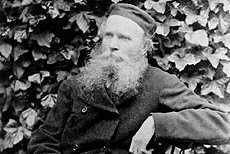 William Chester Minor
Homicide · United Kingdom · 1872
William Chester Minor was found not guilty on grounds of insanity on April 6, 1…
1 victim
William Chester Minor
Homicide · United Kingdom · 1872
William Chester Minor was found not guilty on grounds of insanity on April 6, 1…
1 victim
 Mick Philpott
Homicide · United Kingdom · 2012
Michael “Mick” Philpott was an Englishman who had gained notoriety as a crimina…
6 victims
Mick Philpott
Homicide · United Kingdom · 2012
Michael “Mick” Philpott was an Englishman who had gained notoriety as a crimina…
6 victims
 Dyson Allen
Homicide · United Kingdom · 2012
Dyson Allen was convicted for starting a fire in a wardrobe in the children’s b…
4 victims
Dyson Allen
Homicide · United Kingdom · 2012
Dyson Allen was convicted for starting a fire in a wardrobe in the children’s b…
4 victims
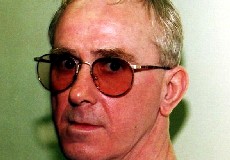 Robert Mone
Homicide · United Kingdom · 1967
Robert Francis Mone was born in 1948. He grew up with his parents and two siste…
4 victims
Robert Mone
Homicide · United Kingdom · 1967
Robert Francis Mone was born in 1948. He grew up with his parents and two siste…
4 victims
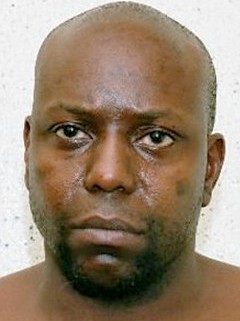 Peter Bryan
Homicide · United Kingdom · 1993
Peter Bryan was a schizophrenic cannibal who was sentenced to closed psychiatri…
3 victims
Peter Bryan
Homicide · United Kingdom · 1993
Peter Bryan was a schizophrenic cannibal who was sentenced to closed psychiatri…
3 victims
 Roger Dean
Mass murderer · Australia · 2011
Roger Kingsley Dean was an aged-care nurse and worked at Quakers Hill Nursing H…
11 victims
Roger Dean
Mass murderer · Australia · 2011
Roger Kingsley Dean was an aged-care nurse and worked at Quakers Hill Nursing H…
11 victims
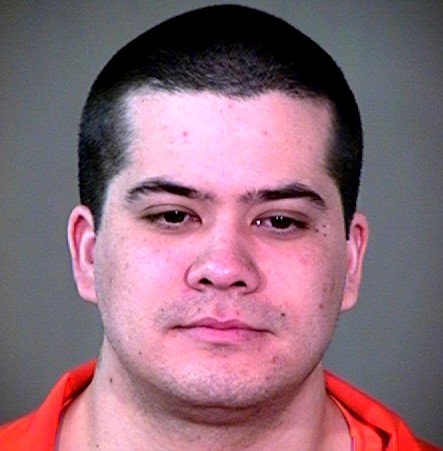 Cody Martinez
Murderer · USA · 2003
Cody James Martinez was sentenced to death on November 18, 2005. Martinez and h…
1 victim
Cody Martinez
Murderer · USA · 2003
Cody James Martinez was sentenced to death on November 18, 2005. Martinez and h…
1 victim
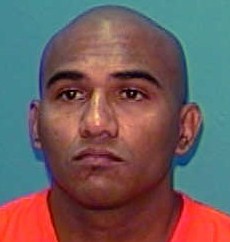 Noel Doorbal
Murderer · USA · 1995
Noel Doorbal (DOB: 12/21/71) was sentenced to death on 07/17/98. Eleventh Judic…
2 victims
Noel Doorbal
Murderer · USA · 1995
Noel Doorbal (DOB: 12/21/71) was sentenced to death on 07/17/98. Eleventh Judic…
2 victims
 Frederick Smallwood
Murderer · USA · 1995
Frederick B. Smallwood (also known as Frederick B. Smallwood, Sr.) was convicte…
1 victim
Frederick Smallwood
Murderer · USA · 1995
Frederick B. Smallwood (also known as Frederick B. Smallwood, Sr.) was convicte…
1 victim
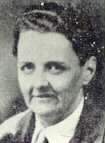 Margaret Allen
Murderer · United Kingdom · 1948
Margaret Allen was a cross-dressing lesbian who preferred to be called "Bill" a…
1 victim
Margaret Allen
Murderer · United Kingdom · 1948
Margaret Allen was a cross-dressing lesbian who preferred to be called "Bill" a…
1 victim
- Gender
- male
- Country
- United Kingdom
- Location
- Glasgow, Scotland, United Kingdom
- Date of birth
- 1851
- Age at first offence
- 27
- Characteristics
- former mental patient
- Victim profile
- His 18-month-old son
- Method of murder
- Smashing his head against a wall
- Date(s) of murder
- April 10, 1878
- Years active
- 1878
- Date of arrest
- —
- Status
-
Fraser was not responsible for his actions and was found sane; it was reported that during the day he was a free man and at night he slept alone in a room locked from the outside with his wife keeping the key
Case overview
Simon Fraser was a happily married man and a devoted father. He suffered from somnambulism. At 1am on the morning of 10th April 1878, in their home in Lime Street, Glasgow, he got out of bed and, lifting his son out of bed, swung him around and smashed his head against a wall. He did not deny what he had done but told the police that he thought he had been defending himself and his family from a savage creature which was trying to harm his son.
Timeline
- 10 April 1878, 1am — In his home in Lime Street, Glasgow, Simon Fraser lifted his 18-month-old son out of bed and smashed his head against a wall.
Background
Simon Fraser was 27-years-old and doted on his 18-month-old son. He had experienced problems in his sleep before; nightmares were described as normal occurrences. His father recounted how he had awoken one night to find Simon’s 14-year-old son on top of him beating him. Simon’s sister told the court that one night Simon had almost strangled her. The court also heard that, on one occasion, Simon had been pulled out of the sea after he had gone to try and rescue his sister from drowning; she was said to be safe in bed at home. On another occasion, he had pulled his wife out of bed by the legs because he thought he was saving her from a fire.
The offence
At 1am on the morning of 10th April 1878, in their home in Lime Street, Glasgow, Simon Fraser got out of bed and lifted his son out of bed. He then swung him around smashing his head against a wall.
Investigation and arrest
Simon Fraser did not deny what he had done. He told the police that he thought he had been defending himself and his family from a savage creature which was trying to harm his son.
Trial
The trial took place at Edinburgh High Court. Witnesses gave evidence of previous injuries Simon had caused while fighting off visions in his nightmares. The foreman of the jury intervened to say that he and his colleagues thought there was little point in hearing any more evidence and that they considered that Fraser was not responsible for his actions. It was then decided that testimony should be heard to determine whether Fraser was sane or not, which would decide whether he went free or spent the rest of his days in an asylum.
Expert testimony was heard from Dr Yellowlees, who considered him insane, and from Dr Clouston who thought he was not. The jury did not even retire and, after a minute or so of whispering amongst themselves, returned the verdict that Fraser was not responsible for his actions and that he was sane.
Outcome
Although Fraser had been found not guilty, there was still some concern that Simon may commit yet another serious crime and no-one wanted that.
It was rumoured that a compromise was reached over a “special arrangement”. The details of the “special arrangement” were never made public, but it was reported that during the day Fraser was a free man. At night he slept alone, in a room locked from the outside, and his wife kept the key.
Other details
Simon Fraser’s case was discussed alongside other historic and contemporary sleepwalking homicide accounts, including:
- A case reported by Polish physician Jan Jonston around 1630, where an inhabitant of Paris, while asleep, got up, took his sword, swam across the river Seine, and killed a man he had planned to murder the day before, then crossed back and eventually returned to bed without awaking.
- The case of Kenneth Parks in 1987, described as a married 23-year-old man with a 5-month-old daughter. Parks reportedly got up from sleep, drove roughly 23 km to his in-laws’ home, broke in, assaulted his father-in-law, and stabbed his mother-in-law to death. He managed to drive himself to the police station and then, in police station questioning, said: “I think I have killed some people…my hands.” Parks’ only defense was that he was asleep during the entire incident and was not aware of what he was doing. He was acquitted of the murder of his mother-in-law and the attempted murder of his father-in-law.
- The case of Scott Falater in 1997, described as accused of murdering his wife by stabbing her 44 times. A prosecution expert testified on June 18, 1999 that Falater’s actions were “too complex” to have been carried out while sleepwalking. A week later, Scott Falater was found guilty of first degree murder and sentenced to life in prison without chance of parole.
- The case of Edward Lowe, whose body was found on his driveway in Manchester, England, on October 30, 2004. His son, Jules, admitted that he caused his father’s death but did not remember committing the act, and had used “automatism” as his defense. He was not convicted, but he was confined indefinitely to a mental institution.
- A case involving Steven Reitz, described as having killed his girlfriend, Eva Weinfertner, and using a sleepwalking defense according to Dateline; the defense was rejected and he was convicted of first degree murder.
The material also referenced a list of eight people recorded as having killed in their sleep, including Simon Fraser, and named: “A. F.” (only initials recorded), Willis Boshears, Simon Fraser, Wasyl Gnypiuk, Esther Griggs, Jo Ann Kiger, Robert Ledru, and William Pollard (contributor John M. B. Edwards). It further described how “Griggs and Pollard were never charged; ‘A. F.,’ Kiger, and Boshears were acquitted; Fraser and Ledru were acquitted but ordered by the court to sleep henceforth only by themselves, in locked rooms; while Gnypiuk, denied an appeal to the British House of Lords, was hanged.”
The descriptions also included:
- “A. F.” who kept loaded firearms in his room; hearing a bump, he hollered “You dog, what do you want here?” and fired near to his hand, and the intruder turned out to be his father.
- Willis Boshears, an American Army sergeant stationed in England, drinking in a British pub on New Year’s Eve; after returning to an apartment with a young couple, he went to sleep on the floor where the woman was already asleep, and when he woke up he found he had killed the woman; he hid the body miles from the apartment.
- Simon Fraser, described as dreaming that a beast invaded his home; one time he dreamed a white beast had come up through the floor, and he seized it and dashed it to the ground, waking up to find he had killed his infant son.
- Wasyl Gnypiuk, a Polish immigrant (to England) who suffered Nazi internment, causing nightmares; in one he dreamed of fighting back, and he was in the home of his landlady when he woke up to find he had beaten her to death.
- Esther Griggs, resident of London and a mother of three, who dreamed her house was on fire; she was described as screaming “save my children!” though asleep and throwing her baby into the street.
- Jo Ann Kiger, a teenager, who took a revolver in each hand while asleep and fired, fatally shot her brother and her father.
- Robert Ledru, a French police detective, who was asked to investigate a murder on the beach; examining evidence, he decided he had been sleepwalking on the beach and fired the fatal shot, then turned himself in.
- William Pollard, a farmer whose neighbors knew him as a sleepwalker and sleep worker doing chicken-farm chores while fast asleep; one night he dreamed he was fighting with a marauding stranger, and when his wife awakened him she found he had killed their daughter.
The material also discussed that Western law recognizes sleepwalking as a defense but is otherwise not consistent, and referenced an episode titled “The Case of the Sleepwalker's Niece” from the first season of the Perry Mason TV series.
Spotted an error, or have more information about this case?