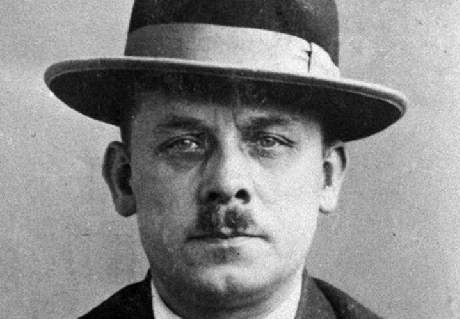
Friedrich Haarmann
Serial killer Bruno Lüdke
Serial killer · Germany · 1928
Bruno Lüdke (3 April 1908 – 26 April 1944) was an alleged German serial killer.…
84 victims
Bruno Lüdke
Serial killer · Germany · 1928
Bruno Lüdke (3 April 1908 – 26 April 1944) was an alleged German serial killer.…
84 victims
 Georg Karl Grossmann
Serial killer · Germany · 1913
Georg Karl Grossmann, who commonly called himself just Karl Grossman (also give…
50 victims
Georg Karl Grossmann
Serial killer · Germany · 1913
Georg Karl Grossmann, who commonly called himself just Karl Grossman (also give…
50 victims
 Karl Denke
Serial killer · Germany · 1909
Karl Denke (August 12, 1870 – December 20, 1924) was a serial killer from Germa…
30 victims
Karl Denke
Serial killer · Germany · 1909
Karl Denke (August 12, 1870 – December 20, 1924) was a serial killer from Germa…
30 victims
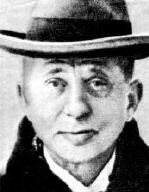 Adolf Gustav Seefeld
Serial killer · Germany · 1908
Adolf Gustav Seefeld (1871–1936) was a German tramp and religious fanatic who k…
12 victims
Adolf Gustav Seefeld
Serial killer · Germany · 1908
Adolf Gustav Seefeld (1871–1936) was a German tramp and religious fanatic who k…
12 victims
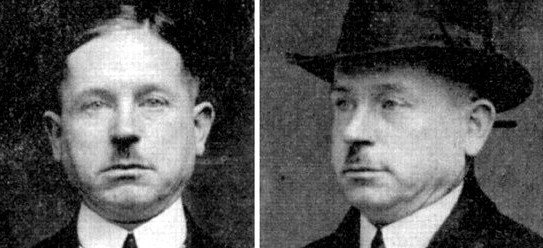 Peter Kürten
Serial killer · Germany · 1913
Peter Kürten Peter Kürten was convicted of nine murders and sentenced to death.…
9 victims
Peter Kürten
Serial killer · Germany · 1913
Peter Kürten Peter Kürten was convicted of nine murders and sentenced to death.…
9 victims
 Friedrich Schumann
Serial killer · Germany · 1911
Friedrich Schumann (1 February 1893 – 27 August 1921) was a German serial kille…
6 victims
Friedrich Schumann
Serial killer · Germany · 1911
Friedrich Schumann (1 February 1893 – 27 August 1921) was a German serial kille…
6 victims
 Luvenia Spates
Murderer · Alabama · 2011
Luvenia Spates Luvenia Spates was sentenced to 30 years in prison on September…
1 victim
Luvenia Spates
Murderer · Alabama · 2011
Luvenia Spates Luvenia Spates was sentenced to 30 years in prison on September…
1 victim
 Angela Stoldt
Murderer · USA · 2013
Angela Stoldt was a Florida woman who killed her neighbor, James Sheaffer. The…
1 victim
Angela Stoldt
Murderer · USA · 2013
Angela Stoldt was a Florida woman who killed her neighbor, James Sheaffer. The…
1 victim
 Robert Lee Willie
Murderer · USA · 1980
Robert Lee Willie (died December 28, 1984) was a man convicted in Louisiana of…
1 victim
Robert Lee Willie
Murderer · USA · 1980
Robert Lee Willie (died December 28, 1984) was a man convicted in Louisiana of…
1 victim
 Danny Crump
Mass murderer · USA · 1980
Danny Crump left a package marked "Handle with Care" on the hood of his ex-wife…
6 victims
Danny Crump
Mass murderer · USA · 1980
Danny Crump left a package marked "Handle with Care" on the hood of his ex-wife…
6 victims
- Gender
- male
- Country
- Germany
- Location
- Hannover, Lower Saxony, Germany
- Date of birth
- October 25, 1879
- Age at first offence
- 39
- Characteristics
- homosexual, dismemberment, cannibalism
- Victim profile
- Boys and young men
- Method of murder
- Strangulation / Biting through their throats
- Date(s) of murder
- 1918 - 1924
- Years active
- 1918–1924
- Date of arrest
- June 23, 1924
- Status
-
Executed
Executed by guillotine on April 15, 1925
Background
Friedrich "Fritz" Haarmann (October 25, 1879 – April 15, 1925) was a serial killer from Hannover, Germany. From 1919 to 1924, he committed at least 24 murders, and he was suspected of murdering a minimum of 27. His victims were young male vagrants who hung around railway stations. Haarmann lured victims back to his apartment and then killed them by biting through their throats in a kind of sexual frenzy. After the killings, victims were dismembered before they were discarded, usually in the river Leine.
Rumours circulated that Haarmann would peddle meat from the bodies of his victims as canned black market pork, but no physical evidence confirmed it. An accomplice and live-in partner, Hans Grans, sold the clothing and personal items of victims cheaply on the black market and kept other possessions for himself. Haarmann initially claimed that although Grans knew of many of his murders and urged him to kill two victims so Grans could obtain their clothing and personal possessions, Grans was otherwise not involved in the murders. Haarmann became known as "The Butcher of Hanover."
Other details
Haarmann was referred to by the public as a "werewolf", a "vampire", and "The Wolf Man". He was also described with no concepts or expressions for his crimes, and the case stirred discussion in Germany about the death penalty, the correct approach towards mentally ill offenders, police investigation methods, and homosexuality.
After the execution, Haarmann’s head was preserved in a jar by scientists to examine the structure of his brain. Haarmann’s head was kept at the Göttingen medical school. The remains of Haarmann’s victims were buried together in a communal grave.
Timeline
- October 25, 1879 — Friedrich "Fritz" Haarmann was born.
- 1914 — Haarmann was convicted of a series of thefts and frauds and imprisoned.
- 1918 — Haarmann was released.
- September 1918 — Haarmann began his crime rampage.
- 1919 — Haarmann met young Hans Grans at the Hannover railway station.
- 1919 to 1924 — Haarmann committed at least 24 murders.
- April 26, 1924 — Robert Witzel disappeared.
- May and June 1924 — Skeletal remains that Haarmann had dumped into the river Leine washed up downstream.
- May 1924 — Numerous skeletal remains were found after washing up in the river Leine.
- June 1924 — The police drag of the river discovered more than 500 human bones confirmed as coming from at least 22 separate individuals.
- May 29, 1924 — Another human skull washed up on the riverbank.
- June 13, 1924 — Two more skulls were found included in the river’s sediment.
- June 14, 1924 — The disappearance of Erich de Vries signalled the end of Haarmann’s reign.
- June 22, 1924 — Haarmann was observed prowling Hanover’s railway station.
- June 23, 1924 — Haarmann was taken to prison after trying to lure a boy to his apartment.
- July 8, 1924 — Hans Grans was arrested.
- August 16, 1924 — Haarmann remained in prison until this date and was then sent to nearby Gottingen for psychiatric examination.
- April 15, 1925 — Haarmann was executed by guillotine.
The offence
From September 1918 to June 1924, Haarmann killed young male victims. He lured victims to his apartment and then killed them by biting through their throats. Victims were dismembered before being discarded, usually into the river Leine. The skulls were smashed to pieces and thrown in the river or marsh.
Haarmann also had a practice of distributing victims’ possessions. The possessions of several victims were either sold on the black market or retained by Haarmann or his lover, Hans Grans. On multiple occasions, victim families later found personal artefacts among items confiscated from Haarmann and his associates.
Investigation
Numerous remains washed up downstream in May and June 1924. More than 500 human bones were discovered during a drag of the river Leine and were later confirmed as having come from at least 22 separate human individuals. Police decided to drag the river after skeletal remains washed up. Skeletal remains included the bones of individuals whose ages ranged, including that about a third were aged between 15 and 20.
Haarmann was eventually apprehended after his arrest coincided with the discovery of numerous remains from bodies he had dumped into the river Leine. He was placed under surveillance and arrested after being observed prowling Hanover’s railway station and attempting to lure a boy to his apartment.
Arrest
On the night of June 22, 1924, Haarmann was observed prowling Hanover’s railway station. He was quickly arrested after trying to lure a boy to his apartment. His apartment was searched and the walls were found to be heavily bloodstained. Clothing and personal items known to be possessions of several missing youths were found in his home.
Trial
Haarmann’s trial began on December 4, 1924. The trial took place at the Hannover Assizes and lasted through 14 days and almost 200 witnesses. The public opening decree stated that Haarmann was "accused of killing 27 persons intentionally and deliberately" from September 1918 to June 1924. Haarmann insisted on conducting his own defence and remained nonchalant, frequently interrupting proceedings. He complained about too many women being in the courtroom. He was allowed freedom to smoke a cigar when a mother became too distraught to give evidence clearly.
Haarmann told journalists, "You are not to lie; we know you are all liars," and told the jury, "Keep it short. I want to spend Christmas in heaven with Mother." Haarmann also stated, "I never intended to hurt those youngsters, but I knew that if I got going something would happen and that made me cry ... I would throw myself on top of those boys and bite through the Adam's apple, throttling them at the same time."
He also gave an extended description of what he claimed he did after killing:
"I'd make two cuts in the abdomen and put the intestines in a bucket, then soak up the blood and crush the bones until the shoulders broke. Now I could get the heart, lungs and kidneys and chop them up and put them in my bucket. I'd take the flesh off the bones and put it in my waxcloth bag. It would take me five or six trips to take everything and throw it down the toilet or into the river. I always hated doing this, but I couldn't help it - my passion was so much stronger than the horror of the cutting and chopping."
An expert report submitted their reports to the effect that although Haarmann had a "pathological personality", he had not been devoid of free will and responsibility and therefore bore no manic depressive insanity.
Hans Grans was accused in two cases of instigating murder and was focused on self-preservation. The jury subsequently branded him as the more dangerous (yet the more innocent) of the two. Grans received a death sentence in relation to the Hannappel case. A Hannover messenger named Lueters found a letter addressed to Albert Grans, father of the man under sentence of death, lying on the street. The note reached the court and was described as a four-page confession from Fritz Haarmann written while being taken by car to the police station, professing Hans Grans’s innocence. The letter included:
"Hans Grans has been sentenced unjustly and that's the fault of the police and also because I wanted revenge ... Put yourself in Grans's position: he will question the existence of the Lord and justice just because of me ... May Hans Grans forgive me for my revenge and humanity."
Sentencing
On December 19, 1924, Haarmann received 24 death sentences in 24 cases and Hans Grans received one death sentence for his supposed incitement to murder in the Hannappel case. Upon announcement of the verdict, Haarmann proclaimed:
"I want to be executed on the marketplace. On the tombstone must be put this inscription: 'Here Lies Mass-Murderer Haarmann'."
Haarmann was beheaded with a guillotine within the walls of Hannover Prison.
Grans’s appeal was rejected and the death sentence pronounced correct and final.
A second trial for Grans followed after the discovery of a letter from Haarmann declaring Grans’s innocence, leading to a 12-year prison sentence for Grans. After serving his time, Grans continued to live in Hanover until his death around 1980.
Outcome
Haarmann was executed by guillotine on April 15, 1925. Hans Grans received a 12-year sentence after a second trial and later died around 1980.
Victims
Friedel Rothe (age 17): disappeared September 25, 1918. Haarmann claimed to have buried Rothe in Stoekner cemetery. Fritz Franke (age 16): disappeared February 12, 1923. Wilhelm Schulze (age 17): disappeared March 20, 1923. Roland Huch (age 15): disappeared May 23, 1923. Vanished from Hanover railway station. Hans Sonnenfeld (age 18): disappeared May, 1923. A runaway from the town of Limmer. Ernst Ehrenberg (age 13): disappeared June 25, 1923. Disappeared whilst running an errand for his parents. Heinrich Strauss (age 18): disappeared August 24, 1923. Haarmann was in possession of Strauss' violin case when arrested. Paul Bronischewski (age 17): disappeared September 17, 1923. Vanished on his way to visit his Uncle Richard Graf. Disappeared after telling his friends a detective from Hanover had found him a job. Wilhelm Erdner (age 16): disappeared October 12, 1923. Disappeared from Hanover station. Haarmann sold Erdner's bicycle. Hermann Wolf (age 16): disappeared October 24, 1923. The victims clothes were traced to Haarmann and his acquaintances. Heinz Brinkmann (age 13): disappeared October 27, 1923. Vanished from Hanover station after missing his train home to Clausthal. Adolf Hannappel (age 15): disappeared November 11, 1923. An apprentice. Witnesses saw Haarmann approach Hannappel. Adolf Hennies (age 19): disappeared December 6, 1923. Hennies disappeared whilst looking for work in Hanover. Ernst Speiker (age 17): disappeared January 5, 1924. Disappeared on his way to appear as a witness at a trial. Heinrich Koch (age 18): disappeared January 15, 1924. Koch was known to be an acquaintance of Haarmann. Willi Senger (age 19): disappeared February 2, 1924. The victim's clothes were found in Haarmann's apartment after his arrest. Hermann Speichert (age 15): disappeared February 8, 1924. An electrical apprentice. Alfred Hogrefe (age 16): disappeared April 6, 1924. An apprentice mechanic. All Hogrefe's clothes were traced to Haarmann. Hermann Bock (age 22): disappeared April, 1924. Bock was last seen by his friends walking towards Haarmann's apartment. Wilhelm Apel (age 15): disappeared April 17, 1924. Disappeared on his way to work. Robert Witzel (age 18): disappeared April 26, 1924. Haarmann admitted dumping Witzel's remains in the river Leine. Heinz Martin (age 14): disappeared May 9, 1924. An apprentice locksmith. Martin disappeared from Hanover station. Fritz Wittig (age 17): disappeared May 26, 1924. Haarmann insisted Grans ordered him to commit both this murder and the murder of Hannappel. Friedrich Abeling (age 11): disappeared May 26, 1924. The youngest victim. Remains dumped in the river Leine. Heinrich Koch (age 16): disappeared June 5, 1924. Vanished on his way to College. Koch was last seen in the company of Haarmann. Erich de Vries (age 17): disappeared June 14, 1924. Haarmann led police to Erich's remains after his arrest.
Aftermath
The case was one of the first major media events in Germany. It was described as spectacular and unprecedented in German judicial history. After his conviction and execution, controversy continued around death penalty issues, mentally ill offenders, police methods, and homosexuality.
In popular culture, Haarmann became known as "The Butcher of Hannover." A film titled The Tenderness of the Wolves (Die Zärtlichkeit der Wölfe) was released in Germany in 1973 and dramatized Haarmann’s crimes. It starred Kurt Raab as the killer and featured Rainer Werner Fassbinder in a minor role. Another film, Der Totmacher (The Deadmaker; 1995), starred Götz George as Haarmann and was based on protocols of psychiatric examinations of Haarmann by Erich Schultze.
The classic film M (1931), directed by Fritz Lang and starring Peter Lorre, was inspired by Haarmann’s crimes and also those of Düsseldorf child killer Peter Kürten. In M, Haarmann was mentioned by name along with another German serial killer, Karl Grossmann. The American heavy metal band Macabre made two songs about him: "Fritz Haarmann, the Butcher" on Gloom and "Fritz Haarmann, Der Metzger" on Murder Metal.
Notes on claims about meat
Rumours had it that Haarmann would peddle meat from the bodies of his victims as canned black market pork, although there was never physical evidence to confirm this.
Spotted an error, or have more information about this case?