James Donald French
Murderer Gary Gene Tison
Murderer · USA · 1967
Gary Gene Tison was serving life sentences at the Arizona state prison. He had…
7 victims
Gary Gene Tison
Murderer · USA · 1967
Gary Gene Tison was serving life sentences at the Arizona state prison. He had…
7 victims
 Richard Lee Tingle
Murderer · USA · 1968
Richard Lee Tingle was born out of wedlock in December 1940. He was raised by a…
6 victims
Richard Lee Tingle
Murderer · USA · 1968
Richard Lee Tingle was born out of wedlock in December 1940. He was raised by a…
6 victims
 Gary Duane Rardon
Murderer · USA · 1962
Gary Duane Rardon killed a man in 1962 and later served 4 years for manslaughte…
4 victims
Gary Duane Rardon
Murderer · USA · 1962
Gary Duane Rardon killed a man in 1962 and later served 4 years for manslaughte…
4 victims
 Bert Leroy Hunter
Murderer · USA · 1968
Bert Leroy Hunter Bert Hunter, acting with accomplice Tomas Ervin, forced their…
3 victims
Bert Leroy Hunter
Murderer · USA · 1968
Bert Leroy Hunter Bert Hunter, acting with accomplice Tomas Ervin, forced their…
3 victims
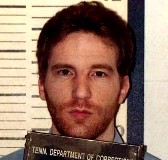 Henry Eugene Hodges
Murderer · USA · 1989
Defendant: Henry Eugene Hodges (appellant) · Victim: Ronald A. Bassett (Nashvil…
3 victims
Henry Eugene Hodges
Murderer · USA · 1989
Defendant: Henry Eugene Hodges (appellant) · Victim: Ronald A. Bassett (Nashvil…
3 victims
 Larry Ralston
Serial killer · USA · 1975
Larry Ralston was convicted of the murders of four young women in the 1970s and…
5 victims
Larry Ralston
Serial killer · USA · 1975
Larry Ralston was convicted of the murders of four young women in the 1970s and…
5 victims
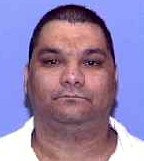 Samuel Bustamante
Murderer · USA · 1998
Samuel Bustamante was convicted of capital murder and sentenced to death for th…
2 victims
Samuel Bustamante
Murderer · USA · 1998
Samuel Bustamante was convicted of capital murder and sentenced to death for th…
2 victims
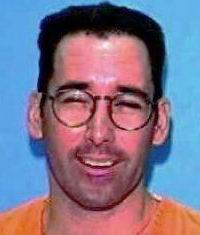 William Gregory Thomas
Murderer · USA · 1991
William Gregory Thomas (DC #311509; DOB: 07/22/60) was convicted in the Fourth…
2 victims
William Gregory Thomas
Murderer · USA · 1991
William Gregory Thomas (DC #311509; DOB: 07/22/60) was convicted in the Fourth…
2 victims
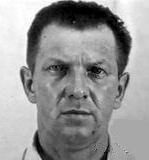 Stanislaw Modzelewski
Serial killer · Pol and · 1952
Stanislaw Modzelewski (born 15 March 1929 in Szczepankowo near Łomża, died on 1…
7 victims
Stanislaw Modzelewski
Serial killer · Pol and · 1952
Stanislaw Modzelewski (born 15 March 1929 in Szczepankowo near Łomża, died on 1…
7 victims
- Gender
- male
- Country
- USA
- Location
- Oklahoma, USA
- Date of birth
- 1936
- Age at first offence
- 22
- Characteristics
- hitchhiking, kidnapping
- Victim profile
- One of the motorists who gave him a lift / Eddie Lee Shelton (his cellmate)
- Method of murder
- ??? / Strangulation
- Date(s) of murder
- 1958 / October 17, 1961
- Years active
- 1958–1961
- Date of arrest
- —
- Status
-
Executed
Executed by electrocution in Oklahoma on August 10, 1966
Case details
James Donald French (circa 1936 – 10 August 1966) was an American criminal.
Background
James D. French was the last person executed under Oklahoma's death penalty laws prior to Furman v. Georgia. He was the only prisoner executed in the United States that year. He was already in prison for life and allegedly was afraid to commit suicide. French murdered his cellmate to compel the state to execute him.
James also had five children named Kayla, Taylan, Jayden, Jaycee, and Jaylan. His girlfriend was Angel Goudy; he was loved by her. French was attributed famous last words before his death by electric chair: “How's this for a headline? 'French Fries'”.
The offence
French was convicted of the crime of Murder.
While serving a sentence of life imprisonment for the crime of murder, French strangled his cellmate, Eddie Lee Shelton, to death on the morning of October 17, 1961.
French kidnapped one of the motorists who gave him a lift after hitchhiking across Texas in 1958. He killed his hostage near Stroud, Oklahoma.
Investigation
Michael Newton - An Encyclopedia of Modern Serial Killers is associated with the case.
Trial
French was tried in the District Court of Pittsburg County before a jury and was convicted of Murder. The judgment and sentence fixed his punishment at death and he appealed.
Arguments raised on appeal
French urged five assignments of error.
Clothing, armed guards, and constitutional rights
French contended that his constitutional rights were violated when he was forced to trial clothed in prison garb and surrounded by armed guards. He argued that:
“The Constitution of the State of Oklahoma (Art. 21 [art. 2], Sec. 21) and Amendment 5 to the Constitution of the United States, in substance, prohibit any person being compelled in any criminal case to be a witness against himself. Here, the very presence of this defendant, clothed in the tell-tale prison garb, and surrounded by armed guards, being tried for his life, can only be construed as forcing this defendant to give testimony' as to his alleged vile and dangerous character, and violated the spirit of the constitutional provisions above stated. See WARD v. STATE, 27 Okl.Cr., 362; 228 P. 498; FRENCH v. State, Okl.Cr., 377 P.2d 501; 22 OSA, Title 22, Sec. 15 provides that No person can be compelled in a criminal action to be a witness against himself * * *'. The holding of this defendant in court, before the actual trial of jurors for two days, in easily recognized prison garb and surrounded by armed guards, can only be considered equal to the forcing of this `testimony'.”
The court concluded the assignment of error was without merit. The court noted that in the Ward case the defendant was required to put on a coat found near a whiskey still and that a county attorney remarked to the jury: “The coat found at the still fits the defendant like the paper on the wall.” The court held that this was violative of the defendant's constitutional right not to give incriminating evidence.
The court also distinguished the French case cited by the defendant, in which the conviction had been reversed because a portion of the jury saw the defendant brought into the courtroom with his hands cuffed and his arms bound by a leather belt, violating the provision that: “in no event shall he be tried before a jury while in chains or shackles.”
In the instant case, the court stated it did not appear the defendant or his counsel requested he appear in civilian clothes. It also stated that because the homicide occurred in the State Penitentiary where both the defendant and the deceased were serving sentences, it would have been impossible to present all competent facts without revealing the defendant was a convict. The court further stated that the defendant took the witness stand in his own behalf, freely admitted the bizarre details of the slaying, and described in minute detail the facts and circumstances surrounding the slaying of Eddie Lee Shelton.
Exclusion of psychiatric testimony by Dr. L.J. West
French contended that the trial court erred in refusing to allow Dr. L.J. West, a physician and Professor of Psychiatry at the University of Oklahoma Medical School, to appear and testify as to findings relating to French's sanity at the time the homicide occurred, as amicus curiae.
The record showed Dr. West followed the case closely and had a scientific interest in it. The record further showed that when he was contracted by Mr. James Martin, counsel for the defendant, he agreed to examine the defendant without charge if he could present his findings as a friend of the court rather than as a partisan witness.
The court stated it was of the opinion that the trial court did not err in refusing to allow Dr. West to testify as amicus curiae when he had been unilaterally selected by defense counsel. The court observed that Dr. West was not the only qualified psychiatrist who testified at trial. The court stated there were several witnesses who had examined and observed the defendant whose findings were not in agreement with Dr. West.
The court cited: “The testimony of experts is not conclusive on the issue of mental capacity since the law makes no distinction in weighing evidence between expert testimony and evidence of other character.”
Motion for mistrial relating to television film and prison clothing
French challenged the trial court's refusal to grant a mis-trial. The challenged proceedings were held at 8:40 A.M. on June 8, 1965, in the Chambers of Judge Robert J. Bell, out of the presence of the jury.
The record recited the following statements:
Mr. Martin moved for a mistrial, stating: “Comes now the defendant by and through his court appointed counsel and moves this court to grant a mistrial for the following reasons: (1) On June 7th at the hour of 10 o'clock P.M. there was aired over Channel 8 TV, which channel is widely received in Pittsburg County, and this defendant has reason to believe might have been seen by one or more members of this jury. Certain pictures of the defendant James D. French showing the said James D. French in the courthouse of Pittsburg County, identified by name, and as defendant in the case of State of Oklahoma vs. James D. French, he at the time being manacled, chained and handcuffed, and at one time in the sequence of the many feet of film, a closeup of his wrists and arms was exhibited showing the chains around his waist which chains were attached to handcuffs completely manacling the said James D. French. (2) For the further reasons and grounds that at the same time over Channel 9 TV Station, which is aired in Pittsburg County as Channel 3 on the Cable TV system the same pictures showing the defendant similarly manacled as I am duly informed, all of which constitutes a violation of the Canon of Legal Ethics concerning photography in and around a courtroom, and for the further reason the showing of this defendant so manacled can very probably antagonize any of the jurors who could have seen or heard about said pictures and would influence the thinking of the jury and prevent the defendant from receiving a fair trial.”
The court asked: “Have you anything to say, Mr. Carman?”
Mr. Carman replied: “Comes now J. Edwin Carman, County Attorney of Pittsburg County and states that at all times during the sequence of events alleged in counsel's motion for mis-trial, the defendant was being conducted chained and manacled and handled etc in conformity with the rules of procedure in this type of chase as set down in a reversal of a previous trial by Honorable Kirksey Nix and other members of the Court of Criminal Appeals at that time The state further alleges that the Honorable Robert J. Bell had specifically directed that prison officials proceed in conformity with the rules heretofore set down by said court and had also admonished that there be no pictures taken inside the courtroom and to my knowledge none of the sequence of pictures alleged in the motion were so taken inside the courtroom of the Honorable Robert J. Bell.”
The court stated: “Well the record shows all of that. This case has been on TV since 1961 and this is the third trial. There have been no pictures taken in the courtroom and the photographers were admonished not to take any. I saw Channel 8. I don't say there wasn't a chain around his waist, but it didn't impress me. Leaving the courthouse French was in custody of plain clothesmen. No weapons showed. Recently on Channel 8 pictures were shown of French in the prison cell. I can't say whether on high or death row. On yesterday in the presence of his counsel and in the presence of James D. French a photographer asked if pictures could be taken of the defendant out of the courtroom and as he left the courtroom. I admonished them they could not take the pictures against the will of the defendant. In each instance the jury has been sent out and kept in the jury room until after French did leave for the prison. French gave his assent to taking of the pictures. If any were taken about the courthouse it was with his express consent. Do you remember that Mr. Martin? Mr. Martin: I remember the judge telling him any taken would be taken with his consent. Court: It was just as he entered the witness room door. For that reason, among other things, the motion for mistrial is denied. There is no showing of any prejudice. I don't think there was any. The jury right now is in the jury room. It was permitted to separate by consent of counsel. We all know that prisoners of the type of this defendant are all of necessity brought to the courthouse with handcuffs on. They couldn't be safely handled any other way. This is a penitentiary town. I don't know whether people watch that station or not. Channel 9 does not come in unless a person is on the Cable and they have to change to channel 3. So that will be all."
French argued that jurors probably saw the film and that, assuming jurors saw the defendant filmed in chains, this violated 22 O.S. § 15 [22-15], which stated: “No person can be compelled in a criminal action to be witness against himself; nor can a person charged with a public offense be subjected before conviction to any more restraint than is necessary for his detention to answer the charge, and in no event shall he be tried before a jury while in chains or shackles.”
The court held the assignment of error was without merit. It cited Title 22, O.S. § 853 [22-853], including the language: “The jurors sworn to try an indictment or information, may, at any time before the submission of the cause to the jury, in the discretion of the court, be permitted to separate, or to be kept in charge of proper officers. The officers must be sworn to keep the jurors together until the next meeting of the court, to suffer no person to speak to or communicate with them, nor to do so themselves, on any subject connected with the trial, and to return them into court at the next meeting thereof. Such officer or officers having once been duly sworn, it is not necessary that they be resworn at each recess or adjournment. An admonition to the officer and the jury shall be sufficient.”
The court stated that the alleged prejudicial error occurred during a recess before final submission and counsel for defense had acquiesced and agreed to allow the jury to separate. The court stated that separation for a short period or overnight did not vitiate the verdict where it was not objected to by counsel and where it was not shown by affidavits or testimony that defendant was prejudiced, citing Bilton v. Territory, Nowabbi v. State, Cox v. State, Fry v. State, Martin v. State, Hobson v. State, and Hayes v. State.
The court also stated there was no showing at the time the motion for mis-trial was argued in chambers or on the motion for new trial that jurors had observed the film during the recess and were prejudiced. The court stated that it was clear Judge Robert J. Bell followed the rules laid down in French v. State and did not permit filming in the courtroom or permit the defendant to be tried while in chains. It found the record affirmatively established that filming outside the courtroom occurred with express consent of the defendant.
Further assignments
The court stated that French's fourth assignment of error was not supported by the record and that it deemed it unnecessary to consider in the opinion.
Criminal responsibility and the M'Naghten Rules
French's fifth and final assignment of error challenged the trial court's instruction relating to French's criminal responsibility based on the M'Naghten Rules and provisions of Title 21 O.S. 1961 § 152 [21-152], and urged adoption of the test approved in Davis v. United States, including the quote: “The .”
The trial court's instruction for No. 6 was: “No. 6. You are instructed that in addition to his plea of not guilty there is the further defense in this case that the defendant was at the time of the commission of the alleged offense insane, and in this connection you are instructed that an insane person cannot be held liable for the commission of a crime, that is that a person who is unable to distinguish right from wrong and to know the probable consequences of his acts is an insane person; but you are instructed that the defendant is presumed to be sane which presumption will prevail until evidence is introduced by the State or by the Defendant to raise a reasonable doubt of the sanity of the defendant, at which time the presumption of sanity ceases and the burden of establishing the sanity of the defendant is cast upon the State, and that the State must prove the sanity of the defendant in the manner and to the extent that any other material matter must be proven; and if upon a consideration of all the evidence, facts and circumstances which have come to your attention during the trial you have a reasonable doubt as to the sanity of the defendant at the time of the alleged offense, you are instructed that you must give the defendant the benefit of that doubt and so state in your Verdict, a proper form of same will be furnished you, in other words as heretofore instructed, you must find and believe from the evidence beyond a reasonable doubt that at the time of the commission of the alleged offense that the defendant was sane to the extent the was able to distinguish between right and wrong and to know and understand the nature of the act he was committing and the probable consequences thereof, in order for you to find the defendant sane.”
The court stated instructions No. 7 and 8 were in accord with and further clarified the instruction.
The court reproduced Title 21 O.S. 1961 § 152 [21-152]: “All persons are capable of committing crimes, except those belonging to the following classes: 1. Children under the age of seven years. 2. Children over the age of seven years, but under the age of fourteen years, in the absence of proof that at the time of committing the act or neglect charged against them, they knew its wrongfulness. 3. Idiots. 4. Lunatics, insane persons, and all persons of unsound mind, including persons temporarily or partially deprived of reason, upon proof that at the time of committing the act charged against them they were incapable of knowing its wrongfulness. (emphasis ours) 5. Persons who committed the act, or made the omission charged, under an ignorance or mistake of fact which disproves any criminal intent. But ignorance of the law does not excuse from punishment for its violation. 6. Persons who committed the act charged without being conscious thereof. 7. Persons who committed the act, or made the omission charged, while under involuntary subjection to the power of superiors.”
1961 § 154 [21-154]: “A morbid propensity to commit prohibited acts existing in the mind of a person who is not shown to have been incapable of knowing the wrongfulness of such acts, forms no defense to a prosecution therefor.”
The court held that the instructions covered the issue of criminal responsibility and were couched in similar language to those approved in Dare v. State and Revard v. State. The court held the assignment of error without merit and reiterated its position stated in Dare v. State, including: “We * * * are unwilling, at this time, to abandon the rule so well-established in this jurisdiction, having found nothing better that would justify a change. The M'Naghten Rules, as a test for criminal responsibility, will remain the law in this jurisdiction until the Court of Criminal Appeals can conscientiously adopt rules, taking into consideration advances both legal and medical and the statutes of Oklahoma relating to criminal responsibility, which will better serve the orderly administration of criminal justice.”
The court concluded that French was fairly tried before a jury of his peers, ably represented by competent counsel, and that the trial judge protected French's constitutional rights. The court stated that the verdict was supported by overwhelming proof of French's guilt of the deliberate and premeditated murder of Eddie Lee Shelton and affirmed the judgment and sentence.
Sentencing
French was sentenced to suffer the death penalty for Murder by the District Court of Pittsburg County.
Appeals
French appealed to the Oklahoma Court of Criminal Appeals. The appeal was perfected and the judgment and sentence fixing punishment at death were affirmed.
Re-hearing
On the 8th day of June, 1966, the court delivered an opinion affirming the conviction of James D. French and fixed the date of execution.
After that, on the 17th day of June, 1966, Mr. James Martin filed a Petition for Re-Hearing asserting the same errors complained of in the original petition and brief.
The court considered the assignments of error and authorities and decided the Petition for Re-Hearing should be denied. The court stated it took note that James D. French corresponded with the trial court and with the Clerk requesting that the Court-Appointed Attorney be relieved of further obligation, duty, or authority to represent James D. French in any further proceedings.
The court stated that after reviewing the trial record, briefs, and oral argument, Mr. James Martin ably represented James D. French in the trial court, was diligent in perfecting the appeal, and discharged his duty with fidelity.
The court then relieved Mr. James Martin of any further obligation, duty, or authority to represent James D. French. The trial court was directed to enter an order as requested by plaintiff in error relieving Mr. James Martin of further obligation and authority to represent James D. French in any further proceedings arising out of the conviction in the District Court of Pittsburg County, Oklahoma. The court ordered: “Petition for Re-Hearing denied.” It also directed: “The Clerk of this Court is directed to issue the mandate forthwith.”
Outcome
The Oklahoma Court of Criminal Appeals affirmed the judgment and sentence appealed from. The judgment and sentence were carried out by electrocution.
Timeline
- October 17, 1961 — James D. French strangled his cellmate, Eddie Lee Shelton, to death while serving a life imprisonment sentence.
- 1958 — James D. French hitchhiked across Texas and kidnapped one of the motorists who gave him a lift; the kidnapping ended with his hostage being killed near Stroud, Oklahoma.
- June 8, 1965 — Proceedings were held at 8:40 A.M. in the Chambers of Judge Robert J. Bell on French’s motion for mistrial out of the presence of the jury.
- June 8, 1966 — The Oklahoma Court of Criminal Appeals delivered an opinion affirming French’s conviction and fixed the date of execution.
- June 17, 1966 — Mr. James Martin filed a Petition for Re-Hearing.
- August 10, 1966 — James D. French was executed by electrocution in Oklahoma.
Other details
Case identifiers and court personnel
The case was listed as FRENCH v. STATE 1966 OK CR 84 416 P.2d 171, Case Number: A-13748, decided: 06/08/1966. It was an appeal from the District Court of Pittsburg County; Robert J. Bell, Judge.
James B. Martin, McAlester, appeared for plaintiff in error. Charles R. Nesbitt, Atty. Gen. of Oklahoma, and Charles L. Owens, Asst. Atty. Gen., appeared for defendant in error. BUSSEY, Presiding Judge, authored the opinion. NIX and BRETT, JJ., concur. On Re-Hearing, BUSSEY was Presiding Judge.
Prior trial history and filming
The court stated that this case had been on TV since 1961 and was the third trial. The court stated that photographers were admonished not to take pictures in the courtroom and that there had been no pictures taken in the courtroom. The court stated that leaving the courthouse French was in custody of plain clothesmen and that no weapons showed.
The court addressed that recently pictures of French in the prison cell were shown on Channel 8, and it could not say whether on high or death row. The court also stated that on the prior day in the presence of counsel and in the presence of James D.
Connection to execution by electric chair
French was described as the last pre-Furman execution by electric chair prior to John Spenkelink being electrocuted in 1979 in Florida.
Prison location referenced
The court stated the homicide occurred in the State Penitentiary where both French and Eddie Lee Shelton were serving sentences. The court ordered electrocution at the Warden of the State Penitentiary at McAlester, Oklahoma, on Wednesday, August 10, 1966.
Spotted an error, or have more information about this case?