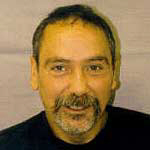
Bert Leroy Hunter
Murderer Ervil LeBaron
Murderer · USA · 1972
Ervil Morrell LeBaron (1925 to August 16, 1981) was the leader of a polygamous…
35 victims
Ervil LeBaron
Murderer · USA · 1972
Ervil Morrell LeBaron (1925 to August 16, 1981) was the leader of a polygamous…
35 victims
 Marvin Gray
Murderer · USA · 1975
Marvin Gray was convicted killer who claimed responsibility for 23 slayings and…
23 victims
Marvin Gray
Murderer · USA · 1975
Marvin Gray was convicted killer who claimed responsibility for 23 slayings and…
23 victims
 Charles Manson
Murderer · USA · 1969
Charles Milles Manson (born November 12, 1934) was an American criminal and mus…
9 victims
Charles Manson
Murderer · USA · 1969
Charles Milles Manson (born November 12, 1934) was an American criminal and mus…
9 victims
 John Errol Ferguson
Murderer · USA · 1977
John Errol Ferguson was sentenced to death and was executed by lethal injection…
8 victims
John Errol Ferguson
Murderer · USA · 1977
John Errol Ferguson was sentenced to death and was executed by lethal injection…
8 victims
 Robert Reldan
Murderer · USA · 1974
Name: Robert Reldan Robert Reldan was sentenced to life in prison on two counts…
8 victims
Robert Reldan
Murderer · USA · 1974
Name: Robert Reldan Robert Reldan was sentenced to life in prison on two counts…
8 victims
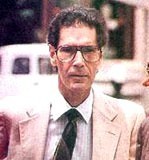 Robert Lee Bennett
??? · USA · 1968
Robert Lee Bennett Jr. operated in Atlanta, Georgia and Tampa, Florida for deca…
0 victims
Robert Lee Bennett
??? · USA · 1968
Robert Lee Bennett Jr. operated in Atlanta, Georgia and Tampa, Florida for deca…
0 victims
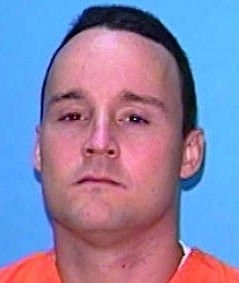 Alvin Leroy Molton
Murderer · USA · 1992
Alvin Leroy Molton was convicted in the Sixth Judicial Circuit, Pasco County, i…
2 victims
Alvin Leroy Molton
Murderer · USA · 1992
Alvin Leroy Molton was convicted in the Sixth Judicial Circuit, Pasco County, i…
2 victims
 Charles Wesley Roache
Mass murderer · USA · 1999
Charles Wesley Roache was a white male. His date of birth was 11/17/73 and his…
6 victims
Charles Wesley Roache
Mass murderer · USA · 1999
Charles Wesley Roache was a white male. His date of birth was 11/17/73 and his…
6 victims
 Julian Knight
Mass murderer · Australia · 1987
Julian Knight was a 19-year-old former Australian Army officer cadet who was ar…
7 victims
Julian Knight
Mass murderer · Australia · 1987
Julian Knight was a 19-year-old former Australian Army officer cadet who was ar…
7 victims
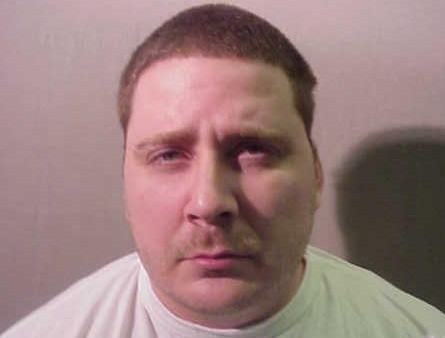 Sean Kenney
Murderer · USA · 1993
Sean Kenney was formerly known as Richard Feaster and later changed his name to…
2 victims
Sean Kenney
Murderer · USA · 1993
Sean Kenney was formerly known as Richard Feaster and later changed his name to…
2 victims
- Gender
- male
- Country
- USA
- Location
- Andrew/Cole Counties, Missouri, USA
- Date of birth
- March 7, 1947
- Age at first offence
- 21
- Characteristics
- robbery, kidnapping
- Victim profile
- Tavern owner / Richard Hodges, 49, and his mother, Mildred Hodges, 75
- Method of murder
- Shooting / Suffocating with plastic bags
- Date(s) of murder
- June 16, 1968 / December 15, 1988
- Years active
- 1968–1988
- Date of arrest
- 1989
- Status
-
Executed
Executed by lethal injection in Missouri on June 28, 2000
Name and identity
Bert Leroy Hunter
Summary of the case
Bert Hunter, acting with accomplice Tomas Ervin, forced their way into the home of Richard Hodges at gunpoint. They entered because they believed Richard Hodges kept large amounts of cash in a file cabinet in his home. Hunter and Ervin bound Richard Hodges and Mildred Hodges, Richard Hodges’ mother, with duct tape, robbed them of valuables, and later suffocated both victims with plastic bags over their heads upon leaving. Hunter held Richard Hodges’ nose to suffocate him after the plastic bags were placed over the victims’ heads. Hunter checked Mildred Hodges and determined that she had no pulse. After the victims were killed, Hunter and Ervin left and later returned at least once that evening or the next evening.
Hunter later pled guilty to murder and was sentenced to death. He unsuccessfully tried to back out of the plea before sentencing.
Accomplice Tomas Ervin was also convicted, sentenced to death, and executed in 2000.
The offence
On the afternoon of December 15, 1988, Bert Hunter and an accomplice, Thomas Ervin, went to the home of Richard Hodges in Jefferson City because they believed Hodges kept large amounts of cash in a file cabinet in his home. With a pistol in his pocket, Hunter knocked on the Hodges’ door. Richard Hodges’ mother, Mildred Hodges, answered.
Hunter pulled a stocking mask down over his face and displayed a pistol. Hunter entered the house and grabbed Mrs. Hodges by the hand. Mrs. Hodges cried out for her son. Richard Hodges came into the room where they were standing and requested that the two assailants leave his mother alone because she was in frail health.
As Richard Hodges attempted to calm his mother, Ervin and Hunter began binding her hands and feet with duct tape. She was taken to a back bedroom and placed on a bed. Ervin took Richard Hodges to the living room and made him lie on the floor. Ervin began taping Richard Hodges’ hands while Hunter searched the house for money and other valuables.
Mrs. Hodges freed herself and ran into the living room where Ervin was still taping Richard Hodges’ hands. She pulled the mask off Ervin, causing him to fall on the floor. Ervin called out Hunter’s first name. Hunter returned to the living room and saw what had occurred. Once the mask was pulled off and Hunter’s name was called out, Hunter and Ervin decided that both victims had to be killed.
Mrs. Hodges attempted to flee but Hunter and Ervin caught her in the hallway and forced her to the floor. Hunter stated in his confession that she hit the wall, bloodying her nose. A rush of air came out of Mrs. Hodges and she became still. The two then returned to finish securing Richard Hodges. They placed tape over Richard Hodges’ mouth and nose. Plastic bags were placed over the heads of both victims.
Hunter admitted that after the plastic bags were placed on the victims’ heads, he held Richard Hodges’ nose to suffocate him. While Hunter was dealing with Richard Hodges, Ervin was “working with Mrs. Hodges.” Hunter surmised there was “nothing to do, anyway.” Ervin returned and told Hunter that he thought Mrs. Hodges was dead. Hunter checked Mrs. Hodges and determined that she had no pulse. They finished looking through the house and left.
Hunter and Ervin disposed of Richard Hodges’ body in Jefferson City. The police found the body and then went to the Hodges’ home where they found Mrs. Hodges’ body. They returned to the house at least once that evening or the next evening.
Victims
Richard Hodges
- Victim in the December 15, 1988 killing during a home burglary in Jefferson City
Mildred Hodges (75 year old)
- Mother of Richard Hodges
Investigation and evidence
Hunter later provided conflicting accounts about the crime, including accounts that Ervin was not at the scene and that another man killed the victims.
The police found the bodies after disposing of Richard Hodges’ body in Jefferson City and after leaving Mrs. Hodges’ body at the Hodges’ home.
Two previous psychiatric evaluation-related issues were raised in connection with the plea process, including findings about Hunter’s understanding of his legal situation and his mental health.
A medical examiner said the victims died of suffocation. The bodies were found with plastic bags over their heads.
Prior criminal history and earlier offences
Hunter was previously convicted of murder and other offences and met accomplice Ervin while in prison.
On March 27, 1964, Hunter pleaded guilty to Burglaw and was sentenced to two years in the Missouri Department of Corrections.
On September 19, 1965, Hunter pleaded guilty to Stealing (Felony) and Escape and was sentenced to four years and two years to run concurrently in the Missouri Department of Corrections.
On December 15, 1969, Hunter was sentenced to Life in the Missouri Department of Corrections on a charge of Murder 1st Degree. Hunter, acting with another, robbed a tavern in Amazonia, Missouri (Andrew County). The owner was shot and killed during the commission of the offense which occurred June 16, 1968.
On October 21, 1985, Hunter received a Suspended Execution of Sentence in Florida for Aggravated Battery and was placed on seven years probation.
The present offence occurred on December 15, 1988 when Hunter, acting with another, killed a Jefferson City woman and her son during a home burglary.
Convictions, plea, and trial process
The Cole County grand jury indicted Hunter on two counts of first-degree murder and one count of first degree robbery.
Hunter was on parole for a 1969 murder.
On July 21, 1989, Judge Kinder allowed Hunter to represent himself. Hunter entered a plea of guilty to all three charges. Judge Kinder ruled that Hunter knowingly, intelligently and voluntarily waived his right to a jury trial at both the guilty and sentencing phases.
On September 13 (1989), a second psychiatric report ordered by the court was entered in the Cole County Circuit Court. The report found Hunter’s understanding of his legal situation to be impeccable and concluded that Hunter was capable of entering a voluntary guilty plea.
On October 18 (1989), with Hunter’s permission, Hunter’s attorney filed a motion in the Cole County Circuit Court to withdraw the guilty pleas. On December 7, Judge Kinder overruled the motion.
On July 21, 1989, Hunter was sentenced to death after a plea of guilty to Murder 1st Degree (two counts) and Robbery 1st Degree.
Sentencing
On February 15, 1990, Judge Kinder sentenced Hunter to death on each of the two murder charges and to life imprisonment on the robbery charge.
Appeals
On October 27, 1992, the Missouri Supreme Court affirmed Hunter’s conviction and sentence in State v. Hunter, 840 S.W.2d 850 (Mo. banc 1992).
On June 28, 1993, the Missouri Supreme Court denied Hunter’s petition for a writ of certiorari Hunter v. Missouri 113 S. Ct. 3047 (1993).
On October 28, 1993, a petition for a writ of habeas corpus was filed on Hunter’s behalf in the U.S. District Court for the Western District of Missouri.
On May 16, 1994, Hunter filed an affidavit with the Western District Court stating he never wanted to appeal his death sentence. He claimed he personally did not authorize the suit and did not consent to the court’s review of it. He asked U.S. District Judge Dean Whipple to dismiss the suit without prejudice.
On August 2, 1994, the 8th Circuit Court of Appeals ordered Whipple to dismiss Hunter’s case without prejudice.
On August 22, 1994, a petition for a writ of habeas corpus was filed on Hunter’s behalf in the U.S.
On August 25, 1994, a petition for a writ of mandamus and an application for a stay of execution was filed in the 8th Circuit Court of Appeals. The Court granted a thirty day stay of execution.
On February 9, 1995, the U.S. District Court denied the petition for writ of habeas corpus in an unpublished order.
On November 14, 1996, the U.S. District Court denied the petition again in an unpublished order.
On March 22, 1999, the U.S. Eighth Circuit Court of Appeals affirmed the denial of relief.
On January 24, 2000, the U.S. Supreme Court declined discretionary review.
Execution scheduling and clemency
On January 26, 2000, the State requested the Missouri Supreme Court to set an execution date.
On May 24, 2000, the Missouri Supreme Court set June 28, 2000 as Hunter’s execution date.
A clemency petition was supported by a letter from Cheryl Rafert requesting a stay of all executions in Missouri until an independent inquiry was conducted and findings were entered to ensure the execution protocol did not inflict cruel or unusual punishment.
Execution
Hunter was executed by lethal injection in Missouri on June 28, 2000. A witness statement in the clemency material described the witnessing of convulsions during the execution.
Letter excerpt and witness quotations
Cheryl Rafert wrote to Governor Carnahan requesting a stay and an inquiry. She wrote:
“I was a witness to the execution of my client, Bert Leroy Hunter, on June 28, 2000. As a witness to two previous executions in Missouri, I know that Bert Hunter's violent death was not in accordance with execution protocol.”
She described the condemned prisoner’s actions and convulsions as follows:
“During Bert Hunter's execution, as the blinds to the glass windows of the execution chamber opened, Bert Hunter lay on the gurney, looking at me. He mouthed the word "smile." I smiled.”
“Immediately, Bert Hunter began having violent convulsions. His head and chest jerked rapidly upward as far as the gurney restraints would allow, and then he fell quickly down upon the gurney. His body convulsed back and forth like this repeatedly.”
“The lethal injection execution protocol used by Missouri requires a series of three separate drugs be given - the first renders the person unconscious, the second stops the breathing, and the third stops the heart.”
“He never lost consciousness prior to receiving the drugs to stop his breathing and his heart.”
Other details
Family and other personal details mentioned
Hunter was born on 3-7-47 in Stillwell, Oklahoma.
Hunter was referred to as 53 in the execution scheduling narrative.
Hunter continued to have depression and suicidal tendencies while on death row.
In 1989 proceedings, Hunter filed a motion to withdraw his guilty pleas within three months of his July 21, 1989 guilty plea.
Hunter and accomplice Tomas Ervin met while in prison.
The letter-writer stated that Hunter did not have a trial by a jury and did not have legal representation by an attorney at the time of his convictions.
Prior habeas corpus appeal (federal)
In 1971, Hunter brought an action for a writ of habeas corpus against Harold R. Swenson, warden of the Missouri State Penitentiary. The trial court denied the petition and refused to grant an evidentiary hearing. The United States Court of Appeals, Eighth Circuit reversed with directions to hold an evidentiary hearing. The opinion described an allegation that Hunter’s confession was involuntary and the disputed point about whether Sgt. Shirley promised or implied a reduced charge in return for Hunter’s cooperation prior to a confession.
The majority opinion included quoted material from the Missouri Supreme Court:
“There is the further significant fact, which we find from the evidence, that there was no discussion of the so-called `deal' on the 5th of August when Hunter was finally ready to give his confession. If in fact there had been such an understanding Hunter, who in his testimony showed that he knew there was such a thing as a written guarantee of immunity, would doubtless have insisted upon at least an oral confirmation of the deal before signing away his rights and confessing his crime.”
A dissenting opinion by Chief District Judge Stephenson disagreed with the need for another evidentiary hearing.
Charges and verdicts referenced in the record
Hunter was charged with first degree murder in an amended information filed in the Circuit Court of Andrew County, Missouri on March 10, 1969. He pleaded not guilty and was convicted after a trial to a jury on May 1, 1969, and was sentenced to life imprisonment. The Missouri Supreme Court affirmed the conviction.
A separate later capital case involved two counts of first-degree murder and one count of first degree robbery, with a guilty plea and sentencing to death on each murder count and life imprisonment on the robbery count.
Spotted an error, or have more information about this case?