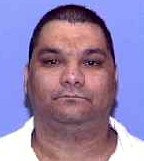
Samuel Bustamante
Murderer Russell Ellwood
Murderer · USA · 1991
Russell Ellwood was a former taxi driver. Authorities suspected him of killing…
20 victims
Russell Ellwood
Murderer · USA · 1991
Russell Ellwood was a former taxi driver. Authorities suspected him of killing…
20 victims
 Robert Martines Perez
Murderer · USA · 1994
Name: Robert Martines Perez · Other name used in proceedings: Robert Martinez P…
15 victims
Robert Martines Perez
Murderer · USA · 1994
Name: Robert Martines Perez · Other name used in proceedings: Robert Martinez P…
15 victims
 Billy Frank Vickers
Murderer · USA · 1993
Billy Frank Vickers Vickers was executed by lethal injection in Texas on Januar…
14 victims
Billy Frank Vickers
Murderer · USA · 1993
Billy Frank Vickers Vickers was executed by lethal injection in Texas on Januar…
14 victims
 Louis Hastings
Spree killer · USA · 1983
Louis Hastings was a 39-year-old unemployed computer programmer during the shoo…
6 victims
Louis Hastings
Spree killer · USA · 1983
Louis Hastings was a 39-year-old unemployed computer programmer during the shoo…
6 victims
 Bradley Mullins
Homicide · USA · 2005
Bradley Mullins was 19 during a trial in Tennessee for conduct involving drag r…
1 victim
Bradley Mullins
Homicide · USA · 2005
Bradley Mullins was 19 during a trial in Tennessee for conduct involving drag r…
1 victim
 Eric John King
Murderer · USA · 1989
Eric John King was convicted of two first-degree murder counts and armed robber…
2 victims
Eric John King
Murderer · USA · 1989
Eric John King was convicted of two first-degree murder counts and armed robber…
2 victims
 Kevin Weaver
Spree killer · United Kingdom · 1987
Kevin Weaver was sentenced to closed psychiatric confinement on March 28, 1988.…
4 victims
Kevin Weaver
Spree killer · United Kingdom · 1987
Kevin Weaver was sentenced to closed psychiatric confinement on March 28, 1988.…
4 victims
 Michael Anthony Guider
— · Australia · 1986
Michael Anthony Guider was born on 20 October 1950 in the city of Melbourne, Vi…
1 victim
Michael Anthony Guider
— · Australia · 1986
Michael Anthony Guider was born on 20 October 1950 in the city of Melbourne, Vi…
1 victim
 Christopher Speight
Spree killer · USA · 2010
Christopher Speight was the suspect in the Appomattox shootings, a spree shooti…
8 victims
Christopher Speight
Spree killer · USA · 2010
Christopher Speight was the suspect in the Appomattox shootings, a spree shooti…
8 victims
- Gender
- male
- Country
- USA
- Location
- Fort Bend County, Texas, USA
- Date of birth
- December 11, 1969
- Age at first offence
- 29
- Characteristics
- robbery
- Victim profile
- Rafael Alvarado, 27 / Lloyd Harold Turner
- Method of murder
- St abbing with knife
- Date(s) of murder
- January 18 /February 13, 1998
- Years active
- 1998
- Date of arrest
- —
- Status
-
Executed
Executed by lethal injection in Texas on April 27, 2010
Case details
Samuel Bustamante was convicted of capital murder and sentenced to death for the murder of Rafael Alvarado in Fort Bend County, Texas.
Bustamante was executed by lethal injection in Texas on April 27, 2010.
Timeline
- January 17, 1998 — Samuel Bustamante and three friends planned a robbery and drove to Rosenberg to go “shopping” after the bars closed.
- January 18, 1998 — Bustamante stabbed Rafael Alvarado ten times with a knife; Alvarado died from stab wounds to the heart and liver and the attendant loss of blood.
- February 13, 1998 — The body of Lloyd Harold Turner was found February 13, 1998, in an area underneath an overpass on Highway 59 in Wharton County.
- April 27, 2010 — Samuel Bustamante was executed by lethal injection in Texas.
- May 19, 2004 — The Texas Court of Criminal Appeals denied his state habeas application in a written order.
- May 19, 2005 — Bustamante’s federal habeas petition was filed.
- December 6, 2006 — The United States District Court for the Southern District of Texas granted summary judgment for the State.
- July 8, 2008 — The United States Court of Appeals for the Fifth Circuit affirmed the federal district court’s judgment.
The offence
On the night of January 17, 1998, Samuel Bustamante and three other men drove to Rosenberg to find, beat and rob a man after the bars closed. At first, the group had trouble finding a victim. They came upon Rafael Alvarado, a Hispanic male.
Bustamante noted that Alvarado’s clothes were in good condition and that his watch looked like it was made of “real gold.” Alvarado offered to pay the driver of the pickup truck to give him a ride across town. The men agreed, and Alvarado climbed into the bed of the pickup with Bustamante and two of the other men. Arthur Escamilla and Dedrick Depriest sat in the truck cab while Bustamante, Walter Escamilla and the victim sat in the truck bed.
After about fifteen minutes, Bustamante asked Walter what he was going to do. Walter told Bustamante to wait but Bustamante stood up and began stabbing Alvarado with a knife. Bustamante stabbed him ten times. Alvarado managed to break free, fell to the ground, and escaped from the truck. When the truck stopped, Bustamante and the others looked for Alvarado but were unable to see him because it was dark, so they left.
After they left, the group remarked that Bustamante was crazy. One of the men admitted at trial that, had they found Alvarado, they probably would have robbed him.
The police followed a trail of blood from the west city limits of Rosenberg to where Alvarado’s body was found in a ditch in Fort Bend County. Alvarado was wearing a watch, a gold necklace, and a ring, and he had a hundred dollars in his pockets. His wallet was undisturbed. His death was caused by stab wounds to the heart and liver and the attendant loss of blood.
After returning from Rosenberg, Bustamante told Solomon Escamilla and Richard Escamilla to wash the truck before daylight. There was blood in the bed of the truck and a hand-print on the tailgate. Bustamante told Solomon that things went wrong and that someone had gotten in the way of what Bustamante does, explaining that he had gotten hold of a man the night before and the man had fallen out of the truck. When Solomon showed him a story about the victim in the paper, Bustamante responded, “That’s what I told you, nobody gets away,” saying that when he kills somebody, he knows he kills them.
Solomon and Richard joked with Bustamante by telling him not to stab them and by trying to give him their money.
Bustamante told Solomon and Richard to wash the truck before daylight; there was blood in the bed of the truck and a hand-print on the tailgate. Bustamante told Solomon that things went wrong and someone had gotten in the way of what Bustamante does. Bustamante explained that he had gotten hold of a man the night before and the man had fallen out of the truck. When Solomon showed Bustamante a story about the victim in the paper, Bustamante responded, “That’s what I told you, nobody gets away,” saying that when he kills somebody, he knows he kills them.
Co-defendants and related individuals
Bustamante committed the offenses along with three other co-defendants. The co-defendants were Diedrick Depriest, Aurthur Escamilla, and Walter Escamilla. The men were described as planning the robbery and going to Rosenberg to go “shopping.”
Walter Escamilla and Arthur Escamilla were brothers. Solomon Escamilla was Walter and Arthur’s brother, and Richard Escamilla was another brother. Solomon Escamilla was also Bustamante’s brother-in-law, married to Bustamante’s sister.
Brandy Riha was the ex-girlfriend of Bustamante’s brother, Bill Bustamante.
Investigation
During the investigation, police officers interviewed Bustamante’s brother, Bill Bustamante, and procured from him a signed, written statement.
Later, after Bustamante was jailed on an unrelated charge in Wharton County, authorities notified Rosenberg police after receiving a tip that he was involved in Alvarado’s slaying.
At trial, Bustamante’s confessions were referenced, including an electronically recorded oral confession and a written confession relating the events of the crime.
Arrest
Bustamante was not described as having been arrested in the provided text.
Trial
Bustamante was tried before a jury on the charge of capital murder in Fort Bend County, Texas, and was convicted of capital murder and sentenced to death.
Guilt/innocence phase: jury deliberations and exhibit issue
During the guilt/innocence phase of trial, the State called Bill Bustamante to testify, but he declined. The trial court granted Bill immunity for any testimony given at trial and ordered him to testify. Bill persisted in refusing to testify and was held in contempt. Bill’s written statement, marked State’s Exhibit 107, was never admitted into evidence.
Another item, a chart or graph, was later marked as Exhibit 107 and admitted into evidence. During jury deliberations on guilt, one juror read the Bill Bustamante statement aloud while others listened. After the statement was read, the jurors became concerned about whether it was properly before them and the jury foreman sent a note asking: “Judge, can we use exhibit 107 in making our decision?”
The trial judge discovered that Bill Bustamante’s written statement was in the jury room and removed it. The trial judge questioned each juror individually about the statement, including how much they read or heard, whether it presented anything new, whether it influenced them, and whether they could follow an instruction to disregard the exhibit.
Nine jurors said they had not read the statement but had heard some or all of it being read. Three jurors said they had read the statement or parts of it. Jurors learned that Bustamante had “gone shopping” before and that there was an incident at a truck stop, after the murder, in which Bustamante apparently started to break into another vehicle occupied by a sleeping person. One juror said she also learned that Bustamante had told his brother before leaving for Rosenberg that he intended to rob someone. Eight jurors said the evidence would not influence their decision; the other four were not asked that question. Some jurors said they had already made up their minds before the statement was read.
After questioning all twelve jurors, the trial judge instructed the jury to disregard the Bill Bustamante statement. The instruction included the following:
Members of the jury, now that I've had an opportunity to talk to each one of you 12 jurors individually, I need to give you an additional admonition; and that admonition is as follows: Because of the factors that we discussed here individually a few minutes ago, specifically that there were two State's exhibit number 107 marked in this case. Only the first State's exhibit 107 was actually admitted by me into evidence. That State's exhibit number 107 is this plat which is down here on the floor. That may be considered by you, and I'm answering your question now. That exhibit number 107 may be used in making your decision in this case. The second State's exhibit number 107 was mismarked. That purports to be a statement by Mr. Bill Bustamante. That State's exhibit number 107 was never put into evidence, and you are not to consider it as evidence of any kind for any purpose at any stage of this trial. You are to make a decision in this case based only on the law and the evidence, specifically the evidence which has been admitted before you for your consideration, which would be the physical pieces of evidence that are admitted and the testimony that you've heard from the witness stand in here. In short, you're not to use anything that you may have read or heard from the purported Bill Bustamonte statement for any purpose whatsoever. That's an additional admonition that you are charged to follow.
Appellant moved for a mistrial on the basis that the jury had received other evidence during deliberations. The trial court denied the motion. The jury later returned a guilty verdict for capital murder.
Appellant also complained about the issue in a motion for new trial, which was denied.
Sufficiency of the evidence for robbery/attempted robbery
On direct appeal, Bustamante raised four points of error. The Texas Court of Criminal Appeals affirmed.
Bustamante argued that the evidence was legally and factually insufficient to show that he committed the underlying offense of robbery or attempted robbery, and asserted in his brief that his confessions indicated the group originally planned to go to Rosenberg to rob illegal aliens but argued the murder was not connected to that plan. He pointed out that no money or property was taken, and he argued no one demanded money from the deceased. He also pointed to testimony of Depriest that they did not intend to rob anyone and went to Rosenberg to party, and to testimony that the other participants were shocked by Bustamante’s actions.
The Court of Criminal Appeals held that completed theft was not required to establish robbery or attempted robbery and that an intent to steal could be inferred from circumstantial evidence. The court found direct evidence from Bustamante’s own confessions that the group intended to rob someone in Rosenberg and that the group intended to rob the victim. It also relied on Bustamante telling two other people that he intended to go shopping, which the court found was code for robbing someone, on Bustamante noticing the victim’s watch and real gold appearance, and on Bustamante’s desire to retrieve the victim’s boots as evidence he intended to steal.
The court noted that failure to contradict jokes about stealing money could be interpreted as tacit acceptance that the murder was part of an attempted robbery.
The Court of Criminal Appeals overruled points of error one and two and later overruled points of error three and four regarding the jury’s examination of the Bill Bustamante statement, affirming the judgment.
Sentencing
After the jury answered the special issues following the sentencing phase, the trial judge imposed a death sentence.
The punishment phase included evidence of prior crimes and confessions, including a confession to the murder of Lloyd Harold Turner.
Bustamante also received a sentence of 40 years in prison for Turner's killing.
Prior criminal history
At the punishment phase of his trial, it was revealed that Bustamante had confessed to the murder of Lloyd Harold Turner. Turner’s body was found February 13, 1998, in an area underneath an overpass on Highway 59 in Wharton County, where Turner had lived for about a year. Bustamante’s signed, written confession was read and admitted into evidence.
Bustamante had a prior prison record that included the North Carolina Department of Corrections on a one year sentence for Forgery, confined 6 months, and released on parole.
He also had a five year sentence from Wharton County for one count of Burglary of a Building, released on parole to Dallas County.
He returned from parole with a four year sentence for one count of possession of a prohibited weapon, released on parole on 2/16/1991.
Additional details about earlier sentences were provided: in December 1988, Bustamante began serving a 5-year sentence for burglary of a building; he was paroled after a year. While on parole, he received a new conviction for possessing a prohibited weapon and served 6 months of a 4-year sentence before receiving parole again in February 1991. After moving to North Carolina, he was quickly in prison again on a 1-year sentence for forgery that began in April 1991 and he was paroled after serving 5 months. After that, he racked up convictions for shooting a gun within city limits, carrying a concealed weapon, making threatening communications, resisting arrest, and possessing marijuana. After his last conviction in December 1992, he returned to Texas.
Appeals
Direct appeal (state)
Bustamante’s conviction was affirmed on appeal by the Texas Court of Criminal Appeals.
The Texas Court of Criminal Appeals denied his state habeas application in a written order on May 19, 2004.
The Court of Criminal Appeals’ opinion was delivered on June 4, 2003.
Federal habeas proceedings
Bustamante’s federal habeas petition was filed on May 19, 2005.
The United States District Court for the Southern District of Texas, Gray H. Miller, J., denied the petition in 2006 (summary judgment for the State granted on December 6, 2006).
Bustamante appealed and the United States Court of Appeals for the Fifth Circuit affirmed the judgment on July 8, 2008.
Bustamante did not file a petition for writ of certiorari with the U.S. Supreme Court.
Ineffective assistance of counsel appeal
Bustamante appealed the denial of federal habeas relief and argued ineffective assistance of counsel during the guilt phase, contending counsel failed to inspect trial exhibits before they were given to the jury, allowing an exhibit not admitted into evidence to be considered by the jury.
The Court of Appeals held that defense counsel’s failure to inspect trial exhibits before they were given to the jury did not prejudice defendant, and affirmed the district court’s denial of federal habeas relief.
The Court of Appeals stated that Bustamante had not shown that the state court’s decision was objectively unreasonable.
Outcome
Samuel Bustamante was executed by lethal injection in Texas on April 27, 2010.
He was pronounced dead at 6:22 p.m. after the lethal injection began, with the lethal drugs administered at 6:14 p.m. Bustamante made no final statement. His death was witnessed by four friends he invited. No friends or relatives of the victim were present.
Aftermath and remarks
Bustamante’s execution was scheduled after 6 p.m. on April 27, 2010.
A reporter’s request for an interview prior to his execution was granted, but he failed to keep the appointment.
On an anti-death-penalty website, Bustamante stated: “I did do wrong, yet there is a lot more good in me than bad. We are all human and make mistakes. Yet, do we not deserve the benefit of the doubt?”
For his last meal, Bustamante ordered four fried chicken legs and thigh quarters, macaroni and cheese, fried okra, jalapeno peppers, 10 flour tortillas, and a six pack of cola.
At a meeting prior to execution, Bustamante answered questions with “yes” and “no,” and he was described as “very quiet” by a prison spokesman.

Spotted an error, or have more information about this case?