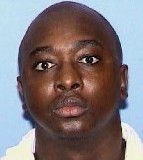
Ray McArthur Freeney
Murderer Robert Martines Perez
Murderer · USA · 1994
Name: Robert Martines Perez · Other name used in proceedings: Robert Martinez P…
15 victims
Robert Martines Perez
Murderer · USA · 1994
Name: Robert Martines Perez · Other name used in proceedings: Robert Martinez P…
15 victims
 Billy Frank Vickers
Murderer · USA · 1993
Billy Frank Vickers Vickers was executed by lethal injection in Texas on Januar…
14 victims
Billy Frank Vickers
Murderer · USA · 1993
Billy Frank Vickers Vickers was executed by lethal injection in Texas on Januar…
14 victims
 Richard Barry Randolph
Murderer · USA · 1988
Richard Barry Randolph was sentenced to death on April 5, 1989. He was identifi…
1 victim
Richard Barry Randolph
Murderer · USA · 1988
Richard Barry Randolph was sentenced to death on April 5, 1989. He was identifi…
1 victim
 Florence Maybrick
Murderer? · United Kingdom · 1899
Florence Elizabeth Maybrick (Florence Maybrick) was an American woman convicted…
1 victim
Florence Maybrick
Murderer? · United Kingdom · 1899
Florence Elizabeth Maybrick (Florence Maybrick) was an American woman convicted…
1 victim
 Sharon Kinne
Murderer · Mexico · 1960
Sharon Kinne was known in Mexico as La Pistolera. She was an American murderer.…
3 victims
Sharon Kinne
Murderer · Mexico · 1960
Sharon Kinne was known in Mexico as La Pistolera. She was an American murderer.…
3 victims
 Zane Jack Fields
Murderer · USA · 1988
Zane Jack Fields Sentenced to death in August 1991 Zane Jack Fields was 46 year…
1 victim
Zane Jack Fields
Murderer · USA · 1988
Zane Jack Fields Sentenced to death in August 1991 Zane Jack Fields was 46 year…
1 victim
- Gender
- male
- Country
- USA
- Location
- Harris County, Texas, USA
- Date of birth
- December 21, 1973
- Age at first offence
- 29
- Characteristics
- rape
- Victim profile
- Kirshalynne Jones, 15 / Vicky Dean (prostitutes)
- Method of murder
- St abbing with knife
- Date(s) of murder
- April 18 /22, 2002
- Years active
- 2002
- Date of arrest
- —
- Status
-
Sentenced to death
Sentenced to death on September 25, 2003
Case overview
Ray McArthur Freeney was indicted for the murders of Kirshalynne Jones and Vicky Dean during different criminal transactions but pursuant to the same scheme or course of conduct. Freeney was convicted in August 2003 of capital murder. Pursuant to the jury's answers to the special issues set forth in Texas Code of Criminal Procedure Article 37.071, Sections 2(b) and 2(e), the trial court sentenced Freeney to death.
Timeline
- April 18, 2002 — Freeney took his girlfriend to a motel in Houston, Texas where he sexually assaulted her and stabbed her multiple times, resulting in her death; he then attacked a second female victim and sexually assaulted and stabbed her until she lost consciousness; he picked up a third victim, took her to his residence, choked her until she lost consciousness, and later sexually assaulted and stabbed her multiple times, resulting in her death.
- Around midnight, April 18, 2002 — Jason Shiner drove Jones and Sims to Bissonnet Road; Jones met her first customer and brought him back to the motel room; later Shiner drove Jones back to Bissonnet Road.
- About 1:30 a.m., April 18, 2002 — Shiner called the motel office and asked for a security guard; the security guard attempted to open the door but it was locked from the inside with a deadbolt.
- About 1:45 a.m., April 18, 2002 — Shiner dialed 911 after finding Jones's body in the bathtub.
- April 19, 2002 — A Harris County deputy constable discovered Freeney's abandoned car in the parking lot of the Tinseltown Movie Theatre on Beltway 8.
- April 19, 2002 — The police discovered Freeney's car and observed a stain around the gear shift lever that looked like blood.
- April 22, 2002 — Officer Guy Majors was dispatched to the Ravencrest apartment complex at about 1:30 a.m. and found a naked woman covered in blood lying in the grass next to the building; the woman told Majors her name was Vicky Dean.
- Shortly before midnight, April 25, 2002 — Officer Todd Miller and Quentessa Synegal drove to Bissonnet; Synegal identified Freeney sitting with a woman at a bus stop bench in front of a Burger King; a team of police officers arrested Freeney.
- May 1, 2002 — A live line-up occurred approximately two weeks after April 18, 2002, at which Jason Shiner was in jail on a probation revocation.
- September 25, 2003 — Freeney received his death sentence.
- April 27, 2005 — Date delivered.
Background
Ray McArthur Freeney (TDCJ Number 999458) was born on 12/21/1973 and received on 09/25/2003 at age 29. His offense age was 28 at the time of the offenses. He was described as Black male with black hair, and 05'08" height and 194 weight. His county and state are listed as Harris County, Harris Texas. Prior occupation was fast food and laborer.
Freeney had no prior prison record listed.
The offence
Jones murder
Fifteen-year-old Kirshalynne Jones had been staying with some relatives in the Travel Lodge Motel at the intersection of Beltway 8 and Highway 59 in Houston. Jones became friends with fellow motel guest Margaret Sims, and moved into the motel room that Sims shared with her boyfriend, Jason Shiner. Sims and Jones worked as prostitutes and generally solicited customers on Bissonnet Road and brought them back to their room at the Travel Lodge.
Jason Shiner testified that he drove Jones and Sims to Bissonnet Road at around midnight on April 18, 2002. Jones met her first customer that evening and brought him back to the motel room. After they were finished, Sims arrived with her “date,” and Shiner drove Jones back to the motel. Shiner later noticed Jones had been in the motel room an unusually long time and began calling the room on his cell phone. He tried to call several times, but the line was busy. He knocked on the door, but no one answered it. He called the motel office at about 1:30 a.m. and asked for a security guard to assist him. The security guard attempted to open the door, but it was locked from the inside with a deadbolt. While Shiner waited for the guard to retrieve a key, a bald man with a dark complexion came out of the room. Shiner reached for the door, but the man pulled it shut.
Shiner asked, “Where's the girl?” and the man responded, “She's in the bathroom. She's okay.”
Shiner followed the man downstairs and wrote down his license plate number as he drove away. Shiner and the security guard returned to the motel room. Shiner went inside and called for Jones but did not get a response. He went into the bathroom, pulled back the shower curtain, and found Jones's body in the bathtub. He dialed 911 at about 1:45 a.m.
The medical examiner testified that Jones died from multiple stab wounds. She suffered three stab wounds to her chest and two stab wounds to the left side of her neck. She had a blunt trauma injury to the top of her head and a bruise behind her right ear consistent with a blow to the back of her head. She had abrasions on her torso, face, and neck consistent with a violent struggle. The petechiae present in her eyes was indicative of strangulation. She also had vaginal redness consistent with some sort of penetration.
Freeney’s audiotaped confession included details about the Jones murder. Freeney said he picked up Jones on Bissonnet and they went to her room on the third floor at the Travel Lodge. Freeney said he did not have any money and never intended to pay Jones for sex. Freeney said Jones asked him for the money upfront and that he “jumped on her.” Freeney described placing Jones in a “choke hold,” stating that she passed out for about fifteen minutes while he attempted to have vaginal intercourse but could not ejaculate. Freeney said that when she “came to,” he stabbed her in the side, chest, and neck with his pocketknife. He said Jones began performing oral sex on him, but again he did not ejaculate. Freeney described Jones having a “bleak look in her eyes,” slowly passing out, and dying at the foot of the bed closest to the door. Freeney said that afterwards he used water to clean up the areas that he touched and placed Jones’s body in the bathtub, ran water in the tub, shut the shower curtain and the bathroom door. Freeney said a man had been knocking on the door for five to ten minutes while Freeney was cleaning up the room; when Freeney opened the door and exited, the man asked if the girl was okay and Freeney said yes, and that she was in the bathroom. Freeney said the man followed him downstairs and Freeney got into his car and left, drove home, took a shower, and went to bed. Freeney said the next day he left his car in the Tinseltown parking lot after he hit a median while driving on Beltway 8.
Dean murder
Vicky Dean was found in the Ravencrest apartment complex at 10003 Forum West. Officer Guy Majors arrived at about 1:30 a.m. and saw a naked woman covered in blood lying in the grass next to the building. The woman told Majors that her name was Vicky Dean. She said she had been attacked, but was unable to give Majors any information about her attacker.
Majors observed the window of a nearby apartment was open about five inches, with blood on the window and windowsill. When Majors pulled back the curtain and looked inside, he saw blood all over the room. Majors and some other officers knocked on the door to the apartment. Lou Jackson, Freeney’s elderly aunt with whom he shared the apartment, answered the door. She gave officers permission to come inside and look through the apartment and appeared very frail, saying she had been undergoing treatment for cancer. Jackson gave Majors the phone number of Freeney’s girlfriend.
Officer Glen Riddle testified that there was blood in the entryway and living room. A knife blade on the living room floor had bloodstains and two small strands of hair on it. Riddle testified there was a trail of blood leading to the bedroom and blood on the outside of the bedroom door. Inside the bedroom, there was blood on the bed, walls, ceiling, and floor. The bedroom was in disarray and the sheets and mattress cover had been pulled off the bed.
A black purse containing Dean’s driver’s license was lying on the bed. Various items were scattered on the floor at the foot of the bed, including two women’s sandals, a black bra, a black dress, a box of condoms, a set of keys, and a small cosmetic bag. A black knife handle without a blade was also lying on the floor near the bed.
Dean’s sister Carol Dempsey testified that Dean had been living with her in her condominium next door to the Ravencrest apartment complex. On the evening of April 21, Dean was getting ready to go out and told Dempsey that she had a date. Dempsey testified that Dean left at 10:05 p.m. and was wearing a dress and sandals. Dean was transported to the hospital and died several days later.
The medical examiner testified that Dean had twenty “sharp force injuries” to her arms, hands, torso, neck, and face. The fatal wound was the stab wound to her left eyebrow which entered her eye socket, perforated the roof of her skull, and entered the left side of her brain. As a result, a blood clot formed in her left internal carotid artery.
Freeney’s audiotaped confession included details about the Dean murder. Freeney stated that he met Dean on Forum West street and that she willingly walked with him to his apartment. He stated they entered the apartment through his bedroom window. Freeney said Dean told him she wanted the money right away, but Freeney knew he did not have any money. He stated Dean asked him for something to drink, so he gave her juice with a “sleeping aid” in it. Freeney said he got a sharp knife with a black handle and a “flimsy blade” from the kitchen and returned to the bedroom. Freeney said Dean drank the juice, smoked cigarettes, and talked to him. He said he told her to lie on the bed so he could give her a massage and that he stabbed her in the neck. He said they wrestled, and he continued to stab her and told her “she was stupid for being a prostitute.” He said that after “the first few stabs,” she took her clothes off and they attempted to have vaginal intercourse. Freeney said she then performed oral sex on him and he ejaculated. Freeney said they fought again, and the knife broke at some point. He said he swung the knife one last time and stabbed her in the left eye, and that she told him, “Pull this knife out of me so I can die.” He said he threw the bedcovers over her and exited through the window.
Investigation
Officer Todd Miller arrived at the Jones scene and saw a blood stain and a fecal matter stain on the floor at the foot of the bed; he discovered another large blood stain after pulling back the bedspread. There was an empty bottle of Chloraseptic spray on the vanity near the sink. Jones’s body was immersed in water in the bathtub. An empty bottle of Dial body wash and a pair of underwear floated in the water as well.
Joseph Burrell, the crime scene investigator, testified that he was unable to locate any usable fingerprints and that the table in the motel room “had obviously been wiped down.”
Officer Todd Miller checked the license plate number obtained by Shiner and found it matched a green Pontiac Sunfire that was registered to Freeney. Miller ascertained that Freeney lived at the Ravencrest apartment complex at 10003 Forum West, located almost directly behind the Travel Lodge Motel. Miller put together a photo spread containing Freeney’s picture. Shiner and Sims identified Freeney in the photo spread. Shiner identified Freeney at trial, but Sims was unable to do so.
A Harris County deputy constable discovered Freeney’s abandoned car in the parking lot of the Tinseltown Movie Theatre on Beltway 8 on April 19. Miller testified that he observed a stain around the gear shift lever that looked like blood. DNA was extracted from a swabbing of the gear shift. Forensic DNA analyst Jennifer McCue testified the sample contained a mixture of DNA from more than two individuals, and Freeney and Jones could not be excluded from the mixture.
Officer Guy Majors responded to the Ravencrest apartment complex at about 1:30 a.m. on April 22 and found Dean. Majors observed the open window and blood on the window and windowsill.
Officer Glen Riddle testified about items and blood trail at the apartment.
Officer Miller met with Freeney’s girlfriend, Quentessa Synegal, who gave information as to possible whereabouts of Freeney. Shortly before midnight on April 25, Miller and Synegal drove to Bissonnet where Synegal identified Freeney sitting with a woman on a bus stop bench in front of a Burger King. Police arrested Freeney. The woman he was sitting with identified herself as Shaekia Calhoun. Calhoun told Detective John Swaim that she was a prostitute and that she and Freeney were discussing a price to go to a nearby hotel room. Miller observed cuts and scratches on Freeney’s hands and forearms during an interview at the police station.
Freeney gave three audiotaped statements confessing to the murders of Jones and Dean.
Riddle testified that he recovered a pocketknife from “another location in Southwest Houston.” Riddle obtained swabs from the knife, which appeared to have bloodstains. McCue testified that Jones’s DNA profile matched the profile on the swabs. McCue performed DNA analysis on two hairs found on the knife recovered from Freeney’s apartment; the DNA profile of the hair root matched Dean’s DNA profile. McCue detected Dean’s DNA on some of Freeney’s clothing.
Arrest
Police arrested Freeney following an identification made by Quentessa Synegal shortly before midnight on April 25 when Freeney was sitting with Shaekia Calhoun at a bus stop bench in front of a Burger King on Bissonnet.
Trial
Charges and conviction
Freeney was indicted for the murders of Kirshalynne Jones and Vicky Dean during different criminal transactions but pursuant to the same scheme or course of conduct. He was convicted in August 2003 of capital murder.
Jury and sentence
Direct appeal
Direct appeal to the Texas Court of Criminal Appeals was automatic. Freeney raised sixteen points of error challenging his conviction and sentence. The Court rejected his contentions and affirmed the conviction and sentence.
Evidence and legal issues raised on appeal
Sufficiency of evidence
Freeney argued that evidence was legally insufficient to support his conviction for capital murder, contending that evidence was insufficient to show the murders occurred during the same scheme or course of conduct. He highlighted differences, including that the State committed itself to a theory of systematic murder of prostitutes, yet the evidence failed to prove that Vicki Dean was a prostitute. He also alleged he attempted to conceal his identity after murdering Jones but did not do so with regard to Dean. He alleged he used drugs to sedate Dean but not Jones. The Court held there were enough similarities in motive or pattern of behavior, and affirmed. Point of error one was overruled.
Freeney also argued that evidence was factually insufficient for the same reasons as his first point of error. The Court found the same facts supporting legal sufficiency also supported factual sufficiency, and overruled point of error two.
Batson challenges
Freeney made Batson objections to the State's peremptory challenges of prospective jurors Doris Anderson, Borita Williams, and Annita Waller.
For Doris Anderson, defense counsel objected stating Freeney was African-American and Anderson was also African-American, and asserted Anderson could follow the law and that the State improperly used a peremptory on her, with other potential jurors who were Caucasian who had also stated they could follow the law. The court denied the objection, stating: “That will be denied. I heard the testimony.” The Court held Freeney failed to meet his ultimate burden to demonstrate purposeful discrimination and overruled point of error five.
For Borita Williams, defense counsel argued the State used a peremptory challenge for a juror who was otherwise qualified, noting she stated she could follow the law and return the death penalty if based upon facts, and asserted there were other similar Anglo potential jurors not challenged peremptorily. The prosecutor responded that the State did not think a prima facie showing of racial reasons had been made and offered reasons including that the juror was “a very, very weak juror” and had answers in her questionnaire not favorable to the State, including that someone she admired was “a strong anti-death penalty opponent.” The trial court asked the prosecutor to put reasons on the record. The Court held the denial of the Batson challenge was supported by the record and overruled point of error six.
For Annita Waller, the defense argued the State struck a juror who was qualified under the law and that similar prospective jurors were not struck. The prosecutor explained race-neutral reasons including that rehabilitation was more important than punishment for the person who had shot her, that she believed a friend had been rehabilitated after twenty-five years, that she and her parents were employed at agencies providing rehabilitation services, that she thought life in prison was a stiffer punishment than the death penalty, that she felt the death penalty was “the easy way out,” that she believed the death penalty was used too often, and that she reacted favorably to probation in a murder case. The prosecutor also stated concern about Waller indicating on her questionnaire that she would be a leader in “all situations,” and that “We want to make sure everybody has got equal input, because it should be a decision by 12 individual people and I don't think it would be appropriate for one person to be taking command and making all of the decisions.” The trial court found these were race-neutral explanations and overruled point of error seven.
Hearsay evidence
Freeney alleged the trial court erred by permitting Detective John Swaim to testify about what Shaekia Calhoun told him at the time of Freeney’s arrest: that “she was a prostitute and that [she] and Freeney were talking about a price to go to a motel room nearby.” Freeney objected on hearsay grounds and the State argued admissibility under the present sense impression and statement against interest exceptions to the hearsay rule. The trial court overruled the objection and admitted the testimony without specifying the exception. The Court overruled point of error three and held the decision was not an abuse of discretion under statement against interest analysis.
Identification procedure
Freeney argued that the trial court should have suppressed Jason Shiner’s in-court identification as tainted by a suggestive out-of-court identification procedure. The Court addressed a two-step analysis for admissibility of in-court identification and considered totality of circumstances.
Shiner twice identified Freeney prior to trial: first in a photospread the morning after Jones’s murder; second in a live line-up approximately two weeks later. Freeney argued the line-up was impermissibly suggestive. Shiner testified that before he viewed the line-up, other inmates told him the suspect “had some scratches on his wrists.” Shiner testified he identified Freeney based on facial features and upper body and that he identified him as soon as he entered the room before seeing the scratches. Miller testified Shiner identified Freeney based on facial features and that he did not think Shiner could have clearly seen the scratches in the few seconds the defendant was visible before identification.
The trial court excluded evidence about Shiner's out-of-court identification of Freeney in the line-up because the State acknowledged the line-up was “potentially tainted,” and the judge concluded: “everybody has agreed [it] is tainted.”
The Court held that even if the line-up was impermissibly suggestive, it did not create a very substantial likelihood of irreparable misidentification because Shiner viewed Freeney in a lighted area from a few feet away, paid a good amount of attention during his interaction, made a “tentative identification” of Freeney in the photospread meaning fairly sure but not positive, and became more certain over time including in the line-up and at trial. Point of error four was overruled.
Admission of photographs
Freeney argued that the trial court violated Rule 403 by admitting gruesome photographs at the guilt or innocence phase, specifically State’s Exhibits 43, 44, and 45 depicting Jones’s body as it was found in the motel bathroom. The Court discussed probative value and inflammatory nature, noting that the photographs were 8" x 10" color images: Exhibit 43 showed Jones's body from the neck down and was neither close-up nor detailed; Exhibit 44 offered a closer view of Jones’s entire body; Exhibit 45 depicted Jones’s head, shoulders, and upper chest and showed a pair of underwear and an empty bottle of Dial soap floating in the water, with some blood visible but no detailed views of Jones's injuries. The Court held the trial court did not abuse its discretion and overruled point of error eight.
Freeney also argued photographs were duplicative of State’s Exhibit 46 videotape. The Court noted that a videotape offers a panoramic view while photographs focused on location and condition, and held the danger of unfair prejudice did not substantially outweigh probative value.
Atkins/mentally ill claim
Freeney argued that application of the death penalty was unconstitutional under Atkins v. Virginia because he was mentally ill. The Court stated Atkins held it was unconstitutional to execute the mentally retarded and declined to extend the holding to the mentally ill in the absence of authority and argument. Point of error nine was overruled.
Texas death-penalty scheme challenges
Freeney raised multiple points of error challenging the Texas death-penalty scheme. The Court stated it previously rejected the arguments and declined to reconsider, overruling points of error ten through sixteen. The issues included challenges to statutory Penry special issues, meaningful appellate review, constitutionality of definition of mitigating evidence, claims of cruel and unusual punishment, “10-12” rule, and failure to inform jury that a single holdout juror on any special issue would result in an automatic life sentence.
Outcome
The Texas Court of Criminal Appeals affirmed the conviction and the death sentence.
The opinion included multiple points: it stated Freeney’s conviction and sentence were affirmed after rejecting his contentions, and it overruled points of error one through sixteen.
Spotted an error, or have more information about this case?