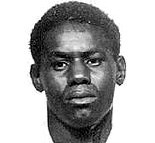
Sammie Felder
Murderer Ervil LeBaron
Murderer · USA · 1972
Ervil Morrell LeBaron (1925 to August 16, 1981) was the leader of a polygamous…
35 victims
Ervil LeBaron
Murderer · USA · 1972
Ervil Morrell LeBaron (1925 to August 16, 1981) was the leader of a polygamous…
35 victims
 Brian Kevin Rosenfeld
Murderer · USA · 1985
Brian Kevin Rosenfeld Brian Kevin Rosenfeld was sentenced to three concurrent l…
23 victims
Brian Kevin Rosenfeld
Murderer · USA · 1985
Brian Kevin Rosenfeld Brian Kevin Rosenfeld was sentenced to three concurrent l…
23 victims
 Marvin Gray
Murderer · USA · 1975
Marvin Gray was convicted killer who claimed responsibility for 23 slayings and…
23 victims
Marvin Gray
Murderer · USA · 1975
Marvin Gray was convicted killer who claimed responsibility for 23 slayings and…
23 victims
 Yahweh ben Yahweh
Murderer · USA · 1980
Yahweh ben Yahweh was born and legally named Hulon Mitchell Jr. (October 27, 19…
23 victims
Yahweh ben Yahweh
Murderer · USA · 1980
Yahweh ben Yahweh was born and legally named Hulon Mitchell Jr. (October 27, 19…
23 victims
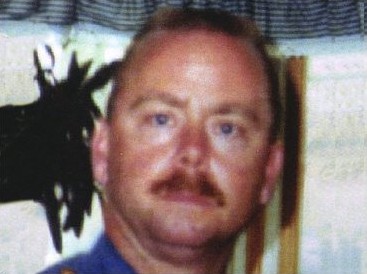 Edward Lutes
Mass murderer · USA · 2002
Edward Lutes, 42, was a police officer. Local community members described Edwar…
5 victims
Edward Lutes
Mass murderer · USA · 2002
Edward Lutes, 42, was a police officer. Local community members described Edwar…
5 victims
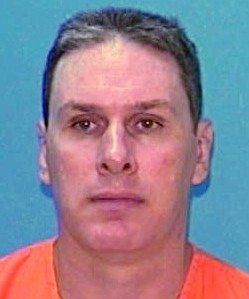 Allen Ward Cox
Murderer · USA · 1998
12/21/98 — Allen Ward Cox attacked Thomas Baker at Lake Correctional Institute,…
1 victim
Allen Ward Cox
Murderer · USA · 1998
12/21/98 — Allen Ward Cox attacked Thomas Baker at Lake Correctional Institute,…
1 victim
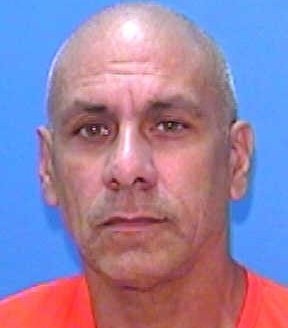 Michael George Bruno
Murderer · 1986
Michael George Bruno was convicted for the murder of Lionel Merlano. Bruno was…
1 victim
Michael George Bruno
Murderer · 1986
Michael George Bruno was convicted for the murder of Lionel Merlano. Bruno was…
1 victim
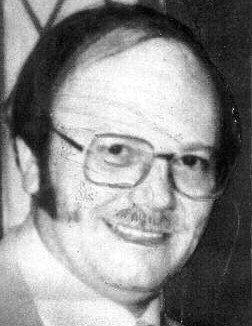 Robert Healey
Murderer · United Kingdom · 1986
Robert Healey Sentenced to life in prison on April 1, 1987 · 30 March 1987 — Ro…
2 victims
Robert Healey
Murderer · United Kingdom · 1986
Robert Healey Sentenced to life in prison on April 1, 1987 · 30 March 1987 — Ro…
2 victims
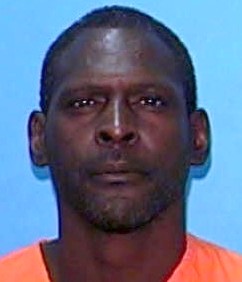 Crosley Green
Murderer · USA · 1989
Crosley Green was sentenced to death on February 8, 1981. Late in the evening o…
1 victim
Crosley Green
Murderer · USA · 1989
Crosley Green was sentenced to death on February 8, 1981. Late in the evening o…
1 victim
- Gender
- male
- Country
- USA
- Location
- Harris County, Texas, USA
- Date of birth
- August 23, 1945
- Age at first offence
- 30
- Characteristics
- robbery
- Victim profile
- James Hanks, 42 ( quadriplegic Korean War veteran)
- Method of murder
- St abbing with a pair of scissors
- Date(s) of murder
- March 13, 1975
- Years active
- 1975
- Date of arrest
- April 14, 1975
- Status
-
Executed
Executed by lethal injection on December 15 1999
Timeline
- March 13, 1975 — Felder worked his usual day shift, 6:00 a.m. to 2:00 p.m., while Emma Carroll worked the night shift, at Independent Life Styles at the Westbury Country Village Apartments in Houston, Texas.
- March 14, 1975 — Carroll made her second round to James Hanks’s apartment to reposition him in his bed and noticed that his door was open.
- March 14, 1975 — Carroll called out for Hanks and received no reply, then called Bronchee Watson, the staff supervisor and personal friend of Hanks; Watson arrived and found Hanks in his bed with faint breathing, an awkward head position, and knots on each side of his head; Watson noticed blood on the mattress underneath Hanks and attempted to stimulate Hanks’s breathing until an ambulance was called.
- March 14, 1975 — Houston police officer B.G. Stilley responded; he noticed sheets covered with blood and pillows on the floor, conducted a complete search of the apartment, and was informed that Hanks had puncture type wounds to his left and right temples and to his neck; Hanks was placed on life support.
- After about three hours at the hospital (same night/period) — Watson returned to Hanks’s apartment to try to determine what had happened; Watson noted that Hanks’s wallet was missing and that stainless steel surgical scissors were also missing.
- Early December 1999 — Felder filed a second application for state writ of habeas corpus with the convicting court.
- December 10, 1999 — The Court of Criminal Appeals dismissed the application as an abuse of the writ.
- December 14, 1999 — Texas Attorney General John Cornyn issued a media advisory that Sammie Felder was scheduled to be executed after 6 p.m. on December 15.
- December 15, 1999 — Felder was executed by lethal injection in Texas.
Background
Sammie Felder, also known as Sammie Felder Jr., was a career burglar and, at the time of the murder, worked as an orderly in a southwest Houston nursing home setting associated with handicapped people. He had been previously convicted twice and sentenced to death before being convicted a third time.
At the time of his death, Felder was 54 (the record also presents 29 in connection with the time of the murder).
The offence
Felder killed James Hanks, a quadriplegic Korean War veteran, while attempting to steal from his room during a robbery.
James Hanks had become quadriplegic as a result of a car accident while serving in the Korean War. At the time of his death, Hanks was described as being in his early forties, and separate portions of the record state Hanks’s age as 42. In the procedural background portion, Hanks was described as 41-year-old.
Carroll was assigned to care for Hanks. When Carroll discovered Hanks’s door was open, she called out and received no reply. Watson found Hanks with faint breathing, an awkward head position, and knots on each side of his head, and he observed blood on the mattress underneath Hanks.
A wallet was missing. Watson stated Hanks always kept his wallet underneath his pillow and that it usually contained between $250 and $300 cash. Another portion states the wallet contained about $300 and that Watson later noticed the wallet was missing.
Stainless steel surgical scissors that were usually kept near the bed were missing. The autopsy described multiple injuries consistent with having been inflicted by surgical scissors:
- A fatal stab wound to the left temple had penetrated the skull and into Hanks’s brain to an approximate depth of three inches (other passages describe 2 1/2 to 3 inches and describe the cause of death as a stab to the left temple penetrating into the brain).
- An additional wound was described as a one-inch long wound to the right temple.
- Cuts to the neck were described; the number of cuts is given in places as eight cuts to the neck and in another passage as ten wounds on the temples and neck.
In Felder’s later confession to Edith Cobb, Felder described returning to the man’s room at about two or three in the morning, carrying a gun, attempting to take the money, then stabbing the man in the head and throat with scissors and trying to smother him with a pillow while the man cried, “please don’t hurt me,” continuing stabbing until the man appeared not to be breathing, taking over $300 from underneath the pillow, and throwing the scissors out the window while driving. Felder told Cobb that later the same day his brother drove him to the airport and he caught a plane to Denver. Felder also stated, “a dead man tells no tales.”
A separate portion describes Felder entering through the unlocked door after it was left unlocked and, according to the confession portion, taking a camera from the front room before advancing to the rear bedroom, and stabbing Hanks after Hanks awoke and recognized him by name.
Investigation and arrest
Houston police searched the apartment for the type of weapon used and whether anything unusual had occurred elsewhere; nothing else was observed.
Hanks remained on life support for several days. After it was determined he was brain dead, his family decided to discontinue life support. Hanks died on March 18.
Felder failed to report to work the day Hanks was found and did not leave a forwarding address to receive his paycheck.
In the investigation, a dispatcher named Edith Cobb met Felder in August 1974 in Denver and helped him get a job. By November 1974, Felder left Denver and traveled to Texas. Cobb did not see Felder again until the end of March 1975, when he appeared at her father’s house and asked for a ride to the liquor store.
On April 10, 1975, Cobb informed the Denver police of what she had learned from Felder. Four days later, Felder was stopped for a traffic violation by an Idaho police officer. Under the name Alvin Eugene Yost, he produced a draft card; he was arrested after a driver’s license number and date of birth under Yost’s name could not be confirmed. The officer then found some identification with Felder’s name and learned of an outstanding Houston warrant.
In the federal procedural background portion, the record states that almost a month after the killing, on April 11, 1975, a Houston police officer filed an affidavit and felony complaint in the Harris County Justice of the Peace court charging Sammie Felder, Jr., with capital murder, and that on the same day the Texas court issued a fugitive warrant. The record further states Felder was stopped in Idaho Falls, Idaho, on a minor traffic offense; he refused to produce a driver’s license and gave a false name; Miranda warnings were given; the Texas fugitive warrant was discovered and he was held for extradition; and he was arraigned on the fugitive warrant in Bonneville County, Idaho, with local bar representative R. John Insinger, Esq. appointed to represent him.
The federal procedural background includes a description that Insinger instructed Idaho police not to question Felder about legal affairs unless he was present, and that police agreed, with an exception where they notified Insinger when they wished to question Felder about a reported murder in Denver, and Insinger agreed and was present. Later, on April 23, 1975, officer J.W. Clampitte questioned Felder in Idaho after giving the Miranda warning and obtained an oral and later written confession.
Trial
Felder was convicted a third time on February 14, 1989, of capital murder for a murder committed while in the course of a robbery. The jury affirmatively answered the two special sentencing issues and the trial court sentenced Felder to death.
A portion of the record states that on May 21, 1976, a jury in the 176th District Court convicted Felder of capital murder and sentenced him to die, and that the same verdict was returned in two later trials.
In the federal procedural discussion, Felder’s conviction and sentencing were described across appeals and habeas proceedings. The record states the Texas Court of Criminal Appeals affirmed Felder’s conviction and sentence on September 16, 1992.
Sentencing
After a separate punishment hearing at the third conviction, the jury answered both special sentencing issues in the affirmative, and the trial court sentenced Felder to death.
Appeals
Felder’s appeal to the Texas Court of Criminal Appeals was automatic because he was sentenced to death.
- September 16, 1992 — The Texas Court of Criminal Appeals affirmed Felder’s conviction and sentence.
- October 4, 1993 — The United States Supreme Court denied certiorari review.
- October 18, 1995 — The Court of Criminal Appeals denied Felder’s application for state writ of habeas corpus.
- June 2, 1998 — The United States District Court for the Southern District of Texas, Houston Division, denied relief.
- June 30, 1999 — The United States Court of Appeals for the Fifth Circuit affirmed the denial of relief.
The record also describes earlier federal proceedings:
- In a Fifth Circuit decision, the court reversed and remanded with instructions to issue a writ of habeas corpus ordering Felder released from state custody unless within ninety days the State commenced a new trial (a ruling connected to the suppression of Felder’s confession).
- In another Fifth Circuit habeas appeal, the Fifth Circuit affirmed the district court’s denial of habeas relief.
The record further states that on December 10, 1999, the Court of Criminal Appeals dismissed a second state writ application as an abuse of the writ.
Outcome
STATUS at the time of execution was lethal injection.
Felder’s last statement at the execution was: “Like to tell my friends that I love them. Appreciate them being here to support me. Alison, I love you.”
At the time of execution, intravenous lines were inserted and a lethal mixture of sodium thiopental, pancuronium bromide, and potassium chloride was administered. The record states that the lethal drugs began flowing at 6:09 p.m. and he was declared dead 6 minutes later.
Another execution timing statement in the record states he was pronounced dead at 6:15 p.m. The record also describes that Felder was moved to a special holding cell at Ellis and placed under a suicide watch on Tuesday morning, visited briefly with his attorney and spiritual adviser on Wednesday morning, and was driven to the death house after being handcuffed and shackled.
Aftermath
The media advisory described that Felder was scheduled to be executed after 6 p.m. on Wednesday, December 15.
The record states that neither Felder’s family nor that of the victim witnessed his death. It also describes statements by Hanks’s elder sister Lorene Autry and Andy Kahan, Houston mayor’s crime victims advocate:
- Lorene Autry said: “This should have happened long ago,” and “I've often wondered what happened to that man.”
- Andy Kahan said: “From the victims' perspective, justice, like in the Felder case, moves excruciatingly slowly. It prolongs the pain, grief and misery.”
The record also includes statements by other family members:
- Lorene Autry said: “I resent the fact that we've been feeding this man this long,” and “Maybe he doesn't have much of a life on death row, but he's alive.”
- Lonnie Hanks said: “He had a heart of gold,” “He was an even-tempered guy. We weren't always the best of kids. But he rarely got upset about things that would put other people in a rage.”
- A Katy businessman who asked not to be named called Hanks “a really bright guy.”
- The Katy businessman said Hanks “didn't have any enemies” and “never refused anyone anything,” in the context of victim character testimony described in the habeas discussion:
- “never refused anyone anything,”
- “was always in good spirits even though he was disabled,”
- “was a very good natured person,”
- “didn't have any enemies.”
Finally, the record includes a quotation from Sammie Felder Jr. recalling his life of crime, and an execution remark:
- “My life of crime started when I was 14 years old. It seems that I just turned bad. Not bad in the sense of someone who is constantly walking around thinking about evil deeds. Not like this. Bad in the sense that I just started doing wrong, started stealing. I was burglarizing peole's houses, I was robbing peoples [sic], I was just a common thief.”
- “It was not my intention to kill him. I just snapped.”
- “They'll ask me if I have any last words to say. If the victim's family is there, I'll probably tell them how terribly sorry I am that this happened, because there was no need for him to die. I know this is not going to be any consolation to them, because they lost a loved one. I'm very sorry for it.”
Other details
At the punishment phase, the State presented evidence of Felder’s three prior felony convictions for burglary and burglary of an automobile, arising between 1963 and 1969. The record also states Felder was carrying a concealed weapon at the time of his arrest for the instant offense.
Edith Cobb testified that Felder told her he had burglarized apartments in low-income housing projects and carried a gun during those burglaries. Cobb also stated that Felder ducked down below window level in her car as she drove past a barber shop and Felder explained he had previously robbed the barber shop.
The record states there was no evidence of drug or alcohol use connected with the instant offense.
In the procedural record and factual record, Felder’s prior imprisonment history is described:
- He began serving a 2-year sentence for burglary of an automobile in May 1963, discharged in December 1964.
- He served 2½ years of another 5-year sentence for burglary from January 1966 to July 1968.
- In April 1969, he began serving another 10-year sentence for burglary.
- He was paroled in May 1974 and discharged in January 1975, about one month before Hanks’s murder.
The record also presents earlier litigation history connected to Felder’s first two convictions:
- His conviction for the murder of James Hanks was overturned by an appeals court due to an improperly obtained confession, and on retrial he was again sentenced to die in September 1986.
- A federal procedural history notes that the Fifth Circuit reversed and remanded on the Sixth Amendment right to counsel basis, relating to Felder’s confession being obtained while counsel was not present.
The record provides some execution context and prison history:
- Felder was on death row and among Texas inmates with 20 or more years on death row; it states only 3 had been there longer than the Taylor native.
- The execution timing and witness arrangements were described: Felder was moved to the death house in the final 17 miles; Willett asked Felder to walk unhindered by restraints to the execution chamber; he was secured to a gurney with leather straps around his ankles, thighs, chest and arms; intravenous tubes were inserted in both arms; a saline drip started; and the lethal mixture was administered.
The record includes references to court proceedings involving Felder’s habeas corpus petitions and includes factual narrative that he was characterized as of low average intelligence and his IQ was given as 88 in the federal decision.
The allowed characteristics vocabulary item that fits the presented facts is robbery, which appeared in the case summary: Felder was convicted of capital murder while in the course of a robbery and was executed accordingly.
Spotted an error, or have more information about this case?