Wayne Robert Felde
Murderer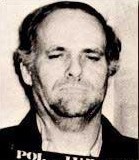 Ervil LeBaron
Murderer · USA · 1972
Ervil Morrell LeBaron (1925 to August 16, 1981) was the leader of a polygamous…
35 victims
Ervil LeBaron
Murderer · USA · 1972
Ervil Morrell LeBaron (1925 to August 16, 1981) was the leader of a polygamous…
35 victims
 Brian Kevin Rosenfeld
Murderer · USA · 1985
Brian Kevin Rosenfeld Brian Kevin Rosenfeld was sentenced to three concurrent l…
23 victims
Brian Kevin Rosenfeld
Murderer · USA · 1985
Brian Kevin Rosenfeld Brian Kevin Rosenfeld was sentenced to three concurrent l…
23 victims
 Marvin Gray
Murderer · USA · 1975
Marvin Gray was convicted killer who claimed responsibility for 23 slayings and…
23 victims
Marvin Gray
Murderer · USA · 1975
Marvin Gray was convicted killer who claimed responsibility for 23 slayings and…
23 victims
 Yahweh ben Yahweh
Murderer · USA · 1980
Yahweh ben Yahweh was born and legally named Hulon Mitchell Jr. (October 27, 19…
23 victims
Yahweh ben Yahweh
Murderer · USA · 1980
Yahweh ben Yahweh was born and legally named Hulon Mitchell Jr. (October 27, 19…
23 victims
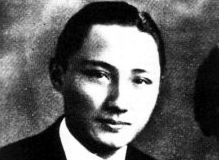 Miao Chung-yi
Murderer · United Kingdom · 1928
Chung Yi Miao was an American Chinese with a doctorate in law. He was 28 years…
1 victim
Miao Chung-yi
Murderer · United Kingdom · 1928
Chung Yi Miao was an American Chinese with a doctorate in law. He was 28 years…
1 victim
 Nellie May Madison
Murderer · USA · 1934
Nellie May Madison (1895-1953) was an American woman who was convicted of murde…
1 victim
Nellie May Madison
Murderer · USA · 1934
Nellie May Madison (1895-1953) was an American woman who was convicted of murde…
1 victim
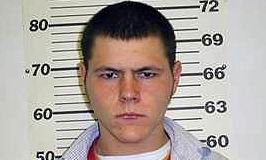 Matthew Slocum
Murderer · USA · 2011
Matthew Slocum was sentenced to 88 years to life in state prison for the shotgu…
3 victims
Matthew Slocum
Murderer · USA · 2011
Matthew Slocum was sentenced to 88 years to life in state prison for the shotgu…
3 victims
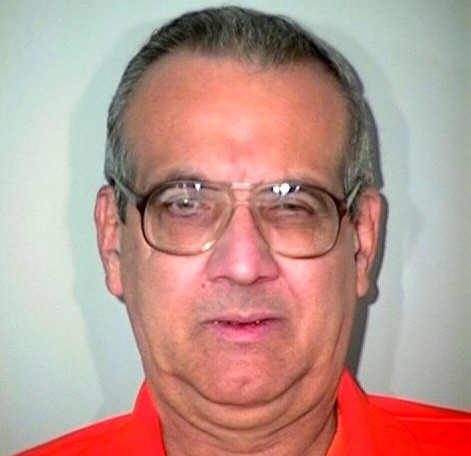 Edward Schad
Murderer · USA · 1978
Edward Schad was tried for the killing of Lorimer “Leroy” Graves, a 74-year-old…
1 victim
Edward Schad
Murderer · USA · 1978
Edward Schad was tried for the killing of Lorimer “Leroy” Graves, a 74-year-old…
1 victim
 Michael Van McDougall
Murderer · USA · 1979
Michael Van McDougall was convicted of fatally stabbing a neighbor and was late…
1 victim
Michael Van McDougall
Murderer · USA · 1979
Michael Van McDougall was convicted of fatally stabbing a neighbor and was late…
1 victim
- Gender
- male
- Country
- USA
- Location
- Caddo Parish, Louisiana, USA
- Date of birth
- March 25, 1949
- Age at first offence
- 29
- Characteristics
- mentally ill, escape attempt, motive unclear
- Victim profile
- Thomas Glenn Tompkins (Shreveport Police Officer)
- Method of murder
- Shooting
- Date(s) of murder
- October 20, 1978
- Years active
- 1978
- Date of arrest
- Same day (wounded by Police)
- Status
-
Executed
Executed by electrocution in Louisiana on March 15, 1988
Case overview
Wayne Robert Felde was sentenced to death in Louisiana for the 1978 killing of Shreveport Police Officer Thomas Glenn Tompkins. Felde was executed on March 15, 1988.
Timeline
- February 14, 1981 — A judge sentenced 32-year-old Robert Wayne Felde to death in the electric chair for the 1978 slaying of a policeman.
- January 22, 1979 — Dr. Braswell examined Felde.
- January 29, 1979 — Dr. Mauroner examined Felde.
- January 31, 1979 — Dr. Marceau examined Felde.
- February 5, 1979 — Dr. Mauroner examined Felde.
- February 19, 1979 — Dr. Braswell and Dr. Mauroner examined Felde.
- August 21 — A jury recommended death.
- October 20, 1978 — Felde was convicted of shooting Shreveport Police Officer Thomas Glenn Tompkins.
- 1978 — Felde pleaded insanity based on delayed stress from his experiences in the Vietnam War.
- March 15, 1988 — Wayne Robert Felde was executed.
- July 21, 1986 — The United States Court of Appeals for the Fifth Circuit decided a habeas matter in Wayne Robert FELDE v. Frank BLACKBURN.
- May 11, 1987 — The United States Court of Appeals for the Fifth Circuit decided another appeal in Wayne Robert Felde v. Robert H. Butler, Sr.
- June 8, 1987 — Rehearing and rehearing en banc were denied.
- 2004 — The Louisiana Supreme Court received an automatically filed appeal, with the sentence being automatically appealed (no specific year-specific outcome was stated beyond the automatic appeal statement).
People
- Wayne Robert Felde — defendant; a Vietnam veteran; convicted of shooting a police officer; sentenced to death; executed.
- Thomas Glenn Tompkins — Shreveport police officer; victim; killed in 1978 while moving Felde to jail on a drunkenness charge.
- Glen Tompkins — Shreveport police officer named as the officer shot in 1978.
- Graves Thomas — Felde’s attorney at the second trial on punishment.
- Robert Wayne Felde — same person as Wayne Robert Felde.
- Dr. Marceau — one of three examining psychiatrists on the sanity commission; examined Felde on January 31, 1979.
- Dr. Braswell — one of three examining psychiatrists on the sanity commission; examined Felde on January 22 and February 19, 1979.
- Dr. Mauroner — one of three examining psychiatrists on the sanity commission; examined Felde on January 29, February 5, and February 19, 1979.
- Frank Blackburn — Warden, Louisiana State Penitentiary (respondent in the Fifth Circuit appeal).
- Robert H. Butler, Sr. — Warden, Louisiana State Penitentiary (respondent in the Fifth Circuit appeal).
- GEE, RANDALL, and DAVIS — Circuit Judges (panel described in the Fifth Circuit decision).
- Keith Oliver — juror addressed by Felde during his testimony at sentencing.
- Joe Oliver — referenced by Felde as Keith Oliver’s cousin.
- Mr. Coker — referenced by Felde.
- Tommy Strange — referenced by Felde as one of Mr. Coker’s good friends.
- Judge Humphries — judge thanked by Felde during his closing remarks.
- The jury — recommended death; later returned a death sentence.
- Maya Ying Lin — Yale University student; won a design competition for a national memorial; her quoted statements and the memorial discussion framed narrative context.
- Robert Muller — executive director of Vietnam Veterans of America; quoted about the issues driving Vietnam veterans.
- John Wilson — psychologist who had studied more than 500 cases of post-traumatic stress; quoted on symptom patterns and a peak in 1990.
- Tong That Tung — Vietnamese scientist; studied soldiers and birth defects in their children.
Background
Felde pleaded insanity based on delayed stress from his experiences in the Vietnam War. He later described himself as “a troubled and wrecked man” and made statements to the court about his condition and preference for execution.
Felde had been a fugitive from a Maryland prison where he had been serving time for manslaughter. He had also escaped from a minimum-security facility in 1976.
Felde grew up in a white, middle-class family in Maryland. After graduating from high school in 1967, he planned to attend veterinary school but enlisted in the Army instead. He arrived in Vietnam in March of 1968, on the day he turned 19.
The offence
Felde was convicted of shooting Shreveport Police Officer Thomas Glenn Tompkins in the back in 1978 while Officer Tompkins was moving him to jail on a charge of drunkenness.
The prosecutor’s closing statement and rebuttal included reference to evidence not in the record and included a warning that if the petitioner was found not guilty by reason of insanity he might easily escape.
Investigation
The narrative described Felde having a concealed .357 magnum which had been overlooked by the arresting officer. When the officer tried to stop him, the gun went off. The officer was killed by an errant bullet that split on a seat spring and severed a vein in his groin.
Arrest and custody
Officer Tompkins had been moving Felde to jail on a charge of drunkenness when the shooting occurred.
Felde had been serving time for manslaughter in Maryland prior to being a fugitive. After his escape in 1976, Felde spent the next two years on the run.
After the Shreveport incident, Felde was captured after being felled by shotgun blasts.
Trial
A judge sentenced 32-year-old Robert Wayne Felde to death in the electric chair as he had requested. The sentence was automatically appealed to the Louisiana Supreme Court.
Felde asked the jury to sentence him to death, and both Felde and his attorney, Graves Thomas, asked that he be executed at the second trial held on the issue of punishment.
Felde’s defence was based on post-traumatic stress syndrome occurring as a result of his military service in Vietnam.
The jury recommended death on August 21, and the members of the jury, some of whom were described as weeping during the trial, agreed with the defense’s contention that Felde’s actions had antecedents in Vietnam. Nevertheless, the jury convicted him of first-degree murder and complied with his request that he be sentenced to death rather than life imprisonment without hope of psychiatric care.
A recorded statement attributed to Felde was included in the sentencing context:
“I am not a criminal but a troubled and wrecked man. Like many other vets I know what Vietnam did to me.... Critical wounds do not always pierce the skin, but enter the hearts and minds and dreams of those that are only begging for help so badly needed.”
At sentencing, Felde made statements about state law and suicide if the death penalty were reduced:
“I think state law says the Supreme Court can take away a the death penalty and change it to life but if they do, I'll kill myself,”
He also stated:
“I know that I could not survive in prison as I told the jurors,”
and:
“Given the choice between life in prison or execution, I prefer execution as either means death to me anyway.”
Felde’s final words were:
“You can kill the messenger, but you can't kill the message.”
Felde filed a class action suit on behalf of the inmates at the Rapides Parish Jail where he was housed.
Jury statement through its foreman
Through its foreman, the jury added:
“We, the Jury, recognize the contribution of our Viet Nam veterans and those who lost their lives in Viet Nam. We feel that the trial of Wayne Felde has brought to the forefront those extreme stress disorders prevalent among thousands of our veterans. We have attempted, through great emotional and mental strain, to serve and preserve the judicial branch of our government by serving on this Jury. This trial will forever remain indelibly imprinted upon our minds, hearts, and consciences. Through long and careful deliberation, through exposure to all evidence, we felt that Mr. Felde was aware of right and wrong when Mr. Thompkins' life was taken. However, we pledge ourselves to contribute whatever we can to best meet the needs of our veterans.”
Closing and testimony at the sentencing phase (Appendix)
Felde’s testimony began addressing the jury even before his attorney asked him a question:
BY MR. FELDE: A. All I can say to you all is.... I would advise you to return the death penalty in this case.... Keith Oliver, I know your cousin Joe Oliver. We were cell partners for about eight (8) months.... Mr. Coker, I know one of your good friends, too, Tommy Strange. We picked this Jury and we picked them on intelligence. I consider all of you people intelligent so I hope you will take my advice, return the death penalty. Thank you.
Then, after his attorney asked a question about control of future actions:
BY MR. THOMAS: Q. What if.... the death penalty is not returned, Wayne, do you think you will be able to control your actions in the future? Can you guarantee them that you could control your actions if you would--(Interrupted) A. I think other deaths will result. Yes, Mr. Thomas, I do. And that's why I suggested it, to prevent it from happening. They would be on your conscience if you can't return it. Now, I'm not trying to put you all in a bad position but you all are taking other people's lives in your hands, along with mine, so I think you should return it. I don't think no more needs to be said, Mr. Thomas. They're upset. The state and then Thomas made their closing remarks. Thomas did not plead for Felde's life:
Graves Thomas made closing remarks:
BY MR. THOMAS: What I am going to convey to you is not necessarily my own thoughts but more those of my client, although, in some respects, I share them.... I can't tell anyone to take someone else's life but I think if that is the case only the person whose life is to be taken has that right, and I believe that you have heard him testify a short time ago.... [A]t this point, I believe there is only one kind of help you can give him because I am not going to stand up here and tell you that you are doing him a favor by giving him life, because Angola is hell and for a crippled man, it's hell twice over, and I think that's where he is going to go, first degree murder of a Shreveport policeman.... There are a lot of thoughts going through my head right now and there's no way.... I keep thinking.... I'm waiting for something to come in here and tell me, you know, there's some reason I should ask you to spare this man but there's not. There, honestly, is not. There's not one reason that I can think of for him to continue to experience what he has been experiencing. I cannot think of one reason.
Felde addressed the jury again in his capacity as co-counsel:
BY MR. FELDE: All I have to say is.... whether you all believed what we'd said throughout this defense or not, it is true. There are two hundred thousand other veterans suffering with it and I'm sorry you didn't believe it but, however, I do pray that you will come back with the death penalty. I'm not coming out and threatening anybody because that's not what it is. A walking time bomb, that's what it is. Somebody else will die as a result of it if I'm not put to death, I am sure. It's happened twice in eight years. There's been ten years of proof shown to you. I don't know where it went so, please, return that. I think, as countrymen, you owe me that much. I did my part. Please do yours. Okay? Thank you. Thank you, Judge Humphries, for a fair trial.
Sentencing
On February 14, 1981, a judge sentenced 32-year-old Robert Wayne Felde to death in the electric chair for the 1978 slaying of a policeman.
A second trial was held on the issue of punishment, with both Felde and his attorney Graves Thomas asking that he be executed.
Appeals
Fifth Circuit — 1986 decision (habeas claims)
In Wayne Robert FELDE v. Frank BLACKBURN, Warden, Louisiana State Penitentiary, No. 85-4437, the United States Court of Appeals for the Fifth Circuit decided on July 21, 1986.
Felde’s habeas petition argued that he was denied effective assistance of counsel in the penalty phase when his attorney, acting on instructions, suggested life imprisonment would be unbearable and requested death, which the jury returned. Felde contended he was mentally incompetent to give such instructions, and that the attorney was derelict in duty for following them.
The court discussed its reasoning in Autry v. McKaskle, and concluded that the record was incomplete on the sentencing competence issue. It remanded for expanded record proceedings on whether the state court’s competence finding was fairly supported by the record. If the district court concluded the state finding was not entitled to a presumption of correctness, it should conduct an evidentiary hearing and make findings on whether there was an “absence of apparent mental deficiency” such that Autry principles would be satisfied.
The Fifth Circuit found no merit in the other claims: prosecutor remarks, jury selection arguments, and prosecution references to statements made by Felde to a psychiatrist during court-ordered sanity commission examination (as impeachment in cross-examination, closing statement, and rebuttal).
The court’s conclusion was:
- It found no merit in any of Felde’s claims save his contention that he lacked effective assistance of counsel in the sentencing phase.
- It remanded to the district court for proceedings consistent with the opinion.
Fifth Circuit — 1987 decision (habeas remand)
In Wayne Robert Felde v. Robert H. Butler, Sr., Warden, Louisiana State Penitentiary, the United States Court of Appeals for the Fifth Circuit decided on May 11, 1987, and rehearing and rehearing en banc were denied on June 8, 1987.
The court described Felde as convicted of assault and manslaughter in Maryland, then murdering a policeman in Louisiana while at large after escaping from custody, and being crippled by shotgun fire during being reapprehended. At the capital murder trial, it described the strategy as seeking either acquittal on grounds of insanity (post-traumatic stress syndrome arising from combat service) or a death sentence.
After remand, the district court concluded that Felde was not prejudiced by counsel’s failure to seek a hearing on competence to stand trial at the sentencing phase and that Felde had the ability to consult with counsel with rational understanding and had rational and factual understanding of the proceedings.
The Fifth Circuit affirmed:
“AFFIRMED.”
The court also discussed an additional contention about whether trial counsel actively sought the death penalty and whether that would be ineffective assistance. The court said it did not need to decide, but held there was no reasonable probability of a different result given counsel’s indirect, bookended comments framed by Felde’s preceding assertions and concluding pleas for death.
Outcome
Wayne Robert Felde’s death sentence was carried out by execution.
Aftermath
The narrative stated that Felde was executed on March 15, 1988.
Felde had injuries described in the narrative including loss of a kidney and part of his liver, and his right leg being crippled.
The narrative included discussion of Vietnam veterans’ delayed stress syndrome and other issues, and it quoted:
“What drives the Vietnam veteran is not so much his own particular situation, although for some guys it's a very stressful and difficult situation. But it's more than that. It's the issues that were at the heart of the Vietnam era.”
It also included statements attributed to John Wilson:
“Iruption of its symptoms among Vietnam veterans will increase, peaking in 1990.”
Spotted an error, or have more information about this case?