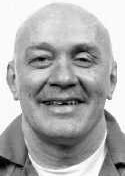
D. H. Fleenor
Murderer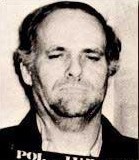 Ervil LeBaron
Murderer · USA · 1972
Ervil Morrell LeBaron (1925 to August 16, 1981) was the leader of a polygamous…
35 victims
Ervil LeBaron
Murderer · USA · 1972
Ervil Morrell LeBaron (1925 to August 16, 1981) was the leader of a polygamous…
35 victims
 Brian Kevin Rosenfeld
Murderer · USA · 1985
Brian Kevin Rosenfeld Brian Kevin Rosenfeld was sentenced to three concurrent l…
23 victims
Brian Kevin Rosenfeld
Murderer · USA · 1985
Brian Kevin Rosenfeld Brian Kevin Rosenfeld was sentenced to three concurrent l…
23 victims
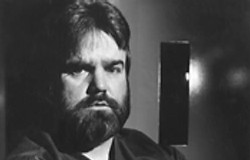 Marvin Gray
Murderer · USA · 1975
Marvin Gray was convicted killer who claimed responsibility for 23 slayings and…
23 victims
Marvin Gray
Murderer · USA · 1975
Marvin Gray was convicted killer who claimed responsibility for 23 slayings and…
23 victims
 Yahweh ben Yahweh
Murderer · USA · 1980
Yahweh ben Yahweh was born and legally named Hulon Mitchell Jr. (October 27, 19…
23 victims
Yahweh ben Yahweh
Murderer · USA · 1980
Yahweh ben Yahweh was born and legally named Hulon Mitchell Jr. (October 27, 19…
23 victims
 Russell Ellwood
Murderer · USA · 1991
Russell Ellwood was a former taxi driver. Authorities suspected him of killing…
20 victims
Russell Ellwood
Murderer · USA · 1991
Russell Ellwood was a former taxi driver. Authorities suspected him of killing…
20 victims
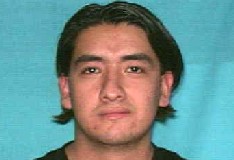 Erik Salvador Ayala
Murderer · USA · 2009
Erik Salvador Ayala opened fire indiscriminately outside an under-21 nightclub,…
2 victims
Erik Salvador Ayala
Murderer · USA · 2009
Erik Salvador Ayala opened fire indiscriminately outside an under-21 nightclub,…
2 victims
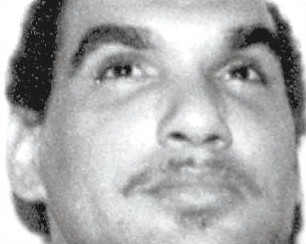 Larry Allen Stout
Murderer · USA · 1987
Larry Allen Stout, aged 33, pleaded guilty in a Virginia court to the robbery a…
1 victim
Larry Allen Stout
Murderer · USA · 1987
Larry Allen Stout, aged 33, pleaded guilty in a Virginia court to the robbery a…
1 victim
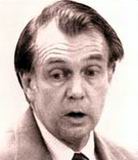 Richard Crafts
Murderer · USA · 1986
Richard Crafts was sentenced to 50 years in prison on January 9, 1990. Helle Cr…
1 victim
Richard Crafts
Murderer · USA · 1986
Richard Crafts was sentenced to 50 years in prison on January 9, 1990. Helle Cr…
1 victim
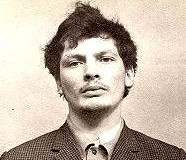 Patrick David Mackay
Serial killer · United Kingdom · 1973
Patrick David Mackay was born on September 25, 1952, in England. He was the son…
11 victims
Patrick David Mackay
Serial killer · United Kingdom · 1973
Patrick David Mackay was born on September 25, 1952, in England. He was the son…
11 victims
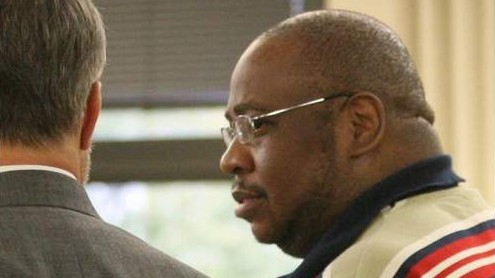 Dellmus Colvin
Serial killer · 1987
Dellmus Colvin (also written as Dellmus Colvin; truck driver): convicted serial…
7 victims
Dellmus Colvin
Serial killer · 1987
Dellmus Colvin (also written as Dellmus Colvin; truck driver): convicted serial…
7 victims
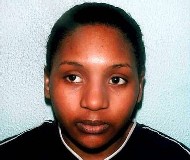 Kemi Adeyoola
Homicide · United Kingdom · 2005
Kemi Adeyoola was convicted of murdering 84-year-old Anne Mendel. Adeyoola had…
1 victim
Kemi Adeyoola
Homicide · United Kingdom · 2005
Kemi Adeyoola was convicted of murdering 84-year-old Anne Mendel. Adeyoola had…
1 victim
- Gender
- male
- Country
- USA
- Location
- Johnson County, Indiana, USA
- Date of birth
- October 29, 1951
- Age at first offence
- 31
- Characteristics
- revenge, alcohol, mentally retarded, rape
- Victim profile
- Nyla Harlow, 49, and Bill Harlow, 58 ( his parents-in-law )
- Method of murder
- Shooting with .22 handgun
- Date(s) of murder
- December 12, 1982
- Years active
- 1982
- Date of arrest
- Next day
- Status
-
Executed
Executed by lethal injection in Indiana on December 9, 1999
Case name
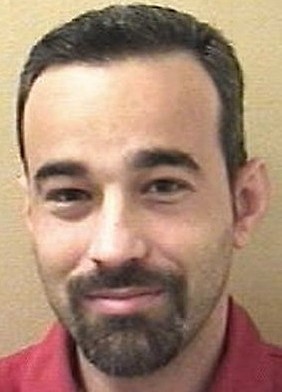
D. H. Fleenor
Status / outcome
D. H. Fleenor was executed by lethal injection in Indiana on December 9, 1999.
Background
As of 12 October 1999, 38 prisoners were under sentence of death in Indiana. Since executions resumed, 6 prisoners had been put to death in the state under its present death penalty laws. The most recent execution in Indiana was Robert Smith in 1998. The method of execution was lethal injection. The power to grant clemency rested with the state governor. The Constitution of Indiana stated: "The penal code shall be founded on the principles of reformation, and not vindictive justice."
D. H. Fleenor had been sentenced to die in Johnson County after he was convicted in the murders of Bill and Nyla Harlow of Madison, his parents-in-law. Fleenor had shunned attempts to save his life in the last few months and skipped his own clemency hearing two weeks before Wednesday in the events described. He reportedly told one clemency board member that he was guilty and to show him "no mercy."
D. H. Fleenor was mentally retarded and had abused alcohol. Several days before the incident, Fleenor and his wife sought, but were refused, help for his alcohol problem. A recent Indiana law barred the death penalty for the mentally retarded, but it was stated that it would not affect Fleenor because he was sentenced before the law's passage. The pending execution was described as being governed by the legal position that a prohibition was declared non-retroactive and that the Governor could grant clemency to an individual who was mentally retarded.
It was also stated that Fleenor’s mental state at the time of the homicides and his present mental state rendered him unfit for the death penalty. The Department of Corrections would not release Fleenor’s records without a court order which inhibited his lawyers from gathering information about his current mental state.
The offence
D. H. Fleenor murdered Nyla Jean and Bill Harlow in 1982.
The incident timeline included the following dated sequence:
- On December 12, 1982, between 3:00 p.m. and 4:00 p.m., Fleenor purchased a ".22 Colt Peacemaker."
- During the course of the afternoon, he consumed approximately four beers, and he smoked a marijuana cigarette.
- Between 4:00 p.m. and 5:00 p.m., Sandra Sedam and Nyla Harlow were Christmas shopping at a department store. At the store, they encountered Fleenor, and they talked to him for about ten minutes. Fleenor was agitated and might have been drinking before this conversation.
- At approximately 6:30 p.m., Fleenor sought out Sandra Sedam at a church service. He behaved properly in the church, he apologized for the earlier meeting, and then he left.
- Afterwards, he was given a ride to the area of the Harlow's home, and he entered it.
- At 7:30 p.m., Bill Harlow, Nyla Harlow, Sandra Sedam, Sandra's little boy Justin, and Bill Harlow's grandchildren Billy and Angie returned home from church. Bill and Nyla started talking about Fleenor showing up at the church.
- Appellant then appeared in the hallway, and he shot Bill. He ordered the two women and the children to sit on the couch.
- He allowed Nyla to go to her husband Bill, who was on the floor.
- As she assisted Bill, Fleenor shot her in the head.
- He ordered Sandra, Billy and Angie to carry Nyla into the bedroom.
- Fleenor then drove to the home of James Sedam, Sandra's brother, with Sandra, Billy, Angie and Justin.
- Fleenor ordered Angie to tell James that they were going out of town for a few days.
- They then returned to the Harlow's home.
- Bill Harlow was conscious, and he asked about his wife. Bill asked Fleenor not to leave him there.
- Appellant then said to Sandra, "You know I have to .. I can't let him suffer any more"
- Immediately thereafter, Fleenor shot Bill Harlow again.
- The next morning, Fleenor fled to Tennessee with Sandra, Billy, Angie and Justin accompanying him.
- While in Tennessee, Fleenor called his mother in Indiana, and he told her that he thought he killed the Harlows.
A separate narrative in the case record described the same events as follows: Fleenor bought a gun and used it on his in-laws, killing them both as they arrived home from church. He shot Bill Harlow in the abdomen. When his mother-in-law went to help, he shot her in the head. He told his wife to drag her mother's body to another room. Then he left, taking Sandra and the children. Eventually, they returned to the Harlow home to find Bill Harlow still alive. Fleenor shot him again, killing him. Fleenor fled with his wife and the children to Greeneville, Tenn., where police captured him at a relative's home.
The convictions included murder and burglary. It was stated that Bill and Nyla were killed in Madison. The judgment of the trial court was affirmed in all things in Fleenor v. State, 514 N.E.2d 80 (Ind. 1987) (Direct Appeal). It was also stated that the Harlow’s both died from gunshot wounds to the head.
Investigation and arrest
After the shootings, Fleenor fled with his wife and the children to Greeneville, Tenn., where police captured him at a relative's home. During the course of the afternoon of the killings, he consumed approximately four beers and smoked a marijuana cigarette.
Friends of Fleenor testified that he bought a .22-caliber pistol on Dec. 12, 1982—the day of the killings—and that they dropped him off near the Harlow home. He went in and waited for them to return from church.
Trial
Fleenor was found guilty on Dec. 1, 1983. At trial in Johnson County, Fleenor was found guilty on Dec. 1, 1983; the jury recommended the death penalty, and then-Johnson Circuit Judge Larry McKinney imposed on Jan 4, 1984.
At sentencing, it was stated that Fleenor was sentenced to death for the murders of his mother-in-law and father-in-law in their Madison home. The record described the murder convictions as for the murders of Bill and Nyla Harlow.
The case record stated that Fleenor was convicted in the Circuit Court, Johnson County, Larry J. McKinney, J., of murder and burglary, and received death sentence. It was stated that there was no record before the court showing that a sentence for burglary was given.
In the direct appeal description, it was stated that:
- A jury returned verdicts of guilty on all counts.
- The jury recommended a death sentence.
- Appellant received a death sentence for the murder.
During trial, Fleenor’s attorneys argued that he was stressed over the impending divorce and was drinking heavily. It was also stated that Sandra Sedam testified at the penalty phase of Fleenor’s trial and expressed opposition to the death penalty and that the victims opposed its use. Angie Harlow, the Harlows’ granddaughter who was also present at the murder, gave testimony at post-conviction that she opposed imposition of capital punishment as well.
Sentencing
Fleenor was sentenced to death. The jury recommended the death penalty and then-Johnson Circuit Judge Larry McKinney imposed the death penalty on Jan 4, 1984.
Appeals
Fleenor v. State, 514 N.E.2d 80 (Ind. 1987) (Direct Appeal)
It was stated that Fleenor v. State was a direct appeal from two convictions for murder, I.C. § 35-42-1-1, and a conviction for burglary, I.C. § 35-43-2-1. It was stated that the jury returned verdicts of guilty on all counts and recommended a death sentence, and that Appellant received a death sentence for the murder under I.C. § 35-50-2-9. It was stated there was no record before the court showing that a sentence for burglary was given.
The Supreme Court held that: (1) photographs of victims and crime scene were admissible; (2) evidence established that defendant had requisite intent to commit murder; (3) instructions given during penalty phase were not misleading; (4) trial court did not reach final sentencing decision before hearing all evidence; and (5) death penalty statute is not unconstitutional.
It stated that the judgment of the trial court was affirmed in all things.
It listed twenty-one issues on appeal: (1) whether the right to an impartial jury was denied by the exclusion of prospective jurors who could not conscientiously consider the death penalty; (2) whether several prospective jurors were improperly excluded due to their views on the death penalty; (3) whether the trial court erred in admitting into evidence several State's exhibits which consisted of photographs depicting the victims and the crime scene; (4) whether there is sufficient evidence to support the convictions; (5) whether the trial court erred in refusing the tendered penalty phase Instruction No. 3 and in editing the tendered penalty phase Instruction No. 2; (6) whether the trial court erred in giving penalty phase Instructions No. 4 and No. 12; (7) whether the trial court erred in refusing to admit into evidence appellant's Exhibit B, a report documenting the death penalty positions of various religious organizations; (8) whether the trial court denied him the right to be heard at the sentencing hearing; (9) whether the trial court failed to find, value and weigh all existing mitigating circumstances; (10) whether the death penalty statute has reduced the arbitrary, capricious and random selection of those sentenced to death; (11) whether death by electrocution is cruel and unusual punishment under the Eighth Amendment of the United States Constitution; (12) whether the death penalty statute violates Article 1, § 18 of the Indiana Constitution; (13) whether the death penalty statute is unconstitutional due to the degree of prosecutorial discretion it vests in charging; (14) whether the death penalty statute is unconstitutional because it does not provide for the automatic exclusion of jurors who would always vote for the death penalty in murder cases; (15) whether the death penalty statute is unconstitutional because it does not require the jury to make written findings of fact; (16) whether the death penalty statute is unconstitutional because it does not specifically guide the sentencer's discretion in weighing the aggravating circumstances and the mitigating circumstances; (17) whether the death penalty statute is unconstitutional because it does not require the sentencer to find that the aggravating circumstances outweigh the mitigating circumstances beyond a reasonable doubt; (18) whether the death penalty statute is unconstitutional because it does not prescribe specific rules to govern appellate review of death sentences; (19) whether the death penalty statute is unconstitutional because it does not require any comparative proportionality review; (20) whether the death penalty statute is unconstitutional because it does not require a finding of specific intent to kill in order for the death penalty to be imposed when the underlying charge is felony murder; and (21) whether the death penalty statute is unconstitutional because it permits burglary to be employed as an aggravating circumstance where burglary is also an independent offense.
Fleenor v. State, 622 N.E.2d 140 (Ind. 1993) (PCR)
It was stated that Fleenor’s petition for postconviction relief was denied by the Circuit Court, Johnson County, Jeffrey Eggers, J. Defendant appealed. The Supreme Court, DeBruler, J., held that: (1) voir dire examination did not lead jury to believe that responsibility for death penalty rested elsewhere in violation of Eighth Amendment; (2) jury instruction and prosecutor's argument on possible terms of imprisonment were not unconstitutional; (3) jury instructions were adequate; (4) permitting state to use opinion of court-appointed psychiatrist on defendant's future dangerousness during guilt phase was not unconstitutional; and (5) double jeopardy did not prohibit finding of intentional killing on capital penalty issue after conviction based on knowing murders.
It stated that the judgment was affirmed.
Fleenor v. Anderson, 171 F.3d 1096 (7th Cir. 1999) (Habeas)
It was stated that after the murder conviction and death sentence were upheld on direct appeal (514 N.E.2d 80), petitioner sought federal habeas corpus relief. The United States District Court for the Southern District of Indiana, David F. Hamilton, J., denied relief. Petitioner appealed. The Court of Appeals, Posner, Chief Judge, held that: (1) judge's voir dire statement to juror that jury's death sentence recommendation was not binding, and could be ignored or accepted, was not misleading under Indiana law; (2) prosecution's rebuttal argument indicating that jury's death recommendation was not final and would be reviewed by sentencing court, state supreme court, and possibly other courts was not reversible error; and (3) prosecutor's rebuttal use during sentencing of report of psychiatrist who had examined petitioner to determine his sanity at time of trial and of murders did not violate petitioner's right to assistance of counsel.
Clemency and final appeals before execution
On Wednesday, Governor Frank O'Bannon refused to grant clemency to convicted killer D. H. Fleenor and said it was not his role to "second-guess" years of judicial proceedings. O'Bannon said it meant only the federal courts could stop Fleenor’s execution, scheduled to begin Thursday at 12:01 a.m. CST. It was stated that lawyers from the Midwest Center for Justice filed a petition Wednesday with the 7th U.S. Circuit Court of Appeals asking the court to stop the execution until psychiatrists could establish that Fleenor was mentally competent to face the state's death chamber. It was stated that similar appeals to the Indiana Supreme Court and U.S. District Court in Indianapolis already had failed.
O'Bannon said suggestions that Fleenor's present mental state rendered him unfit for the death penalty "is refuted by overwhelming evidence that he knows he is about to die; knows why; and appears to have accepted that he is about to face the ultimate punishment for his crimes."
On this issue, O'Bannon said:
"On this issue, I will not substitute my judgment for the courts and the mental health professionals,"
It was stated that O'Bannon's decision meant only the federal courts could stop Fleenor’s execution. It was stated that Wednesday night the U.S. Supreme Court and, earlier, the 7th U.S. Circuit Court of Appeals in Chicago rejected final appeals. It was stated that until then, Tom Schornhorst, Alan Freedman and Carol Heise were staying in their offices pursuing every opportunity to delay the execution despite objections from their former client.
Heise said:
"Practicality and his best interests dictate that we stay here and try to stop the execution of someone who is so mentally ill and incompetent that he doesn't even know he's going to be executed,"
Heise also said:
"We have to make a choice between litigating his issues or being there with a client who doesn't know he's going to be executed, and who thinks we're working for the state,"
It was stated that the governor’s office received nearly 400 letters, most opposing the execution.
Execution day events
It was stated that on Wednesday, Fleenor, 48, spent what probably was his last day alive in a way not much different from every day during his 17 years in prison, according to Department of Correction spokeswoman Pam Pattison. Fleenor socialized with the 41 other inmates who shared Death Row with him. He telephoned his sister in southern Indiana. He received a message of forgiveness from witness Angie Harlow. Fleenor called prison on Wednesday evening.
Angie Harlow, who was 13 when her grandfather and stepgrandmother were killed, lived in Anderson and had a family of her own. Harlow called the prison Wednesday evening and said:
"I believe in forgiveness,"
It was stated that Fleenor did not ask to see a chaplain, but asked that prison staff who had come to know him over the years be allowed to visit him. Those staff members shared "idle chitchat."
Fleenor’s case was described as unusual by attorneys continuing to represent him. Heise pointed to erratic behavior including firing his attorneys, claiming to be represented by another, nonexistent attorney, and trying to schedule interviews months after he was scheduled to die to bolster an argument that he was not competent to face the executioner. It was stated that, according to court documents, in November Fleenor told prison staff that he wanted to tell the media "the truth about how his attorneys, the judge, and others lied." It was further stated that, according to DOC spokesman Barry Nothstine, Fleenor tore up a request last week from The Indianapolis Star for an interview.
It was stated that O'Bannon found himself denying clemency to a prisoner who never even asked for it. It was stated that in his statement, O'Bannon reasoned that Fleenor also never explicitly said he wanted the state to kill him. It was stated that O'Bannon rejected claims that Fleenor's mental state was deteriorating, reiterating the evidence that Fleenor knew he was about to die, knew why, and had accepted that he was about to face the ultimate punishment for his crimes.
Execution arrangements
A Department of Correction memo described a chronology leading up to execution. It stated: "Offender receives shower and new clothing ... at approximately 6 p.m.,"
It described the offender being transferred to a cell adjacent to the execution room. It stated that Indiana law said, "The death penalty shall be inflicted before the hour of sunrise." It stated that the execution process began at 12:01 a.m.
The described execution process included:
- Right after midnight, a dozen prison officials, the "cell extraction team," also called the "execution team," presented themselves at the offender's cell door with a gurney.
- The offender walked out of the cell and was placed on the gurney and strapped to it.
- Somebody asked for the offender's last words.
- The offender was rolled into the execution room and a superintendent made a call to a "prison command center" to ask if there was any word of a postponement from the governor or the courts.
- A team member searched for a vein, found one, and spiked it with a needle.
- Sodium pentothal was drippped into the offender’s vein.
- A team member got out the pancuronium bromide muscle relaxer, then got out the potassium chloride.
- A doctor pronounced the offender dead.
- A hearse was waiting, and the prison had an arrangement with the Michigan City funeral home of Ott Haverstock to retrieve bodies of people who got executed.
People involved
Defendant
- D. H. Fleenor (white; 48; inmate on Death Row; convicted killer; described as mentally retarded and having abused alcohol)
Victims
- Nyla Jean Harlow (killed in 1982; described as the wife’s mother; reported as one of the murders)
- Bill Harlow (killed in 1982; described as the victim murdered in Madison; reported as one of the murders)
Defendant’s family and relatives mentioned
- Sandra Sedam (estranged wife of D. H. Fleenor; daughter of Nyla Jean Harlow; filed for divorce in November 1982; also named as carrying Nyla into the bedroom)
- Justin (Sandra's little boy; present at the time of the killings)
- Billy (Bill Harlow’s grandchild; present at the time of the killings)
- Angie (Bill Harlow’s grandchild; present at the time of the killings; gave testimony and later called the prison)
- James Sedam (Sandra’s brother; home where the group drove to and where Fleenor ordered Angie to tell James they were going out of town for a few days)
- Angie Harlow (daughter of Bill Harlow’s side; granddaughter present at the murder; later called the prison; 13 at the time)
Other named individuals
- Pam Pattison (Department of Correction spokeswoman)
- Barry Nothstine (DOC spokesman)
- Phil Bremen (O'Bannon's spokesman)
- Governor Frank O'Bannon
- Tom Schornhorst (lawyer)
- Alan Freedman (lawyer)
- Carol Heise (lawyer; works for the Chicago-based Midwest Center for Justice)
- Judge Larry J. McKinney (then-Johnson Circuit Judge; imposed death sentence)
- Judge Jeffrey Eggers (Circuit Court judge who denied PCR)
- Chief Judge Posner (Court of Appeals; Posner, Chief Judge)
- David F. Hamilton (U.S. District Court judge who denied habeas relief)
- The named justices cited in the direct appeal: SHEPARD, C.J., and GIVAN, PIVARNIK and DICKSON, JJ.
- The named justices cited in the holdings: DeBruler, J.
Other details
D. H. Fleenor was scheduled to be executed on 9 December 1999. His clemency hearing was scheduled for 29 November 1999. It was stated that he was scheduled to become the seventh person executed in Indiana since the state reauthorized the death penalty in 1977.
It was stated that the victim’s daughter, Sandy Sedam, testified at the penalty phase and expressed opposition to the death penalty as well as the victims’ opposition to its use. It was also stated that D. H. Fleenor’s mother turned him in to the authorities and testified by pleading for a sentence other than death.
Prison officials would testify that Fleenor had been a cooperative prisoner.
A protest narrative included:
- Claire Morrison, a junior at North Central High School, said: "I think it's disgusting and wrong that it's happening, and I want people to know that,".
- J.B. Shenk and 2 friends drove across the state from Goshen College for a vigil against the execution; Shenk said: "Christ's example shows "we don't take life, but we save life,""
- Tim Blakley of Indianapolis demonstrated for the death penalty and interpreted scriptures; Blakley said: "the state is God's agent to carry out penalties on the wrongdoer."
- Heise said: "One wonders what public good is served by executing someone who doesn't even appreciate that retribution is being taken,".
The case record also described that Fleenor’s wife and his mother sought help for his habits just days before the murders occurred, but treatment was denied.
Spotted an error, or have more information about this case?