Larry Allen Stout
Murderer Brian Kevin Rosenfeld
Murderer · USA · 1985
Brian Kevin Rosenfeld Brian Kevin Rosenfeld was sentenced to three concurrent l…
23 victims
Brian Kevin Rosenfeld
Murderer · USA · 1985
Brian Kevin Rosenfeld Brian Kevin Rosenfeld was sentenced to three concurrent l…
23 victims
 Yahweh ben Yahweh
Murderer · USA · 1980
Yahweh ben Yahweh was born and legally named Hulon Mitchell Jr. (October 27, 19…
23 victims
Yahweh ben Yahweh
Murderer · USA · 1980
Yahweh ben Yahweh was born and legally named Hulon Mitchell Jr. (October 27, 19…
23 victims
 Russell Ellwood
Murderer · USA · 1991
Russell Ellwood was a former taxi driver. Authorities suspected him of killing…
20 victims
Russell Ellwood
Murderer · USA · 1991
Russell Ellwood was a former taxi driver. Authorities suspected him of killing…
20 victims
 Brenda Hodge
Murderer · Australia · 1983
Brenda Hodge was born Dorothy Brenda White in Victoria in 1951 to Beryl Nanette…
1 victim
Brenda Hodge
Murderer · Australia · 1983
Brenda Hodge was born Dorothy Brenda White in Victoria in 1951 to Beryl Nanette…
1 victim
 Michael Shellito
Murderer · USA · 1994
Michael Shellito was tried in the Fourth Judicial Circuit, Duval County, in Cas…
1 victim
Michael Shellito
Murderer · USA · 1994
Michael Shellito was tried in the Fourth Judicial Circuit, Duval County, in Cas…
1 victim
 Frederick Cumming-El
Murderer · USA · 1991
Frederick Cumming-El (also known as Frederick Wooden) was born on 01/11/58. He…
1 victim
Frederick Cumming-El
Murderer · USA · 1991
Frederick Cumming-El (also known as Frederick Wooden) was born on 01/11/58. He…
1 victim
 Larry Bellmore
Murderer · USA · 1985
Larry Bellmore Bellmore and Wesley went to Denney's home near Martinsville. Aft…
1 victim
Larry Bellmore
Murderer · USA · 1985
Larry Bellmore Bellmore and Wesley went to Denney's home near Martinsville. Aft…
1 victim
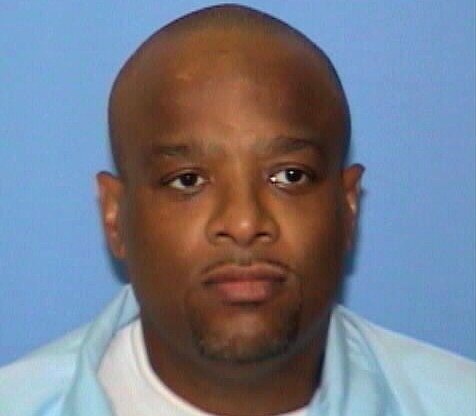 Ronald Macon
Serial killer · USA · 1999
Ronald Macon was convicted of three murders and one criminal sexual assault in…
3 victims
Ronald Macon
Serial killer · USA · 1999
Ronald Macon was convicted of three murders and one criminal sexual assault in…
3 victims
- Gender
- male
- Country
- USA
- Location
- Augusta County, Virginia, USA
- Date of birth
- 1963
- Age at first offence
- 24
- Characteristics
- robbery
- Victim profile
- Jacqueline Kooshian, 40 ( dry-cleaning shop owner )
- Method of murder
- St abbing with knife
- Date(s) of murder
- February 17, 1987
- Years active
- 1987
- Date of arrest
- —
- Status
-
Executed
Executed by lethal injection in Virginia on December 10, 1996
Case details
Larry Allen Stout, aged 33, pleaded guilty in a Virginia court to the robbery and capital murder of Jacqueline Kooshian, the proprietress of a dry cleaning establishment known as Trimble's Cleaners. Virginia offered evidence in support of the guilty plea that Stout robbed Kooshian of $1,200 at her dry cleaning store in Staunton, and murdered her on February 17, 1987.
Timeline
- February 17, 1987 — Stout entered Trimble's Cleaners near closing time when Kooshian was alone, slashed her throat with a knife, and robbed her of $1,200; Kooshian ran into the street and bled to death en route to a hospital.
- February 19, 1987 — Stout entered Trimble's Cleaners near closing time while Kooshian was alone; Stout told Kooshian he was there to pick up some clothing using a fictitious name and attacked her from behind.
- October 18, 1991 — Stout filed a federal habeas petition in the United States District Court for the Western District of Virginia.
- December 12, 1996 — A report described Stout as executed by injection in Jarratt, Virginia on Tuesday night for murdering Jacqueline Kooshian.
- December 10, 1996 — Stout was executed by lethal injection in Virginia.
The offence
On February 19, 1987, Stout, wearing a camouflage jacket, entered Trimble's Cleaners near closing time when Kooshian was alone in the store. Stout's girlfriend and accomplice, Debra Littrell, waited for him a short distance from the entrance to Trimble's Cleaners.
Using a fictitious name, Stout told Kooshian he was there to pick up some clothing. When Kooshian turned to the racks of clothing, Stout approached her from behind, grabbed her by her hair, and slashed her throat with a knife. Kooshian, clutching her bleeding throat, ran into the street. A passing motorist stopped to offer assistance, but Kooshian bled to death en route to a hospital. Littrell left the scene upon seeing Kooshian run out of the store.
After Kooshian exited Trimble's Cleaners, Stout absconded with two bank deposit bags and a purse belonging to Kooshian. These items had been sitting on a countertop when Stout entered Trimble's Cleaners. Stout returned to the apartment he and Littrell shared with her mother, Carole Lauber, and Lauber's boyfriend, Harley Rathburn.
Later, Stout told Littrell that "the girl could not live the way I cut her." (J.A. at 149.) The next day, upon learning of Kooshian's death, Stout stated that he felt "more at ease." (J.A. at 150.)
A psychiatrist later described in testimony at later proceedings that the wound in Kooshian's neck was consistent with purposeful cutting, and Stout admitted in his own sentencing testimony that he carried out an attack in which Kooshian was cut. In his own account during sentencing, Stout said:
"[S]he throwed [sic] her hands up and started hollering and I felt like she grabbed my wrist or she did it somehow and I went to shove her and in the long run, she got cut." (J.A. at 338-39.)
He later said he felt "[s]cared, sick" after the incident. (J.A. at 339.)
The medical testimony at the plea hearing described the injury. A forensic pathologist, Dr. William Massello, testified that Kooshian suffered "a cutting wound to the left side of the neck" that "show[ed] a direction from left to right going slightly downward, cutting into the soft tissue of the neck and running to the voice box." (J.A. at 179.) The cut was approximately two inches deep at its deepest point and became progressively deeper from left to right. Massello testified that the cut severed one of Kooshian's jugular veins and was "rapidly lethal." (J.A. at 183.) Massello testified that the wound was characteristic of one inflicted by coming behind the victim and slashing left to right with the right hand.
Another witness identified the murder weapon by comparing tool marks on Kooshian's larynx to tool marks made by a hunting knife retrieved from Stout's person upon his arrest.
Other incidents introduced at sentencing
Over Stout's objection, Virginia introduced testimony of three women whom Stout had robbed in separate incidents during the two months preceding the attack on Kooshian while Stout was living in Florida. Two of the women testified that just before closing, Stout had entered the convenience stores where they worked alone. Stout brandished a knife, ordered the women to lie on the floor while he took money from the cash register. The third woman testified that Stout snatched her purse outside a restaurant.
Debra Littrell testified that she and Stout made their living by committing robberies like those described above. Littrell also testified that she had overheard Stout and her ex-husband discussing the murder of two drug dealers and that, according to Littrell, Stout and her ex-husband had been hired to commit the murders after the victims reneged on a narcotics transaction.
Stout later denied killing the two drug dealers.
Guilty plea proceedings
Stout offered no evidence during the plea hearing and counsel, William Bobbitt, engaged in only limited cross-examination of the witnesses. Based on the evidence presented, the trial court accepted Stout's guilty plea and proceeded directly to the penalty phase.
During sentencing, the sentencing argument and Stout's testimony included his account of the offence and expressions of remorse. Stout expressed remorse as:
"I'm sorry for what I did. If that's [sic] anyway I could bring the lady back, I would, I would be glad to swap changes with her, she could have her life back.... I think about it most everyday...." (J.A. at 340.)
On cross-examination at sentencing, Stout denied that the hunting knife identified as the murder weapon was the knife he used in the attack on Kooshian, insisting that he used a kitchen knife. He also denied that he had "cased" Trimble's during the week before the robbery.
Investigation and evidence at plea hearing
Evidence tended to show that Stout and Littrell premeditated the robbery. Kooshian's mother testified that two days before the murder, Stout came into Trimble's and spoke briefly with Kooshian. A Trimble's employee testified that Littrell entered the store three days before the murder and inquired when Trimble's closed. The employee also testified that she had observed Stout "walking past [Trimble's] at different times of that week of the 19th. He would disappear and then would show back up standing across the street, directly across from" Trimble's. (J.A. at 124.)
In addition, testimony was offered that Stout had "cased" another dry cleaning establishment up the street.
Massello also testified about the injury characteristics and the directionality of the cut.
The appellate record later referenced a fingerprint found on one of the photographs that matched Stout.
Sentencing
The trial court sentenced Stout to life imprisonment on the robbery charge and to death on the capital murder charge.
In Virginia's capital sentencing scheme, the trial court found that Stout "constitute[d] a continuing serious threat to society" (future dangerousness) and that the murder of Kooshian "was outrageously or wantonly vile, horrible or inhuman in that it involved torture, depravity of mind or an aggravated battery to the victim" (vileness). Va. Code Ann. § 19.2-264.2 (Michie 1995).
Mitigation presented
Stout called the chief correctional officer for the facility where he was incarcerated, who testified that Stout had not presented any disciplinary problem. The parties stipulated that one of Stout's former employers in Florida would have testified that Stout was an excellent employee.
Stout also called his cellmate, who testified that he had been helping Stout, who was almost entirely illiterate, learn to read.
During later proceedings, the trial court reconvened after adjourning for a presentencing report. The presentencing report included information about Stout's family history. It stated:
- Stout was reared in a substandard economic situation with very little parental guidance and without the benefit of an appropriate male role model.
- Stout was the youngest child born to his mother, Sylvia Stout, and he did not know who his father was but had always been told he was an Indian.
- When Stout was approximately four years old, he was placed in a foster home for a short period due to problems between Stout and Calvin Stout, described in the report as "an indolent alcoholic," who would not accept Stout due to his dark skin color.
- The report stated that Stout recalled being physically abused by Calvin Stout, which was confirmed by Stout's mother.
- The report stated the family remained in the Des Moines, Iowa area until around 1970 or 1971, when they moved to the Cedar Rapids, Iowa area.
- It described migrant work living in states including California, Florida, Washington, Oregon, and Ohio, and that Stout was very much involved in the work force, making it impossible to receive any formal education.
Bobbitt also introduced a letter from Stout's mother stating that Stout was not a violent person and that his migratory childhood and racially mixed parentage had been hard on him.
Bobbitt elected not to introduce a psychological report. In later proceedings, the psychological report was described as discussing in detail Stout's background of physical and sexual abuse and noting that Stout suffered from anti-social personality disorder.
Stout's testimony at sentencing
Stout testified about his history of moving from state to state to follow harvesting work. He told the court that he became addicted to cocaine at the age of eighteen and acknowledged committing convenience store robberies, in addition to other crimes, to support his drug habit.
Regarding the Kooshian murder, Stout testified that he entered Trimble's Cleaners, asked Kooshian for some clothing, walked up behind her with the knife, and told her to lie on the floor. He then described the incident as quoted above.
He expressed remorse for the crime during sentencing.
Direct appeal and post-conviction litigation
On direct appeal, the Virginia Supreme Court affirmed Stout's convictions and sentences in Stout v. Commonwealth, 376 S.E.2d 288 (Va. 1989). The United States Supreme Court denied Stout's petition for a writ of certiorari, Stout v. Virginia, 492 U.S. 925 (1989).
Stout then filed a petition for a writ of habeas corpus in state court raising numerous issues. The state habeas court found that all of Stout's claims were procedurally barred except his claim of ineffective assistance of counsel. The state habeas court denied ineffective assistance of counsel on the merits, rejecting an argument that Bobbitt had been constitutionally ineffective for failing to advise Stout that a guilty plea to capital murder included an admission of premeditation and for failing to conduct a complete investigation into mitigating evidence regarding Stout's upbringing.
The state habeas court explicitly rejected Stout's claim that Bobbitt failed to present information regarding Stout's childhood history of abuse and explained:
"The Presentence Report ... gave an extensive narrative of the family and environmental background of the Petitioner.... The Petitioner testified on his own behalf and narrated his life from his earliest experiences.... The court was aware of all the matters in mitigation that the Petitioner now says were not submitted to the court. (J.A. at 481 (citations omitted).)"
The Supreme Court of Virginia denied leave to appeal.
Federal habeas proceedings and appeal to the U.S. Court of Appeals, Fourth Circuit
On October 18, 1991, Stout filed a federal habeas petition in the United States District Court for the Western District of Virginia. He raised eleven claims addressing two central issues: the voluntariness of his guilty plea and the effectiveness of his trial counsel.
The district court dismissed claims related to involuntariness after finding default. The remainder were referred to a magistrate judge. A two-day evidentiary hearing was held on ineffective assistance of counsel.
Stout presented testimony from three attorneys who testified that Bobbitt's representation was constitutionally deficient due in part to Bobbitt's failure to present mitigating evidence regarding Stout's childhood, including the psychological report. Stout also presented several psychologists who testified regarding abuse suffered by Stout and stated conclusions that Stout was not a violent individual despite the abuse. A law enforcement officer testified that the wound in Kooshian's neck was consistent with Stout's version of the crime.
Stout testified describing physical and sexual abuse and his childhood hardships, including ostracism because of his color and hardships of migrant labor. He also asserted he was unable to understand the plea proceedings, stating that when he pleaded guilty he did not understand the meaning of the word "premeditation" and that he thought it meant something like "relaxation." (J.A. at 1175.) He also testified that he did not understand questions asked during the plea colloquy, claiming Bobbitt nodded or shook his head after each question to prompt Stout's response.
Virginia responded with testimony from Bobbitt and from Dr. Massello. Bobbitt testified that he did not introduce the psychological report because he was concerned the conclusion about anti-social personality disorder would prejudice the court. Dr. Massello testified that the wound in Kooshian's neck could only result from a purposeful cut and thus was inconsistent with accidental events claimed by Stout. On cross-examination related to handedness, Dr. Massello testified that a person could have inflicted the wound with either hand if the cutting motion was purposeful rather than accidental.
The magistrate judge issued a report and recommendation suggesting denial. The magistrate judge concluded that Stout had defaulted on all but three of his eleven claims: ineffective assistance for failing to advise Stout that a guilty plea to capital murder entailed an admission that the murder was premeditated; ineffective assistance for failing to advise that unadjudicated felonies could be used as evidence of future dangerousness; and ineffective assistance for failing to investigate mitigating evidence regarding Stout's background. The magistrate judge rejected those claims on the merits.
Upon de novo review, the district court granted habeas relief as to the capital murder conviction, vacating Stout's guilty plea and ordering he be given the opportunity to enter a new plea within sixty days. The district court found constitutional deficiencies in the sentencing phase, including Bobbitt's failure to advise Stout to enter a plea pursuant to North Carolina v. Alford, 400 U.S. 25, 37-38 (1970), and failure to present mitigating evidence regarding Stout's background. The district court also concluded Stout's plea was neither knowing nor intelligent based on the record not revealing whether Bobbitt informed him of the Alford option, and it reasoned that Stout's testimony presented a credibility risk if counsel advised an unconditional guilty plea despite Stout's claimed accidental killing.
Virginia appealed. Stout cross-appealed.
In the United States Court of Appeals, Fourth Circuit, opinion per curiam:
- Argued: July 8, 1996.
- Decided: Sept. 3, 1996.
- Case citations and parties included Larry Allen Stout and J.D. Netherland, Warden, with docket numbers Nos. 95-4008 and 95-4007.
The Court of Appeals held that Stout did not receive ineffective assistance of counsel during the guilt and sentencing phases of his trial for robbery and capital murder. The Court reversed the district court's grant of habeas relief and remanded with instructions to reinstate the death sentence as imposed by Virginia. It affirmed the district court's rulings in other respects and rejected Stout's cross-appeal. The disposition stated: "REVERSED IN PART AND AFFIRMED IN PART."
Execution
On December 10, 1996, Larry Stout was executed by lethal injection in Virginia. Reports stated that he was executed in Jarratt, Virginia on a Tuesday night for murdering Jacqueline Kooshian.
In his final statement, Stout apologized to Kooshian's family:
"I'm sorry to the family for the pain I have caused," he said.
"I hope this closes the chapter on this."
Other details
Stout said he pleaded guilty on the advice of a public defender who told him he would not be sentenced to death. He later said:
"My lawyer didn't put on no defense for me," Mr. Stout said last month.
"My lawyer told me if I pleaded guilty I wouldn't get the death sentence. He said, 'Own up to the crime and be a man.'"
Appellate proceedings referenced an ineffective assistance framework under Strickland v. Washington, 466 U.S. 668 (1984), and prejudice in the context of guilty pleas under Hill v. Lockhart, 474 U.S. 52, 59 (1985). The appellate opinion also cited and discussed Bunch v. Thompson, 949 F.2d 1354 (4th Cir. 1991), and other cases concerning procedural defaults and Virginia procedural rules including Slayton v. Parrigan and Hawks v. Cox.
The appellate record identified that only one of the two aggravating criteria (future dangerousness or vileness) needed to be found to justify imposition of the death penalty under Va. Code Ann. § 19.2-264.2.

Spotted an error, or have more information about this case?