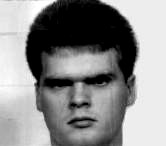
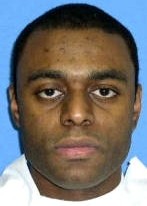
Aaron Lee Fuller
Murderer Brian Kevin Rosenfeld
Murderer · USA · 1985
Brian Kevin Rosenfeld Brian Kevin Rosenfeld was sentenced to three concurrent l…
23 victims
Brian Kevin Rosenfeld
Murderer · USA · 1985
Brian Kevin Rosenfeld Brian Kevin Rosenfeld was sentenced to three concurrent l…
23 victims
 Yahweh ben Yahweh
Murderer · USA · 1980
Yahweh ben Yahweh was born and legally named Hulon Mitchell Jr. (October 27, 19…
23 victims
Yahweh ben Yahweh
Murderer · USA · 1980
Yahweh ben Yahweh was born and legally named Hulon Mitchell Jr. (October 27, 19…
23 victims
 Russell Ellwood
Murderer · USA · 1991
Russell Ellwood was a former taxi driver. Authorities suspected him of killing…
20 victims
Russell Ellwood
Murderer · USA · 1991
Russell Ellwood was a former taxi driver. Authorities suspected him of killing…
20 victims
 Robert Martines Perez
Murderer · USA · 1994
Name: Robert Martines Perez · Other name used in proceedings: Robert Martinez P…
15 victims
Robert Martines Perez
Murderer · USA · 1994
Name: Robert Martines Perez · Other name used in proceedings: Robert Martinez P…
15 victims
 Shey Weiker
Murderer · Ohio · 2014
Defendant: Shey Weiker, 32 · Residence: Fostoria · Age references: 31 (competen…
2 victims
Shey Weiker
Murderer · Ohio · 2014
Defendant: Shey Weiker, 32 · Residence: Fostoria · Age references: 31 (competen…
2 victims
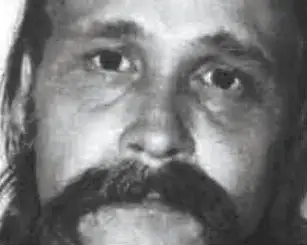 Everett Mueller
Murderer · USA · 1990
Everett Lee Mueller abducted, raped and killed Charity Powers, a 10-year-old gi…
1 victim
Everett Mueller
Murderer · USA · 1990
Everett Lee Mueller abducted, raped and killed Charity Powers, a 10-year-old gi…
1 victim
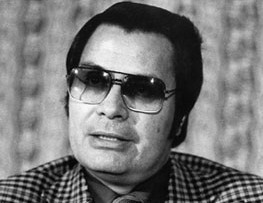 Jim Jones
Murderer · Guyana · 1978
James Warren "Jim" Jones (May 13, 1931 – November 18, 1978) was the American fo…
900 victims
Jim Jones
Murderer · Guyana · 1978
James Warren "Jim" Jones (May 13, 1931 – November 18, 1978) was the American fo…
900 victims
 Michael James McNeely
Murderer · USA · 1993
Michael James McNeely was the defendant in a criminal case before the Supreme C…
1 victim
Michael James McNeely
Murderer · USA · 1993
Michael James McNeely was the defendant in a criminal case before the Supreme C…
1 victim
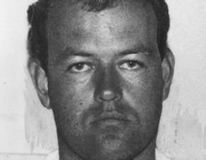 Colin Pitchfork
Murderer · United Kingdom · 1983
Colin Pitchfork was born in 1961 in Bristol, England. He was described as a loc…
2 victims
Colin Pitchfork
Murderer · United Kingdom · 1983
Colin Pitchfork was born in 1961 in Bristol, England. He was described as a loc…
2 victims
 Carlyle Harris
Murderer · USA · 1891
Carlyle Harris was executed by electrocution at Sing Sing Prison on May 7, 1893…
1 victim
Carlyle Harris
Murderer · USA · 1891
Carlyle Harris was executed by electrocution at Sing Sing Prison on May 7, 1893…
1 victim
- Gender
- male
- Country
- USA
- Location
- Dawson County, Texas, USA
- Date of birth
- August 26, 1967
- Age at first offence
- 22
- Characteristics
- rape, robbery
- Victim profile
- Loretta Stephens (female, 69)
- Method of murder
- Suffocating with a pillow
- Date(s) of murder
- March 18, 1989
- Years active
- 1989
- Date of arrest
- —
- Status
-
Executed
Executed by lethal injection in Texas on November 6, 1997
Case record: Aaron Lee Fuller
Status
Aaron Lee Fuller was sentenced to death for the robbery, murder, and sexual assault of Loretta Stephens and was executed by lethal injection in Texas on November 6, 1997.
Timeline
- November 6, 1997 — Aaron Lee Fuller was executed by lethal injection in Texas.
- May 30, 1997 — The United States Court of Appeals for the Fifth Circuit affirmed the district court’s denial of Fuller's petition for writ of habeas corpus.
- 1990 — Aaron Lee Fuller was convicted of murdering an elderly woman in her home and was sentenced to die.
- 1992 — Fuller v. State, 829 S.W.2d 191 (Tex.Crim.App.1992) (en banc) set out details of the case.
- 1993 — Certiorari was denied in connection with Fuller v. State, 508 U.S. 941 (1993).
- December 13, 1995 — An evidentiary hearing was scheduled in Fuller's district court habeas action.
- December 12, 1995 — The district court denied Fuller's habeas petition.
Background
Aaron Lee Fuller was identified as the petitioner-appellant in a federal habeas case challenging his death sentence. The appeal was in Fuller v. State, 829 S.W.2d 191 (Tex.Crim.App.1992) (en banc), cert. denied 508 U.S. 941 (1993), and in the federal appeal summarized as 114 F.3d 491, Aaron Lee Fuller, Petitioner-Appellant, v. Gary L. Johnson, Director, Texas Department of Criminal Justice, Institutional Division, Respondent-Appellee. No. 96-10027 Federal Circuits, 5th Cir. May 30, 1997.
In Fuller's case, Loretta Stephens was the victim. Loretta Stephens was beaten to death in her home during a theft. She was then sexually assaulted and dumped in the tall weeds on the side of Highway 87 north of Lamesa, Texas.
During questioning by police, Aaron Fuller offered several different accounts of his involvement, some implicating Juan Gomez. Fuller eventually confessed to murdering and sexually assaulting Ms. Stephens by himself, then disposing of the body without Gomez's knowledge. When it became clear at trial that the state was seeking the death penalty, Fuller recanted his confession and sought to implicate Gomez once again.
The offence
The state pursued the death penalty for the robbery, murder, and sexual assault of Loretta Stephens.
Fuller’s theory at trial was that Gomez beat Ms. Stephens to death with a six-inch metal pipe while Fuller went through her purse in another room. Prosecutors refuted Fuller’s theory with autopsy evidence from Dr. Ralph Erdmann showing that Ms. Stephens’s injuries were more consistent with blows from a fist than from a pipe.
The State introduced physical evidence from Ms. Stephens's house tending to show that Fuller committed both crimes. The jury found Fuller guilty of capital murder.
Investigation
During questioning by police, Fuller offered several different accounts of his involvement, including accounts that implicated Juan Gomez. Fuller later confessed to murdering and sexually assaulting Ms. Stephens by himself and disposing of the body without Gomez’s knowledge. When it became clear at trial that the state was seeking the death penalty, Fuller recanted the confession and again sought to implicate Gomez.
Trial
Guilt/innocence phase
At the guilt/innocence phase, prosecutors refuted Fuller’s theory using autopsy evidence from Dr. Ralph Erdmann. Dr. Erdmann testified that Ms. Stephens’s injuries were more consistent with infliction by fist than by pipe. The State also introduced physical evidence from Ms. Stephens’s house tending to show Fuller committed both crimes.
Punishment phase
At the punishment phase, the State introduced evidence of Fuller's future dangerousness, including testimony by psychiatrist James Grigson that Fuller would represent a continuing threat to society.
The State introduced evidence that Fuller belonged to the Aryan Brotherhood, described as a violent neo-nazi prison gang. The jury sentenced Fuller to death.
Psychiatric testimony and future dangerousness
During sentencing, Dr. James P. Grigson testified for the prosecution that, in his opinion, "there is absolutely no question, no doubt whatsoever" that Fuller would be dangerous in the future.
The court record also described media scrutiny and outside criticism directed at Dr. Grigson. It stated that some described him as "Doctor Death" and said the American Psychiatric Association had reprimanded him twice for his testimony and filed an amicus curiae brief with the Supreme Court urging the Court to prohibit his predictions because the association found the predictions unreliable. It also referenced an academic criticism article co-written by Dr. James Marquart in Law and Society Review. Fuller claimed that, because Dr. Grigson was aware of much of this criticism, he lied to the court when he testified as to the certainty of his predictions, and Fuller further claimed that the State knew or should have known that Dr. Grigson was unreliable and that his testimony as to the certainty of his predictions was false.
Aryan Brotherhood evidence
The State introduced testimony of one Royce Smithey. Royce Smithey testified that the Aryan Brotherhood was a white supremacist, neo-nazi-type gang that routinely dealt in violence, drug dealing, protection rackets, prostitution, and fear.
Fuller asserted that the prosecution failed to show that he was a member of the gang or shared its beliefs. Fuller also argued that the use of this evidence as an aggravating factor supporting the death penalty violated his First Amendment rights of freedom of belief and association.
Juror exclusion for cause (capital punishment views)
Fuller asserted that the trial court improperly excluded for cause a qualified venire member based on her views on capital punishment.
During voir dire, venire member Jonnie White expressed reservations about imposing the death penalty unless the defendant was a repeat offender. The district attorney and Ms. White had the following exchange:
"[MR. SMITH, the district attorney]: If, after considering the evidence, you are convinced beyond a reasonable doubt that he is guilty of capital murder, then you as a juror, along with the other eleven, will then decide the answers to some questions. Basically two questions. If you answer those two questions yes, then he will be put to death. If you answer either one of them no, or both no, he will serve a life sentence in the penitentiary. But it will be one or the other, if he is found guilty of capital murder. "[MS. WHITE]: Well, could I explain my answer on the question, or should I just wait for your question. "[MR. SMITH]: Go on and explain. "[MS. WHITE]: About capital murder. Because my feeling about capital murder has always--I don't like taking a life for a life unless it is a case of a serial murderer who has murdered. So, I don't know what my feelings would be about a first time offense of capital murder. "[MR. SMITH]: You understand that our law provides that there are certain crimes that are classified as capital murder. "[MS. WHITE]: I know. "[MR. SMITH]: And that-- "[MS. WHITE]: It doesn't matter how many murders; if it is one murder or ten, or more? "[MR. SMITH]: Yes, ma'am. "[MS. WHITE]: I understand. "[MR. SMITH]: Are you saying that in your opinion that you could only consider the death penalty in a serial murder type case? "[MS. WHITE]: Yes. That is what I am saying. "[MR. SMITH]: And not in any other type case? "[MS. WHITE]: Well, when I say serial, I am talking about--if that includes, you know, two or more. I don't know where you draw the line. I would draw it at two. "[MR. SMITH]: Two previous killings? "[MS. WHITE]: Yes. I mean, more than one. "[MR. SMITH]: Is that the only situation that you could consider it? "[MS. WHITE]: I think that's-- "[MR. SMITH]: I am not trying to--You are entitled to your opinion, absolutely. In your questionnaire you stated that in case of repeat offenders only. You used the word only. Is that your feeling about it, that those are the type cases, only? "[MS. WHITE]: I don't know the answer to that. I think it would, but--If one murder is--I know--If it is proven definitely, beyond a reasonable doubt, I can't--I don't believe that I could--I could vote for a death penalty if it was for one--the first offense. "[MR. SMITH]: Is that regardless of the facts of the case, whatever the facts might be? "[MS. WHITE]: Well, if you are talking about someone who just kills in cold blood, I mean just--or if it is--or if it is accidental or under--under--there are all kinds of circumstances. Are you talking about premeditated murder, or something like that, where someone plans someone's death? "[MR. SMITH]: Well, I am trying to determine-- "[MS. WHITE]: Where I draw the line? "[MR. SMITH]: Yes, ma'am. Where you draw the line. "[MS. WHITE]: Well, I think the only way I would know where I would draw the line, if I was just faced with it immediately, and I had to rely on my own judgment and instinct, I guess, too. The way I feel now, I--I've never been in court before. I've never served on a jury. I have no--I don't have any idea at all how I will--I know that I could be a responsible citizen. But the way I feel now, if I were asked to vote for a death penalty for someone who had committed one crime, even capital murder, I would go with my instincts to say that I would say for, maybe, life for imprisonment or a long sentence in prison. I certainly would want a punishment. But I don't think this-- "[MR. SMITH]: I submit, Your Honor, that the juror should be excused."
After timely objection by the defense, the court questioned Ms. White further:
"THE COURT: You feel, Jonnie, as you sit here now, that you couldn't give the death penalty except where a person had been convicted of murder before, or that kind of crime before? "[MS. WHITE]: Yes. That's the way that I feel. "THE COURT: All right. I am going to excuse her."
Sentencing
The jury sentenced Aaron Fuller to death.
Fuller’s punishment was later upheld through direct appeals and through federal habeas proceedings described as exhausting both direct appeals and state petitions for habeas corpus. Different courts stayed Fuller's execution while those proceedings were exhausted.
Appeals
Aaron Fuller appealed the district court's denial of his petition for writ of habeas corpus.
The Fifth Circuit case stated:
- It affirmed the district court’s denial of Fuller's petition.
- It resolved five challenges to the constitutionality of his death sentence.
Fuller asserted five challenges:
- The state introduced false testimony regarding Ms. Stephens’s autopsy.
- The state introduced false testimony regarding future dangerousness.
- The state did not prove that Fuller was a member of, or shared beliefs with, the Aryan Brotherhood prison gang, and therefore could not inject evidence of the group's beliefs into his murder trial.
- The state improperly excluded a juror based on her views about the death penalty.
- The court wrongly refused his request for state-sponsored expert assistance.
The Fifth Circuit granted a certificate of appealability on four issues and denied it on Fuller's challenge to the district court's denial of state-sponsored expert assistance on his habeas petition.
Review of alleged false testimony (autopsy)
Fuller first claimed that coroner Ralph Erdmann failed to perform scientific procedures necessary to disprove Fuller’s alternative theory that Gomez beat Ms. Stephens to death with a pipe, and that Dr. Erdmann’s testimony was therefore fraudulent.
Dr. Erdmann testified at trial that Ms. Fuller introduced on habeas appeal an affidavit of Dr. Sparks Veasey, who claimed that it was impossible to make that determination without stripping the dura and brain matter from the base of the skull to determine whether or not skull fractures were present. Dr. Veasey also contended that, based on photos of the autopsy, Dr. Erdmann did not strip the dura.
Fuller also relied on Dr. Erdmann’s testimony about semen evidence. Dr. Erdmann testified he did not take a vaginal swab of the deceased to detect or analyze semen because she had been dead too long for proper analysis. Dr. Erdmann testified that after eight hours sperm becomes undetectable. Dr. Veasey testified in the evidentiary hearing that sperm would have been detectable well after eight hours following death.
The Fifth Circuit explained the standard for due process violations based on false or misleading testimony, citing Giglio v. United States and May v. Collins. It concluded Fuller failed to show that Dr. Erdmann’s testimony was actually false, and it held Fuller did not show the prosecution knew of alleged falsity regarding semen evidence.
Review of alleged false testimony (future dangerousness)
Fuller next claimed that psychiatrist Dr. James P. Grigson’s testimony about future dangerousness was materially false and denied him a fair trial under the Fifth, Sixth, Eighth and Fourteenth Amendments.
The Fifth Circuit concluded Fuller failed to show Dr. Grigson's opinions about future dangerousness or credibility were actually false, and therefore the due process claim failed.
Aryan Brotherhood evidence and First Amendment
Fuller contended he was unconstitutionally prejudiced when the State introduced evidence about his membership in the Aryan Brotherhood and testimony about the gang and its beliefs.
The Fifth Circuit discussed Dawson v. Delaware and Romano v. Oklahoma, and concluded the issue involved constitutional considerations on habeas review limited to constitutional issues under 28 U.S.C. 2254(d)(1), as amended by AEDPA. The Fifth Circuit concluded that the Aryan Brotherhood evidence was not unconstitutional on the facts of Fuller's case because the State introduced evidence that the gang committed unlawful or violent acts and that a reasonable juror could find gang membership relevant to future dangerousness.
Juror exclusion for cause
The Fifth Circuit analyzed Fuller's claim that the trial court improperly excluded Jonnie White for cause due to her views on capital punishment. It discussed the legal standard for removal for bias, including Wainwright v. Witt and Lockhart v. McCree.
The Fifth Circuit concluded that the district attorney and the court established that Ms. White personally believed only multiple murders merited capital punishment, and it held the trial court properly excluded her because Fuller did not provide enough evidence to rebut the presumption that the trial court was correct.
Denial of state-funded expert assistance
Fuller contended the court violated his constitutional rights by refusing his request for state-funded expert assistance under 21 U.S.C. 848(q)(4)(B).
The Fifth Circuit described:
- Fuller filed two ex parte motions to obtain expert assistance in preparation for an evidentiary hearing scheduled for December 13, 1995, seeking a clinical and forensic psychologist and a clinical and forensic pathologist.
- The district court requested the government’s reply and later denied both motions without discussion "for the reasons set forth in the Respondent's opposition."
- The district court denied the habeas petition the day before the scheduled hearing, December 12, 1995, but conducted the evidentiary hearing on schedule the following day.
- Fuller's counsel proceeded at the hearing without the requested expert assistance.
- The record offered no explanation for the anomaly.
The Fifth Circuit concluded Fuller was not denied a constitutional right required for a COA, and it denied COA on this issue. It reasoned that Fuller could not show substantial need for expert assistance and that denial of ex parte proceedings did not infringe substantial guarantees of the statute, even though the court’s procedure was described as improper.
Outcome
The Fifth Circuit denied Fuller’s appeal and affirmed the district court’s denial of his petition for writ of habeas corpus.
It stated:
- "We affirm."
- "Therefore we deny COA on this issue."
- "In light of the statutory language, we first note that Fuller did not show a

Spotted an error, or have more information about this case?