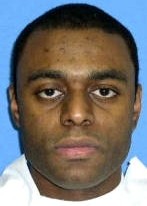
Justin Fuller
Murderer Russell Ellwood
Murderer · USA · 1991
Russell Ellwood was a former taxi driver. Authorities suspected him of killing…
20 victims
Russell Ellwood
Murderer · USA · 1991
Russell Ellwood was a former taxi driver. Authorities suspected him of killing…
20 victims
 Robert Martines Perez
Murderer · USA · 1994
Name: Robert Martines Perez · Other name used in proceedings: Robert Martinez P…
15 victims
Robert Martines Perez
Murderer · USA · 1994
Name: Robert Martines Perez · Other name used in proceedings: Robert Martinez P…
15 victims
 Billy Frank Vickers
Murderer · USA · 1993
Billy Frank Vickers Vickers was executed by lethal injection in Texas on Januar…
14 victims
Billy Frank Vickers
Murderer · USA · 1993
Billy Frank Vickers Vickers was executed by lethal injection in Texas on Januar…
14 victims
 Maria Manning
Murderer · United Kingdom · 1849
Maria Manning was also identified as Marie Manning and Marie de Roux. Maria Man…
1 victim
Maria Manning
Murderer · United Kingdom · 1849
Maria Manning was also identified as Marie Manning and Marie de Roux. Maria Man…
1 victim
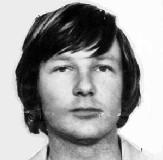 Samuel Leonard Boyd
Murderer · Australia · 1982
Samuel Leonard Boyd was sentenced to 5 consecutives sentences of life imprisonm…
4 victims
Samuel Leonard Boyd
Murderer · Australia · 1982
Samuel Leonard Boyd was sentenced to 5 consecutives sentences of life imprisonm…
4 victims
 Adriana Vasco
Murderer · USA · 1999
Adriana Vasco (35-year-old mother of two; former medical receptionist). Vasco w…
2 victims
Adriana Vasco
Murderer · USA · 1999
Adriana Vasco (35-year-old mother of two; former medical receptionist). Vasco w…
2 victims
 David Morris
Mass murderer · United Kingdom · 1999
David Morris, a former scrap metal dealer and builder’s labourer from Craig Cef…
4 victims
David Morris
Mass murderer · United Kingdom · 1999
David Morris, a former scrap metal dealer and builder’s labourer from Craig Cef…
4 victims
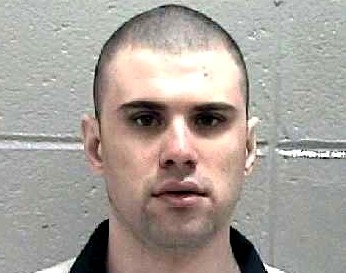 Dorian O'Kelley
Murderer · USA · 2002
Dorian Frank O’Kelley was an accused killer in Chatham County. He was accused o…
2 victims
Dorian O'Kelley
Murderer · USA · 2002
Dorian Frank O’Kelley was an accused killer in Chatham County. He was accused o…
2 victims
- Gender
- male
- Country
- USA
- Location
- Smith County, Texas, USA
- Date of birth
- August 29, 1978
- Age at first offence
- 19
- Characteristics
- robbery, kidnapping
- Victim profile
- Donald Whittington (male, 22)
- Method of murder
- Shooting (.22 handgun)
- Date(s) of murder
- April 21, 1997
- Years active
- 1997
- Date of arrest
- 5 days after
- Status
-
Executed
Executed by lethal injection in Texas on August 24, 2006
Case details
Justin Fuller was executed by lethal injection in Texas on August 24, 2006.
Timeline
- April 20, 1997 — Justin Fuller and three friends went to college student Donald Whittington’s apartment to rob him.
- April 21, 1997 — Fuller and his accomplices forced 21-year-old Donald Whittington into his vehicle, drove him to an automatic teller machine, withdrew money from his account, drove him to Sandy Beach, a local park, and Fuller shot him while he was praying.
- April 21, 1997 (evening) — Fuller took two high school students to view the body and told them about the robbery and murder.
- Four days after the murder — Smith County deputies found Whittington’s body.
- March 4, 1998 — Fuller was convicted of capital murder and later sentenced to death in Smith County.
- December 2000 — Fuller’s conviction and sentence were upheld on direct appeal by the Texas Court of Criminal Appeals.
- May 2001 — The Texas Court of Criminal Appeals denied Fuller’s application for writ of habeas corpus.
- December 2001 — A federal district court dismissed Fuller’s habeas petition to return to state court to exhaust newly raised claims.
- March 2002 — The Texas Court of Criminal Appeals denied Fuller’s successive application.
- November 2003 — The Texas Court of Criminal Appeals denied Fuller’s second successive application.
- January 2005 — A federal district court denied Fuller’s federal habeas corpus petition.
- January 2006 — The 5th Circuit Court of Appeals affirmed the federal district court’s denial of federal habeas corpus relief.
- June 2006 — Fuller petitioned the U.S. Supreme Court for review; the petition was pending.
- August 24, 2006 (Thursday) — Fuller was executed; he was pronounced dead at 6:18 p.m.
- August 25, 2006 (Friday) — Reporting following the execution included statements from Donald Whittington Jr.
Background
Justin Fuller was eighteen years old on the day he killed Donald Whittington.
Evidence presented at the punishment phase of Fuller’s trial indicated that Fuller was associated with a violent gang.
The State presented testimony from Fuller’s former employer at a fast-food establishment, who in 1996 caught Fuller on videotape stealing cash. Fuller was fired and theft charges were filed against him.
At the time of the offense, the group involved with the robbery and killing included:
- Elaine Hays (age 25 is stated in one account)
- Samhermundre Wideman / Samhermundre Wideman (age 20 is stated in one account)
- Brent Chandler (age 19 is stated in one account)
The offence
On April 20, 1997, Justin Fuller and three friends went to college student Donald Whittington’s apartment to rob him. Fuller and his accomplices tied Whittington up and searched his apartment for items of value. While one man removed property, Fuller and two other men forced the 21-year-old Whittington into his vehicle.
Fuller and the other men drove Whittington to an automatic teller machine. Fuller withdrew money from Whittington’s account. The money was distributed between the three captors as “eighty dollars apiece” in one account.
Fuller and his two accomplices then drove Whittington to Sandy Beach, a local park. They forced Whittington to his knees and Fuller shot him while he was praying.
Another account described Whittington being sprayed with tear gas, blindfolded, with his hands and feet tied, and being threatened with death if he did not surrender his ATM card and password. In that description, Chandler took clothing and items from Whittington’s apartment, and the other assailants threw Whittington into the back seat of his own car, drove to a bank, withdrew about $300, and then drove to the lake area where Whittington was killed. That account stated Fuller told police he was urinating in the lake at the time of the shooting, while his companions disputed his story.
Investigation and arrest
A criminal investigation led to Fuller’s arrest.
Fuller gave a videotaped statement confessing to the details of the offense.
Police found Whittington’s body four days after the murder.
Authorities said numerous people had gone to see the body before police found it. A student at Chapel Hill High School near Tyler overheard talk and called police.
In a description of evidence found at Fuller’s home, the police found Whittington’s ATM card in Fuller’s wallet and Whittington’s watch in the living room.
In another description, Fuller acknowledged being in the vicinity when Donald Whittington III was killed at Lake Tyler, but said he did not fire the fatal shots with a .22-caliber pistol and did not show off the body later to friends.
Trial
Procedural history included:
- March 1998 — Fuller was convicted of capital murder and sentenced to death in Smith County.
- December 2000 — Fuller’s conviction and sentence were upheld on direct appeal.
- Multiple state and federal habeas proceedings followed, with denials and dismissals.
Evidence at trial included testimony about gang association. The State also presented evidence related to Fuller stealing cash in 1996 while working at a fast-food establishment.
In one account, Fuller’s trial involved prosecutors alleging Fuller was the triggerman, with defense arguments focused on minimizing Fuller’s culpability and depicting other participants as leaders or shooters. A jury convicted Fuller of capital murder and sentenced him to death.
In one description, the defense unsuccessfully appealed Fuller’s conviction, including an assertion that an appeal petition included portions of a brief from another case that at one point described a different crime.
Sentencing
Fuller was sentenced to death in Smith County.
In one account, the jury deliberated for 13 hours over a two-day period to recommend the death penalty.
Appeals
Fuller pursued direct appeal and post-conviction relief in state court and federal court. The Texas Court of Criminal Appeals denied Fuller's application for writ of habeas corpus and denied successive applications. A federal district court dismissed one habeas petition to allow exhaustion of newly raised claims, then later denied Fuller’s habeas petition. The 5th Circuit affirmed the denial of federal habeas corpus relief. Fuller petitioned the U.S.
A federal appeals discussion included the following points:
- A claim about excluding evidence of a co-perpetrator’s moral culpability during the punishment phase was rejected.
- A claim about excluding testimony on future dangerousness was rejected.
- A Batson challenge regarding peremptory strikes was rejected.
- Procedurally defaulted claims were addressed under standards including cause and prejudice and actual innocence.
The federal appellate decision affirmed the district court’s denial of habeas relief.
Outcome
Fuller made statements before death, and he was pronounced dead at 6:18 p.m.
Last statement and statements at execution
Fuller thanked his family and friends for their support.
He said: "Let everyone know that you must stay strong for each other," he said. "Take care of yourselves."
He told the warden standing next to him: "That's it."
As the lethal drugs began to take effect, he looked at his parents watching through a window a few feet away and said: "I love you."
Another account included that Fuller said: "I would like to tell my family 'Thank you for your support' and my friends," he said. "And let everyone know that you must stay strong for each other. Take care of yourselves," he finished. “That’s it, warden.”
Aftermath
Three others convicted in the case were serving long prison terms in one account.
One account stated:
- Samhermundre Wideman and Elaine Hays received life sentences, with a parole ineligibility reference for Wideman and Hays.
- Brent Chandler accepted a 25-year sentence and testified against Fuller.
Fuller was described as not acknowledging the family of his victim in multiple accounts.
The case inspired the passage of a state law making it a crime to know about a body and remain silent about it.
Donald Whittington Jr. made statements after the execution, including: "It was too easy. Compared to what my son went through, it was really too easy," Donald Whittington Jr. said. "He showed no remorse in court, and he showed no remorse being injected." He also said he had “no sense of closure.”
Donald Whittington Jr. said: "I still never got the answer to my question — why? “The way they executed him, it was nothing,” he continued. “It was like he fell asleep. My son was my friend. We had a beautiful relationship. We never suspected nothing like this.”
In one account, Fuller did not request a last meal.
Other details
Fuller’s statements in a videotaped FBI interview included that he admitted his involvement in the robbery but denied being the trigger man. He implicated Samhermundre Wideman as the shooter.
In a CourtTVnews.com interview, Justin Fuller said:
After I die? I always tell my pen pals that I'll just be floating in the wind. Where I go I don't know, but I'll be floating somewhere.
In the same interview, Fuller said:
No. No. and: Right, it was just to go retrieve these rings, from the rings that he loaned to Elaine Hays. That was the initial thing. and: When we got to the lake. and: The initial plan was to just drop him off, and you know, let's go back home. But things escalated from that point on, and that's when it got out of hand.
Fuller said:
He was pronounced dead at 6:18 p.m.
A federal appellate discussion included names and roles in procedural matters, including references to Larry Fitzgerald, the Director of Information for the Texas Department of Criminal Justice, Institutional Division.
Federal case caption included “Fuller v. Dretke No. 05-70004” and the decision referenced an appeal affirmed with a holding that the district court’s denial of habeas corpus relief was upheld.
Spotted an error, or have more information about this case?