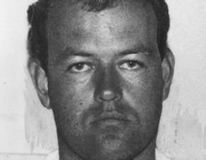
Colin Pitchfork
Murderer John Cooper
Murderer · United Kingdom · 1985
John Cooper was a serial killer from Milford Haven, Pembrokeshire. Cooper was c…
4 victims
John Cooper
Murderer · United Kingdom · 1985
John Cooper was a serial killer from Milford Haven, Pembrokeshire. Cooper was c…
4 victims
 Andrew Walker
Murderer · United Kingdom · 1985
Royal Scots corporal Andrew Walker killed three Army colleagues in a payroll ro…
3 victims
Andrew Walker
Murderer · United Kingdom · 1985
Royal Scots corporal Andrew Walker killed three Army colleagues in a payroll ro…
3 victims
 Arthur Hutchinson
Murderer · United Kingdom · 1983
Arthur Hutchinson was an English murderer and rapist who committed three murder…
3 victims
Arthur Hutchinson
Murderer · United Kingdom · 1983
Arthur Hutchinson was an English murderer and rapist who committed three murder…
3 victims
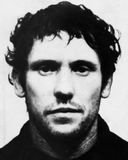 Barry Prudom
Murderer · United Kingdom · 1982
Barry Prudom was the prime suspect in the killings of police officers after pol…
3 victims
Barry Prudom
Murderer · United Kingdom · 1982
Barry Prudom was the prime suspect in the killings of police officers after pol…
3 victims
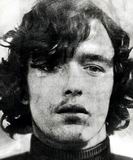 David McGreavy
Murderer · United Kingdom · 1973
David McGreavy was born in 1950 or 1951. He was an English convicted murderer w…
3 victims
David McGreavy
Murderer · United Kingdom · 1973
David McGreavy was born in 1950 or 1951. He was an English convicted murderer w…
3 victims
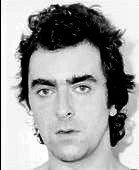 John Cannan
Murderer · United Kingdom · 1986
John Cannan Susannah “Suzy” Lamplugh was a British estate agent reported missin…
3 victims
John Cannan
Murderer · United Kingdom · 1986
John Cannan Susannah “Suzy” Lamplugh was a British estate agent reported missin…
3 victims
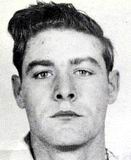 Edgar Smith
Murderer · USA · 1957
Edgar Smith Edgar Smith was born in 1934. He had been an unemployed mechanic at…
1 victim
Edgar Smith
Murderer · USA · 1957
Edgar Smith Edgar Smith was born in 1934. He had been an unemployed mechanic at…
1 victim
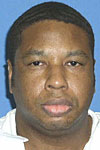 Charles Neale
Murderer · USA · 1997
Charles Anthony Nealy was convicted of capital murder and sentenced to death fo…
2 victims
Charles Neale
Murderer · USA · 1997
Charles Anthony Nealy was convicted of capital murder and sentenced to death fo…
2 victims
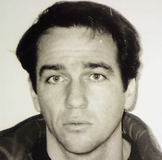 Pascal Payet
Murderer · France · 1997
Pascal Payet was born 7 July 1963. He was a French criminal. Payet spent his ch…
1 victim
Pascal Payet
Murderer · France · 1997
Pascal Payet was born 7 July 1963. He was a French criminal. Payet spent his ch…
1 victim
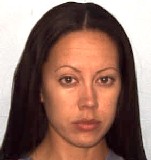 Linda Pedroza
Homicide · USA · 2000
Linda Pedroza was a 17-year-old Palm Beach Gardens girl who pleaded guilty to s…
1 victim
Linda Pedroza
Homicide · USA · 2000
Linda Pedroza was a 17-year-old Palm Beach Gardens girl who pleaded guilty to s…
1 victim
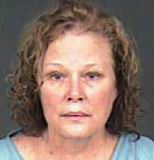 Mary Koontz
Murderer · USA · 2009
Mary Koontz was 60 years old at the time of the murder trial. She had been a fo…
1 victim
Mary Koontz
Murderer · USA · 2009
Mary Koontz was 60 years old at the time of the murder trial. She had been a fo…
1 victim
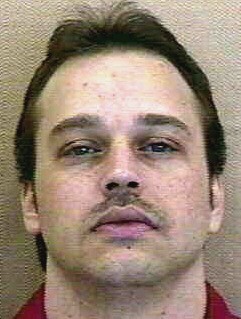 Edward Ernest Hartman
Murderer · USA · 1993
Defendant: Edward Ernest Hartman DOC Number: 0172549 Date of birth: 08/25/1964…
1 victim
Edward Ernest Hartman
Murderer · USA · 1993
Defendant: Edward Ernest Hartman DOC Number: 0172549 Date of birth: 08/25/1964…
1 victim
- Gender
- male
- Country
- United Kingdom
- Location
- Narborough, Leicestershire, England, United Kingdom
- Date of birth
- 1960
- Age at first offence
- 23
- Characteristics
- rape, serial rapist, child killer
- Victim profile
- Lynda Mann (female, 15) / Dawn Ashworth (female, 15)
- Method of murder
- Strangulation
- Date(s) of murder
- November 21, 1983 / July 31, 1986
- Years active
- 1983–1986
- Date of arrest
- September 19, 1987
- Status
-
Life imprisonment
Sentenced to life imprisonment on January 23, 1988
Background
Colin Pitchfork was born in 1961 in Bristol, England. He was described as a local baker. He was arrested at his house in the neighbouring village of Littlethorpe. He resided at Haybarn Close in Littlethorpe at the time of the murder of Dawn Ashworth.
A prior conviction for rape based on DNA was mentioned in connection with a nurse who was convicted of raping a mentally sub normal 14 year old following DNA testing of her baby.
The offence
On November 21, 1983, 15-year-old Lynda Mann left her home to visit a friend’s house and did not return. The next morning, Lynda was found raped and strangled on a deserted footpath known locally as the Black Pad.
On July 31, 1986, another 15-year-old girl, Dawn Ashworth, took a shortcut instead of taking the normal route home. Two days later, her body was found in a wooded area near a footpath called Ten Pound Lane. Dawn Ashworth was raped and strangled, and the modus operandi matched that of the first attack. Semen samples revealed the same blood type for both killings.
During subsequent questioning after Pitchfork was arrested, he admitted flashing females over 1000 times, a compulsion that he had started in his early teens. The narrative also stated that flashing catapulted him to sexually assault and then to strangle his victims in order to protect his identity. He pleaded guilty to the two rape/murders in addition to another separate incident of sexual assault that he had committed.
Investigation
For Lynda Mann’s killing, forensic science techniques available at the time were used to analyse a semen sample taken from her body. The semen sample was found to belong to a person with type A blood and an enzyme profile that matched only 10 percent of males. With no other leads or evidence, the case was left open.
For Dawn Ashworth’s killing, semen samples revealed the same blood type as in Lynda Mann’s case. The prime suspect was identified as a local 17-year-old boy, Richard Buckland. He revealed knowledge of Ashworth’s body and admitted the crime under questioning, but denied the first murder.
The narrative described Professor Sir Alec Jeffreys of the University of Leicester developing DNA profiling along with Peter Gill and Dave Werrett of the Forensic Science Service (FSS), and it said they detailed the technique in a 1985 paper. Gill commented:
I was responsible for developing all of the DNA extraction techniques and demonstrating that it was possible after all to obtain DNA profiles from old stains. The biggest achievement was developing the preferential extraction method to separate sperm from vaginal cells – without this method it would have been difficult to use DNA in rape cases.
Using this technique, Jeffreys compared semen samples from both murders against a blood sample from Buckland. The comparison conclusively proved that both girls were killed by the same man, but not by the suspect. The police then contacted the FSS to verify Jeffreys’ results and decide which direction to take the investigation. It stated that Buckland became the first person to be exonerated by DNA fingerprinting. Jeffreys later said:
I have no doubt whatsoever that he would have been found guilty had it not been for DNA evidence. That was a remarkable occurrence.
Leicestershire police and the FSS then undertook a project in which 5,000 local men were asked to volunteer blood or saliva samples. The project took six months and no matches were found.
The narrative stated that later a man named Ian Kelly was heard bragging that he had given a sample while masquerading as his friend, Colin Pitchfork.
Arrest
Pitchfork was arrested at his house in the neighbouring village of Littlethorpe. The narrative stated that a sample was found to match that of the killer.
Trial
Pitchfork pleaded guilty to the two rape/murders and to another separate incident of sexual assault.
The judge at his trial, Mr Justice Otton, described Pitchfork as “callous and cunning”.
Sentencing
Pitchfork was sentenced to life imprisonment for the two murders on January 23, 1988. The narrative described concurrent terms for rape and murder, with no minimum sentence, stating this presented the opportunity for release after ten years.
Appeals
On Thursday 14 May 2009, Pitchfork’s legal appeal was heard at the Court of Appeal at The Royal Courts of Justice, having initially been adjourned from 30 April 2009. It said he won his appeal against his original sentence of a minimum of 30 years’ imprisonment, and his hearing resulted in a two year reduction to 28 years. Consequently, the narrative stated Pitchfork would be eligible for release in 2016.
It further stated that the Lord Chief Justice Lord Judge said:
he cannot be released unless and until the safety of the public is assured.
The narrative stated that Pitchfork was educated to degree level and was an expert at the transcription of printed music into Braille, and that he hoped to one day help the blind. It stated that the evidence was presented as proof of the development of his character whilst incarcerated, by his legal representatives.
Outcome
Pitchfork remained serving his prison sentence, with a reduction to a 28-year minimum term following the appeal hearing.
Aftermath
A sculpture Pitchfork produced while in prison was exhibited at the Royal Festival Hall in London in April 2009, but it was subsequently removed from display after public outrage.
The narrative stated that Pitchfork wrote:
Without this opportunity to show our art, many of us would have no incentive, we would stay locked in ourselves as much as the walls that hold us.
It also stated that a sculpture titled “Bringing Music To Life?” was described, and it referenced that Pitchfork completed the work in his cell at Frankland Prison, Durham, before being moved to Full Sutton, near York. It described the work as a choir and orchestra created in meticulous miniature detail by folding, cutting and tearing the score of Beethoven’s Ninth Symphony. It said the work had been exhibited anonymously as part of a show by offenders’ art charity The Koestler Trust and that the identity of the sculptor was later revealed, leading to fury from crime victims’ groups.
The narrative stated that Pitchfork gained financially from the work, described as being given about £300 of the £600 sale proceeds. It said 40 per cent was retained by the charity and 10 per cent went to Victim Support. It stated that the charity removed or kept anonymity in line with its practice and that it refused to confirm his identity as the artist. It also stated that officials at the Royal Festival Hall removed the artwork and that a spokesman apologized for any offence caused and said it respected the Koestler Trust’s policy of anonymity, while reviewing future policy.
The narrative quoted Tim Robertson, chief executive of the Koestler Trust:
It’s not relevant to us what the person’s offence is. What’s relevant to us is how good the art is.
It also quoted Robertson on privacy:
Our aim is to reduce the number of victims of crime and we would never have released the artist’s name and caused offence to relatives.
It quoted a spokesman apology:
We are extremely sorry if the display has caused offence to victims of crime.
Former Cabinet minister and ex-prisoner Jonathan Aitken was mentioned as saying:
Mr Pitchfork is rebuilding his life behind bars through rehabilitation, including, in his case, artistic endeavour. Society should be pleased by that rather than condemning him or trying to stop him from benefiting from the proceeds,
and:
The Royal Festival Hall has made the wrong decision in withdrawing the work, for while I deplore the serious crime in this case, the sentence is the punishment. There also has to be rehabilitation.
Lynda Mann’s mother, Kath, was quoted saying:
This man is supposed to be in prison as a punishment for what he did. He raped and killed two 15-year-old girls just because "they were there" and we should never forget that.
and:
For a man who did that to be rewarded for making paperwork art - good or bad - is not right. 'This man is supposed to be in prison as a punishment for what he did. He raped and killed two 15-year-old girls just because "they were there" and we should never forget that.'
Kelvin Donaghey was quoted:
Lynda was good at art and so was Dawn. They never got the chance to have their works exhibited, yet the man who took their lives away not only has that, but earns money from it, too.
Other prison art examples were listed: Ronnie Kray, Jimmy Boyle, and Charles Bronson, with references to their art and awards.
The narrative additionally stated that Pitchfork initially bribed someone else to give a DNA sample in his place. It said the substitute was Ian Kelly, who switched passport photos, learned to forge Pitchfork’s signature, and became word-perfect on the killer’s family history. It stated that the attempted deceit was revealed after Kelly bragged to friends in a pub.
Other details
The narrative mentioned that Pitchfork was preparing to move to Littlethorpe at the time of the murder of Lynda Mann, and that he lived at Haybarn Close in Littlethorpe at the time of the murder of Dawn Ashworth. It also described how the mass screening involved adult males in three villages, totalling 5,000 men.
It described the police verifying DNA results and that the murderer almost escaped by getting a friend to give blood in his name. It stated that friend was later overheard talking about the switch and that he’d given his sample masquerading as Colin Pitchfork.
A claim in the narrative stated that Pitchfork had been able to be convicted because he was arrested and his DNA profile matched the semen from both murders, and that in 1988 he was sentenced to life for the two murders.
The narrative also referenced an exhibited work by folding, cutting and tearing the score of Beethoven’s Ninth Symphony, and described it as “By any artistic standard, it is a striking piece of sculpture”. It included the wording:
By any artistic standard, it is a striking piece of sculpture: an entire choir and orchestra created in meticulous miniature detail by folding, cutting and tearing the score of Beethoven's Ninth Symphony.
Spotted an error, or have more information about this case?