Michael James McNeely
Murderer Brian Kevin Rosenfeld
Murderer · USA · 1985
Brian Kevin Rosenfeld Brian Kevin Rosenfeld was sentenced to three concurrent l…
23 victims
Brian Kevin Rosenfeld
Murderer · USA · 1985
Brian Kevin Rosenfeld Brian Kevin Rosenfeld was sentenced to three concurrent l…
23 victims
 Russell Ellwood
Murderer · USA · 1991
Russell Ellwood was a former taxi driver. Authorities suspected him of killing…
20 victims
Russell Ellwood
Murderer · USA · 1991
Russell Ellwood was a former taxi driver. Authorities suspected him of killing…
20 victims
 Robert Martines Perez
Murderer · USA · 1994
Name: Robert Martines Perez · Other name used in proceedings: Robert Martinez P…
15 victims
Robert Martines Perez
Murderer · USA · 1994
Name: Robert Martines Perez · Other name used in proceedings: Robert Martinez P…
15 victims
 Billy Frank Vickers
Murderer · USA · 1993
Billy Frank Vickers Vickers was executed by lethal injection in Texas on Januar…
14 victims
Billy Frank Vickers
Murderer · USA · 1993
Billy Frank Vickers Vickers was executed by lethal injection in Texas on Januar…
14 victims
 Thomas Harrison Provenzano
Murderer · USA · 1984
21 July 2000 — Thomas Harrison Provenzano was executed by lethal injection in F…
1 victim
Thomas Harrison Provenzano
Murderer · USA · 1984
21 July 2000 — Thomas Harrison Provenzano was executed by lethal injection in F…
1 victim
 Tony Chambers
Murderer · USA · 1990
Tony Neyshea Chambers — defendant; convicted and sentenced to death by the Stat…
1 victim
Tony Chambers
Murderer · USA · 1990
Tony Neyshea Chambers — defendant; convicted and sentenced to death by the Stat…
1 victim
 Spencer Brasure
Murderer · 1996
Spencer Brasure was sentenced to death on August 25, 1998. The state’s highest…
1 victim
Spencer Brasure
Murderer · 1996
Spencer Brasure was sentenced to death on August 25, 1998. The state’s highest…
1 victim
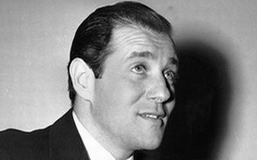 Bugsy Siegel
Murderer · USA
Benjamin “Bugsy” Siegel (February 28, 1906 – June 20, 1947) was an American mob…
Bugsy Siegel
Murderer · USA
Benjamin “Bugsy” Siegel (February 28, 1906 – June 20, 1947) was an American mob…
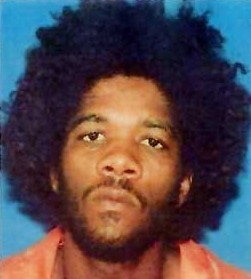 Kevin Cooper
Mass murderer · USA · 1983
Kevin Cooper (born 1958) was a death row inmate held in California’s San Quenti…
4 victims
Kevin Cooper
Mass murderer · USA · 1983
Kevin Cooper (born 1958) was a death row inmate held in California’s San Quenti…
4 victims
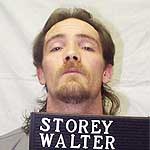 Walter Storey
Murderer · USA · 1990
Walter Timothy Storey (also known as Walter Storey) was convicted in the case S…
1 victim
Walter Storey
Murderer · USA · 1990
Walter Timothy Storey (also known as Walter Storey) was convicted in the case S…
1 victim
- Gender
- male
- Country
- USA
- Location
- Multnomah County, Oregon, USA
- Date of birth
- March 31, 1956
- Age at first offence
- 37
- Characteristics
- rape
- Victim profile
- Suzanne Marie Hill, 24 (stripper)
- Method of murder
- Strangulation
- Date(s) of murder
- March 15, 1993
- Years active
- 1993
- Date of arrest
- 2 months later
- Status
-
Sentenced to death
Sentenced to death on January 10, 1995
Case identity
Michael James McNeely was the defendant in a criminal case before the Supreme Court of the State of Oregon on automatic and direct review of his judgment of conviction and sentence of death.
Timeline
- March 8, 2000 — The case was argued and submitted.
- January 10, 1995 — McNeely was sentenced to death.
Background
The victim disappeared from Portland in March 1993. In May 1993, her body was discovered in a dumpster. An autopsy indicated that she had died of strangulation.
The offence
McNeely was convicted of seven counts of aggravated murder and 12 other felonies in connection with the victim’s death. After the jury answered Oregon’s four death-penalty sentencing-phase questions in the affirmative under ORS 163.150(1)(b), the trial court sentenced McNeely to death.
Investigation
Thompson, another jail inmate, spoke with McNeely several times over a three- or four-day period while McNeely was in jail. During some of those conversations, McNeely discussed the facts of the case. A few days after those conversations, Thompson contacted the police and disclosed incriminating statements that McNeely had made about the victim’s death.
Trial
Guilt phase
McNeely made six assignments of error relating to the guilt phase of his trial, only two of which warranted discussion.
Motion to suppress Thompson’s testimony
McNeely contended that the trial court erred in denying his motion to suppress the testimony of Thompson. McNeely argued that Thompson was acting as a state-controlled informant and that Thompson automatically became a “state agent” for purposes of the state and federal constitutions because Thompson was attempting to gain a benefit from the state by providing information to the police.
The trial court denied the motion and made findings on Thompson’s status as follows:
"Well, first of all, I'm going to deny the motion and find that Mr. Thompson was acting as a private citizen on his own initiative and for his own reasons in contacting or in speaking with * * * [defendant], I don't think he actually contacted [defendant] based on the evidence, but once he was contacted by [defendant] he was not being directed or even indirectly was he involved with the police in any way, any police agency in either initiating, planning, controlling or supporting his activities. So, I find that the exclusionary rule simply doesn't apply in this case. "As for these issues of his ultimately perhaps receiving some benefit, I would agree with the State's position that the fact that he may have received a benefit ultimately as a result of this does not then make him an agent of the State at the outset of the contacts. * * * "Obviously anybody who, in the course of their time in prison, who happens to come upon some evidence, as he apparently did, someone willing to talk to him who was charged with a serious crime, Mr. Thompson used his brain here and realized that maybe this could assist him as well as what he had undertaken in connection with that agreement, and apparently it may have benefitted him. But that does not then result in his being termed an agent of the State at the time that he first made the contact. There is simply no evidence whatsoever to indicate that anybody asked him to do this."
McNeely’s assignment of error presented whether his state or federal constitutional rights to remain silent and to counsel were violated. The court held that the trial court properly refused to suppress Thompson’s testimony because McNeely pointed to no evidence in the record demonstrating that anyone from the state initiated, planned, controlled, or supported Thompson’s activities in obtaining information from McNeely about the case.
Motion to exclude Thompson’s testimony for lack of identification
McNeely also contended that the trial court erred in denying his motion to exclude Thompson’s testimony because Thompson was unable to identify him at trial as the man with whom he had spoken in jail. At a pretrial hearing, Thompson was unable to identify McNeely. At trial, Thompson again stated that he did not recognize McNeely.
The trial court ruled:
"Okay. Well, I'm going to allow Mr. Thompson to testify. I have heard his testimony at the pretrial hearing and I'm satisfied that although he was not able to specifically identify the -- [defendant] in the courtroom, there is ample evidence that his appearance is different now, and based upon the evidence that he did -- or testimony that he did give at the time, I believe that it should go to the weight and not the admissibility of his testimony. So, I'll allow him to testify."
On review, McNeely argued that Thompson’s testimony was irrelevant and should have been excluded at trial. The state responded that Thompson’s testimony was “conditionally relevant” under OEC 104, and that it was properly admitted.
The court described the conditional relevancy framework under OEC 104(2) and held that the record supported the trial court’s decision to leave admissibility to the jury rather than excluding the testimony outright. Thompson testified at trial that he had spoken with a man in jail who had admitted choking and killing the victim. The record also included evidence that Thompson and McNeely had met in jail in 1993, that Thompson testified:
"I spoke to somebody that represented himself as being [defendant] or was represented by somebody else as being [defendant]."
The court also relied on evidence that McNeely had gained 25 pounds and had shaved off his moustache since the time when he and Thompson were in jail together. The court held that Thompson’s inability to identify McNeely at trial went to the weight the jury might give the testimony, not to its admissibility.
Motions for a mistrial during closing argument (guilt phase)
McNeely moved for a mistrial during and after the prosecution’s closing argument during the guilt phase. The court discussed only one ground.
During closing argument, the prosecutor argued:
"Who is this man over here? Who is this man here? You've gotten to know him for two-and-a-half weeks. Don't lose sight of [the victim] because you've seen a living, breathing human body over here. That might invoke some sympathy on your part. "Who is that man over there? If we could resurrect [the victim] for you maybe she could tell you. If we could do that."
Defense counsel objected and moved for a mistrial, citing State v. Leland. The trial court denied the motion.
After the objection, the prosecutor mentioned the victim only once more, telling the jurors:
"Don't for a moment forget about [the victim]."
The court held that the trial court did not err in denying the motion for a mistrial.
Penalty phase
McNeely made twelve assignments of error regarding the penalty phase of his trial, and only three warranted discussion.
Motion for a mistrial during closing argument (penalty phase)
McNeely moved for a mistrial during the state’s closing argument in the penalty phase, claiming that the prosecutor made an impermissible comment on McNeely’s decision not to testify. The prosecutor told the jury:
"But let's talk a little bit about the things that they said about why [defendant] is the way that he is today. Excuses after excuses after excuses were brought before you during the testimony of these people. And this relates not to the questions that you have here but it relates to the word 'provocation,' and it relates to the defendant not taking responsibility for his actions and it relates generally to his inability to take responsibility -- "* * * * * "Think back to Dr. McGovern's testing of the defendant. Think back to that. Did he take responsibility for his thefts? Sometimes. At least according to Dr. McGovern, even though Dr. McGovern's colleague did not get that indication. "Did he take responsibility for committing an act of prostitution? No. Did he take responsibility for the fact that he beat his prior lovers? Never. How was it that [defendant] referred to his prior relationship with these women and how was it that it was characterized by Dr. McGovern? Oh, he had problems with the people he was involved with. They had misunderstandings. They had problems. But nobody, nobody who took the stand for the defendant in the last day-and-a-half has come up here and admitted to you that the defendant has a problem."
The trial court denied McNeely’s motion, explaining that the prosecutor’s comment “was appropriate given Dr. McGovern's testimony[.]”
The Supreme Court held that the trial court did not abuse its discretion in refusing to grant a mistrial. The court stated that the prosecutor’s comment concerned McNeely’s refusal to take responsibility for his actions in the past and that such a discussion related to future dangerousness under ORS 163.150(1)(b)(B).
Motion to limit the prosecutor’s rebuttal argument (penalty phase)
McNeely contended that the trial court erred in denying his motion to limit the prosecutor’s rebuttal argument in the penalty phase. The trial court submitted four questions to the jury under ORS 163.150(1)(b). The fourth question asked whether the defendant should receive a death sentence under ORS 163.150(1)(b)(D).
McNeely sought an order precluding the state from presenting any argument “that relates to or touches on the fourth question.” He argued that there was no burden of proof on the fourth question and that the state should be precluded from presenting evidence or argument relating to it in rebuttal.
The trial court concluded that ORS 163.150 allowed the state to present argument on the fourth question and denied McNeely’s motion. On review, the Supreme Court analyzed whether ORS 163.150 prohibited rebuttal argument on the fourth question and concluded that ORCP 58 B(4) authorized the state to present rebuttal argument on any penalty phase matter raised by a defendant’s argument. The court therefore held that the trial court did not err in denying the motion to limit the prosecutor’s rebuttal argument on the fourth question.
McNeely also contended, without analysis or elaboration, that the trial court’s ruling violated his Eighth and Fourteenth Amendment rights to a reliable sentencing hearing and due process. The Supreme Court declined to address the issue due to insufficiency of the constitutional argument as presented.
McNeely finally contended that the trial court erred in failing to declare the death penalty unconstitutional. The Supreme Court held that the trial court did not err, stating that it had considered and rejected all state and federal constitutional grounds relied upon in earlier cases.
Appeals
The Supreme Court of the State of Oregon conducted automatic and direct review of the judgment of conviction and sentence of death imposed by the Multnomah County Circuit Court.
The Supreme Court reviewed 18 assignments of error and addressed only the specific grounds that warranted discussion. The court affirmed the judgment of conviction and sentence of death.
Outcome
The judgment of conviction and the sentence of death were affirmed.
Spotted an error, or have more information about this case?