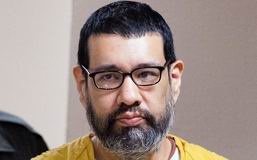
Anthony Garcia
Murderer Joshua Wayne Andrews
Murderer · USA · 2000
Joshua Wayne Andrews was a serial killer accused of killing several people in V…
5 victims
Joshua Wayne Andrews
Murderer · USA · 2000
Joshua Wayne Andrews was a serial killer accused of killing several people in V…
5 victims
 Juan Carlos Alvarez
Murderer · USA · 1998
Juan Carlos Alvarez, born on March 9, 1977, in San Luis, Mexico, was a Hispanic…
5 victims
Juan Carlos Alvarez
Murderer · USA · 1998
Juan Carlos Alvarez, born on March 9, 1977, in San Luis, Mexico, was a Hispanic…
5 victims
 Leon Davis Jr.
Murderer · USA · 2007
Leon Davis Jr. was sentenced to death on April 29, 2011, for the execution-styl…
5 victims
Leon Davis Jr.
Murderer · USA · 2007
Leon Davis Jr. was sentenced to death on April 29, 2011, for the execution-styl…
5 victims
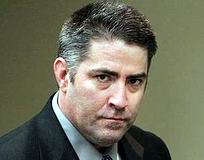 Raymond Lee Oyler
Murderer · USA · 2006
Raymond Lee Oyler was convicted for starting the 2006 Esperanza fire in Riversi…
5 victims
Raymond Lee Oyler
Murderer · USA · 2006
Raymond Lee Oyler was convicted for starting the 2006 Esperanza fire in Riversi…
5 victims
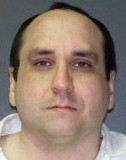 Terry Lee Hankins
Murderer · USA · 2000
Terry Lee Hankins was convicted by a jury of capital murder and was sentenced t…
5 victims
Terry Lee Hankins
Murderer · USA · 2000
Terry Lee Hankins was convicted by a jury of capital murder and was sentenced t…
5 victims
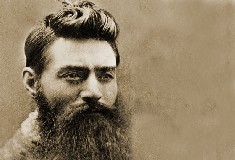 Ned Kelly
Murderer · Australia · 1878
Edward “Ned” Kelly (June 1854 or 1855 – 11 November 1880) was an Irish Australi…
6 victims
Ned Kelly
Murderer · Australia · 1878
Edward “Ned” Kelly (June 1854 or 1855 – 11 November 1880) was an Irish Australi…
6 victims
 David James Roberts
Murderer · USA · 1974
David James Roberts David James Roberts was resentenced to six life sentences i…
4 victims
David James Roberts
Murderer · USA · 1974
David James Roberts David James Roberts was resentenced to six life sentences i…
4 victims
 Aset Magomadova
Murderer · Canada · 2007
Aset Magomadova was convicted of manslaughter for strangling her daughter, Amin…
1 victim
Aset Magomadova
Murderer · Canada · 2007
Aset Magomadova was convicted of manslaughter for strangling her daughter, Amin…
1 victim
 Penny Bjorkland
Murderer · USA · 1959
Rosemarie Diane “Penny” Bjorkland (1941-?) — defendant; US murderer who killed…
1 victim
Penny Bjorkland
Murderer · USA · 1959
Rosemarie Diane “Penny” Bjorkland (1941-?) — defendant; US murderer who killed…
1 victim
 Karl Anthony Terry
Murderer · USA · 1994
Karl Anthony Terry was sentenced to death on November 22, 1995. This case under…
2 victims
Karl Anthony Terry
Murderer · USA · 1994
Karl Anthony Terry was sentenced to death on November 22, 1995. This case under…
2 victims
- Gender
- male
- Country
- USA
- Location
- Omaha, Douglas County, Nebraska, USA
- Date of birth
- 1973
- Age at first offence
- 35
- Characteristics
- rape, drug addict, drug dealer, alcohol, mentally ill, torture, domestic violence
- Victim profile
- Thomas Hunter, 11; Shirlee Sherman, 57; and Dr. Roger and Mary Brumback, both 65
- Method of murder
- Stabbing with knife - Shooting
- Date(s) of murder
- March 13, 2008 / May 12, 2013
- Years active
- 2008–2013
- Date of arrest
- July 15, 2013
- Status
-
Found guilty on all counts including four counts of First Degree Murder; pending sentence
Case details
Anthony Garcia was a former doctor who was found guilty on all counts including four counts of First Degree Murder.
The victims
Garcia was convicted in relation to the March 2008 deaths of Thomas Hunter, 11, and Shirlee Sherman, 57, and the May 2013 deaths of Dr. Roger Brumback and Mary Brumback, both 65.
Background
Garcia was described as a former resident at the Creighton University Medical Center and as being fired from Creighton University Medical Center by Thomas’ father, Dr. William Hunter, and Dr. Brumback.
Investigation and evidence
After Garcia’s arrest, detectives searched his nearly abandoned Terre Haute, Indiana, home and found evidence including documents, writings, and items they said supported a motive of revenge.
Investigators also recovered a black iPhone and a Samsung Galaxy tablet from inside Garcia’s SUV. A Douglas County District Judge Gary Randall barred jurors from hearing testimony about additional contents inside the SUV, including a crowbar, a sledgehammer, an unloaded .45 caliber handgun, a package of .45 caliber bullets, and an LSU lab coat.
Detectives also described a chemical-smeared garbage bag in Garcia’s kitchen sink.
Investigators described evidence they said linked Garcia to the crimes, including surveillance photos, DNA found on the door handle of another doctor’s home on the day prosecutors said the Brumbacks were killed, and phone searches for the addresses of Dr. Brumback, Dr. Chhanda Bewtra, and Bewtra’s daughter Aruna Bewtra.
Omaha police officers found what prosecutors said were web searches on Garcia’s smartphone including a line from Shakespeare, “If you wrong us, shall we not revenge?”
Evidence disputes and trial rulings
Defense counsel challenged DNA analysis and attempts to introduce additional DNA analysis. Judge Gary Randall warned defense counsel that if their expert made grand conclusions that Garcia did not leave DNA, it would open the door for prosecutors to attempt to introduce an advanced DNA analysis.
Forensic and other testimony highlights
A forensic pathologist Michelle Elieff performed an autopsy and testified in detail about injuries to Mary Brumback, including multiple cut injuries to her arms and hands and stab wounds to the right side of her neck, and about injuries to Roger Brumback, who was stabbed and shot.
A forensic pathologist for the defense, Dr. Francisco Diaz, testified about the stiffness and decomposition of the Brumbacks’ bodies and said his opinion was that the time frame asserted by prosecutors was not feasible based on post-mortem findings.
Trial
Garcia’s trial lasted three weeks and ended with convictions.
Opening and closing arguments
In opening statements, prosecutors used the Shakespeare quote “If you wrong us, shall we not revenge?” and said the case was about revenge.
The defense attorney Robert Motta Sr. argued that the case was about a rush to judgment and said prosecutors lacked witnesses or physical evidence, calling it a “loosely woven tapestry.”
Defense counsel attacked evidence including claimed lack of direct evidence placing Garcia at the scenes and argued prosecutors did not prove the Brumbacks’ time of death, including an argument that it could not have happened while Garcia was in Omaha.
Prosecutor Brenda Beadle told jurors “It’s not fun to look at. Not fun to talk about. But it’s what happened,” while displaying photos of each victim.
Defense counsel presented arguments including claims that Omaha police had no direct evidence placing Garcia at either of the two double-slaying scenes and accused police of planting searches on Garcia’s phone and a gun on a roadside near his home. Prosecutors objected and the judge sustained many objections during the closing arguments.
Evidence described from trial testimony
Trial testimony included descriptions of:
- The March 13, 2008 slayings of Thomas Hunter and Shirlee Sherman, including testimony from Dr. William “Bill” Hunter describing discovery of their bodies and knife wounds.
- The May 12, 2013 killings of Dr. Roger Brumback and Mary Brumback at their Omaha home, including testimony describing Roger Brumback being shot and stabbed and Mary Brumback being stabbed, with discussion of defensive wounds.
- Forensic testimony about latent fingerprints that could not be identified.
Trial testimony also included details about attorneys’ disputes over evidentiary issues, including disputes about exhibits related to items from Garcia’s SUV and disagreements over when and how certain evidence could be introduced.
Sentencing phase and competency issues
Competency inquiry and communications
Garcia’s attorneys called his communications “gobbledygook,” and a judge wanted to question Garcia to determine his mental fitness to face a death penalty hearing.
Defense attorney Jeremy Jorgenson said in court that Garcia had not communicated with his attorneys or his family in months, except for “nonsensical” letters.
Douglas County District Judge Gary Randall presented options during the hearing, including that Garcia might choose not to talk to his attorneys. The judge noted defiant behavior before, during, and after the murder case.
The judge said that Garcia’s writings had been strange, including writings about assuming other people’s identities, wearing Band-Aids on his fingers, renting a boat and fleeing through Canada or the Gulf of Mexico, and writing reminders to himself to “brush teeth.”
A note sent by Garcia to jail officials contained: “I raped babies,” and Garcia also claimed to have been gang-raped by five Douglas County jailers.
Psychiatrists found Garcia competent to stand trial after evaluations in March 2014 and December 2015, with Garcia refusing to talk to them.
A jail sergeant testified that Garcia never engaged in “small talk” with jailers, gave orders and opinions, and sometimes complied and sometimes refused.
Jorgenson said:
“Either he’s incredibly talented at sounding insane — or he is insane,”
and:
“I don’t know the answer.”
Jorgenson also said:
“It is possible that (Mr.) Garcia was exercising an extraordinary amount of will. It’s also possible that his mind has unraveled. I don’t know when or if his mind unraveled, but I think it has to be addressed. “If not, it would essentially just be a steamroller of justice.”
The judge stated:
“I think he made a choice” not to talk to his attorneys,
and:
“Maybe Garcia just doesn’t want to talk to his attorneys.”
The county attorney suggested the judge question Garcia directly, and Randall scheduled a Monday hearing to do so. The judge said he was undecided as to whether he would order Garcia to be extricated from his cell if he refused to go.
Garcia refused to come to court at the hearing described as the second time he had done so since his October conviction.
Aggravating factors for potential death penalty
A Douglas County jury found aggravating factors that could lead to the death penalty.
The aggravating factors were:
- that Garcia killed multiple people;
- that he killed to conceal his identity; and
- that the killings were especially heinous and cruel and manifested exceptional depravity.
The jury was described as finding that prosecutors had proven three aggravating factors in about 30 minutes.
Kleine displayed photos of the victims, and Jeff Sherman motioned for Madison, 14, to avert her eyes, while Madison threw her blond hair over her face and covered her eyes. Sherman's family relatives and jurors removed their sweaters and sweatshirts after the verdict.
Garcia was described as being halfway to death row.
The case was set to move to a three-judge panel to determine whether Garcia should receive the death penalty.
Other events during the proceedings
Trial day 10 and arrest-related testimony
FBI agents tracked Garcia and arrested him after monitoring his phone.
Garcia said he was headed to New Orleans, and investigators believed he was headed to Louisiana State University to harm people there.
Judge Gary Randall barred jurors from hearing testimony about certain additional contents found inside Garcia’s SUV. The judge also barred testimony about LSU connection and information deemed to concern uncharged crimes.
Prior medical residency and termination disputes
Testimony included descriptions of Garcia’s conduct and interactions during a residency at Creighton University Medical Center, including testimony from Dr. William Hunter and Dr. Chhanda Bewtra about complaints and reviews.
Status and posture
Garcia had been found guilty on all counts including four counts of First Degree Murder. Sentencing was pending, and he faced proceedings related to potential death penalty consideration.
Spotted an error, or have more information about this case?