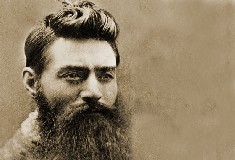
Ned Kelly
Murderer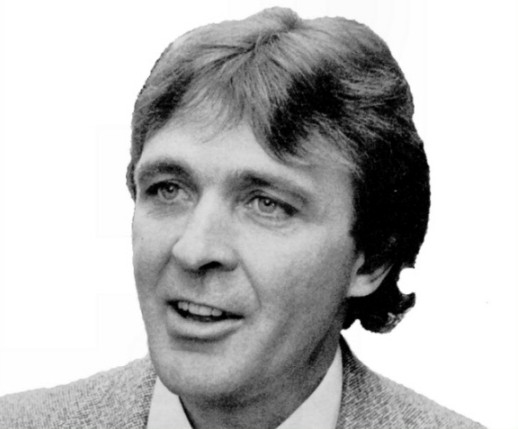 Christopher Flannery
Murderer · Australia · 1979
Christopher Dale Flannery (1949 - missing and believed murdered ca. May 9, 1985…
12 victims
Christopher Flannery
Murderer · Australia · 1979
Christopher Dale Flannery (1949 - missing and believed murdered ca. May 9, 1985…
12 victims
 John Makin
Murderer · Australia · 1892
John Makin (14 February 1845 – 15 August 1893) was an Australian baby farmer wh…
12 victims
John Makin
Murderer · Australia · 1892
John Makin (14 February 1845 – 15 August 1893) was an Australian baby farmer wh…
12 victims
 Alexander Pearce
Murderer · Australia · 1822
1819 — Alexander Pearce was sentenced at Armagh in 1819 to penal transportation…
6 victims
Alexander Pearce
Murderer · Australia · 1822
1819 — Alexander Pearce was sentenced at Armagh in 1819 to penal transportation…
6 victims
 Bevan Von Einem
Murderer · Australia · 1979
Bevan Spencer von Einem (born c.1945), also known as Bevan von Einem (with the…
5 victims
Bevan Von Einem
Murderer · Australia · 1979
Bevan Spencer von Einem (born c.1945), also known as Bevan von Einem (with the…
5 victims
 Joseph Schwab
Murderer · Australia · 1987
Joseph Schwab was a German man who murdered five tourists in the Northern Terri…
5 victims
Joseph Schwab
Murderer · Australia · 1987
Joseph Schwab was a German man who murdered five tourists in the Northern Terri…
5 victims
 Paul Ferguson
Murderer · USA · 1968
Paul Ferguson was sentenced to life imprisonment in 1969 and was paroled less t…
1 victim
Paul Ferguson
Murderer · USA · 1968
Paul Ferguson was sentenced to life imprisonment in 1969 and was paroled less t…
1 victim
 Donetta Hill
Murderer · USA · 1990
Donetta Hill, also referred to as Doneta Hill, was born in 1966. She was a Sout…
2 victims
Donetta Hill
Murderer · USA · 1990
Donetta Hill, also referred to as Doneta Hill, was born in 1966. She was a Sout…
2 victims
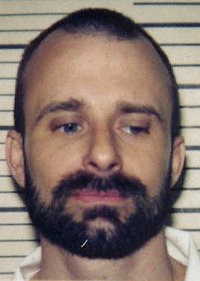 Eric Randall Nance
Murderer · USA · 1993
Eric Randall Nance was a white male who was born on 01/09/60. He was convicted…
1 victim
Eric Randall Nance
Murderer · USA · 1993
Eric Randall Nance was a white male who was born on 01/09/60. He was convicted…
1 victim
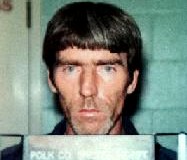 Daniel Joseph Blank
Serial killer · USA · 1996
Daniel Joseph Blank was a mechanic and was described as a gifted mechanic and a…
6 victims
Daniel Joseph Blank
Serial killer · USA · 1996
Daniel Joseph Blank was a mechanic and was described as a gifted mechanic and a…
6 victims
 Brittany Miles
Murderer · USA · 2011
Brittany Miles was convicted of first-degree felony murder after a fatal collis…
1 victim
Brittany Miles
Murderer · USA · 2011
Brittany Miles was convicted of first-degree felony murder after a fatal collis…
1 victim
- Gender
- male
- Country
- Australia
- Location
- Victoria, Australia
- Date of birth
- June 1854 or 1855
- Age at first offence
- 24
- Characteristics
- —
- Victim profile
- Sergeant Michael Kennedy / Constable Scanlan / Constable Lonigan / Aaron Sherritt / Martin Cherry / John Jones, 11
- Method of murder
- Shooting
- Date(s) of murder
- 1878 / 1880
- Years active
- 1878–1880
- Date of arrest
- June 28, 1880
- Status
-
Executed
Executed by hanging on November 11, 1880
Overview
Edward “Ned” Kelly (June 1854 or 1855 – 11 November 1880) was an Irish Australian bushranger. He was convicted of three counts of wilful murder and was hanged.
Timeline
- June 1854 or 1855 — Ned Kelly was born in Beveridge.
- 15 October 1869 — Ned Kelly was charged with the assault and robbery of Ah Fook.
- 20 October 1869 — Ned Kelly was again remanded after the police failed to produce an interpreter.
- 26 October 1869 — The charge was dismissed and Ned Kelly was released.
- 16 March 1870 — Bushranger Harry Power and Ned Kelly stuck up and robbed Mr M’Bean.
- 2 May 1870 — Ned Kelly was charged with robbery in company and accused of being Power’s accomplice; charges were dismissed.
- 15 April 1878 — Constable Strachan learned that Kelly was at a shearing shed and Constable Alexander Fitzpatrick was involved in an attempt to apprehend Dan Kelly.
- 17 May 1878 — At the Benalla Police Court, William Williamson, alias “Brickey”, William Skillion, and Ellen Kelly were charged with aiding and abetting attempted murder.
- 9 October 1878 — Ellen Kelly, Skillion and Williamson appeared before Judge Redmond Barry charged with attempted murder.
- 25 October 1878 — Police parties were secretly despatched to search for the Kellys in the Wombat Ranges; the camp at Stringybark Creek was set up.
- 26 October 1878 — Sergeant Michael Kennedy and Scanlan were involved in events at the Stringybark Creek camp; Dan Kelly and Ned Kelly killings of police occurred, and subsequent related arrests occurred.
- 9 December 1878 — Kelly walked into the homestead of Gooram Gooram Gong Wool station at Faithful’s Creek; he and the gang held people captive and committed a bank robbery at Euroa.
- 16 December 1878 — Kelly posted a 20-page letter to Mr Donald Cameron M.L.A.
- 8 February 1879 — The gang surrounded the Jerilderie police barracks and ordered the police to hold up their hands.
- 10 February 1879 — Ned Kelly handed the Jerilderie Letter to Mrs. Gill during the Jerilderie hold-up.
- March 1879 to June 1880 — Nothing was heard of the gang’s whereabouts.
- 25 June 1880 — Dan Kelly and Joe Byrne rode into “The Woolshed” at Aaron Sherritt’s farm; the gang decided to kill Sherritt.
- 26 June 1880 — Aaron Sherritt was shot dead.
- 27 June 1880 — The gang descended on Glenrowan and took over the township; later events involved a siege.
- 28 June 1880 — Bodies at Glenrowan were recovered after the burning of the hotel and subsequent events; a number of people were shot or died.
- 19 October 1880 — Ned Kelly survived to stand trial on a charge of the murder of Sergeant Kennedy, Constable Scanlan and Lonigan, the various bank robberies, the murder of Sherritt, and resistance to the police at Glenrowan.
- 28 October 1880 — The trial was adjourned; Kelly was convicted of the wilful murder of Constable Lonigan.
- 11 November 1880 — Ned Kelly was hanged at Melbourne Gaol.
- 13 November 2007 — A weapon claimed to be Constable Fitzpatrick’s service revolver was auctioned.
- 11 November 2009 — Tom Baxter handed the skull in his possession to police; the skull and remains were historically and forensically tested.
- 1 August 2012 — The Victorian government issued a license for Kelly’s bones to be returned to the Kelly family.
- 20 January 2013 — Kelly’s descendants buried his remains within consecrated ground at Greta cemetery.
- 18 January 2013 — A Requiem Mass was held at St Patrick’s Catholic Church in Wangaratta.
Background
Kelly was born in Victoria to an Irish convict father, John Kelly, better known as “Red”. Red Kelly had been transported in 1841 from Tipperary to Tasmania for stealing two pigs. After his release in 1848, Red Kelly moved to Victoria and worked at James Quinn’s farm at Wallan Wallan as a bush carpenter. He later worked at gold-digging and purchased a small freehold at Beveridge.
In 1851, Red Kelly married Ellen Quinn, his employer’s 18-year-old daughter, in Ballarat. Their first child, Mary Jane, died at six months in 1850. Ellen later gave birth to Annie in 1853. Edward “Ned” Kelly was born in Beveridge, just north of Melbourne. His date of birth was not known, but at Beveridge he said to an officer: “Look across there to the left. Do you see a little hill there?”, “That is where I was born about 28 years ago. Now, I am passing through it, I suppose, to my doom.”
Kelly was baptised by an Augustinian priest, Charles O’Hea. As a boy he obtained basic schooling and once risked his life to save another boy, Richard Shelton, from drowning. As a reward he was given a green sash by Richard Shelton’s family, and he wore it under his armour during his final showdown with police in 1880.
The Kelly family moved to Avenel near Seymour, where Red Kelly became noted as an expert cattle-stealer. Red Kelly was convicted of cattle duffing in 1865 and imprisoned. Red Kelly died at Avenel on 27 December 1866 shortly after his release from Kilmore gaol. When Red Kelly died, he was survived by his wife and seven offspring: Ned and Dan, James, Mrs Gunn, Mrs Skillion, Kate and Grace.
Several months later the Kelly family acquired 80 acres of uncultivated farmland at Eleven Mile Creek near the Greta area of Victoria, known as “Kelly Country”. The Kellys were suspected many times of cattle or horse stealing, but never convicted. Ned Kelly claimed that he had stolen over 280 horses as a boy.
Red Kelly was arrested after he killed and skinned a calf claimed to be the property of his neighbour. He was found innocent of theft, but guilty of removing the brand from the skin. He was given the option of a twenty-five pound fine or a sentence of six months with hard labour. Because he could not pay the fine, Red served his sentence, which had a fatal effect on his health.
The saga surrounding Red, and his treatment by the police, made a strong impression on his son Ned. In all, eighteen charges were brought against members of Ned’s immediate family before he was declared an outlaw, while only half that number resulted in guilty verdicts. The move to northeast Victoria was linked to claims that Ned’s family was unfairly targeted. The material included commentary by Antony O’Brien that Victoria’s colonial police practices treated arrest as equivalent to proof of guilt, and that regional or family or national criminality was determined by the total number of arrests.
Kelly’s mother Ellen later married George King, a Californian, and they had three children. King, Kelly and Dan Kelly became involved in cattle rustling.
The offence
Shoemaker shop brawl
In September 1877, Kelly was arrested for riding over a footpath while drunk and was locked up for the night. The next day, while he was escorted by four policemen, he escaped and ran into a shoemaker’s shop. The police and the shop owner tried to handcuff him but failed. During the struggle Kelly’s trousers were almost ripped off.
During the struggle, Kelly shot dead Constable Lonigan. The material described Lonigan “black-balled” Kelly by grabbing and squeezing his testicles while trying to force him to submit. A miller walked in and said, “You should be ashamed of themselves.” The miller attempted to pacify the situation and induced Kelly to put on the handcuffs.
Kelly later said about the incident: “It was in the course of this attempted arrest Fitzpatrick endeavoured to catch hold of me by the foot, and in the struggle he tore the sole and heel of my boot clean off. With one well-directed blow, I sent him sprawling against the wall, and the staggering blow I then gave him partly accounts to me for his subsequent conduct towards my family and myself.”
Legend has it that Kelly told Lonigan: “If I ever shoot a man, Lonigan, it'll be you!”
Fitzpatrick incident (attempt to apprehend Dan Kelly)
On 15 April 1878, Constable Strachan, officer in charge of the Greta police station, learned that Kelly was at a shearing shed and went to apprehend him. Because lawlessness was rampant at Greta, Constable Alexander Fitzpatrick was ordered there for relief duty. Fitzpatrick rode to the hotel at Winton and spent considerable time there before resuming his journey.
Fitzpatrick remembered seeing an arrest warrant in The Police Gazette for Dan Kelly for horse stealing. Fitzpatrick went to the Kelly house to arrest Dan Kelly, violating police policy requiring at least two constables for visits to the Kelly homestead.
Fitzpatrick found Dan not at home and remained with Mrs Kelly and other family members in conversation for about an hour. Upon hearing someone chopping wood, he went to ensure it was licensed. The man chopping was William “Bricky” Williamson, a neighbour. Williamson said he only needed a licence if chopping on Crown land. Fitzpatrick then observed two horsemen making toward the house: Dan Kelly and his brother-in-law, Skillion. Fitzpatrick returned and made the arrest.
Dan asked to be allowed to have dinner before leaving. Fitzpatrick consented and took a seat near his prisoner. In an interview three months before execution, Kelly said that at the time of the incident he was 200 miles from home, and that his mother had asked Fitzpatrick if he had a warrant, to which Fitzpatrick said he had only a telegram, and that his mother replied Dan need not go. Fitzpatrick then said, pulling out a revolver: “I will blow your brains out if you interfere.” Kelly’s mother replied: “You would not be so handy with that popgun of yours if Ned were here.”
Dan then said, “Here he (Ned) is coming along.” Dan cornered Fitzpatrick, took the revolver and claimed that he had released Fitzpatrick unharmed. Kelly denied that Fitzpatrick could have tried to take liberties with his sister.
Fitzpatrick rode to Benalla claiming he was attacked by Ned, Dan, Ellen, Bricky Williamson and Bill Skillion. Fitzpatrick claimed all except Ellen had been armed with revolvers, that Ned had shot him in the left wrist, and that Ellen had hit him on the helmet with a coal shovel. Williamson and Skillion were arrested for their part in the affair. Ellen was taken into custody along with her baby, Alice. Ellen remained in prison at the time of Ned Kelly’s execution. The record also stated: “Ellen would outlive her most famous son by several decades and died aged 95 on 27 March 1923.”
Kelly asserted that he was not present and that Fitzpatrick’s wounds were self-inflicted. Upon what Kelly claimed was Fitzpatrick’s false evidence, Kelly’s mother, Skillian and Williamson were convicted.
A reward of £100 was offered for Kelly’s arrest. The material also included that “Just before Kelly was taken away from Benalla after the Glenrowan shootout, Senior-constable Kelly claimed he interviewed him in his cell.” Senior-constable Kelly claimed that Kelly admitted to shooting Fitzpatrick.
Killings at Stringybark Creek
Dan and Ned Kelly doubted they could convince police of their story and went into hiding, later joined by Joe Byrne and Steve Hart. Police heard privately that the Kellys were in the Wombat Ranges at the head of the King River. Two parties of police were secretly despatched, one from Greta with Sergeant Steele in command, and one from Mansfield with Sergeant Kennedy in command, in civilian dress.
A camp was set up near two miners huts at Stringybark Creek in a heavily timbered area. At about 5 pm, McIntyre, with Lonigan at camp, were surprised with the cry, “Bail up; throw up your arms.” Four armed men on foot appeared. Ned Kelly shot Lonigan in the temple. Lonigan fell and died quickly, saying “Oh Christ, I am shot.”
Kelly searched McIntyre, took Lonigan and McIntyre’s revolvers, and remarked, “What a pity; what made the fool run?” Kelly talked to McIntyre, expressed wonder that police looked for him in the ranges, and asked about four men. Kelly said he would roast each of them alive if he caught them. Kelly stated that Fitzpatrick was the cause of “all this” and that his mother and the rest had been unjustly “lagged” at Beechworth.
The four men concealed themselves when Kennedy and Scanlan approached. They made McIntyre sit on a log. Kelly warned, “Mind, I have a rifle for you if you give any alarm.” Kennedy and Scanlan rode into the camp. McIntyre told Kennedy that he was surrounded, and Kelly called out: “Put up your hands.”
Kennedy mistakenly thought it was Lonigan who called out and put a hand on his revolver case. Kelly’s group fired; Kennedy was not hit, then jumped off his horse and said, “It's all right, stop it, stop it.” Scanlan was shot down before he could unsling his rifle. Shots were fired. McIntyre escaped by jumping on Kennedy’s horse and dashing down the creek, hearing Daniel Kelly call, “Shoot that ******.”
Afterwards, the tent had been burnt. Sergeant Kennedy was not found at the initial search. Post-mortem findings by Dr. Reynolds were recorded as follows: Lonigan received seven wounds, one through the eyeball. Scanlan’s body had four shot-marks and the fatal wound was caused by a rifle ball that went clean through the lungs. Scanlan was 33 and Lonigan 37 years of age. Three additional shots were fired into Lonigan’s dead body before the men left the camp so that “all of the gang might be equally implicated.”
The record stated that during search for Kennedy, on 29 October, two relatives known as “Dummy Wright” and “Wild Wright” were arrested in Mansfield for using threatening language towards members of the search party. Wild Wright was threatened with a revolver before agreeing to handcuffs. Wild Wright was remanded for seven days and the other was released.
On the following Wednesday, another party started headed by James Tomkins, president of the Mansfield shire, and Sub-Inspector Pewtress, accompanied by several residents. On the following morning, the body of the sergeant was found by H. G. Sparrow at Germans Creek. The exact place at Germans Creek where this occurred was identified in 2006.
After these killings, the reward was raised to £500 and the Victorian parliament passed the Felons’ Apprehension Act, outlawing the gang and allowing anyone to shoot them. There was stated background that the Act was based on an 1865 Act passed in New South Wales that declared Ben Hall and his gang outlaws.
Kelly stole Sergeant Kennedy’s handwritten note for his wife and his gold fob watch. Ned replied when asked why he stole the watch: “What's the use of a watch to a dead man?” Kennedy’s watch was returned to his kin many years later.
Bank robberies
Euroa (9 December 1878)
At midday on 9 December 1878, Kelly walked into the homestead of Gooram Gooram Gong Wool station at Faithful’s Creek, owned by Mr Younghusband. The gang assured people they had nothing to fear and only asked for food for themselves and their horses. An employee named Fitzgerald eating dinner said: “Well, if the gentlemen want food I suppose they have got to have it.” Other outlaws joined Kelly and four imprisoned men at the station in a spare building used as a store. No interference was offered to women.
The manager Mr Macauley returned and was bailed up. Kelly told him he wanted food for themselves and for their cattle, not horses. A hawker named Gloster camped on the station and said, “I wish they were, it would be £2,000 in my pocket.” Kelly looked up and said, “What is that you say.” Gloster rushed toward his wagon and was covered by the bushrangers; Macauley cried out, “Look out Gloster, you will be shot,” while appealing to Kelly not to shoot him. Gloster said, “Who are you?” Kelly replied: “I am Ned Kelly, son of Red Kelly, as good a blood as any in the land, and for two pins I would put a match to your wagon and burn it.”
The robbers imprisoned all in the storeroom and the station remained quiet until two o’clock in the morning. The outlaws whistled and Steve Hart and Joe Byrne rushed from the building. McCauley was surrounded and Kelly said, “You are armed, we have found a lot of ammunition in the house.” They retired to sleep.
On the afternoon of the second day, 10 December 1878, leaving Byrne in charge, three outlaws cut telegraph wires to prevent interference and were careful to rip off more wire than an ordinary repairer would carry. Railway men were forced to join the prisoners in the storeroom.
Carrying a cheque drawn by Macauley on the National Bank, the three bushrangers visited the bank. After closing time, they reached the bank in the hawker’s cart. Kelly knocked and persuaded the clerk to open and cash the cheque; the clerk and his manager, Mr Scott, were balled up. The robbers took £700 in notes, gold, and silver. Kelly insisted there was more money and compelled Macauley to open the safe. The gang obtained £1,500 in paper, £300 in gold, about £300 worth of gold dust, and nearly £100 worth of silver.
The outlaws were polite and considerate to Mrs. Scott. Mr. Scott invited the outlaws to drink whisky, and they did. The evening passed “quite pleasantly.” When McCauley remarked police might come and mean a fight, Ned Kelly replied, “I wish they would, of there is plenty of cover here.”
At half-past 8, the outlaws warned prisoners not to move for three hours and informed them they were going. Before leaving, Kelly noticed Mr. McDougall wearing a watch and asked for it. McDougall replied it was a gift from his dead mother. Kelly declared, “I wouldn't take it under any consideration,” and the robbers left.
In January 1879 police arrested all known Kelly friends and purported sympathisers and held them without charge for three months. The record stated this caused resentment of abuse of power and led to condemnation in the media and a groundswell of support for the gang that contributed to evading capture.
Jerilderie (8 February 1879)
At midnight on Saturday 8 February 1879, Ned Kelly, Dan Kelly, Hart and Byrne surrounded the Jerilderie police barracks. Hart shouted, “Devine, there's a drunken man at Davidson's Hotel, who has committed murder. Get up at once, all of you.” Constable Richards came to the front door. Devine opened the door and Kelly pointed two revolvers at the policemen, telling them to hold up their hands.
The material described Mrs Devine and children being put in the sitting-room, and firearms being demanded from Mrs Devine in her nightdress. During Sunday, the courthouse was used for mass, and Kelly remained in the courthouse while Mrs Devine prepared the altar and dusted forms, then escorted her back to the barracks and had the blinds down.
On Monday morning, Byrne brought two horses to be shod and the blacksmith noted brands. About 10 am, the Kellys went from the barracks with Constable Richards to the Royal Hotel. Ned Kelly intended to rob the bank. Hart and Byrne rode to the back and told the groom not to feed their horses. At the hotel, Byrne entered through the rear and met the accountant Mr Living who told him to use the front entrance. Byrne displayed his revolver, induced surrender, and walked Living and Mackie into the bar where Dan Kelly stood on guard. Ned Kelly secured the bank manager Mr Tarleton and ordered the safes opened. All were liberated at a quarter to three.
The gang took two thousand pounds from the bank. They treated people civilly and had drinks. Hart took a new saddle from the saddler and several watches were taken then returned. Two splendid police horses were taken, and other horses were wanted but residents said they belonged to women and Kelly relented. Telegraph operators were incarcerated and Byrne took possession of the office and overhauled telegrams.
The gang left about 7 pm in an unknown direction. The record stated the Kellys openly stated they came to shoot Constable Devine, and that Mrs Devine’s entreaties saved him. It also stated Ned Kelly said he intended to stick up the Urana coach and bank.
The material included a conversation with journalist S. Gill: when called upon to stand, Gill ran into the creek. Richards said, “Mrs Gill, don't be afraid, this is Kelly.” Kelly said: “All I want him for is for your husband to print this letter, the history of my life, and I wanted to see him to explain it to him.” Living said: “For God's sake, Kelly, give me the papers, and I will give them to Gill.”
Kelly burned three or four bank books and told the group that when Fitzpatrick was shot he was not within 400 miles of Greta. Kelly admitted stealing 280 horses from Whitty’s station and denied other crimes. Kelly showed revolvers and stated one taken from Constable Lonigan, saying he shot Lonigan with a worn-out, crooked musket. He asked how the listeners would like detectives pointing revolvers at their mothers and sisters. He blamed such treatment for turning him against the law.
Kelly said he had come only to shoot the two policemen Devine and Richards and called Richards “worse than any black trackers.” Tarleton remarked Kelly should not blame Richards for duty, and Kelly replied: “Suppose you had your revolver ready when I came in, would you not have shot me ?” Tarleton replied “Yes.” Kelly said: “Well,” said Kelly, “that's just what I am going to do with Richards—shoot him before he shoots me.” The party interceded for Richards, but Kelly said, “He must die.”
The record stated that before leaving, Ned Kelly remarked he had made a great blunder likely to lead to capture, and that New South Wales issued rewards totaling £4,000, with the Victorian Government matching it for £8,000 for the Kelly gang.
Murder of Sherritt (25–26 June 1880)
On 25 June 1880, Dan Kelly and Joe Byrne rode into “The Woolshed,” where Aaron Sherritt had a small farm. Ned Kelly decided to rob the banks of Benalla and planned to kill or capture Benalla police in a pitched battle at Glenrowan, lured by a diversion further along the railway line. Aaron Sherritt was to provide the diversion.
The gang captured and handcuffed Anton Weekes and pushed him to the back door of the hut. Joe rapped on the door and then stood back. Sherritt’s voice asked, “Who is there?” The German replied, “It is me, I have lost my way.” Young Mrs Sherritt opened the door. Sherritt began to joke, saying: “You must be drunk, Anton. You know that it's over that way,” then Byrne fired at point-blank range. Sherritt staggered back bleeding from a bullet through the chest and Byrne fired again. Sherritt died without a word.
The record described Mrs. Barry asking: “Why did you do it, Joe? Why did you do it?” and Joe replied: “I won't hurt you, Ma'am,” replied the outlaw. “But that ******* had it coming to him. He will never put me away again.”
When Weeks first knocked at the door, Constable Duross had been talking with Sherritt and his wife in the kitchen. Duross joined the other three police men in the bedroom. Byrne told Barry to open the front door of the hut; she did and revealed Dan Kelly a few feet away. Joe ordered the frightened women to leave. The outlaws began shooting into the walls of the bedroom. Dan shouted: “All right police,' he shouted. ‘You've been looking for the Kellys. Well, here we are.'” The gang surrounded the hut and called upon the police to surrender, firing eight shots into the house. The police said they would rather die than surrender. The gang kept the police trapped for twelve hours, threatening to burn the house down and roast them alive, but left without burning it.
Glenrowan shootout (27–28 June 1880)
The record described the gang descending on Glenrowan about 8 am on Sunday 27 June 1880, taking over the township without resistance. The gang compelled line-repairers and others to damage the track. They selected a turning at a culvert on an incline, raised one rail on each side and removed sleepers.
At 3 o’clock on Monday morning, the gang gathered captives (as many as 47) at the hotel. Under duress, drinks were provided to gang members and townspeople while a piano played. The gang members wore armour designed to repel bullets but left legs unprotected. Police knew about the armour and it was said they tested it with bullets at ten paces.
The first special train bringing police reinforcements and reporters was dispatched from Melbourne and the record stated that the attempt to derail it and ambush it failed because a released hostage, schoolmaster Thomas Curnow, stood on the railway line waving a lantern in a red scarf, causing the engine driver to stop short of the broken track. Police disembarked and laid siege to the inn at dawn.
The material stated that Superintendent Hare returned to the battle with a shattered left wrist from early shots. Mr Carrington stopped haemorrhage with his handkerchief. Hare gradually lost so much blood he had to be conveyed to Benalla by a special railway engine.
At about 5 o’clock in the morning, the landlady Mrs. Jones began loudly wailing over the fate of her son shot in the back. She removed her son from the building and sent him to Wangaratta for treatment. The firing continued intermittently. Bullets lodged in the station buildings and the train.
At daybreak, police reinforcements arrived from Benalla, Beechworth, and Wangaratta, including Superintendent John Sadleir with nine more men and Sergeant Steele of Wangaratta bringing six, for a total of about 30 men.
Before daylight, Senior-constable Kelly found a revolving rifle and a cap in the bush about 100 yards from the hotel. The material stated the rifle was covered with blood and that a pool of blood lay near it, and that these proved to be Ned Kelly’s items.
At daybreak women and children among hostages were allowed to depart, and they were challenged to ensure outlaws were not escaping in disguise.
In early morning light, Kelly attacked police from the rear dressed in a long grey overcoat and wearing an iron mask, armed only with a revolver. He moved tree to tree and returned fire. Sergeant Steele, Senior-constable Kelly and a railway guard named Dowsett charged him. After no effect on first shots, Steele realized his legs were unprotected, brought him down with two shots, and Kelly cried, “I am done—I am done.” Kelly howled and swore. Steele seized him, and Kelly fired again. The record stated Kelly gradually became quiet and was shot in the left foot, left leg, right hand, left arm, and twice in the region of the groin, but no bullet had penetrated his armour. He was carried to the railway station and placed in a guard’s van, then to the stationmaster’s office, where his wounds were dressed by a Benalla doctor named Nicholson.
Release of hostages
The siege continued. The female hostages confirmed the three other outlaws were still in the house. Byrne had been shot while drinking whisky at the bar about half-past 5 am. The remaining two kept shooting from the rear during the morning. At 10 o’clock a white flag or handkerchief was held out and about 30 male hostages emerged while Kelly and Hart defended the back door. They were ordered to lie down and checked one by one. Two brothers named M'Auliffe were arrested as Kelly sympathisers.
Conflagration and deaths (28 June 1880)
At 2 pm a 12 pound cannon and a company of militia were sent up by a special train. By afternoon the shooting from the hotel had ceased. The police leader Superintendent Sadleir decided to set fire to the hotel and received permission from the Chief Secretary, Robert Ramsay. At 2:50 pm a final volley was fired into the hotel. Under cover of the fire, Senior-constable Charles Johnson of Violet Town placed a bundle of burning straw at the hotel’s west side.
Mrs. Skillion and Kate Kelly appeared at this juncture. Mrs. Skillion attempted to make way to her brothers, declaring she would rather see them burned than shot by the police. Police ordered her to stop. A light westerly wind carried flames from straw underneath the wall into the hotel. Father Gibney, vicar-general of Western Australia, entered the burning structure and discovered the bodies of Dan Kelly and Steve Hart. He stated that based on their position, they must have killed one another, and the exact cause of their death was never determined.
Hostage Martin Cherry was found dying from a groin wound in the outhouse or kitchen behind the main building. Father Gibney administered the last sacrament. Cherry was insensible and barely alive, and the record stated he succumbed within half an hour.
The record said all that was left standing of the hotel was the lamp-post and the signboard. A man named Rawlins, a reporter with a newspaper at Benalla, was shot and wounded. A boy and girl, children of Mrs. Jones, were shot. The young girl survived, but the boy later died in hospital the following day. A black tracker had a narrow escape with a ball grazing his forehead. The Royal Commission recommended that Superintendent Hare be allowed to retire as though he had attained 55 years and receive an additional allowance of £100 per annum. The record stated that one of the black trackers and several hostages were also shot, two fatally.
The body of Joe Byrne was strung up in Benalla and later friends asked for the body but it was instead secretly interred at night by police in an unmarked grave in Benalla Cemetery. The charred remains of Dan Kelly and Hart were taken to Mrs. Skillion’s place at Greta and placed into expensive coffins. The lid of Daniel Kelly’s coffin was lettered “Daniel Kelly, died 28th June 1880, aged 19 years” and the other was lettered “Stephen Hart, died 28th June 1880, aged 21 years.” They were buried in unmarked graves by their families in Greta Cemetery, 30 km (19 mi) east of Benalla.
Statements to the press
The record included press statements by Ned Kelly and others.
Ned Kelly said:
“I was going down to meet the special train with some of my mates, and intended to rake it with shot; but it arrived before I expected, and I then returned to the hotel. I expected the train would go on, and I had the rails pulled up so that these ****** blacktrackers might be settled. I do not say what brought me to Glenrowan, but it seems much. Anyhow I could have got away last night, for I got into the bush with my grey mare, and lay there all night. But I wanted to see the thing end. In the first volley the police fired I was wounded on the left foot; soon afterwards I was shot through the left arm. I got these wounds in front of the house. I do not care what people say about Sergeant Kennedy's death. I have made my statement of the affair, and if the public don't believe me I can't help it; but I am satisfied it is not true that Scanlan was shot kneeling. He never got off his horse. I fired three or four shots from the front of Jones's hotel, but who I was firing at I do not know. I simply fired where I saw police. I escaped to the bush, and remained there overnight. I could have shot several constables if I liked. Two passed close to me. I could have shot them before they could shoot. I was a good distance away at one time, but came back. Why don't the police use bullets instead of duck shot? I have got one charge of duck-shot in my leg. One policeman who was firing at me was a splendid shot, but I do not know his name. I daresay I would have done well to have ridden away on my grey mare. The bullets that struck my armour felt like blows from a man's fist. I wanted to fire into the carriages, but the police started on us too quickly. I expected the police to come.”
Inspector Sadleir asked:
“You wanted, then, to kill the people in the train ?”
Kelly replied:
“Yes, of course I did; God help them, but they would have got shot all the same. Would they not have tried to kill me?”
The record also included a description of Ned Kelly’s downfall by Inspector Steele:
“The hotel was surrounded by police and black trackers, who kept up a continuous firing at the hotel building. It was a futile, as well as cruel, business, because the place was full of the Kellys' prisoners as anyone could tell by the awful screams. I stopped as much of the shooting as I could and did none myself except to let go a couple of revolver shots at two of the bushrangers who walked on to the verandah with their armor on and fired at the police. I knew about this armour, and it was that knowledge that was Ned Kelly's downfall.”
The record included further Steele description:
“I had already recognised the unaccustomed sound of metallic impact of bullets upon iron, and whilst the men in front of me were yelling, 'Look out! It's the devil'. 'You can't kill it!' and things like that, I realised that at last my chance was coming.”
Steele continued with an encounter description and included direct words:
“Then it started to shoot again. I fired at the headpiece with my revolver, but the mark was small, and my hand was not quite steady, and I do not know if I hit the thing at all – certainly I did not hit the slit in the top of it that I aimed at But the man in the headpiece took no notice except to take steady aim at me and fire again.”
He then described aiming at Kelly’s legs and firing:
“So, I've got you at last, Ned” as his eyes met mine.
“Yes; you've done for me” he moaned.
“Don't let them hurt me!”
Investigation
Police responses included secret despatches, search parties, and arrests related to the Kelly gang. The record described the Felons’ Apprehension Act which outlawed the gang and permitted anyone to shoot them.
Trial
Charges and trial venue
Kelly survived to stand trial on 19 October 1880, at Melbourne before Irish-born Justice Sir Redmond Barry. Mr. Smyth and Mr. Chomley appeared for the crown, and Mr. Bindon for the prisoner. The trial was adjourned to the 28th.
Kelly was presented on the charge of the murder of Sergeant Kennedy, Constable Scanlan and Lonigan, the various bank robberies, the murder of Sherritt, and resistance to the police at Glenrowan, together with a long catalogue of minor charges.
Verdict and sentence
Kelly was convicted of the wilful murder of Constable Lonigan. He was sentenced to death by hanging by Justice Barry. The record included unusual exchanges between the prisoner and judge. Justice Barry’s customary words were: “May God have mercy on your soul”. Kelly replied: “I will go a little further than that, and say I will see you there when I go”. At Ned’s request, his picture was taken and he was granted farewell interviews with family members. His mother’s last words to Ned were reported to be: “Mind you die like a Kelly”.
Outcome
Kelly was hanged on 11 November 1880 at Melbourne Gaol. The gaol warden’s diary recorded that when Kelly was prompted to say his last words, Kelly opened his mouth and mumbled something that could not be heard. The Argus reported that the governor, Mr. Castieau, informed the condemned man that the hour of execution had been fixed at ten o’clock. Kelly replied: “Such is life.”
His leg-irons were removed, and he was marched out. He remarked, when passing the gaol’s flower beds, “what a nice little garden,” then remained silent until reaching the Press room where he stayed until the arrival of chaplain Dean Donaghy. The Argus reported Kelly intended to make a speech but instead said: “Ah, well, I suppose it has come to this,” as the rope was placed round his neck. A petition to spare Kelly’s life attracted over 30,000 signatures.
Aftermath
Reward controversy
There was controversy over the division of the £8,000 reward. Most commentators complained about reward distribution. Public opposition led Superintendent Hare and Sub-inspector O’Connor, in charge of the black trackers, to decline to collect their shares of £800 and £237 respectively.
Despite being suspended for cowardice at Glenrowan, Superintendent Hare received the largest share. Thomas Curnow, who alerted police to the ambush, received £550. The record included listed distributions to senior police officers, constables, a civilian volunteer Mr C. C. Rawlins, train engineers, detectives, and other participants, including native trackers.
Death remains, dissection claims, graves, and skull history
The record stated that no records were kept regarding disposal of executed persons’ remains. Kelly was buried in the “old men’s yard”, just inside the walls of Old Melbourne Gaol.
A newspaper reported Kelly’s body was dissected by medical students who removed his head and organs for study. Public outrage and fears of public disorder led the commissioner of police to write to the gaol governor, who denied that a dissection had taken place.
The record stated his head was allegedly given to phrenologists for study, then returned to the police and used as a paperweight.
In 1929, during demolition works when Melbourne Gaol was closed for renovation, spectators and workers stole skeletal parts from a grave marked with an arrow and the initials “E. K.” believed to be Kelly’s. Site foreman Harry Franklin retrieved the skull and gave it to police. Franklin had the bodies reburied in Pentridge prison at his own expense.
In 1934 the skull stored at the Victorian Penal Department was taken to Canberra for research by the first director of the Australian Institute of Anatomy (Sir Colin Mackenzie). For a period it was lost and later found while cleaning out an old safe in 1952. In 1971 the institute gave it to the National Trust.
The skull displayed at Old Melbourne Gaol was stolen in December 1978. An investigation in 2010 proved the displayed skull was the one recovered in April 1929. Tom Baxter claimed he had the skull stolen in 1978 but refused to hand it over for identification or burial. The skull did not match photographs of the stolen skull, and a facial reconstruction from a cast made from Baxter’s skull did not resemble Kelly but resembled the death mask of Ernest Knox, executed in 1894 for murder. The record described this as raising the possibility that Kelly’s skull was replaced.
On 9 March 2008 it was announced that Australian archaeologists believed they had found Kelly’s grave on the site of Pentridge prison. The bones were uncovered at a mass grave and Kelly’s remains were among those of 32 felons executed by hanging. Jeremy Smith was quoted: “We believe we have conclusively found the burial site but that is very different from finding the remains.” Ellen Hollow offered DNA.
On 11 November 2009, Tom Baxter handed the skull in his possession to police for testing with Pentridge remains. The record stated mitochondrial DNA comparisons based on HV1 and HV2 later confirmed the skeleton exhumed from the mass grave was Kelly’s, and it also described limitations of obtaining somatic DNA for y-DNA profiling.
It stated Kelly’s skeleton was missing most of its skull, whose whereabouts were unknown, and that the final part of skull location remained unresolved.
Final burial occurred with a license issued by the Victorian government on 1 August 2012. On 20 January 2013, Kelly’s descendants buried his remains within consecrated ground at Greta cemetery near his mother’s unmarked grave. A piece of Kelly’s skull was also buried with his remains, surrounded by concrete to prevent looting. The burial followed a Requiem Mass held on 18 January 2013 at St Patrick’s Catholic Church in Wangaratta.
Spotted an error, or have more information about this case?