
Aset Magomadova
Murderer Tooba Yahya
Murderer · Canada · 2009
Tooba Yahya was a 41-year-old second wife in the polygamous Shafia household. H…
4 victims
Tooba Yahya
Murderer · Canada · 2009
Tooba Yahya was a 41-year-old second wife in the polygamous Shafia household. H…
4 victims
 Allyson McConnell
Murderer · Canada · 2010
Allyson McConnell was convicted of manslaughter in the bathtub drowning of her…
2 victims
Allyson McConnell
Murderer · Canada · 2010
Allyson McConnell was convicted of manslaughter in the bathtub drowning of her…
2 victims
 Jane LaMarsh
Murderer · Canada · 2009
Name: Jane LaMarsh Jane LaMarsh was a 50-year-old woman from Wallaceburg, Ontar…
2 victims
Jane LaMarsh
Murderer · Canada · 2009
Name: Jane LaMarsh Jane LaMarsh was a 50-year-old woman from Wallaceburg, Ontar…
2 victims
 Melanie Alix
Murderer · Canada · 2001
Melanie Alix was a South Shore resident. Her brother, Francois Alix, was 18 mon…
2 victims
Melanie Alix
Murderer · Canada · 2001
Melanie Alix was a South Shore resident. Her brother, Francois Alix, was 18 mon…
2 victims
 Catherine Andrus
Murderer · Canada · 2009
Catherine Andrus — common-law wife of Michel Leblanc; pleaded guilty to second-…
1 victim
Catherine Andrus
Murderer · Canada · 2009
Catherine Andrus — common-law wife of Michel Leblanc; pleaded guilty to second-…
1 victim
 Kathrine Dufresne
Murderer · Canada · 2011
Kathrine Dufresne was the mother of seven-year-old Sophie Fitzpatrick, her adop…
1 victim
Kathrine Dufresne
Murderer · Canada · 2011
Kathrine Dufresne was the mother of seven-year-old Sophie Fitzpatrick, her adop…
1 victim
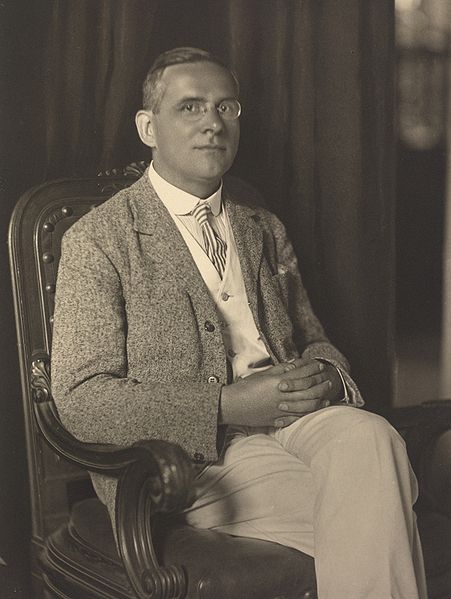 Johann Nelböck
Murderer · Austria · 1936
Dr Johann Nelböck (1903–1954) was an Austrian former student of Moritz Schlick,…
1 victim
Johann Nelböck
Murderer · Austria · 1936
Dr Johann Nelböck (1903–1954) was an Austrian former student of Moritz Schlick,…
1 victim
 Kenneth Halliwell
Murderer · United Kingdom · 1967
Kenneth Halliwell (born in 1926, died August 9, 1967) was a British actor and w…
1 victim
Kenneth Halliwell
Murderer · United Kingdom · 1967
Kenneth Halliwell (born in 1926, died August 9, 1967) was a British actor and w…
1 victim
 Manuel Octavio Bermudez
—
Manuel Octavio Bermudez was known as “El Monstruo de los Cañaduzales.” For four…
Manuel Octavio Bermudez
—
Manuel Octavio Bermudez was known as “El Monstruo de los Cañaduzales.” For four…
 Freddie Lee Glenn
Spree killer · USA · 1975
January 6, 1957 — Freddie Lee Glenn was born. · June 19, 1975 — Glenn and accom…
5 victims
Freddie Lee Glenn
Spree killer · USA · 1975
January 6, 1957 — Freddie Lee Glenn was born. · June 19, 1975 — Glenn and accom…
5 victims
 Allan Legere
Murderer · Canada · 1986
Name: Allan Legere · Citation: R. v. Legere (1988), 89 N.B.R. (2d) 361 · Other…
5 victims
Allan Legere
Murderer · Canada · 1986
Name: Allan Legere · Citation: R. v. Legere (1988), 89 N.B.R. (2d) 361 · Other…
5 victims
 Theunis Christian Olivier
Murderer · South Africa · 2005
Theunis Christian Olivier was sentenced to life in prison on August 8, 2007, fo…
1 victim
Theunis Christian Olivier
Murderer · South Africa · 2005
Theunis Christian Olivier was sentenced to life in prison on August 8, 2007, fo…
1 victim
- Gender
- female
- Country
- Canada
- Location
- Calgary, Alberta, Canada
- Date of birth
- 1969
- Age at first offence
- 38
- Characteristics
- parricide, murder for hire
- Victim profile
- Her daughter, Aminat, 14
- Method of murder
- Strangulation for a head scarf
- Date(s) of murder
- February 26, 2007
- Years active
- 2007
- Date of arrest
- Same day
- Status
-
Deemed unfit to stand trial on October 18, 2013
Overview
Aset Magomadova was convicted of manslaughter for strangling her daughter, Aminat. She received a suspended sentence and three years probation on July 15, 2010. A new trial was ordered on May 10, 2011 after an appellate finding that the trial judge erred in law when acquitting her of second-degree murder and convicting her of manslaughter. On October 18, 2013, a Court of Queen’s Bench justice deemed her unfit to stand trial for a second-degree murder trial, citing chronic cervical cancer.
Timeline
- 2007-02-26 — Aminat was strangled to death at their home.
- 2009-10-07 — A Calgary mother, Aset Magomadova, was convicted of manslaughter in the strangulation of her 14-year-old daughter.
- 2010-07-15 — Magomadova was given a suspended sentence and three years probation.
- 2011-05-10 — The province’s highest court ordered a new trial on second-degree murder.
- 2011-05-11 — A new trial for the mother who strangled her daughter was ordered, and the case was sent back to Court of Queen’s Bench to set a date for the new trial.
- 2013-10-18 — Magomadova was deemed unfit to stand trial.
The offence
Aset Magomadova strangled her 14-year-old daughter, Aminat, with a scarf at their home. The killing occurred after an argument on the day of Aminat’s death, when Aminat refused to go to court to deal with sentencing for assaulting a school teacher. A devout Muslim mother, Magomadova testified that Aminat attacked her with a knife in the sewing room and that she wrapped the scarf around her daughter’s neck and twice told the girl to put the knife down before the daughter lost consciousness, then stopped immediately. Police later found a knife in the room, but it did not have the daughter’s fingerprints on it.
During trial, Aminat was portrayed as an out-of-control teen who threatened to stab other students and boasted about drug use, stealing and having sex. Aminat had also pleaded guilty to assaulting a teacher.
During sentencing arguments, Crown prosecutor Mac Vomberg emphasized expert testimony that it took between 2½ and five minutes for the girl to die. Justice Sal LoVecchio rejected the claim of self defence and did not believe a knife was involved, and concluded Magomadova did not intend to kill her daughter.
Investigation
During the sentencing and appellate discussions, the knife argument was addressed.
Trial
Manslaughter conviction
Aset Magomadova pleaded not guilty to second-degree murder in the death of her daughter Aminat on Feb. 26, 2007. On Oct. 7, 2009, a judge-only trial resulted in her conviction of the lesser charge of manslaughter. Justice Sal LoVecchio said the Crown did not prove beyond a reasonable doubt that Magomadova intended to kill Aminat. The judge said the mother “in an impulsive moment, may have simply lost it,” and Magomadova showed no emotion as the decision was handed down.
Mark Tyndale, who acted as Magomadova’s lawyer, told reporters outside the courtroom:
“As she said on the stand, this in some ways it really doesn’t matter,”
“Yes, it affects the rest of her life, but her daughter is still dead, and that to her is the largest punishment that could ever be imposed.”
Tyndale asked for an acquittal, arguing Magomadova was defending herself against an out-of-control teen. He said:
“There were a series of concerted cries for help from every authority here — the police, probations, the schools, social services and especially child welfare and not one of those bodies adequately dealt with this,”
“Not one of them responded to the call for the help. Not one of them dealt with Aminat in terms of getting her counselling and taking care of this sort of seething anger she had.”
Crown prosecutor Mac Vomberg argued that Magomadova was the aggressor, portraying her as a mother who had reached a breaking point with a rebellious child. Vomberg emphasized expert testimony that it took between 2½ and five minutes for the girl to die. LoVecchio rejected the claim of self defence, did not believe a knife was involved, said the use of the scarf was inappropriate and troublesome, and did not believe Magomadova intended to kill her daughter.
Bail and sentencing proceedings
After the manslaughter conviction, Magomadova remained free on bail until Oct. 16, when a date was set for sentencing. Vomberg questioned whether bail was appropriate and said:
“This is a very serious event. There's significant likelihood that she will be in jail for a long period of time and it's something the Crown considers should be reviewed by the court when there is a conviction of manslaughter,”
During sentencing arguments, defence lawyer Alain Hepner urged the judge to take into account Magomadova’s “catastrophic” background.
Sentencing
On July 15, 2010, Justice Sal LoVecchio ruled that Magomadova would not serve any jail time for strangling her teenage daughter. Magomadova received a suspended sentence and three years of probation.
Crown prosecutor Mac Vomberg had asked for a 12-year sentence, arguing that Magomadova abused her position of trust and authority and that her actions needed to be strongly condemned.
Justice Sal LoVecchio said:
“Showing mercy does not mean we approve of the act. It simply means sometimes a particular situation may demand a slightly different solution. ”
and:
“At first blush that may sound like a get out of jail free card. It is not,”
The judge explained that the suspended sentence would come with conditions, and if those conditions were breached, Magomadova would be brought back to court:
“The court has said the act in question does not merit a period of incarceration. What the court has done is reserved or ... ‘suspended’ judgment on that point for a period of time on conditions. If the conditions are satisfied, then the individual will not be sentenced. If they are breached, the individual will be brought back to the court to be dealt with further.”
The probation conditions included:
- must seek counselling and treatment for anger management, depression, bereavement and grief
- cannot own any weapons
- must provide a blood sample for registration with the national DNA database
- must keep the peace and be of good behaviour
- must appear in court when required
Marilyn Millions, described as a friend of the Magomadova family, said:
“We're relieved at the compassion and mercy that has been shown,”
Vomberg said no decision had been made yet on whether to appeal the sentence.
Appeals
Ordering of a new trial
On May 10, 2011, the province’s highest court ordered a new trial on second-degree murder for a Calgary mother who strangled her 14-year-old daughter with a head scarf at their northeast home four years ago. The Alberta Court of Appeal Justices Peter Martin, Ellen Picard and Patricia Rowbotham were unanimous that the trial judge erred in law when he acquitted Aset Magomadova of second-degree murder and convicted her of manslaughter.
After Justice Sal LoVecchio’s verdict in July (conviction of manslaughter, with the sentence later suspended), the sentence was suspended and probation was imposed for three years with counselling conditions.
Trial Crown prosecutors Mac Vomberg and Sarah Bhola, who sought a murder conviction, later argued for 12 years in prison on manslaughter.
Crown arguments at appeal
Crown prosecutor Goran Tomljanovic said there was “no question” the accused killed her daughter and that the mother strangled her with a scarf. He said:
“There's no question this was a 14-year-old girl who was out of control, violent, destructive and provocative to those in authority, was abusing drugs and into prostitution,”
“The victim and the accused had a history of conflict that stretched over many months. There is no issue that the accused killed her daughter or how she did it: she strangled her with a scarf.”
He addressed forensic pathologist evidence that a victim would lose consciousness in some 15 to 30 seconds and said there must be a minimum two to five minutes of constant pressure to cause the death. Tomljanovic said:
“However, Tomljanovic said the forensic pathologist’s evidence clearly showed a victim would lose consciousness in some 15 to 30 seconds and there must be a minimum two to five minutes of constant pressure to cause the death.”
He said:
“Having ruled out self-defence by Magomadova, who testified her daughter had come at her with a large knife in the sewing room, Tomljanovic said there is no explanation why she would continue to apply pressure to the scarf for such a long time after the girl was unconscious, unless she intended to kill the teen or at least cause bodily harm that could lead to death and was reckless.”
Tomljanovic said:
“The trial judge weighed all of the evidence, rejected the knife argument, and said there was no self-defence or related defence succeeded,”
“He said, ‘I find it as a fact the victim was strangled for at least 2 minutes.’ That is the primary piece of evidence the Crown relies on that the trial judge applied the wrong test.”
Defence arguments at appeal
Defence lawyer Alain Hepner argued that the judge erred in rejecting his client’s contention that she had been attacked by her knife-wielding daughter and was defending herself. Hepner also argued that LoVecchio’s finding that there was not a specific intent to kill, required to convict on murder, was a finding of fact that was not a ground of appeal. Hepner said:
“I believe Justice LoVecchio had all these issues on his mind when he made his ruling,”
“He says we have to look at the whole constellation of factors and emotions in the history of the mother and daughter, that shows she didn’t appreciate her actions at the time. Her testimony was that she was reacting to her daughter’s aggression.”
Other details
Background and personal circumstances
Magomadova was described as a refugee from war-torn Chechnya. She came to Canada from war-torn Chechnya in 2003 with her daughter and wheelchair-bound teenage son, who has a rare form of muscular dystrophy. Her husband had been killed in the war by Russian soldiers in 1995 while she was pregnant with her son.
During the period after her husband’s death, she spent six months in jail in Chechnya after having part of her foot blown off. Defence counsel said it was a “very traumatic three years,” and that it would be traumatic “for the rest of her life in terms of what she has done.” Hepner said:
“It was a very traumatic three years,”
“Probably it will be traumatic for the rest of her life in terms of what she has done.”
The case was described as having prompted outrage among victims’ groups in Canada, and the suspended sentence sparked debate and controversy.
Aset Magomadova was described as 41 in relation to the May 10, 2011 appellate proceeding and as 39 in relation to the Oct. 7, 2009 conviction.
Statements at the fitness ruling
On October 18, 2013, Justice Suzanne Bensler concluded that Magomadova’s chronic cervical cancer made it unreasonable to expect her to properly withstand a five-week trial and ruled that Magomadova was not physically capable and could not give a full answer to her defence. Bensler said:
“I find the accused not physically capable and can’t give full answer to her defence,”
and: “Given all the circumstances in this case there is no other remedy.”
Bensler discussed granting a judicial stay only in the clearest cases and said:
A defence lawyer, Alain Hepner, said the ruling would set Canadian legal precedence and said:
“It’s very, very rare,”
“Those scornful of the decision, he said, likely hadn’t sat through all the evidence.”
Prosecutor Gary Cornfield said:
“The Crown will decide whether or not to appeal the decision, particularly given its future ramifications,”
“We’ll be looking at the precedential value of the decision,”
“Cornfield wouldn’t second-guess Bensler’s decision but said the gravity of the killing can’t be ignored,”
“When you’re dealing with the death of another individual, ti’s almost always fit to pursue charges vigorously,”
In discussing the evidence of photographs of Magomadova riding a motor scooter through northwest Calgary last spring, Bensler ruled it irrelevant given her chronic illness.
An oncologist testified that although the spread of her cancer had halted for now, Magomadova would never recover and her death was only a limited matter of time. Bensler said:
“The final decision in this case is very fact-driven — her life expectancy is short,”

Spotted an error, or have more information about this case?