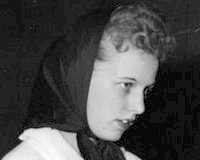
Penny Bjorkland
Murderer Marie Noe
Murderer · USA · 1949
Marie Noe was convicted in June 1999 of murdering eight of her children. Betwee…
8 victims
Marie Noe
Murderer · USA · 1949
Marie Noe was convicted in June 1999 of murdering eight of her children. Betwee…
8 victims
 Waneta Ethel Hoyt
Murderer · USA · 1965
Waneta Ethel (Nixon) Hoyt was born in Richford, New York, and died in prison on…
5 victims
Waneta Ethel Hoyt
Murderer · USA · 1965
Waneta Ethel (Nixon) Hoyt was born in Richford, New York, and died in prison on…
5 victims
 Alicia Crimmins
Murderer · USA · 1965
Name: Alicia Crimmins On her first trial in 1968 was charged only with the deat…
2 victims
Alicia Crimmins
Murderer · USA · 1965
Name: Alicia Crimmins On her first trial in 1968 was charged only with the deat…
2 victims
 Earle Dennison
Murderer · USA · 1952
Earle Dennison was a widow and worked as a surgical nurse. She worked at the We…
2 victims
Earle Dennison
Murderer · USA · 1952
Earle Dennison was a widow and worked as a surgical nurse. She worked at the We…
2 victims
 Marie Dean Arrington
Murderer · USA · 1964
Marie Dean Arrington (born August 8, 1933) was an American criminal. She was al…
2 victims
Marie Dean Arrington
Murderer · USA · 1964
Marie Dean Arrington (born August 8, 1933) was an American criminal. She was al…
2 victims
 Evan Savoie
Homicide · USA · 2003
Evan Drake Savoie was a 12-year-old boy from Ephrata, Washington. Craig Sorger…
1 victim
Evan Savoie
Homicide · USA · 2003
Evan Drake Savoie was a 12-year-old boy from Ephrata, Washington. Craig Sorger…
1 victim
 John Walter Bardgett
Homicide · USA · 2001
John Walter Bardgett was a 25-year-old nurse. Bardgett worked at Harborside-Nor…
2 victims
John Walter Bardgett
Homicide · USA · 2001
John Walter Bardgett was a 25-year-old nurse. Bardgett worked at Harborside-Nor…
2 victims
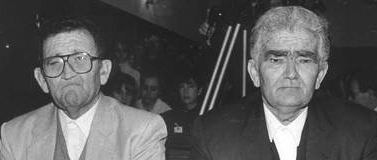 Emilio and Antonio Izquierdo
Mass murderers · Spain · 1990
Emilio Izquierdo and Antonio Izquierdo carried out a mass murder known as the P…
9 victims
Emilio and Antonio Izquierdo
Mass murderers · Spain · 1990
Emilio Izquierdo and Antonio Izquierdo carried out a mass murder known as the P…
9 victims
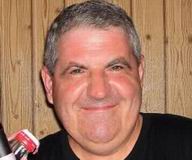 Gianluca Casseri
Murderer · Italy · 2011
Gianluca Casseri committed suicide by shooting himself the same day after an ar…
2 victims
Gianluca Casseri
Murderer · Italy · 2011
Gianluca Casseri committed suicide by shooting himself the same day after an ar…
2 victims
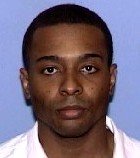 Vaughn Ross
Murderer · USA · 2001
Vaughn Ross was convicted of capital murder in Texas for the deaths of Douglas…
2 victims
Vaughn Ross
Murderer · USA · 2001
Vaughn Ross was convicted of capital murder in Texas for the deaths of Douglas…
2 victims
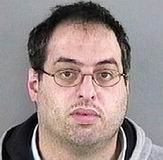 Danilo Restivo
Murderer · United Kingdom · 1993
Danilo Restivo was born in Sicily in April 1972. He later lived in Potenza, Ita…
2 victims
Danilo Restivo
Murderer · United Kingdom · 1993
Danilo Restivo was born in Sicily in April 1972. He later lived in Potenza, Ita…
2 victims
- Gender
- female
- Country
- USA
- Location
- Daly City, California, USA
- Date of birth
- 1941
- Age at first offence
- 18
- Characteristics
- —
- Victim profile
- August Norry, 28
- Method of murder
- Shooting
- Date(s) of murder
- February 1, 1959
- Years active
- 1959
- Date of arrest
- April 15, 1959
- Status
-
Released
Pled guilty to Second Degree Murder; sentenced to life in prison with parole eligibility in seven years; paroled in the mid 1960’s
Case record
People
- Rosemarie Diane “Penny” Bjorkland (1941-?) — defendant; US murderer who killed a gardener, August Norry.
- August Norry — victim; twenty-eight year old landscaper; married; about to become a father for his first time; described as a “lady’s man.”
- Darlene Norry — August Norry’s wife; widow later gave birth to daughter Cynthia.
- Cynthia Norry — daughter of August and Darlene Norry; born September 17, 1958.
Timeline
- January (year not specified) — Bjorkland stole the .38 from “a friend’s bedroom” at some point in January.
- February 1, 1959 — Bjorkland left home with an army-issue handgun tucked into the waistband of her pedal pushers.
- February 2, 1959 — the body of August Norry was found in the Daly City hills, south of San Francisco.
- April 14, 1959 — Inspectors Milt Minehan and Willam Ridenour confronted Lawrence Schultze with evidence; Schultze confessed and said he sold bullets to Bjorkland and went with Penny and his girlfriend to San Bruno Mountain to test fire the rounds.
- July 20, 1959 — Rosemarie “Penny” Bjorkland pled guilty to Second Degree Murder and threw herself on the mercy of the court; South San Francisco Municipal Judge Charles Becker sentenced her to life in prison with parole eligibility in seven years.
- September 17, 1958 — Darlene Norry gave birth to daughter Cynthia.
- Mid 1960’s — Bjorkland was paroled.
Background
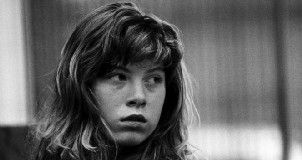
Rosemarie Diane “Penny” Bjorkland (1941-?) was described as a “normal, average girl,” with blonde hair, blue eyes, freckles, and a pony-tail. She considered herself a “normal, average girl.” Her school friends noticed she was nervous, a nail biter, and “a bit of a loner.” Once in school she was caught with a container of Vodka and orange juice in her locker.
At the time of the killing, Bjorkland was described as an attractive, full-figured, freckled-faced woman of eighteen, with strawberry-blonde hair in a pony tail and ruby red lipstick that offset her blue eyes.
Bjorkland’s parents scrambled to find an attorney for her. They were willing to mortgage their home to pay for legal fees. Bjorkland responded: “They had nothing to do with it. I guess this does affect them, but that’s not my concern.”
A dozen psychologists, including experts from Bay Area universities, were called in by both sides, and had generally agreed that there was nothing psychologically wrong with Penny Bjorkland.
Bjorkland would not talk to mental health specialists or a priest. She never cried or showed any emotion while incarcerated or in front of the judge. She told police matron Maxine Stooksbury that she hated her parents because they made her go to church.
Co-workers described Bjorkland as a “knife-carrying lone wolf” who ate her lunch by herself at her job at Periodical Publishers Service Bureau in San Francisco. She never altered her story to help herself.
The offence
On February 1, 1959, Bjorkland woke and told herself: “today is the day I will kill someone.” She wandered the hills of San Francisco.
She came across August Norry, who offered her a ride. When she got out of the car, she faced Norry and fired five shots into him. She went around the car, took out fresh ammo and reloaded, then fired five more shots into Norry. Still unfinished, she went back to the passenger side and shot him more. After that, she took the body out of the car, drove off, and later disposed of the pistol and unused bullets down a storm drain at the corner of Camellia and Castle Manor in San Francisco.
Forensic and descriptive details included that Norry was shot multiple times while in the driver’s seat, with blood on the inside of the door indicating the car’s door was open when he was shot. He was then shot again through the passenger side window. The car was driven about fifty yards off the road, through a barbed wire fence, where Norry was dumped face up on the ground and shot multiple times. In all, there were eighteen bullet holes in August Norry, with fourteen passing completely through his body. He was shot three times in the head, three times in the neck, three times in the chest, twice in the stomach, and the rest in his limbs.
Bjorkland also described a personal urge to kill. When police asked about motive, she replied: “For about a year or a year and a half I’ve had the urge to kill someone,” she said, “I’ll admit that the motive sounds crazy, but I wanted to know if a person could commit a crime like this and not worry about the police looking for her or have it on her conscience.” She added: “I’ve felt better since I killed him.”
At trial, reporters described her as having a “giggling disinterest.”
Investigation
Police discovered the crime after the body of August Norry was found in the Daly City hills, south of San Francisco.
A best lead was testimony from a boy who had seen a freckle-faced blonde driving Norry’s car “like mad” away from the hills, along with a description involving .38 caliber bullets.
After investigation, police traced the bullets by tracing the bullets’ manufacturing to a gun maker who remembered selling them to Bjorkland. The police were then able to pick her up at her parents’ Daly City home. Bjorkland’s confession answered many questions.
A detailed investigation included that two and a half months passed as San Mateo Sheriff’s Department detectives Milt Minehan and Willam Ridenour tracked down the manufacture of the bullet mold to a New Jersey company where 10,000 were sold, then narrowed it down to Bay Area purchasers. Minehan and Ridenour checked out each owner, often taking samples of bullet lead to analyze and compare with bullets taken from the crime scene.
Eventually, Inspectors Minehan and Ridenour questioned Lawrence Schultze, described as a twenty-three year old Daly City mechanic, about his reloading practices. Samples of Schultze’s bullet lead matched the Norry bullets.
On April 14, 1959, Minehan and Ridenour confronted Schultze with evidence; he confessed he had made the bullets and loaded them into a live cartridge. Schultze told the detectives he had sold a box of fifty wad-cutter bullets to his eighteen year old blonde-haired friend, Rosemarie “Penny” Bjorkland of Daly City. Schultze also said he personally went with Penny, along with his girlfriend (Penny’s best friend), to San Bruno Mountain, near where Norry was murdered, to test fire the rounds.
Arrest and interrogation
Bjorkland was picked up at her parents’ Daly City home. She remained tight-lipped during questioning at the San Mateo Sheriff’s Department until she confessed at 5:40 in the morning.
The newspapers reported that Bjorkland giggled while acting out her crime for assembled police and journalists.
Confession and statements
Bjorkland confessed quickly and wanted to plead guilty before she even had an attorney, but District Attorney Keith C. Sorenson would not allow it.
Bjorkland stated she had stolen the revolver from a boyfriend’s parents’ home in December, with plans on using it to murder someone.
She explained she met Norry once before on a walk on the Crocker Estate. Norry was emptying yard waste along the road; they struck up a conversation. They went to a drive-in burger restaurant in nearby San Francisco for lunch. Bjorkland said she did not know Norry was married until she read it in the newspapers, but she said that did not matter because she had no romantic interest in Norry. She said her only repentance was feeling bad for Mrs. Norry.
Bjorkland said that on the day she killed him, Norry drove by and offered her a ride. She said that while riding in Norry’s car, she fired a wild shot out the window into the woods. After they stopped and talked casually, she pulled out the gun and shot Norry several times. She said she got out, opened the driver’s door, and shot Norry until the gun clicked on empty rounds, then reloaded, shoved Norry onto the passenger side, and drove off the road through a wire fence. She said she pulled Norry’s lifeless body out of the car onto scrub brush and emptied the revolver into the unmoving father, then reloaded the six-shot revolver and fired six more bullets into the body of August Norry.
Bjorkland explained: “Suddenly,” explained Bjorkland, “I had the overpowering urge to shoot him. I kept shooting, emptying my gun and reloading. That was the only reason. There was no other.”
She said she drove away in Norry’s car, ditched it, and went home to have dinner with her family.
Trial
Bjorkland pled guilty to Second Degree Murder. She threw herself on the mercy of the court.
At her trial, reporters described her as having a “giggling disinterest.”
Sentencing
On July 20, 1959, South San Francisco Municipal Judge Charles Becker sentenced Penny Bjorkland to life in prison, but made her eligible for parole in seven years.
After the judge read her verdict—life imprisonment—Bjorkland was stunned and stated: “I am unhappy.”
Appeals
No appeals were described.
Outcome
Bjorkland was paroled in the mid 1960’s.
Aftermath
Darlene Norry gave birth to daughter Cynthia on September 17, 1958. Darlene was described as so upset with intrusive visits from police that she had gone to stay with an aunt in Santa Rosa to finish out her pregnancy. She did not know about Bjorkland’s arrest until she was informed by a relative and was stunned that she and her family were still being relentlessly and rudely interrogated by various law enforcement agencies when they were already onto Bjorkland.
Darlene Norry exclaimed: “They were around to insult me just before the caught her,” and said: “That is the reason I had to get away for a while.”
It was stated that there was no record of when Bjorkland was released from the California State Prison for Women at Corona, but it was believed that she was paroled in the mid 1960’s, by which time Cynthia would have been in grade school and never knew her father.
Other details
- Bjorkland was described as stabbing or knife-carrying in media portrayals, including descriptions of her as “knife-carrying” and “a sexually charged, gum-chewing, knife-carrying, pony-tailed, freckle-faced, blonde-haired teenager” in reporting.
- A man reported seeing a young blonde woman with a bulldog walking toward Norry about 11:00 a.m. on the day of the murder; this lead went nowhere.
- Norry was described as a Korean War veteran who was wounded in action, and as having taken his G.I. Bill money to study landscape architecture. He worked full time as a landscaper at the Lake Merced Country Club and took care of the grounds at a chemical plant in San Leandro on Sundays.
- Norry had been described as a former minor-league baseball player and an Arthur Murray dance instructor before the Army.
- Norry’s car was described as being found at the end of a lover’s lane on Christmas Tree Hill about 10:00 p.m. that night, and his bullet-ridden body was found in the San Bruno Hills the next day.
- Norry’s twenty year old wife Darlene Norry was “mercilessly questioned” by Daly City and San Mateo County Police, and the home shared with August was crudely searched.
Spotted an error, or have more information about this case?