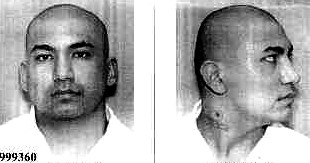
Juan Martin Garcia
Murderer Russell Ellwood
Murderer · USA · 1991
Russell Ellwood was a former taxi driver. Authorities suspected him of killing…
20 victims
Russell Ellwood
Murderer · USA · 1991
Russell Ellwood was a former taxi driver. Authorities suspected him of killing…
20 victims
 Robert Martines Perez
Murderer · USA · 1994
Name: Robert Martines Perez · Other name used in proceedings: Robert Martinez P…
15 victims
Robert Martines Perez
Murderer · USA · 1994
Name: Robert Martines Perez · Other name used in proceedings: Robert Martinez P…
15 victims
 Billy Frank Vickers
Murderer · USA · 1993
Billy Frank Vickers Vickers was executed by lethal injection in Texas on Januar…
14 victims
Billy Frank Vickers
Murderer · USA · 1993
Billy Frank Vickers Vickers was executed by lethal injection in Texas on Januar…
14 victims
 Charles Guiteau
Murderer · USA · 1881
Charles Julius Guiteau (September 8, 1841 – June 30, 1882) was an American lawy…
1 victim
Charles Guiteau
Murderer · USA · 1881
Charles Julius Guiteau (September 8, 1841 – June 30, 1882) was an American lawy…
1 victim
 Steven Edward Stein
Murderer · USA · 1991
Steven Edward Stein was sentenced to death on July 23, 1991. · 01/23/91 — Stein…
2 victims
Steven Edward Stein
Murderer · USA · 1991
Steven Edward Stein was sentenced to death on July 23, 1991. · 01/23/91 — Stein…
2 victims
 Stephen Akinmurele
Serial killer · United Kingdom · 1995
Stephen Akinmurele was accused in connection with the deaths of multiple pensio…
5 victims
Stephen Akinmurele
Serial killer · United Kingdom · 1995
Stephen Akinmurele was accused in connection with the deaths of multiple pensio…
5 victims
 Luis Morine Mata
Murderer · USA · 1977
Luis Morine Mata and his brother, Alonzo, were at their Phoenix apartment with…
1 victim
Luis Morine Mata
Murderer · USA · 1977
Luis Morine Mata and his brother, Alonzo, were at their Phoenix apartment with…
1 victim
- Gender
- male
- Country
- USA
- Location
- Harris County, Texas, USA
- Date of birth
- February 18, 1980
- Age at first offence
- 18
- Characteristics
- robbery, murder for hire
- Victim profile
- Hugo Solano, 32
- Method of murder
- Shooting (.25 caliber pistol)
- Date(s) of murder
- September 17, 1998
- Years active
- 1998
- Date of arrest
- —
- Status
-
Sentenced to death
Sentenced to death on June 21, 2000
Case details
Juan Martin Garcia was convicted of capital murder in Harris County, Texas, under Tex. Pen. Code § 19.03(a)(2) (murder in the course of robbery). A Harris County jury found appellant guilty of capital murder. The trial court sentenced appellant to death in accordance with the jury’s answers to the punishment stage special issues.
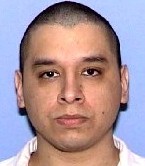
Garcia was identified as Juan Martin Garcia (TDCJ Number 999360). His date of birth was 2/18/1980. The record listed his age as 18 at the time of the offense and 20 at the time of receipt. He was described as Hispanic, male. His hair color was black and his height was 5 ft 5 in, with a weight of 183 and brown eye color. His native county was Harris and his native state was Texas. His prior prison record was None, and his prior occupation was construction, landscaping, laborer.
The Court of Criminal Appeals of Texas had appellate proceedings recorded in No. 73,804, Juan Martin Garcia, Appellant v. The State of Texas. The appeal was from Harris County. The opinion was delivered by Holcomb, J., with Keller, P.J., and Meyers, Womack, Johnson, Keasler, Hervey, and Cochran, JJ., joining. Price, J., joined the judgment, but not the opinion.
Timeline
- 9/17/1998 — During the night in Houston, Garcia and three co-defendants approached a hispanic male who was walking to his vehicle in the parking lot of an apartment complex; Garcia demanded the victim’s money and shot him in the head with a .25 caliber pistol, killing him; Garcia took $8 in cash from the victim.
- 6/21/2000 — Garcia was sentenced to death.
- 10/3/2001 — The opinion was delivered.
The offence
On 9/17/1998, during the night in Houston, Garcia and three co-defendants approached a hispanic male who was walking to his vehicle in the parking lot of an apartment complex. Garcia demanded the victim’s money and shot him in the head with a .25 caliber pistol, killing him. Garcia took $8 in cash from the victim.
In addition to the murder, the evidence at trial included that appellant attempted to rob 32-year-old Hugo Solano. When Solano refused to hand over any money, appellant shot him four times in the head and neck, killing him. The murder for which appellant was tried, convicted, and sentenced to death was the killing of Hugo Solano.
The evidence also showed that Garcia and three accomplices went on a crime spree in Harris County during August and September of 1998. As part of that crime spree, appellant attempted to rob 32-year-old Hugo Solano and later shot and killed him.
The record reflected that appellant also committed multiple robberies in connection with the period in which the victim was killed. The evidence described these dates and offenses as part of the jury’s consideration:
- on June 24, 1992, when appellant was twelve years old, he committed the offense of terroristic threat;
- on May 6, 1993, when appellant was thirteen years old, he committed misdemeanor theft;
- on August 31, 1998, when appellant was eighteen years old, he committed three separate aggravated robberies;
- on September 15, 1998, appellant again committed aggravated robbery;
- on September 17, 1998, appellant shot and killed Hugo Solano, the victim in this case;
- on that same date appellant also committed two aggravated robberies;
- on September 20, 1998, appellant committed aggravated robbery and attempted capital murder;
- on September 21, 1998, appellant committed aggravated robbery and attempted capital murder; and
- on one day in November 1999, while appellant was incarcerated in the Harris County Jail awaiting trial in this case, he committed misdemeanor assault.
Co-defendants and victim
Garcia was involved with three co-defendants named in the record: Eleazar Mendoza, Gabriel Morales, and Raymond McBen.
The victim in this case was described as a hispanic male. A separate description in the evidence identified the murder victim as Hugo Solano, a 32-year-old individual. The record’s “Race and Gender of Victim” was “hispanic male.”
Investigation and arrest
No investigation or arrest details were included in the provided material.
Trial
A Harris County jury found appellant, Juan Martin Garcia, guilty of capital murder under Tex. Pen.
Punishment-stage issues
The first punishment issue asked the jury to determine “whether there is a probability that the defendant would commit criminal acts of violence that would constitute a continuing threat to society.” The State had the burden of proving the first punishment issue beyond a reasonable doubt.
Appellant raised three points of error on direct appeal.
Appeals
Point of error 1: ineffective assistance of counsel
Appellant argued that his trial counsel rendered ineffective assistance, in violation of the Sixth Amendment to the United States Constitution, when during the punishment stage counsel elicited damaging testimony from defense witness Dr. Walter Quijano, a clinical psychologist. Appellant argued that the testimony in question “tacitly asked [the jury] to consider race and ethnic stereotypes” in its determination of the first punishment issue concerning future dangerousness to society.
The record reflected that defense counsel’s examination of Quijano covered educational and professional background first and then addressed predicting and, within a prison setting, controlling an individual’s proclivity for criminal violence, i.e., dangerousness.
The challenged examination included the following verbatim testimony:
Q [by Defense Counsel]: Dr. Quijano, are there certain factors that contribute to someone’s dangerousness in society?
A: Yes.
Q: And can you tell us what those are?
A: Although dangerousness is difficult to predict, we know that there are certain factors that are associated with increased dangerousness or the absence of the factors with decreased dangerousness.... * * *
Q: Can you tell us what those factors are?
A: There are three groups of factors. The first group is called statistical. The second group, called environmental. And the third group, I call clinical.
Q: And can you tell us what is in the first group or cluster of factors, if you will?
A: The first group, called statistical factors, include the age of the person, which is the best predictor of dangerousness. The younger the person, the more dangerous. The older the person, the less dangerous. Prior assaultive crimes or prior assaults is also a strong predictor. The more prior assaults, the more violence in the past, the more dangerous in the future. The use of drugs and alcohol during the commission of these assaultive events increases the probability of violence, and then, finally, the use of a weapon, the presence of which increases dangerousness. The absence of which decreases dangerousness.
Q: Does sex play a role?
A: Sex in the sense of gender plays a role in that males are statistically more violent than females.
Q: What about whether or not someone is black, white, Hispanic? Does that play a role?
A: The race plays a role in that the - among dangerous people, minority people are overrepresented in this population. And, so, blacks and Hispanics are overrepresented in the - in the dangerous - so-called dangerous population.
Q: What about economics?
A: Economics and stability of work record are also important in that the more unstable the work history or the more unstable the socioeconomic standing, the poorer the people, the more likely they are to be dangerous than those with steady employment and a reasonable socioeconomic status.
Q: What about whether or not there’s any substance abuse?
A: Substance abuse, again, is a high risk factor in the future of violence.
Q: Now, are these - are some of these factors eliminated in a prison environment?
A: Most of these factors are either eliminated or kept to a minimum, reduced to a minimum within the prison setting. Those factors that are biographical [biological?] are, of course, not eliminated, your gender and your race .
Q: How are these certain factors eliminated in a prison setting?
A: Many of these factors are controlled, eliminated, kept to a minimum in the prison setting because of the controls that the prison system inflicts on the inmates. For example, weapons: although there are weapons in the prison, there is intense supervision so that they’re kept to a small minimum. The presence of alcohol and drugs: there is alcohol and drugs in the prison, but, again, it’s difficult to get them. So, those are two examples where the factors that contribute to dangerousness are kept to a minimum in the prison system. * * *
Q: Can dangerousness be situational?
A: Dangerousness is an interaction between what the person is and where he is or under what environmental controls the person is under. So that dangerousness would increase if the person is under a loose supervision setting, such as in the free community, and it would decrease dramatically in the prison where there is much controls imposed on him. * * *
Q: Are there certain safeguards at TDC [Texas Department of Corrections] that decrease one’s dangerousness?
A: The -
Q: Such - I apologize, Doctor. Go ahead.
A: The answer is “yes.” The whole stance of the prison system is to house these inmates, many of whom are violent and dangerous in the free community, to house them in a safe manner. So, there are many procedures and techniques that are intended to suppress whatever dangerousness that inmates bring with them. * * *
Q: Is the amount of dangerousness in someone, is it activated by certain environmental factors?
Q: How does that fit in with being in a prison setting?
A: A person who has many characteristics or factors associated with dangerousness can go to the prison and much of those factors are either no longer relevant, such as employment, financial stability, and the prison system takes over those factors and subdues whatever dangerousness a person comes in. And, so, a person’s dangerousness - the same person, the same person’s dangerousness may be higher in the free world and lower in the prison, higher in some sections of the prison and lower in some sections of the prison. * * *
Q: Can someone in prison continue with threatening or assaultive behavior?
A: Threatening may continue. Assaultive, there is a point at which that is subdued.
Q: And why is that?
A: Because the prison system will do what it can to subdue assaultive, violent behavior in the prison. Now, threats, verbal threats, they may not be able to do much about that because they cannot shut the mouth, but actual overt assaults can be controlled physically, and TDC will apply whatever measures are necessary to control that.
The court addressed the Sixth Amendment right to counsel and applied the Strickland v. Washington framework. The appellate discussion included these quotations:
“In general, to obtain a reversal of a conviction on the ground of ineffective assistance, an appellant must demonstrate that (1) defense counsel’s performance fell below an objective standard of reasonableness and (2) there is a reasonable probability that, but for counsel’s unprofessional error(s), the result of the proceeding would have been different.”
and “must indulge a strong presumption that counsel’s conduct [fell] within the wide range of reasonable professional assistance; that is, the [appellant] must overcome the presumption that, under the circumstances, the challenged action might be considered sound trial strategy.”
“commonly will assume a strategic motivation if any can possibly be imagined,”
The appellate court concluded that appellant failed to demonstrate that trial counsel’s performance fell below an objective standard of reasonableness and overruled appellant’s first point of error.
Point of error 2: legal sufficiency of evidence for first punishment issue
Appellant argued that the evidence was legally insufficient to support the jury’s affirmative answer to the first punishment issue.
The appellate court described the first punishment issue as asking whether there was a probability that the defendant would commit criminal acts of violence that would constitute a continuing threat to society, citing Tex. Code Crim. Proc. art. 37.071, § 2(b)(1). It described the State’s burden to prove the first punishment issue beyond a reasonable doubt.
The court then described its standard of review for legal sufficiency, discussing that it considered the record evidence in the light most favorable to the prosecution and whether a rational jury could have found beyond a reasonable doubt that the correct answer was “yes.”
The appellate court concluded that the evidence at trial established multiple prior offenses and continued dangerousness and held that the evidence adduced at appellant’s trial was legally sufficient to support the jury’s affirmative answer. The court overruled appellant’s second point of error.
Point of error 3: jury instruction burden for extraneous offenses
Appellant argued that the trial court reversibly erred in not charging the jury at the punishment stage that extraneous offenses must be proved by the prosecution beyond a reasonable doubt.
The appellate court cited its prior rejection of identical arguments and stated:
“As long as the punishment charge properly requires the State to prove the special issues, other than the mitigation issue, beyond a reasonable doubt, there is no unfairness in not having a burden of proof instruction concerning extraneous offenses.”
The appellate court overruled appellant’s third point of error.
Outcome
The appellate court determined that appellant showed no reversible error and affirmed the judgment of the trial court.
Other details
The record included numbered footnotes providing additional legal statements. Footnote 1 included:
“The Sixth Amendment provides in relevant part that ‘[i]n all criminal prosecutions, the accused shall enjoy the right ... to have the assistance of counsel for his defence.’”
Footnote 1 also included the citation to Gideon v. Wainwright, 372 U.S. 335, 345 (1963).
Footnote 2 included the quotation of the first punishment issue definition:
“whether there is a probability that the defendant would commit criminal acts of violence that would constitute a continuing threat to society.”
Footnote 3 included:
“In some circumstances, none of which are applicable here, a showing that the result would have been different is not sufficient to show prejudice. See Williams v. Taylor , 120 S.Ct. 1495, 1512 (2000).”

Spotted an error, or have more information about this case?