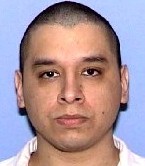
Joseph Christopher Garcia
Murderer Russell Ellwood
Murderer · USA · 1991
Russell Ellwood was a former taxi driver. Authorities suspected him of killing…
20 victims
Russell Ellwood
Murderer · USA · 1991
Russell Ellwood was a former taxi driver. Authorities suspected him of killing…
20 victims
 Robert Martines Perez
Murderer · USA · 1994
Name: Robert Martines Perez · Other name used in proceedings: Robert Martinez P…
15 victims
Robert Martines Perez
Murderer · USA · 1994
Name: Robert Martines Perez · Other name used in proceedings: Robert Martinez P…
15 victims
 Billy Frank Vickers
Murderer · USA · 1993
Billy Frank Vickers Vickers was executed by lethal injection in Texas on Januar…
14 victims
Billy Frank Vickers
Murderer · USA · 1993
Billy Frank Vickers Vickers was executed by lethal injection in Texas on Januar…
14 victims
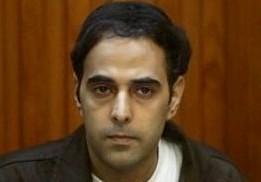 Yigal Amir
Murderer · Israel · 1995
Yigal Amir (born May 23, 1970) was the Israeli assassin of the Prime Minister o…
1 victim
Yigal Amir
Murderer · Israel · 1995
Yigal Amir (born May 23, 1970) was the Israeli assassin of the Prime Minister o…
1 victim
 Albert DeSalvo
Serial killer · USA · 1962
Albert DeSalvo (November 3, 1931 - November 25, 1973) was a serial killer activ…
13 victims
Albert DeSalvo
Serial killer · USA · 1962
Albert DeSalvo (November 3, 1931 - November 25, 1973) was a serial killer activ…
13 victims
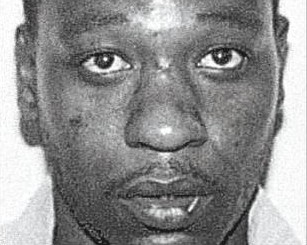 Tony Albert Mackall
Murderer · USA · 1986
Tony Albert Mackall was convicted of robbery, displaying a firearm in a threate…
1 victim
Tony Albert Mackall
Murderer · USA · 1986
Tony Albert Mackall was convicted of robbery, displaying a firearm in a threate…
1 victim
 Richard Zeitvogel
Murderer · USA · 1981
Richard Steven Zeitvogel was executed by lethal injection in Missouri on Decemb…
2 victims
Richard Zeitvogel
Murderer · USA · 1981
Richard Steven Zeitvogel was executed by lethal injection in Missouri on Decemb…
2 victims
 Ashley Cameron
Murderer · USA · 2012
Ashley Cameron was a 25-year-old woman from Onawa, Iowa. She was the mother of…
1 victim
Ashley Cameron
Murderer · USA · 2012
Ashley Cameron was a 25-year-old woman from Onawa, Iowa. She was the mother of…
1 victim
- Gender
- male
- Country
- USA
- Location
- Dallas County, Texas, USA
- Date of birth
- November 6, 1971
- Age at first offence
- 29
- Characteristics
- member of the "texas seven, robbery
- Victim profile
- ??? / Aubrey Hawkins, 29 ( Irving police officer )
- Method of murder
- Shooting
- Date(s) of murder
- ??? / December 24, 2000
- Years active
- 2000
- Date of arrest
- —
- Status
-
Sentenced to death
Sentenced to death on February 14, 2003
Case information
Joseph Christopher Garcia (TDCJ Number 999441) was convicted of capital murder and was sentenced to death.
Background
Garcia was an inmate of the Texas Department of Criminal Justice Connally Unit.
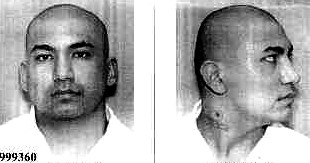
Garcia was described as Hispanic male with black hair. He was 5 ft 9 in tall and weighed 202. His eye color was brown. His education level was 12. His county was Dallas and he was a resident of Texas.
Garcia received his prior prison record on #774391 on a 50 year sentence from Bexar County for murder with a deadly weapon. On 12/13/2000, he escaped from custody.
Garcia was one of seven prisoners known as the “Texas Seven.”
The offence
On 12/24/2000, the group committed a robbery at a sporting-goods store in Irving and killed Irving police officer Aubrey Hawkins as they fled. The escapees used the weapons stolen from the prison to commit the robbery and murder.
The victim was a white male police officer, Aubrey Hawkins. The incident resulted in the death of one police officer.
Investigation
On December 13, 2000, seven inmates, including Garcia, escaped from the Texas Department of Criminal Justice Connally Unit, taking firearms stolen from the unit.
The Texas Seven were apprehended in January 2001. Their apprehension was described as a direct result of the television show America’s Most Wanted.
A friend of Wade Holder, the owner of the Coachlight Motel and R.V. Park in Woodland Park, Colorado, happened to watch America’s Most Wanted on January 20, 2001 and told Wade that they were staying in his RV Park. When he confirmed this, he reported the suspicious activities to local authorities the next day on January 21.
The El Paso County Sheriff’s Department SWAT team found Garcia, Rodriguez, and Rivas in a Jeep Cherokee in the RV Park. Authorities moved in and captured them at a nearby gas station. Halprin and Harper were found in an RV; Halprin surrendered peacefully, but Harper was found dead after a standoff. Harper had shot himself in the chest and left temple with a pistol. The surviving four members were taken into police custody.
On January 23, the remaining information about the whereabouts of the last two was received. They were hiding in a Holiday Inn in Colorado Springs, Colorado. A deal brokered between the two, Newbury and Murphy, allowed them to make live TV appearances before they were arrested.
In the early hours of January 24, a local KKTV television anchorman, Eric Singer, was taken into the hotel where on camera he interviewed the two by telephone. Both of them harshly denounced the criminal justice system in Texas, with Newbury adding "the system is as corrupt as we are."
Authorities later found out that a woman named Patsy Gomez conspired with a man named Raul Rodriguez, the father of Michael Rodriguez, to help the Texas 7.
Arrest
The SWAT team captured Garcia, Rodriguez, and Rivas in a Jeep Cherokee in the RV Park and captured them at a nearby gas station.
Harper was found dead after a standoff.
Halprin surrendered peacefully.
Trial
In February 2003, a jury convicted Garcia of capital murder under Tex. Penal Code Ann. § 19.03(a).
Sentencing
Pursuant to the jury’s answers to the special issues under Texas Code of Criminal Procedure Article 37.071, sections 2(b) and 2(e), the trial judge sentenced Garcia to death under Art. 37.071, § 2(g).
Garcia was sentenced to death on February 14, 2003.
Appeals
Direct appeal
The case reached the Court of Criminal Appeals of Texas as No. AP-74,692: Joseph C. Garcia, Appellant v. The State of Texas.
The appeal was automatic. The court delivered the opinion for a unanimous Court. The judgment was affirmed.
Garcia raised thirteen points of error, and the court overruled each point.
Voir dire (points of error one through seven)
Garcia complained that the trial court erred in overruling his challenges for cause to seven veniremembers.
For point of error one, Garcia complained the trial court should have granted his challenge for cause to prospective juror Ama Helfenbein. Garcia argued two reasons: that she was unable to consider the minimum punishment of five years for murder, and that she opined that if any participant in a crime was armed, she would always conclude that the State had met its burden to show that all participants should have anticipated that a life would be taken and answer the anti-parties issue “yes.” See Art. 37.071 § 2(b)(2). Helfenbein responded that she could keep her mind open to the full range of punishment. When asked whether she could sentence him to five years in the penitentiary if the jury found him guilty only of murder, Helfenbein responded, "I doubt it." On the law of parties, Helfenbein responded that it would depend on the evidence, case by case. When asked about the anti-parties issue at punishment, she answered yes after the prosecutor told her the question always started out with a “no” answer and after appellant asked whether, if one or more participants in a conspiracy or joint enterprise were armed, the anti-parties issue would be answered yes in her mind. She answered, "Yes." The court held Garcia failed to carry his burden.
For point of error two, Garcia complained the trial court should have granted his challenge for cause to prospective juror Thomas Tucker. Tucker believed that a person who committed one murder would always be a continuing threat to society, thereby relieving the State of its burden to prove the future-dangerousness issue beyond a reasonable doubt. Tucker stated he might be "predisposed" to believe that a person would be willing to commit another violent act, but after further explanation he stated he could follow the law and would not automatically answer the future-dangerousness question "yes" based on guilt.
For points of error three through seven, Garcia complained the trial court should have granted his challenges for cause to prospective jurors Larry Carroll, Gregory Babineau, Lillian Lyles, Alan Lucien, and Robin Tucker. Garcia argued the prospective jurors gave conflicting answers concerning the issues, but each ultimately told the court they could follow the law. The court held each prospective juror was vacillating or equivocal and deferred to the trial court, concluding Garcia failed to meet his burden.
Each of points of error one through seven was overruled.
Extraneous offense evidence (point of error eight)
Garcia complained the trial court erred in admitting evidence during the guilt phase concerning two extraneous offenses: (1) Garcia’s escaping from prison, and (2) the escapees’ taking of numerous firearms during the escape.
Garcia asserted that admitting this evidence violated Texas Rules of Evidence 401, 402, 403, and 404(b), and asserted that the trial court should have granted his request for a limiting instruction once the evidence was admitted.
The court addressed the admissibility of other-crimes evidence under Rule 404(b), including same-transaction contextual evidence, and concluded the trial court did not abuse its discretion in admitting evidence of the escape and stolen weapons. The court stated the evidence was limited to what was necessary to explain the connection of the weapons to the charged offense and Garcia’s connection to the weapons.
The court overruled point of error eight.
Constitutionality of the Texas death-penalty scheme (points of error nine through twelve)
Garcia challenged the constitutionality of the Texas death-penalty scheme in points of error nine through twelve.
Point of error nine: Garcia asserted mitigation question issues under Article 37.071, section 2(e) were unconstitutional because the State was not required to prove the absence of sufficient mitigating circumstances beyond a reasonable doubt, as dictated by Apprendi v. New Jersey, 530 U.S. 466 (2000), and its progeny.
Point of error ten: Garcia asserted Article 37.071, section 2(b)(1) was unconstitutionally applied because the court refused to define the term "probability" and the phrase "criminal acts of violence."
Point of error eleven: Garcia challenged the "10/12" rule of Article 37.071.
Point of error twelve: Garcia asserted the scheme was unconstitutional because it was impossible to simultaneously restrict the jury’s discretion to impose death while allowing the jury unlimited discretion to consider evidence militating against imposition of death.
The court stated it had previously considered and rejected all claims and overruled points of error nine through twelve.
Cumulative effect (point of error thirteen)
Garcia argued in his thirteenth point that the cumulative effect of the above-enumerated constitutional violations denied him due process of law. The court concluded that because Garcia did not show constitutional violations, there could be no cumulative effect. The court overruled point of error thirteen.
Other details
The Texas Seven and related individuals
The Texas Seven were described as prisoners who escaped from the John Connally Unit near Kenedy, Texas on December 13, 2000. They were apprehended January 21–23, 2001.
The group was described as composed of:
- Joseph C. Garcia
- Randy Ethan Halprin
- Larry James Harper (deceased by suicide)
- Donald Keith Newbury
- Patrick Henry Murphy, Jr.
- George Rivas (Ringleader)
- Michael Anthony Rodriguez (executed in 2008)
George Rivas was described as sentenced to death after being extradited to Texas. Since then, the other five surviving members of the Texas Seven were described as being put on death row alongside Rivas while their appeals were pending.
Escape and actions during the escape period
The Texas Seven were described as overpowering and restraining nine civilian maintenance supervisors, four correctional officers, and three uninvolved inmates at approximately 11:20 a.m. during the escape.
The escape was described as occurring during the slowest period of the day with less surveillance of certain locations, such as the maintenance area during lunch and at count time.
The escape was described as involving plans in which offenders called someone over and then hit them on the head from behind. After subduing victims, the offenders removed some of the victim’s clothing, tied them up, gagged them, and placed them in an electrical room behind a locked door.
The attackers stole clothing, credit cards, and identification from their victims.
The escapees were described as impersonating prison officers on the phone and creating false stories to ward off suspicion from authorities.
After that, three of the group were described as making their way to the back gate of the prison, disguised in stolen civilian clothing, pretending to be there to install video monitors. A guard at the gatehouse was subdued. The trio raided the guard tower and stole numerous weapons.
Meanwhile, four offenders who stayed behind were described as making calls to prison tower guards to distract them. They then stole a prison maintenance pick-up truck, drove it to the back gate, picked up their cohorts, and drove away from the prison.
Crime spree details included in the case text
The white prison truck was described as found in the parking lot of the Wal-Mart in Kenedy, Texas.
The Texas Seven were described as going into San Antonio right after breaking out of the complex. Realizing they were running out of funds, they were described as robbing a Radio Shack in Pearland, Texas on December 14 at around 2 AM.
They were described as entering an adjacent computer software store and knocking down flimsy sheetrock to reach the other side. Once inside and undetected, they were described as tethering the Radio Shack safe to their truck and dragging the safe outside, causing damage to the parking lot and pavement.
On December 19, four members checked into an Econo Lodge motel in Farmers Branch, Texas under assumed names. They then decided to rob an Oshman’s Sporting Goods in nearby Irving, Texas.
On December 24, 2000, they were described as holding up the store and stealing 44 guns.
A customer standing outside of the store was described as noticing commotion inside and calling police. Irving police officer Aubrey Hawkins responded to the call and was almost immediately ambushed. His autopsy was described as showing he had sustained eleven gunshots, and his body was run over by the fleeing gang.
After Hawkins’ murder, a $100,000 reward was offered to whoever could snare the group of criminals, and the reward was described as climbing to $500,000 before apprehension.
Appellate delivery information
The opinion was delivered February 16, 2005. The case was marked as “Do Not Publish.”
Statutory citations and procedural framing
The opinion described:
- Tex. Penal Code Ann. § 19.03(a) for capital murder.
- Texas Code of Criminal Procedure Article 37.071, sections 2(b) and 2(e) and section 2(g) relating to sentencing.
- Article 37.071, section 2(h) for automatic direct appeal.
- Texas Code of Criminal Procedure Article 35.16(a)(9) and (c)(2) regarding challenges for cause.
- Tex. R. App. P. 38.1(h) regarding briefing requirements.
Spotted an error, or have more information about this case?