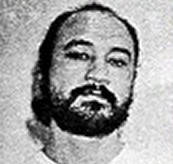
Luis Morine Mata
Murderer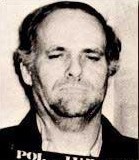 Ervil LeBaron
Murderer · USA · 1972
Ervil Morrell LeBaron (1925 to August 16, 1981) was the leader of a polygamous…
35 victims
Ervil LeBaron
Murderer · USA · 1972
Ervil Morrell LeBaron (1925 to August 16, 1981) was the leader of a polygamous…
35 victims
 Brian Kevin Rosenfeld
Murderer · USA · 1985
Brian Kevin Rosenfeld Brian Kevin Rosenfeld was sentenced to three concurrent l…
23 victims
Brian Kevin Rosenfeld
Murderer · USA · 1985
Brian Kevin Rosenfeld Brian Kevin Rosenfeld was sentenced to three concurrent l…
23 victims
 Marvin Gray
Murderer · USA · 1975
Marvin Gray was convicted killer who claimed responsibility for 23 slayings and…
23 victims
Marvin Gray
Murderer · USA · 1975
Marvin Gray was convicted killer who claimed responsibility for 23 slayings and…
23 victims
 Yahweh ben Yahweh
Murderer · USA · 1980
Yahweh ben Yahweh was born and legally named Hulon Mitchell Jr. (October 27, 19…
23 victims
Yahweh ben Yahweh
Murderer · USA · 1980
Yahweh ben Yahweh was born and legally named Hulon Mitchell Jr. (October 27, 19…
23 victims
 Kenneth Leon Davis
Murderer · USA · 1989
February 23, 1989 — Kenneth Leon Davis entered Dr. Duck's Pawn Shop in Jackson,…
1 victim
Kenneth Leon Davis
Murderer · USA · 1989
February 23, 1989 — Kenneth Leon Davis entered Dr. Duck's Pawn Shop in Jackson,…
1 victim
 Robert Martines Perez
Murderer · USA · 1994
Name: Robert Martines Perez · Other name used in proceedings: Robert Martinez P…
15 victims
Robert Martines Perez
Murderer · USA · 1994
Name: Robert Martines Perez · Other name used in proceedings: Robert Martinez P…
15 victims
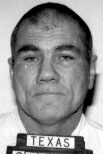 James Paul Collier
Murderer · USA · 1995
James Paul Collier was executed by lethal injection in Texas on December 11, 20…
2 victims
James Paul Collier
Murderer · USA · 1995
James Paul Collier was executed by lethal injection in Texas on December 11, 20…
2 victims
 Nevada-Tan
Homicide · Japan · 2004
Nevada-tan was a name commonly used to describe an 11-year-old Japanese schoolg…
1 victim
Nevada-Tan
Homicide · Japan · 2004
Nevada-tan was a name commonly used to describe an 11-year-old Japanese schoolg…
1 victim
- Gender
- male
- Country
- USA
- Location
- Maricopa County, Arizona, USA
- Date of birth
- July 10, 1951
- Age at first offence
- 26
- Characteristics
- rape
- Victim profile
- Debra Lopez (female, 21)
- Method of murder
- Stabbing with knife
- Date(s) of murder
- March 10, 1977
- Years active
- 1977
- Date of arrest
- —
- Status
-
Executed
Executed by lethal injection in Arizona on August 22, 1996
Case record
Background
Luis Morine Mata and his brother, Alonzo, were at their Phoenix apartment with Debra Lopez on the evening of March 10, 1977. When Ms. Lopez got up to leave, Luis Mata stopped her and told her they were going to rape her.
The offence
Luis Mata and Alonzo Mata began beating Debra Lopez with a rifle and their fists. Each brother raped Ms. Lopez. Luis Mata then drove the unconscious victim away from the apartment and killed her by cutting her throat with a knife, nearly decapitating her in the process.
Investigation
Luis Mata’s execution followed his conviction and exhaustion of state remedies in this capital murder case from Arizona. During the trial, both Luis Mata and Alonzo Mata exercised their constitutional right not to testify. Alonzo and Luis had both confessed to raping and murdering the decedent and dumping her body in the desert outside Tucson. Luis’ version of the confession included that he admitted he had indeed cut the throat of the victim.
Trial
Luis Mata’s presiding judge was Stanley Z. Goodfarb. His prosecutor was Michael Donovan. The trial began on October 4, 1977, and the verdict was rendered on October 17, 1977.
Both Luis Mata and Alonzo Mata declined to testify. The state offered both Luis’ and Alonzo’s confessions into evidence against both defendants, with the confessions used after the defendants chose not to testify.
Defense lawyers argued years after sentencing that Judge Stanley Goodfarb uttered racial slurs, specifically the term "wetback," in reference Mata during the trial. A judge later ruled that Goodfarb was simply repeating terminology used by the defense.
Sentencing
Luis Mata was sentenced on December 9, 1977. He was later resentenced on December 8, 1978.
The aggravating circumstances included a prior conviction punishable by life imprisonment and a finding of especially heinous/cruel/depraved circumstances. No mitigating circumstances were listed.
Appeals
Luis Mata’s codefendant, Alonzo Mata, was convicted for the murder of Lopez and sentenced to death, and was later resentenced to life in prison. Alonzo later claimed that he, not Luis, had killed Lopez. Courts did not believe the confession.
Luis Mata appealed through federal habeas corpus proceedings in a capital murder case from Arizona. The matter reached the United States Court of Appeals, Ninth Circuit, in a case titled: Luis MATA, Petitioner-Appellant, v. James G. RICKETTS, Attorney General of the State of Arizona; Samuel Lewis, Director ADOC; Lloyd Bramlett, Warden, ASPC-F; John Avenenti, Deputy Warden, ASU, Respondents-Appellees. No. 87-1731.
The appeal was argued and submitted with submission deferred on June 16, 1988 and resubmitted without further argument on February 1, 1991, with a decision issued on July 1, 1991. The appeal was from the United States District Court for the District of Arizona. The panel consisted of CHOY, GOODWIN and NORRIS, Circuit Judges.
Luis Mata’s appeal raised whether a new Supreme Court decision announced after exhaustion of state remedies and after conclusion of proceedings before the district court created a right to federal constitutional relief. Specifically, Luis Mata contended that under the rule of Cruz v. New York, 481 U.S. 186, 193-94, 107 S.Ct. 1714, 1719-20, 95 L.Ed.2d 162 (1987), he was entitled to a new trial. The state conceded that Cruz barred the use of a nontestifying codefendant’s confession incriminating the defendant in future trials, but argued that reasons counsel against employing Cruz to reopen old cases, particularly where the codefendant’s incriminating confession added little or nothing to the state's overwhelming evidence of guilt.
The state argued that Alonzo’s confession told the jury nothing it did not already know; that the evidence was harmless beyond a reasonable doubt; that the evidence was lawfully received when the case was tried (citing Parker v. Randolph, 442 U.S. 62, 99 S.Ct. 2132, 60 L.Ed.2d 713 (1979)); and that new constitutional rules of criminal procedure generally should not be applied retroactively to cases on collateral review (citing Teague v. Lane, 489 U.S. 288, 109 S.Ct. 1060, 103 L.Ed.2d 334 (1989)).
The Ninth Circuit concluded it did not need to discuss Teague because any error in using the codefendant's confession was harmless beyond a reasonable doubt, citing Harrington v. California, 395 U.S. 250, 89 S.Ct. 1726, 23 L.Ed.2d 284 (1969).
The Ninth Circuit described the harmless error test as follows:
Since Chapman, [386 U.S. 18, 87 S.Ct. 824, 17 L.Ed.2d 705 (1967) ] the Court has consistently made clear that it is the duty of a reviewing court to consider the trial record as a whole and to ignore errors that are harmless, including most constitutional violations. .... The question a reviewing court must ask is this: absent [the allegedly improper evidence] is it clear beyond a reasonable doubt that the jury would have returned a verdict of guilty? Id. 461 U.S. at 509-11, 103 S.Ct. at 1980-82.
The Ninth Circuit concluded there was no doubt the petitioner would have been convicted by his own confession plus the abundant corroboration of George Castro, Antonio Sanez, and Arnold Chance. It concluded the confession of Alonzo merely seconded the confession of Luis and was cumulative evidence with reference to the material facts of the murder, and that the use of Alonzo’s confession in the joint trial did not then offend the Sixth Amendment and did not infect the fact finding process.
The Ninth Circuit also addressed Luis Mata’s challenge to the voluntariness of his confession and rejected it, stating Luis presented no grounds to overturn the district court’s careful review of the state court record and the findings at every level that his confession was voluntary.
The Ninth Circuit rejected other constitutional arguments, including the argument that the Arizona death penalty law was unconstitutional, stating it had been definitively answered adversely by the Supreme Court in Walton v. Arizona. It also rejected complaints that Luis’ defense counsel did not adequately defend him as presenting no factual basis for overturning the decision of the district court. It rejected complaints about various evidentiary rulings as not raising federal constitutional questions.
In the end, the Ninth Circuit decision affirmed: AFFIRMED.
A note in the appeal stated submission of the appeal had been deferred pending the decision on the constitutionality of the Arizona death penalty, by another panel of this court, referencing Adamson v. Ricketts, 865 F.2d 1011 (en banc), cert. denied, Lewis v. Adamson, --- U.S. ----, 110 S.Ct. 3287, 111 L.Ed.2d 795 (1990). It further stated the case was resubmitted February 1, 1991, when it was determined that remaining questions still pending in Adamson did not appear to be controlling in this case.
Outcome
Luis Mata was executed by lethal injection in Arizona on August 22, 1996.
Appeals citations and published opinions
Published opinions included State v. Mata (Luis), 125 Ariz. 233, 609 P.2d 48 (1980). The record also included Mata v. Ricketts, 937 F.2d 467 (9th Cir. 1991), and Mata v. Ricketts, 981 F.2d 397 (9th Cir. 1992).
Other details
In Luis Mata’s case, his “Last meal” was listed as: Two Beef burritos, two pork chops, French fries (big order), jalapenos (a few).
Luis Mata lived on death row more than 19 years before his execution.
Spotted an error, or have more information about this case?