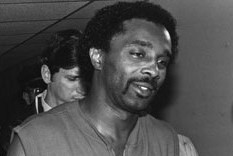
Carlton Gary
Serial killer Donald Henry Gaskins
Serial killer · USA · 1969
Donald Henry Gaskins, also known as Donald “Pee Wee” Gaskins, was a serial kill…
200 victims
Donald Henry Gaskins
Serial killer · USA · 1969
Donald Henry Gaskins, also known as Donald “Pee Wee” Gaskins, was a serial kill…
200 victims
 Carl Eugene Watts
Serial killer · USA · 1974
Carl Eugene Watts (born November 7, 1953; died September 21, 2007), also known…
100 victims
Carl Eugene Watts
Serial killer · USA · 1974
Carl Eugene Watts (born November 7, 1953; died September 21, 2007), also known…
100 victims
 Rodney Alcala
Serial killer · USA · 1977
Rodney James Alcala (born August 23, 1943) was also known as Rodrigo Jacques Al…
100 victims
Rodney Alcala
Serial killer · USA · 1977
Rodney James Alcala (born August 23, 1943) was also known as Rodrigo Jacques Al…
100 victims
 Donald Harvey
Serial killer · USA · 1970
Donald Harvey was known as an American serial killer and a self-professed “Ange…
87 victims
Donald Harvey
Serial killer · USA · 1970
Donald Harvey was known as an American serial killer and a self-professed “Ange…
87 victims
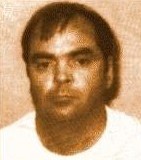 Donald Leroy Evans
Serial killer · USA · 1975
Donald Leroy Evans (born July 5, 1957) was an American serial killer who murder…
60 victims
Donald Leroy Evans
Serial killer · USA · 1975
Donald Leroy Evans (born July 5, 1957) was an American serial killer who murder…
60 victims
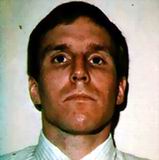 Michael Swango
Serial killer · USA · 1981
Michael Swango (Joseph Michael Swango) was a physician and American serial kill…
60 victims
Michael Swango
Serial killer · USA · 1981
Michael Swango (Joseph Michael Swango) was a physician and American serial kill…
60 victims
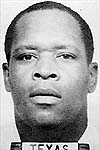 Curtis Lee Johnson
Murderer · USA · 1983
Curtis Lee Johnson was executed by lethal injection in Texas on August 11, 1992…
1 victim
Curtis Lee Johnson
Murderer · USA · 1983
Curtis Lee Johnson was executed by lethal injection in Texas on August 11, 1992…
1 victim
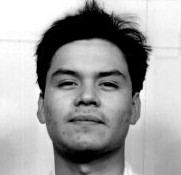 David Allen Castillo
Murderer · USA · 1983
David Allen Castillo was executed by lethal injection in Texas on September 23,…
1 victim
David Allen Castillo
Murderer · USA · 1983
David Allen Castillo was executed by lethal injection in Texas on September 23,…
1 victim
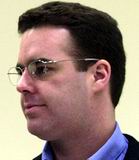 Shane Ragland
Murderer · USA · 1994
Shane Ragland was convicted of murder for the sniper-style shooting death of Un…
1 victim
Shane Ragland
Murderer · USA · 1994
Shane Ragland was convicted of murder for the sniper-style shooting death of Un…
1 victim
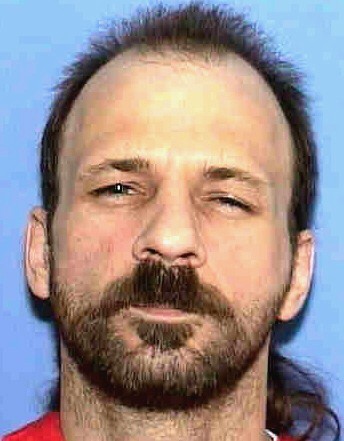 Tracy Hansen
Murderer · USA · 1987
Tracy Alan Hansen was convicted of gunning down Mississippi Highway Patrolman D…
1 victim
Tracy Hansen
Murderer · USA · 1987
Tracy Alan Hansen was convicted of gunning down Mississippi Highway Patrolman D…
1 victim
 Silvo Plut
Serial killer · Slovenia / Serbia · 1990
Silvo Plut was a Slovenian serial killer. He was born 29 May 1968 in Novo mesto…
3 victims
Silvo Plut
Serial killer · Slovenia / Serbia · 1990
Silvo Plut was a Slovenian serial killer. He was born 29 May 1968 in Novo mesto…
3 victims
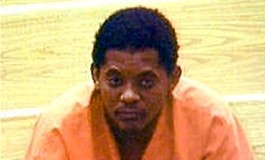 Silvio Izquierdo-Leyva
Mass murderer · USA · 1999
Silvio Izquierdo-Leyva was a hotel employee who opened fire inside a hotel crow…
5 victims
Silvio Izquierdo-Leyva
Mass murderer · USA · 1999
Silvio Izquierdo-Leyva was a hotel employee who opened fire inside a hotel crow…
5 victims
- Gender
- male
- Country
- USA
- Location
- New York/Georgia, USA
- Date of birth
- December 15, 1952
- Age at first offence
- 23
- Characteristics
- rape, serial rapist, rape?, drugs, drug addict, abuse
- Victim profile
- Elderly women
- Method of murder
- Strangulation, mostly by using stockings
- Date(s) of murder
- 1975 - 1978
- Years active
- 1975–1978
- Date of arrest
- May 3, 1984
- Status
-
Sentenced to death
Sentenced to death in Georgia on August 27, 1986; execution halted on December 16 and DNA testing hearing ordered; on December 1, 2009, the U.S. Supreme Court refused to hear Gary's latest appeal, clearing the way for an execution date; on December 4 a court set a December 16 execution date; on December 15 the state Board of Pardons and Paroles denied a request to stay his execution
Case record: Carlton Gary
Background
Carlton Gary was an American serial killer convicted for the murders of elderly women in Columbus, Georgia from 1977-1978 and was sentenced to death in Muscogee County in August 1986. He was born December 15, 1952, and was described as having an intelligence quotient of 115. His oldest known victim was 10 days from her 90th birthday and his youngest was 55 years old. All of his victims were elderly white women who lived alone.
The murders occurred after he had been active in criminal activity in his teens, with arrests beginning in 1966 and a rap sheet listing charges of robbery, arson, and assault before he reached his eighteenth birthday. The account also described childhood malnourishment and abuse and at least one serious head trauma in elementary school after being knocked unconscious in an accident on a playground.
Carlton Gary was also described as a heavy drug user in his late teens and as having a long criminal history, including escapes from custody.
The offence
Between September 11, 1977, and April 19, 1978, eight elderly women in Columbus were raped and strangled in their homes. One survived. The other seven were strangled to death. Seven of the victims lived in the Wynton area of Columbus, and one victim lived two miles away but had attended choir practice in Wynton the evening she was murdered.
He was also described as the “Stocking Strangler,” with a modus operandi that involved raping and killing his victims, strangling them with their own stockings in multiple cases. In three of the cases he was convicted of beating, sexually assaulting, and strangling the victims, mostly using stockings. Two survivors testified that he strangled them into unconsciousness before raping or attempting to rape them. The Georgia survivor identified him as her attacker in court. It was also stated that she had previously positively identified three other black men as the attacker and in her initial statement had indicated that it was too dark to distinguish the race of the attacker.
The record described multiple victims and dates:
- Gertrude Miller was raped and strangled at her home in Wynnton, with Miller surviving.
- Mary “Ferne” Jackson, 59, was raped, beaten and strangled to death at her home in the Wynnton district of Columbus.
- Jean Dimenstein Florence Scheible, age 89, was killed in identical fashion.
- Martha Thurmond, 69, died in the same way two days later.
- Kathleen Woodruff, 74, was raped, beaten, and manually strangled at home.
- Ruth Schwob, 74, survived an attack triggered by a bedside alarm.
- Mildred Borom, 78, was killed on the same morning as the attack on Ruth Schwob.
- Janet Cofer, 61, was strangled on April 20, and it was stated that the usual stocking was left knotted around her neck.
The account also described an additional rape and murder incident in Albany, New York in 1970 involving an 84-year-old woman, Nellie Farmer, and stated that Carlton Gary was never charged for Albany, New York slayings in the Columbus case. It further stated that the evidence included fingerprints found at four of the crime scenes and that the murders included robbing banks and restaurants in and around Georgia.
An additional, later claim of alleged linkage was described in the record: in 2007 Gary was positively linked through DNA to the rape and murder case of Marion Fisher, 40 years old, after leaving a bar in Nedrow, New York.
Investigation
Police had no viable suspects in the Columbus case until 1984, when a gun stolen from the Wynton area in 1977 was discovered in Michigan in the possession of Carlton Gary’s cousin, as a consequence of that state’s gun registration laws. Police traced the gun back to Carlton Gary through the possession by the cousin.
The investigation also described letters from another serial killer posing as a white radical group. A “Chairman of the Forces of Evil” sent letters threatening to kill black women unless the “Stocking Strangler” was stopped. One of the letters named a woman allegedly being held, but it was stated that the named woman had already been killed. It was stated that the letters were signed and quickly identified as being from Pvt. William Hance, a Fort Benning soldier, who was arrested and eventually tied to the murder of three prostitutes. Hance was convicted of murder and sentenced to death.
A capture and arrest sequence was described:
- A jury trial began after police had traced the case and found the gun connection.
- It was stated that in May 1984 he was nabbed in Albany, Georgia and charged with three of the Columbus killings.
- It was further stated that Columbus Police Department traced a handgun stolen from one of the victim's home to Michigan and back to Phenix City, Alabama, and that Jim Gary told police he had bought the gun from his nephew, Calton Gary.
Arrest and custody
Carlton Gary was arrested on May 3, 1984 in Albany, Georgia. It was stated that he was a Columbus native and had a long criminal history. He was indicted the next day, May 4, 1984.
The record described several escapes:
- He escaped from Onondaga County Correctional Institution in August 1977 by sawing through the bars of his cell and made it back to Columbus, Georgia.
- It also described an escape attempt in December 1985, after which he allegedly began behaving in a “bizarre” manner.
- It further described that he escaped from custody on March 15, 1983, and had earlier escaped from low security prison by sawing through bars, as well as an earlier escape from prison in South Carolina in 1983, described as “having never been formally accused” in his serial killings.
A fugitive status was also described in relation to South Carolina, with the record stating he was held as a fugitive from South Carolina and linked with an October 1977 burglary in Columbus at the time of his May 3, 1984 arrest.
Trial
Dates and procedural history
The record stated:
- The trial began on August 11, 1986.
- The trial concluded on August 27, 1986.
- A motion for new trial was filed on September 25, 1986 and was denied on October 18, 1986.
- The sentences were imposed after a short sentencing hearing, with the verdict reached earlier.
- The case was decided March 6, 1990 by the Supreme Court of Georgia, with reconsideration denied March 28, 1990.
The record stated that the case was tried in Muscogee County by a jury selected in Spalding County after numerous pre-trial hearings and a change of venue.
Charges and conviction
Carlton Gary was convicted by a jury in Muscogee County on three counts each of murder, rape and burglary. He was sentenced to death on each of the murder counts. The jury found that the three offenses of murder were committed while the offender was engaged in the commission of the offenses of rape and burglary, citing OCGA 17-10-30(b)(2). The record stated that the defendant did not question the sufficiency of the evidence and that the court found it supported the convictions.
The record also described that he was tried and convicted of three of the stocking stranglings and sentenced to death, with specific victims mentioned later in the federal and state procedural discussion:
- The state and subsequent discussions stated he was convicted of killing Florence Scheible, Martha Thurmond, and Kathleen Woodruff, and he was sentenced to death.
Evidence and witness testimony
The record stated that police witnesses testified fingerprints matched Gary’s from four of the crime scenes. It also stated that Gertrude Miller survived the strangler’s first attack and identified Gary in court as the man who had raped her.
Detective Michael Sellers testified that on the night of Gary’s arrest he and two colleagues interrogated Gary for eight hours and that they had neither taped nor taken notes of these conversations. Sellers testified that Gary admitted being at the crime scenes and blamed someone else for the murders, a friend named Malvin Crittenden. District Attorney Bill Smith argued to the jury that Gary had surely killed Nellie Farmer too, with the weaknesses noted including pubic hair comparisons and biochemical differences not excluding him.
The record also contained discussion of an issue involving competence and mental disorder claims. On March 10, 1986, the day his trial was scheduled to begin, he filed a special plea of incompetence. Doctor Jerald Lower examined him and concluded that he was deliberately feigning mental disorder. It was stated that he claimed sensory deprivation disorder; expert testimony indicated the condition associated only with complete sensory deprivation not consistent with his incarceration.
A “Jackson-Denno hearing” and admission of pre-trial statements was discussed, with the record stating there was no error in the conduct of the Jackson-Denno hearing or in admission of pre-trial statements.
A recusal issue regarding Judge Followill was discussed in the Supreme Court of Georgia opinion; the record stated it was not raised until more than a year after the hearing and was not timely.
Counsel and funding disputes
The record described attorney arrangements and denials of requests for funds and additional assistance:
- Lead trial attorney August F. Siemon was described as representing the defendant pro bono.
- The record stated that Siemon’s first move was to secure dismissal of court-appointed attorneys and then seek additional court-appointed counsel.
- It stated that requests for funds for forensic and investigative assistance were denied.
- The record stated that at the outset of trial Siemon stated, because of the lack of funds and time, he was not prepared to try the case, but the case proceeded to trial over his objection.
- It stated that on remand after an ineffective assistance inquiry, two additional attorneys were appointed, and the defendant obtained attorney Frank L. Derrickson pro bono, but none of the three trial attorneys testified on behalf of the defendant due to attorney-client privilege, and Siemon was called as a witness by the state but the defendant invoked the privilege.
The Supreme Court of Georgia opinion later addressed these issues and held that the defendant knowingly, voluntarily and intelligently waived issues about trial counsel effectiveness addressed during remand and that he declined to prove denial of effective assistance when given the opportunity.
It also addressed trial counsel travel and funds, holding there was no error in denial of funds and travel expenses, and that the defendant could not name witnesses whose testimony he was unable to secure due to the rulings.
Sentencing
Carlton Gary was sentenced to death on each of the murder counts. The record stated he was convicted on August 26, 1986 and sentenced to death the following day. Another section stated that the jury deliberated for three hours before the penalty was fixed at death and that after a short sentencing hearing they condemned him to death.
He was described as currently on Georgia’s death row.
Appeals
Supreme Court of Georgia (state direct review)
The record includes an appellate opinion titled “GARY v. THE STATE,” cited as (S89P0171) (260 Ga. 38) (389 SE2d 218) (1990), by SMITH, Presiding Justice. The opinion affirmed the conviction and death sentences.
In Division 2, the record included details about the effectiveness of counsel claim and the remand and hearing process. In multiple numbered divisions, the record addressed issues including:
- Solitary confinement while awaiting trial, administrative segregation for his own protection, and that a special jury found him competent to stand trial.
- Competence and the court’s refusal to grant funds for examination by an independent mental health expert, referencing Ake v. Oklahoma.
- Racial motivation in venue change to Spalding County and the percentage of black citizens aged 18 and over in Muscogee County and Spalding County.
- Voir dire and conduct issues.
- Jury deliberation and trial witness testimony admissibility.
- Extrinsic transactions demonstrating modus operandi being admitted in evidence.
- No abuse of discretion in the conduct of voir dire.
- Sentences not imposed under influence of passion, prejudice, or other arbitrary factor and not excessive or disproportionate to sentences in similar cases, with an appendix of similar cases listed.
- The record included numbered divisions and legal citations supporting the conclusion.
U.S. Supreme Court refusal
On December 1, 2009, the U.S. Supreme Court refused to hear Gary's latest appeal, clearing the way for an execution date to be set.
Timing for execution and DNA-related hearing
- On December 4, a court set a December 16 execution date for Gary.
- On December 15, the state Board of Pardons and Paroles denied a request to stay his execution.
- On December 16, only hours before the execution, the Georgia Supreme Court halted the execution to hold a hearing and determine whether DNA tests should be conducted to determine Gary's guilt or innocence.
Habeas corpus and bite-mark cast and serology disputes
The record described federal habeas corpus proceedings and disputes over bite-mark cast evidence and serology evidence:
- It stated that the case was before Judge Clay Land as part of Gary’s federal “habeas corpus” appeal process.
- It stated that Land granted funds for further examination of a bite-mark cast and authorized defense to take a deposition from Dunnavant.
- It stated that on May 30, 2007 Judge Clay Land refused to grant Carlton Gary a new trial over the bite cast that the state failed to disclose for 20 years.
- It also stated that Land’s final 95-page order was issued on September 28, 2004, where Land ruled that the failure to give John Wegel’s laboratory worksheets violated due process and that the denial of a serological expert request was unreasonable. The record stated Land ruled there was enough evidence to convict without resorting to inconclusive serology results.
- It described Judge Lawson’s involvement in a hearing set for November 21, 2000, and later orders on June 29, 2001 denying the defense’s request to test Gary’s semen and to consider the test arranged by others.
- It described that missing laboratory worksheets from 1977-78 for semen testing were discovered and supported new claims about secretor status. It described contested expert interpretations regarding “absorption-inhibition” versus “absorption-elution.”
The record also described actions taken by defense and expert consultations, including named experts:
- Dr. Thomas David, a forensic dentist, and his examination and report on the bite cast.
- Brian Wraxall of the Serological Research Institute in Richmond, California, who conducted testing and reported that the donor was an O secretor with H antigen detected to at least a dilution of 1 in 3000, and that in his opinion he was not a low level secretor.
- Rodger Morrison, director of Alabama’s state crime lab, and his statements in the hearing.
The record further described that a long-missing bite-mark mold was located and that Dr. David inspected the cast in February 2006, with subsequent reports in May 2006 and December 2006 including conclusions about inconsistencies and exclusion beyond a reasonable doubt as to the man who bit Janet Cofer, as described in the record.
Additional disputes and evidence claims included in the record
The record also discussed newly presented or disputed evidence claims including:
- Disputes over bite cast relevance given dental work and discussion of whether the cast involved upper teeth only or included lower teeth as well.
- Claims about footprints from Columbus and Albany.
- Claims about shoe sizes and footprints tied to a survivor’s description, including a sneaker sized 9.5 or 10 and a memo describing the attacker as “small and muscular.”
- Fingerprint disputes involving alleged lack of in situ photography and prints existing only as pieces of tape on cardboard.
Outcome
The record stated that Carlton Gary received a sentence of death in Georgia on August 27, 1986 and that he remained on Georgia’s death row. The record also stated that the execution process was affected in December 2009 and December 2009 led to a Georgia Supreme Court halt and a DNA testing hearing.
The record did not include an overturned conviction or an acquittal.
Aftermath
The record included extensive discussion of post-conviction proceedings, including further evidentiary hearings and disputes regarding due process, denial of funds for experts, and allegedly undisclosed evidence. It described that his case was part of a wider sequence of legal avenues available to capital defendants and that the matter had progressed through state and federal review.
The record also described the Supreme Court of Georgia’s affirmation that death sentences were not imposed under passion or prejudice and were not excessive or disproportionate.
Timeline
- May 3, 1984 — Carlton Gary was arrested in Albany, Georgia.
- May 4, 1984 — Carlton Gary was indicted.
- Aug 11, 1986 — The trial began in Muscogee County.
- Aug 26, 1986 — The jury convicted Gary on all counts and deliberated for three hours before his penalty was fixed at death (as described in the record).
- Aug 27, 1986 — Carlton Gary was sentenced to death in Georgia in Muscogee County.
- Aug 22, 1977 — An escape from custody was described as occurring (as stated in the record).
- Aug 27, 1984 — The record also described a timeline element as “sentenced to death the following day” after conviction, with the sentencing day given as August 27, 1986.
- Dec 1, 2009 — The U.S. Supreme Court refused to hear Gary’s latest appeal.
- Dec 4 (year not specified in the record) — A court set a December 16 execution date for Gary.
- Dec 15 (year not specified in the record) — The state Board of Pardons and Paroles denied a request to stay his execution.
- Dec 16 (year not specified in the record) — The Georgia Supreme Court halted the execution to hold a hearing on whether DNA tests should be conducted.
Other details
Named people and roles mentioned
- Carlton Michael Gary — the serial killer convicted in Columbus (birth given as December 15, 1952; age given as 46 in one passage and 50 in another passage; the record presented different ages in different contexts).
- Gertrude Miller — an elderly woman who survived the strangler’s first attack.
- Mary “Ferne” Jackson — director of public health education for 26 years; 59 years old; murdered after not showing up for work.
- Jean Dimenstein Florence Scheible — 71 or 89 depending on different passages; the record included age 89 and described her as killed on October 21.
- Martha Thurmond — 69 years old; died two days after Scheible.
- Kathleen Woodruff — 74 or 74 in multiple passages; murdered on December 28.
- Ruth Schwob — 74 years old; survived an attack on February 12, 1978.
- Mildred Borom — 78 years old; killed the same morning as Schwob’s attack.
- Janet Cofer — 61 or 61 in different passages; strangled on April 20.
- Dr. Joe Webber — Columbus medical examiner who conducted a postmortem on Ferne Jackson.
- Detective Michael Sellers — detective who made the link between Gary and a gun stolen from the Wynton area.
- District Attorney Bill Smith / District Attorney Douglas C. Pullen — names included in the state appellate opinion context.
- August F. Siemon — lead trial attorney.
- Frank L. Derrickson — pro bono attorney who represented Gary on remand effectiveness issues.
- Don Snow — investigator mentioned as part of initial defense team.
- William Kirby — local attorney mentioned for a time before Gary selected his own lawyer.
- August “Bud” Siemon — trial attorney described.
- Judge Followill — presiding over pre-trial funding rulings (as described in the record).
- Judge Kenneth Followill and Judge Kenneth Followill took rulings referenced; Judge Land and Judge Clay Land are also mentioned.
- Judge Daniel Coursey — assigned to the state habeas appeal.
- Judge Hugh Lawson — involved in a hearing set for November 21, 2000, and later orders issued June 29, 2001.
- Dr. Jerald Lower — examined Gary for competence issue.
- Dr. Thomas David — forensic dentist who examined the bite cast and later provided reports.
- Dr. Carlos “Sonny” Galbreath — dentist described as making the bite cast.
- Donald Kilgore and James Dunnavant — coroners described as having stored the bite cast.
- Michael Mears — director of Georgia Death Penalty Resource Center mentioned in a narrative context.
- Jeff Ertel — lawyer mentioned in the habeas process narrative.
- Jack Martin and Michael McIntyre — attorneys mentioned in the habeas narrative.
- Susan Boleyn — assistant attorney general referenced in briefs and opposition.
- Brian Wraxall — forensic testing described in the record.
- Rodger Morrison — state crime lab director and expert mentioned in a hearing.
- John C. Wegel — forensic serologist at the G.B.I. crime lab referenced in the serology dispute.
- Dr. David Roberts and Dr. David Roberts’s analysis is mentioned in the record about incomplete records and laboratory procedures.
- Gene Hewell and Floyd Washington — individuals mentioned in narrative accounts about Gary.
- William Hance — Fort Benning soldier connected to “Forces of Evil” letters; convicted and sentenced to death in a separate case as described in the record.
- Robert Ressler and Army CID and FBI involvement are described in narrative account.
Other specific incidents and items mentioned
- A gun was traced through gun registration laws and possession by a cousin.
- The record described that Gary was caught trying to sell coins stolen from an apartment building in Albany and was then sent back to prison for parole violation and robbery.
- A restaurant armed robbery in South Carolina was described, where a female employee stated his gun wasn’t loaded, after which he fled and was apprehended stuck in a swamp behind it.
- A “Stocking Strangler’s task force” assigned by the governor was described, with agents from the Georgia Bureau of Investigation and extra patrols by state troopers and soldiers from Fort Benning.
- The record included the claim that evidence from an April 20, 1978 strangling of Janet Cofer was withheld in discovery disputes, leading to later attempts to examine the bite cast.
- The record included a quotation attributed to Judge Clay Land: “The bite mark was withheld, and it may, or may not, be exculpatory, material evidence. It appears the only way to find out is through discovery.”
- The record included another quotation attributed to Land: “Even assuming that the bite mark cast is favorable to Petitioner, the Court finds that, when considering it collectively with the other undisclosed evidence, it does not reasonably put the whole case in such a different light to undermine confidence in the verdict.”
Quotes included verbatim in the record (as provided)
- Judge Land is quoted in the record: “The bite mark was withheld, and it may, or may not, be exculpatory, material evidence.
- Judge Land is quoted in the record: “Even assuming that the bite mark cast is favorable to Petitioner, the Court finds that, when considering it collectively with the other undisclosed evidence, it does not reasonably put the whole case in such a different light to undermine confidence in the verdict.”
- Judge Lawson is quoted in the record: “The court refuses to receive information regarding Mr. Rose's and Mr. Wraxall's testing,”
- Judge Lawson is quoted in the record: “The fact that petitioner may be a normal secretor today does not prove he is innocent of the rapes that occurred in 1977. Apparently there is a disagreement among experts as to whether Mr. Gary could be excluded as the perpetrator of the rape in the Thurmond case. However, the existence of this disagreement does not prove he is innocent.”
- Judge Lawson is quoted in the record: “Mr. Wraxall does not state that petitioner could be excluded as the source of the semen in the Jackson, Scheible, Borom and Woodruff cases.”
- The record included a quote from a survivor referenced as Jesse Thornton: “I could see something that wasn't right. There was stuff laying on the floor, papers, articles, just scattered all over the floor. There was a pillow on the floor, there was a suitcase that was opened, the drawers had been opened on the dresser, and stuff was pulled out and hanging out of it.”
- The record included a quote from Jesse Thornton: “Once I got to the bedroom, I looked inside,”
- The record included a quote from Jesse Thornton: “That's when I saw the body on the bed.”
- The record included a quote from District Attorney Smith as described: “Don't you know that every night Mrs. Miller has laid her head on her pillow and closed her eyes to go to sleep, that she has seen the face of this man? It's burned into her memory, it's forged into her memory, she can't put it out of her mind if she wants to.”
- A quote attributed to Siemon in the record was included: “There is no question in my mind that I have the personal resources to provide representation to [the defendant].”
- A quote attributed to Susan Boleyn in the record was included: “Even if the semen evidence in the Jackson, Scheible and Thurmond cases were … to exclude petitioner as the rapist of these women, the semen evidence does not in any way undermine the testimony of the surviving victim who testified that petitioner Gary raped her and attempted to strangle her with her stockings.”
- A quote attributed to Land in relation to cast relevance was included: “Undermining the state's evidence of the bite mark on Janet Cofer would have resulted in undermining the State's whole case,”
- A quote attributed to Dr. Thomas David is included in the record narrative as: “I know about this case,” and “I'm the guy they showed the bite cast to.” and “Bite cast? What bite cast?”
- A quote attributed to Dr. David Roberts or others appears in narrative form in the record as “Based on this new information,” but the exact quoted statement is attributed to Roberts within quotation marks in that segment: “Based on this new information,” Roberts stated, “it is my firm opinion that Mr. Gary is excluded as a possible donor of the stains believed to be semen in the Jackson case.”
- A quote attributed to Eddie Florence in the narrative was included only in prose and not as a quotation in quotation marks.
Legal holding in the state appellate opinion
The Supreme Court of Georgia opinion concluded that the defendant’s conviction and death sentences were supported by the evidence, and that the sentences were not imposed under passion, prejudice, or arbitrary factors and were not excessive or disproportionate.

Spotted an error, or have more information about this case?