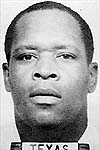
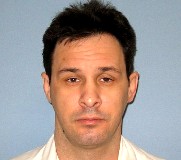
Curtis Lee Johnson
Murderer Brian Kevin Rosenfeld
Murderer · USA · 1985
Brian Kevin Rosenfeld Brian Kevin Rosenfeld was sentenced to three concurrent l…
23 victims
Brian Kevin Rosenfeld
Murderer · USA · 1985
Brian Kevin Rosenfeld Brian Kevin Rosenfeld was sentenced to three concurrent l…
23 victims
 Marvin Gray
Murderer · USA · 1975
Marvin Gray was convicted killer who claimed responsibility for 23 slayings and…
23 victims
Marvin Gray
Murderer · USA · 1975
Marvin Gray was convicted killer who claimed responsibility for 23 slayings and…
23 victims
 Yahweh ben Yahweh
Murderer · USA · 1980
Yahweh ben Yahweh was born and legally named Hulon Mitchell Jr. (October 27, 19…
23 victims
Yahweh ben Yahweh
Murderer · USA · 1980
Yahweh ben Yahweh was born and legally named Hulon Mitchell Jr. (October 27, 19…
23 victims
 Russell Ellwood
Murderer · USA · 1991
Russell Ellwood was a former taxi driver. Authorities suspected him of killing…
20 victims
Russell Ellwood
Murderer · USA · 1991
Russell Ellwood was a former taxi driver. Authorities suspected him of killing…
20 victims
 Corinio Pruitt
Murderer · USA · 2005
Corinio Pruitt (also identified as Corinio Allen Pruitt) was convicted of first…
1 victim
Corinio Pruitt
Murderer · USA · 2005
Corinio Pruitt (also identified as Corinio Allen Pruitt) was convicted of first…
1 victim
 Mark Edward Gardner
Murderer · USA · 1985
Mark Edward Gardner (c. 1956 – September 8, 1999) was executed at the age of 43…
3 victims
Mark Edward Gardner
Murderer · USA · 1985
Mark Edward Gardner (c. 1956 – September 8, 1999) was executed at the age of 43…
3 victims
 Alfred Dewayne Brown
Murderer · USA · 2003
Alfred Dewayne Brown was convicted of capital murder committed on April 3, 2003…
2 victims
Alfred Dewayne Brown
Murderer · USA · 2003
Alfred Dewayne Brown was convicted of capital murder committed on April 3, 2003…
2 victims
 Frederick Emmett-Dunne
Homicide · Germany · 1953
Defendant: Frederick Emmett-Dunne Victim: Sergeant Reginald Watters Other named…
1 victim
Frederick Emmett-Dunne
Homicide · Germany · 1953
Defendant: Frederick Emmett-Dunne Victim: Sergeant Reginald Watters Other named…
1 victim
 Petri Gerdt
Mass murderer · Finland · 2002
Petri Erkki Tapio Gerdt (born April 17, 1983; died October 11, 2002) died in th…
6 victims
Petri Gerdt
Mass murderer · Finland · 2002
Petri Erkki Tapio Gerdt (born April 17, 1983; died October 11, 2002) died in th…
6 victims
- Gender
- male
- Country
- USA
- Location
- Harris County, Texas, USA
- Date of birth
- 1954
- Age at first offence
- 29
- Characteristics
- armed robbery, burglary, robbery, murder for hire
- Victim profile
- Murray Dale Sweat (male, 25)
- Method of murder
- Shooting
- Date(s) of murder
- September 24, 1983
- Years active
- 1983
- Date of arrest
- 7 days after
- Status
-
Executed
Executed by lethal injection in Texas on August 11, 1992
Case record: Curtis Lee Johnson
Background
Curtis Lee Johnson was executed by lethal injection in Texas on August 11, 1992. He was 38 years old at execution, and had a record that dated to his teenage years. Johnson had education level of 7th grade or less.
Johnson was a Dallas native. Roy Junior Jones was his accomplice.
Murray Dale Sweat was not married at the time of his death, and was survived by his parents, three sisters, and two brothers.
The offence
On September 24, 1983, Curtis Lee Johnson and a companion entered the open rear window of the second story apartment of Murray Dale Sweat while carrying a loaded pistol. They burglarized the apartment after hearing people coming up the stairs. Instead of fleeing, they remained in the apartment, and when two people entered, Johnson pointed the gun at them and told them not to move.
One of the men ran out the door, but Sweat lunged at Johnson and grabbed his legs. Johnson kicked Sweat, who fell over backwards. While Sweat was lying on his back, Johnson shot and killed him. Sweat was 25 years old.
Johnson’s trial testimony described the sequence of events as including Sweat grabbing Johnson’s leg when Sweat dropped to his knees. An account in the appeals proceedings also described the offence as “a burglary gone wrong.”
After the shooting, the two robbers left with a camera and $8. Johnson was caught as they were exiting the house.
The case was described as a burglary connected to a killing, and included an accomplice who was later convicted of burglary, theft and armed robbery.
At the time of the slaying, Johnson was on parole for armed robbery.
Investigation
Police linked the gun used in the robbery to Sweat’s slaying.
Johnson and Roy Junior Jones were arrested six days after the murder during an aggravated robbery at a U-Totem store in Houston.
Arrest
Trial
Johnson was charged with capital murder.
Johnson was found guilty by a jury on December 15, 1983.
At the punishment phase of the trial, the jury answered affirmatively to the special issues under the former article 37.071 of the Texas Code of Criminal Procedure.
The trial court sentenced Johnson to the death penalty.
Johnson’s attorney said Johnson shot Sweat in a “mindless reaction” when Sweat lunged toward Johnson’s feet and grabbed his ankles.
James Keegan was Johnson’s attorney in the appeals process and claimed his client shot Sweat in the chest in a “mindless reaction.”
Johnson’s co-defendant Roy Junior Jones was convicted of burglary, theft and armed robbery and was sentenced to 45 years in prison.
Jones testified against Johnson.
During the appeals discussion, Ronald Mock said of Johnson that “was one that didn’t deserve to be executed.” Mock described the event as “It was a burglary gone wrong,” and “They went in to take whatever they could get.” Mock also said: “He (Johnson) was caught as they were exiting the house,” and “That’s when the capital murder happened.”
Mock further said: “He was a good guy, he was caught up with some things.”
Mock contended that Johnson’s motivation differed from other cases he had tried, stating: “He didn’t have the intent to kill, he had the intent to burglarize, but not to kill.”
Mock stated: “He also had priors,” and that “The jury saw that and thought he would be a continuing threat to society. A prior criminal record is what probably got him sentenced to death.”
Mock said the murder case was heard “when we were in a frenzy of capital murder cases.”
Johnson did not petition during the described period in the aftermath narrative.
Special issues under Texas law at the time of Johnson’s offence
At the time of Johnson’s offense, Texas law provided that the court should submit the following issues to the jury at the sentencing proceeding:
(b) On conclusion of the presentation of the evidence [at the sentencing proceeding], the court shall submit the following issues to the jury:
(1) whether the conduct of the defendant that caused the death of the deceased was committed deliberately and with the reasonable expectation that the death of the deceased or another would result;
(2) whether there is a probability that the defendant would commit criminal acts of violence that would constitute a continuing threat to society; and
(3) if raised by the evidence, whether the conduct of the defendant in killing the deceased was unreasonable in response to the provocation, if any, by the deceased.
....
(e) If the jury returns an affirmative finding on each issue submitted under this article, the court shall sentence the defendant to death.
Vernon's Ann. Texas C.C.P. art. 37.071 (1981).
Sentencing
On December 15, 1983, the trial court sentenced Johnson to the death penalty after the jury answered affirmatively to the special issues.
On or about October 23, 1985, the Texas Court of Criminal Appeals affirmed the conviction and sentence.
On January 2, 1986, the trial court scheduled Johnson’s execution for April 7, 1986.
On July 29, 1987, the trial court scheduled Johnson’s execution for September 16, 1987.
Appeals
Johnson v. State, 698 S.W.2d 154 (Tex.Crim.App.1985) affirmed the conviction and sentence.
Johnson’s federal habeas corpus proceedings included a certificate of probable cause application.
Johnson asked the United States Court of Appeals for the Fifth Circuit for a certificate of probable cause after denial of a certificate by the district court. The application was denied.
The appellate proceedings included review of the sufficiency of evidence regarding deliberateness, claims of ineffective assistance of counsel, claims about the Texas procedure at the punishment phase limiting the jury’s consideration to answering three special issues, and claims about voir dire instructions on the meaning of “deliberately” versus “intentionally.”
Claims raised in the appellate proceedings
Johnson complained that the district court erred in adopting the finding of the magistrate judge that there was sufficient evidence to support the affirmative jury finding that Johnson acted deliberately when he shot Murray Dale Sweat.
Johnson claimed ineffective assistance of counsel because counsel failed to raise sufficiency of the evidence supporting deliberateness on direct appeal.
Johnson claimed ineffective assistance of counsel at the punishment phase because counsel failed to call any witnesses on his behalf. The magistrate judge found:
“Counsel were not incompetent in failing to obtain the seven witnesses now claimed to have been readily accessible at the time;”
and
“Johnson [has not] proved that his defense was prejudiced by the failure to call his seven relatives as witnesses.”
The appellate discussion stated that the magistrate judge’s findings were based in part on credibility determinations and factual findings that trial counsel made efforts to find witnesses and that both Johnson and his mother had been uncooperative.
Johnson complained that the district court erred in concluding that Texas’s procedure at the punishment phase allowed the jury to consider and give effect to all mitigating evidence. He cited Penry v. Lynaugh, 492 U.S. 302.
Johnson contended that his trial counsel were ineffective for not attempting to question each prospective juror during voir dire about their ability to vote “no” on at least one special issue, and for not asking the trial court to instruct the jury that at least one special issue must be answered negatively if the circumstances of the offence were such that the death penalty should not be assessed.
Johnson argued that the district court erred in finding he was not prejudiced by counsel’s error of instructing two prospective jurors that “deliberately” means much the same as “intentionally.”
Verbatim voir dire exchanges included in the appellate proceedings
In the examination of Charles Allen White by Benjamin Durant:
Q. ... Now, let me give you a fact situation. Would you agree with me that this word "deliberately" and the word "intentionally," mean basically the same thing?
A. Well, no, not really.
Q. Okay. What do you see the difference in them?
A. I see deliberately is doing the act right then and there, you know, just taking it and doing it; and intentionally is walking in the door with the intent of doing it.
Q. Okay. Let me say this. When you say deliberately means doing it and knowing you're doing it?
A. Right.
Q. And wanting to do it?
A. That's right.
Q. That's deliberately?
A. That's what I said.
A. But it [whether or not something was committed deliberately] would have to be proven to me.
Q. Let me ask you this: It has to be proven to you beyond a reasonable doubt?
A. Absolutely.
Q. If you have a reasonable doubt as to whether or not something was committed deliberately, can you answer that question [the first special issue] "no"?
A. If I have got a reasonable doubt, yes, sir, I could.
In the examination of Frank Alan Cain by Benjamin Durant:
Q. I'm going to state the word "intentional" or "deliberate," I think they can possibly be two interchangeable words taking a fact situation into account.
Q. Let me give you an example of what I'm talking about. Suppose two men--suppose two men are fighting. Let's say if--let me give you a little background of that. Let's say one man is burglarizing another man's car, broken into this man's car; and then the man comes out and sees the fellow inside his car, the man that owns the car. So he attacks the burglar and they're fighting, and during the course of the fight a gun comes up from somewhere; and the two are struggling over the gun. And the gun goes off and shoots and kills the man who owns the car. Do you follow what I'm saying?
A. Yeah. Right.
Q. Now, this would be a capital murder situation; but there may be a question, because the two men are struggling over a gun as to whether or not the burglar intentionally or deliberately shot the man that owned the car. Do you follow what I'm saying?
A. He just--just intentionally kills someone. Right. I understand what you are saying.
Q. But what I'm saying, there may be--there may be a possibility that because of the fact--quite naturally if he just walked up to him and shot him in cold blood, obviously he did that intentionally and deliberately.
Q. Because the two of them are struggling, there is a possibility that the burglar didn't intend to do it. Do you follow what I'm saying?
Q. He killed the man because during the struggling the gun goes off, whatever the case might be. Because of that particular fact situation--don't misunderstand me. I'm not trying to lock into any particular fact. I'm giving you that as a hypothetical example on how a person can be killed during the course of a felony being committed. It might possibly not be a deliberate act, you see.
Outcome
Johnson’s last appeal was rejected, with the appellate proceedings denying his request for a certificate of probable cause.
Johnson was executed by lethal injection on August 11, 1992.
Moments before his execution, Johnson thanked his mother and aunt and forgave “everyone who participated in this.”
Aftermath
A report described Johnson as being executed early on August 12, 1992, and described the execution as occurring after the Texas Supreme Court rejected his last appeal on Monday, with federal courts having previously done so.
That report also described Johnson as having a long criminal record, and stated he was sentenced to die in 1984 for shooting to death Murray D. Sweat, 25, after Sweat found Johnson and Roy Junior Jones in Sweat’s Houston apartment.
The report further stated Johnson and Jones were arrested a week later after a holdup at a store, and that the gun used in the robbery was linked to Sweat’s killing. It stated Roy Junior Jones, 31, was serving a 45-year sentence for burglary and robbery.
Other details
The appellate opinion included jurisdiction and procedural details: it referenced the application for certificate of probable cause from the United States District Court for the Southern District of Texas, and noted that Johnson’s request was DENIED.
The appellate opinion included a numbered legal discussion of claims. It stated that sufficient evidence supported a finding of deliberateness, that ineffective assistance claims failed, that there was no merit to claims regarding the Texas punishment-phase procedure and jury consideration of mitigating evidence, and that it found no merit to the voir dire instruction and related ineffective assistance arguments.

Spotted an error, or have more information about this case?