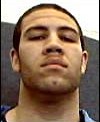
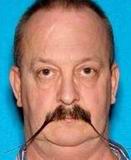
Travis Lee Gibson
Murderer Russell Ellwood
Murderer · USA · 1991
Russell Ellwood was a former taxi driver. Authorities suspected him of killing…
20 victims
Russell Ellwood
Murderer · USA · 1991
Russell Ellwood was a former taxi driver. Authorities suspected him of killing…
20 victims
 Robert Martines Perez
Murderer · USA · 1994
Name: Robert Martines Perez · Other name used in proceedings: Robert Martinez P…
15 victims
Robert Martines Perez
Murderer · USA · 1994
Name: Robert Martines Perez · Other name used in proceedings: Robert Martinez P…
15 victims
 Billy Frank Vickers
Murderer · USA · 1993
Billy Frank Vickers Vickers was executed by lethal injection in Texas on Januar…
14 victims
Billy Frank Vickers
Murderer · USA · 1993
Billy Frank Vickers Vickers was executed by lethal injection in Texas on Januar…
14 victims
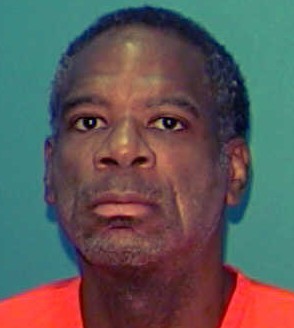 James Belcher
Murderer · USA · 1996
James Belcher was sentenced to death for the murder of Jennifer Embry on 01/08/…
1 victim
James Belcher
Murderer · USA · 1996
James Belcher was sentenced to death for the murder of Jennifer Embry on 01/08/…
1 victim
 Dobie Gillis Williams
Murderer · USA · 1984
Dobie Gillis Williams was black and was staying at the home of his grandfather…
1 victim
Dobie Gillis Williams
Murderer · USA · 1984
Dobie Gillis Williams was black and was staying at the home of his grandfather…
1 victim
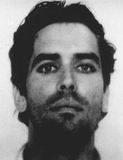 Glen Stewart Godwin
Murderer · USA / Mexico · 1980
August 3, 1980 — Eagle Mountain residents found a blown-up pickup truck with re…
2 victims
Glen Stewart Godwin
Murderer · USA / Mexico · 1980
August 3, 1980 — Eagle Mountain residents found a blown-up pickup truck with re…
2 victims
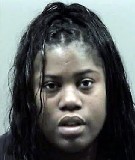 Banita Jacks
Murderer · USA · 2007
Banita Jacks was a Washington, DC resident convicted of murdering her four daug…
4 victims
Banita Jacks
Murderer · USA · 2007
Banita Jacks was a Washington, DC resident convicted of murdering her four daug…
4 victims
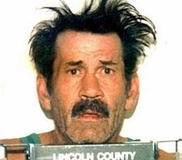 Bobby Jack Fowler
Murderer · Canada · 1973
Bobby Jack Fowler (June 12, 1939 – May 15, 2006) was an American who was a nati…
20 victims
Bobby Jack Fowler
Murderer · Canada · 1973
Bobby Jack Fowler (June 12, 1939 – May 15, 2006) was an American who was a nati…
20 victims
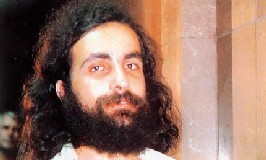 Theofilos Sechidis
Mass murderer · Greece · 1996
Theofilos Sechidis was a 24-year-old Greek law school student. In May 1996, he…
5 victims
Theofilos Sechidis
Mass murderer · Greece · 1996
Theofilos Sechidis was a 24-year-old Greek law school student. In May 1996, he…
5 victims
- Gender
- male
- Country
- USA
- Location
- Lane County, Oregon, USA
- Date of birth
- December 3, 1976
- Age at first offence
- 24
- Characteristics
- robbery
- Victim profile
- Joshua Michael Copp, 25
- Method of murder
- Shooting (.45-caliber pistol)
- Date(s) of murder
- March 12, 2000
- Years active
- 2000
- Date of arrest
- —
- Status
-
Sentenced to death
Sentenced to death on 2001; judgment of conviction and sentences including the sentences of death were affirmed in part and reversed in part on automatic and direct review, and the case was remanded for merging two convictions for aggravated murder into a single conviction and for resentencing to only one sentence of death
Case record: Travis Lee Gibson
STATUS and procedural posture
Travis Lee Gibson received sentences of death on 2001. On automatic and direct review of the judgment of conviction and sentences of death imposed by the Lane County Circuit Court, the Oregon Supreme Court affirmed the judgment of conviction and sentences in part and reversed in part. The case was remanded to the circuit court for further proceedings for the limited purpose of merging two convictions for aggravated murder and resentencing to only one sentence of death.
Timeline
- March 12, 2000 — Travis Lee Gibson attended a party at his cousin’s house in Eugene at about 1:00 a.m.; he encountered Wendy Gates, James Herlong, and Deon Givens, and the group formulated a plan to rob Joshua Copp and went to Copp’s house.
- March 12, 2000 — At about 5:00 a.m., Copp let Gibson’s group into his house; Gibson and others robbed Copp, taped Copp’s hands and eyes, assaulted Copp and Steve Johnson, and shootings were carried out including five or six shots at close range and another shot inside the house.
- March 12, 2000 — After returning to Gibson’s house and splitting money, Gibson told his wife, “we just killed two people.” Later that day, they learned that only Copp had died.
- Next morning (after March 12, 2000) — Gibson, Gates, and Herlong left Eugene by bus to Reno.
- Later (after arriving in Reno) — Gibson pawned the weapon he had used during the robbery and shootings.
- After returning to Eugene — Gibson was arrested.
Background
Travis Lee Gibson attended a party at his cousin’s house in Eugene at about 1:00 a.m. on March 12, 2000. He encountered Wendy Gates, James Herlong, and Deon Givens. Gates indicated that she knew a man named Joshua Copp who might have money because he sold marijuana. Gates, Herlong, and Givens formulated a plan to rob Copp, and Gibson agreed to drive them all to Copp’s house.
The offence
Events at Copp’s house
When Gibson’s group arrived at Copp’s house at about 5:00 a.m., Gibson and Gates knocked on the door. Copp let them in because he knew Gates, then shut and locked the door. Thirty seconds later, Gibson unlocked the door and flashed the porch light as a signal. Givens, Herlong, and Gibson confronted Copp in the hallway and told him to go back to his room, which he did.
The group then asked Copp where his gun and money were, and Copp told them that his gun was under the mattress. Gibson took Copp’s gun and wallet, and someone taped Copp’s hands and his eyes. Copp said that his roommate, Steve Johnson, was in the next bedroom. Herlong and Givens kicked in Johnson’s door and asked him where his money was. They taped Johnson’s hands and searched his room but failed to find anything.
Johnson broke loose and tried to escape through the window. Gibson and Givens caught him and pistol-whipped him. After retaping Johnson, Gibson, together with Givens and Herlong, took Johnson and Copp into the living room, laid them down on the floor, and kicked and hit them.
Someone said, “Let's just smoke them.” Gibson said, “Fuck it. Get a pillow. I'm going to shoot them both in the head.”
When Johnson broke loose again and ran to the door, Gibson and Givens shot him five or six times at close range. Johnson fell through the front door of the house and onto the lawn. Givens and Herlong ran outside to the car. Another shot was fired inside the house, after which Gibson emerged from the house and returned to the car. Gibson told the others in the car that he thought that he had shot one of the victims in the neck or the shoulder.
Items taken and aftermath
From Copp’s house, Gibson, Givens, and Herlong had taken some scales, a knife, some marijuana, a gun they found underneath Johnson’s bed, and $200. Along with Gates, they went back to Gibson’s house, where they split up the money. When they got there, Gibson told his wife, “we just killed two people.” Later that day, they learned that only Copp had died.
Gates, Herlong, and Gibson decided to go to Reno, and they left Eugene by bus the next morning.
Investigation and arrest
After the murder and robbery events, Gibson pawned the weapon he had used during the robbery and shootings while in Reno. Gibson subsequently returned to Eugene, where he was arrested.
Trial
Charges and convictions
The state charged Gibson with the crimes enumerated below. A jury convicted Gibson of all counts, including:
- two counts of aggravated murder;
- felony murder;
- attempted murder;
- first-degree assault;
- first-degree robbery;
- first-degree burglary; and
- felon in possession of a firearm.
Key issue at trial: identity of the shooter
The key issue at trial was whether Gibson or Herlong shot Copp. The state sought to prove that Gibson was the shooter by introducing evidence that Gibson had been the only person in the house with Copp when Copp was shot, that Gibson had been armed with the .45-caliber pistol during the crime, that Gibson had owned the murder weapon, and that Gibson had been the leader of the group and therefore the one most likely to have shot Copp.
Although no witness testified to seeing Gibson shoot Copp, several witnesses testified that Gibson had been the only person inside the house with Copp when they had heard a shot. No witnesses testified to seeing Copp alive after they heard the shot.
The state’s witnesses testified that ballistics tests showed that Copp had been shot with the .45-caliber pistol that Gibson owned, that Gibson had carried that pistol when he and the others had entered Copp’s house, and that Gibson had pawned the pistol in Reno following the murder. Herlong testified that he had seen Gibson fire the gun at least once before. Herlong described an occasion in the week preceding the murder in which he saw Gibson fire the gun through an open car window and say, “I feel like killing somebody.” No objection was made to that testimony.
The state had submitted an offer of proof in which Herlong would have testified to the full circumstances surrounding the incident, including that it had occurred on the same day that Herlong and Gibson had gone to a sandwich shop planning to rob it and that Gibson also had fired the pistol into the back door of the sandwich shop. That evidence was not presented to the jury at that time.
Defendant’s testimony and cross-examination
In his direct testimony, Gibson presented himself as a passive participant in the crimes. He stated that his wife had purchased the murder weapon and that he never had fired it. He testified that he had “went along with” the planning and execution of the Copp robbery and that he had tried to stop Herlong and Givens from harming the victims. He claimed that he had loaned Herlong the murder weapon on the night of the murder, that he had not been armed at the crime scene, and that Herlong had carried the murder weapon during the robbery. He testified that Herlong, not Gibson, had been the last robber in the house.
Gibson testified that after the murder, he had tried to give the robbery proceeds to the others who were involved and to distance himself from them, and that Herlong and Gates had wanted to go to Reno after the murder and Gibson had merely “help[ed them] out.” Gibson repeatedly denied having been the leader of the group.
On cross-examination, the state questioned Gibson about whether he had ever fired the murder weapon and about the prostitution discussion. Gibson denied Herlong’s testimony, stating:
- “A. No, that did not happen. I've never fired that gun before.”
- “Q. Never?”
- “A. No, I have not fired that gun before.”
The state asked Gibson about the events following the murder, including the trip to Reno, and asked whether he had asked Gates “to do anything in Reno to make money.” Gibson denied any such conversation and stated, “I never asked her to do anything for money for me.” Gibson objected that the state’s questions were “not relevant impeachment.”
The trial court overruled Gibson’s objections. The trial court reasoned that the jury were being asked to conclude that Gibson was an “accidental and somewhat inconsequential participant,” especially regarding claims that guns were in the hands of others and that he was not the leader. The trial court stated:
- “The jurors are being asked by virtue of the defendant's testimony to conclude that he basically was a more or less accidental and somewhat inconsequential participant here, at least to the extent that he wants everybody to believe that the guns were in the hands of others and that he was not really the leader.”
- “When asked * * * if he was in charge, he said no. When asked if he was in the leadership role, he said no. And so in my estimation it would be reasonable for the [s]tate to be able to prove that on other occasions involving these same individuals that he was involved and that he was in a leadership position. And I think that the questions put to [defendant] himself and his answers make that relevant.”
On further cross-examination, Gibson denied that he had fired the gun through the car window as Herlong had described, denied ever firing the gun, and asserted that Herlong had initiated the idea of robbing the sandwich shop and had fired the gun at the sandwich shop door:
- “Q. Let's go back to the question I asked you earlier. Have you ever fired that .45 before this night?”
- “A. No, I have not fired that .45.”
- “Q. I thought you said you fired it out the window.”
- “A. No, I didn't tell you I fired it out the window.”
- “Q. You never fired it into the door of a restaurant?”
- “A. No, I didn't. I was present when that gun was fired at the door of the restaurant.”
- “Q. Tell us about that.”
- “A. I was given the safe code for a restaurant, and I was going to go over there and see what was in it. I went over there. James Herlong wanted to come along with me. I got there and there was lights on. And I said, 'Let's wait.' It was, I don't know, it wasn't that late. I said, 'Let's leave it alone for now. It will be there.' ”
- “* * *”
- “He said, 'Come on, * * * I think we can do this.' I said, 'All right, come on, let's go. Let's just do it.' I had the gun. We went back over there. He said, 'Let's shoot the door open.' I said, 'Man, this is West 11th' * * *.”
- “He said, 'I'll do it.' I said, 'Come on.' He said, 'All right, I'll do it.' And he shot the door a couple times. He ran back to my car and -- ”
- “Q. So you gave him the gun?”
- “A. Yeah.”
Gibson also denied that he ever had “taken a leadership role” in other “criminal behavior” with Herlong or Givens.
State rebuttal testimony
The state recalled Herlong and Gates as rebuttal witnesses to rebut Gibson’s assertions that he never had fired the murder weapon, that Herlong, rather than Gibson, had initiated discussions about robbing the sandwich shop, and that Herlong and Gates had initiated discussions about Gates’s possible prostitution. Gibson objected to additional questions based on OEC 404 and because the testimony “introduce[d] evidence of other wrongful acts.” The trial court allowed the testimony over Gibson’s objections.
Herlong testified that Gibson had fired the murder weapon into the back door of the sandwich shop and that Gibson had been “teaching [him] the ropes” on how to commit robbery. Herlong and Gates testified that Gibson had suggested a plan for Gates to earn money through prostitution in Reno.
Penalty phase proceedings
At a separate penalty-phase proceeding on the two counts of aggravated murder, the jury affirmatively answered the four questions set out under ORS 163.150(1)(b). Pursuant to ORS 163.150(1)(f), the trial court entered a sentence of death on each of the aggravated murder counts.
Assignments of error
Gibson raised 34 assignments of error. The Oregon Supreme Court examined each assignment and discussed five of them, rejecting all but the assignment challenging the trial court’s decision to enter two separate convictions for aggravated murder and two separate sentences of death. The judgment of conviction and sentences were affirmed in part and reversed in part.
Sentencing
Original sentence
The trial court entered a sentence of death on each of the aggravated murder counts.
Appellate correction and remand
The Oregon Supreme Court agreed that the trial court erred when it imposed two convictions and two sentences of death for the aggravated murder of Copp, and that the error was apparent on the face of the record. The case was remanded for entry of a corrected judgment of conviction reflecting Gibson’s guilt on the charges of aggravated murder. The corrected judgment was to merge the two convictions for aggravated murder into a single conviction and enumerate separately the aggravating factors on which the conviction was based. The court then was to impose a single sentence of death.
Appeals and evidentiary rulings
Other bad acts: sandwich shop incident
Gibson challenged trial court rulings allowing evidence of earlier acts that included earlier firing of the murder weapon when Gibson and Herlong had considered robbing a sandwich shop.
The Oregon Supreme Court held that evidence of the sandwich shop incident was relevant. The court reasoned that the case turned on the identity of the shooter. It concluded that Herlong’s testimony about Gibson’s earlier possession and firing of the murder weapon was relevant because it had “tendency” to make it more probable that Gibson shot Copp.
The court also concluded that the sandwich shop evidence was not barred by OEC 404(3). It reasoned that the evidence was independently relevant to issues in the case, including the identity of the shooter and the circumstances surrounding possession and use of the murder weapon.
The court addressed the “take the answer” argument and stated that the bar on calling another witness to impeach depends on whether the fact is a “collateral matter.” The court concluded that earlier firing of the murder weapon was not a collateral matter because the facts about possession and firing several days earlier in contemplation of a violent robbery were directly relevant to whether Gibson or Herlong shot Copp.
The court rejected the argument that Gibson’s cross-examination denial was not precise enough to be impeached. It stated that Gibson’s statement that he “never fired that gun before” was precise and that Herlong’s testimony rebutted it.
Finally, the court held that the trial court did not abuse discretion under OEC 403 in admitting the sandwich shop evidence. It found that the potential for unfair prejudice was limited because Gibson had already admitted to participation in criminal activity more serious than the sandwich shop incident, and because the evidence demonstrated possession and use of the murder weapon in a context of potential criminal activity with Herlong.
Other bad acts: prostitution conversation
Gibson also challenged trial court rulings admitting evidence of a conversation on the bus to Reno in which Gibson suggested to Gates that she prostitute herself to make money for the group. The Oregon Supreme Court concluded that the prostitution evidence was not relevant and should not have been admitted. The court reasoned that the relevance depended on the state’s “leadership” theory and that the inference connections were questionable. It further found that the prostitution suggestion bore only a tenuous connection with the state’s leadership theory and a weaker connection with the issue of whether Gibson shot Copp.
The court then addressed prejudice and held that there was little likelihood that the prostitution evidence affected the jury’s verdict. It reasoned that the prosecution involved murder and attempted murder charges as well as assault, robbery, burglary, and felon in possession of a firearm; that Gibson testified to participation in the robbery of Copp and Johnson; and that multiple witnesses and physical evidence supported admissions. The court also noted that the comments attributed to Gibson amounted only to a suggestion and that Gates declined to do so. The court stated that the evidence likely had no effect on the jury’s verdict given the overall evidentiary context.
Other details
Participants in the robbery and killings
Travis Lee Gibson encountered Wendy Gates, James Herlong, and Deon Givens at a party at his cousin’s house in Eugene. Gates indicated she knew Joshua Copp who might have money because he sold marijuana. The robbery was carried out at Copp’s house against Joshua Copp and Steve Johnson.
Weapons and materials
Gibson attended the crimes with a .45-caliber pistol. Givens had two handguns, one of which he gave to Herlong. The group took a knife, scales, some marijuana, a gun they found underneath Johnson’s bed, and $200 from Copp’s house. Gibson pawned the weapon he had used during the robbery and shootings in Reno.
Jury findings in the penalty phase
The jury affirmatively answered the four questions set out under ORS 163.150(1)(b) for each aggravated murder count.
Parties in the appellate briefing
- Jack A. Billings was the judge.
- Eric Johansen, Deputy Public Defender, Salem, argued for appellant, with Peter A. Ozanne, Executive Director, Office of Public Defense Services, and Peter Gartlan, Chief Defender, on the briefs.
- Kathleen Mary Cegla, Assistant Attorney General, Salem, argued for respondent, with Hardy Myers, Attorney General, Mary H. Williams, Solicitor General, and Laura Anderson and Janet Klapstein, Assistant Attorneys General, on the brief.
Appellate argument and submission
The case was argued and submitted September 9, 2004.
Spotted an error, or have more information about this case?