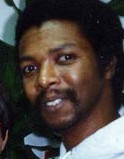
Dobie Gillis Williams
Murderer Brian Kevin Rosenfeld
Murderer · USA · 1985
Brian Kevin Rosenfeld Brian Kevin Rosenfeld was sentenced to three concurrent l…
23 victims
Brian Kevin Rosenfeld
Murderer · USA · 1985
Brian Kevin Rosenfeld Brian Kevin Rosenfeld was sentenced to three concurrent l…
23 victims
 Marvin Gray
Murderer · USA · 1975
Marvin Gray was convicted killer who claimed responsibility for 23 slayings and…
23 victims
Marvin Gray
Murderer · USA · 1975
Marvin Gray was convicted killer who claimed responsibility for 23 slayings and…
23 victims
 Yahweh ben Yahweh
Murderer · USA · 1980
Yahweh ben Yahweh was born and legally named Hulon Mitchell Jr. (October 27, 19…
23 victims
Yahweh ben Yahweh
Murderer · USA · 1980
Yahweh ben Yahweh was born and legally named Hulon Mitchell Jr. (October 27, 19…
23 victims
 Russell Ellwood
Murderer · USA · 1991
Russell Ellwood was a former taxi driver. Authorities suspected him of killing…
20 victims
Russell Ellwood
Murderer · USA · 1991
Russell Ellwood was a former taxi driver. Authorities suspected him of killing…
20 victims
 Wayne Clifford Boden
Serial killer · Canad a · 1969
Wayne Clifford Boden was a Canadian serial killer and rapist active from 1968 t…
4 victims
Wayne Clifford Boden
Serial killer · Canad a · 1969
Wayne Clifford Boden was a Canadian serial killer and rapist active from 1968 t…
4 victims
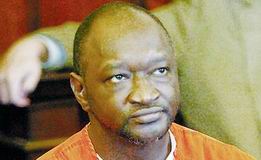 Bennie Adams
Murderer · USA · 1985
Bennie Adams was convicted and sentenced to death in Mahoning County Common Ple…
1 victim
Bennie Adams
Murderer · USA · 1985
Bennie Adams was convicted and sentenced to death in Mahoning County Common Ple…
1 victim
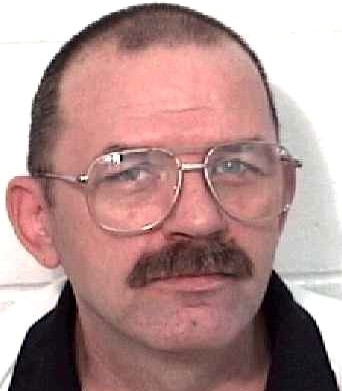 William Earl Lynd
Murderer · USA · 1988
William Earl Lynd was convicted in Berrien County of kidnapping with bodily inj…
2 victims
William Earl Lynd
Murderer · USA · 1988
William Earl Lynd was convicted in Berrien County of kidnapping with bodily inj…
2 victims
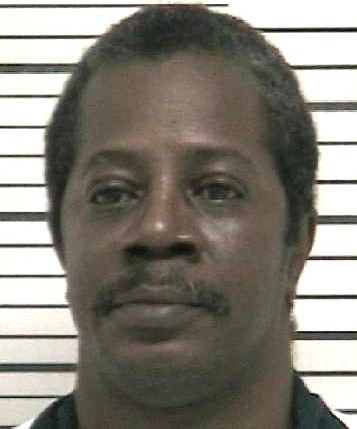 Johnny Lee Gates
Murderer · USA · 1976
Defendant: Johnny Lee Gates · Age: 41 · Court: Muscogee Superior Court · Judge:…
2 victims
Johnny Lee Gates
Murderer · USA · 1976
Defendant: Johnny Lee Gates · Age: 41 · Court: Muscogee Superior Court · Judge:…
2 victims
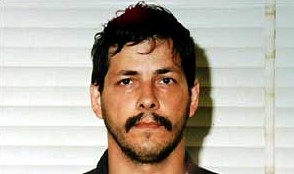 Marc Dutroux
Serial killer · Belgium · 1995
Marc Dutroux (born 6 November 1956 in Brussels) was a Belgian serial killer and…
5 victims
Marc Dutroux
Serial killer · Belgium · 1995
Marc Dutroux (born 6 November 1956 in Brussels) was a Belgian serial killer and…
5 victims
- Gender
- male
- Country
- USA
- Location
- Sabine Parish, Louisiana, USA
- Date of birth
- 1961
- Age at first offence
- 23
- Characteristics
- armed robbery
- Victim profile
- Sonja Merritt Knippers (female, 43)
- Method of murder
- St abbing with knife
- Date(s) of murder
- July 8, 1984
- Years active
- 1984
- Date of arrest
- Same day
- Status
-
Executed
Executed by lethal injection in Louisiana on January 8, 1999
Case record: Dobie Gillis Williams
Background
Dobie Gillis Williams was black and was staying at the home of his grandfather on a five-day furlough while serving a prison sentence for a prior burglary conviction. At the time of the killing, his grandfather’s home was nearby the Knippers residence.
Williams had been identified as being imprisoned at Camp Beauregard and was on a weekend furlough at the time of the murder. He had been a “model prisoner” and he was described as not prone to violence.
Williams was on multiple execution dates before his January 8, 1999 execution, including close calls in June and November when the state came within a couple of hours of killing him but had to call it off because of last-minute stays of execution.
Williams was described as having rheumatoid arthritis, with gnarled fingers and an especially bad left knee, and he walked slowly with labored steps. He kept his hair cropped close and wore big glasses. He had been characterized as having an IQ of 65.
Williams’s spiritual adviser was Sister Helen Prejean.
Williams’s childhood sweetheart was Jean Walker. His mother was Betty Williams. His aunt was Royce. His brother was Patrick. His four-year-old nephew was Antonio.
Two lawyer friends were Carol Kolinchak and Paula Montonye. In addition, Williams had two other lawyers (named in the record only as “two lawyer friends” and later as “two of Dobie’s lawyers”).
The warden was Burl Cain, acting warden of the Louisiana State Penitentiary. Sister Helen Prejean authored a book in which she asserted Williams was innocent and wrongfully executed.
The offence
On the evening of July 6, 1984, Mrs. Sonya Knippers fell asleep on her living room sofa while watching television. She awoke just past midnight and stopped in the bathroom before going to bed.
When she closed the bathroom door, she discovered Dobie Williams hiding behind it, pantless and brandishing a knife. Mrs. Knippers began to scream. Williams locked the bathroom door and stabbed Mrs. Knippers repeatedly with the knife before fleeing out the bathroom window.
Although fatally injured, Mrs. Knippers was able to unlock the bathroom door after Williams fled. Her husband carried her to the living room, where she bled to death in his arms.
Mr. Knippers informed police that his wife had screamed that a black man was trying to kill her.
Investigation and evidence
Police suspected Williams because his grandfather’s home was nearby.
Williams was taken in for questioning and ultimately confessed to the crime after investigators observed fresh scratches and other abrasions on his arms and legs. Williams’s statement led investigators to:
- the murder weapon, found in the grass outside the Knippers home; and
- the shirt Williams was wearing at the time of the crime, which he had hidden underneath the porch at his grandfather’s house.
At the time of questioning, Williams had been staying at his grandfather’s home on a five-day furlough while serving a prison sentence for a prior burglary conviction.
Investigators found a bloodstain on a bathroom curtain, and the state crime lab declared it consistent in seven categories with Williams; the record described the statistical combination as occurring in only two in one hundred thousand black people.
Investigators also found a “dark-pigmented piece of skin” on the brick ledge of the bathroom window through which the killer supposedly entered and escaped. Hair was also taken from the window and found to have characteristics consistent with Williams’s hair.
The autopsy revealed that the stab wounds in the victim’s body were consistent with the type of wounds that would have been made by the knife found in the Knippers’ yard.
Fresh scratches and other abrasions on Williams’s arms and legs were described as consistent with the type of wounds expected after quickly exiting through the Knippers’ bathroom window.
The record also stated that recent DNA testing concluded that Williams was the killer.
Further forensic analysis was described:
- blood found on the Knippers’ bathroom window curtain matched Williams’s blood type, which was described as very rare among African-Americans; and
- the blood could not have come from either Sonja or Charles Knippers. The record also stated that defense counsel challenged DNA results, and that other DNA experts characterized the entire result as “garbage” and complained about inability to check the full DNA report until Thursday.
After Williams made his statement, investigators returned to the Knippers’ home and found a kitchen knife in four inches of damp grass. Officers later retrieved the shirt from the place where Williams claimed to have hidden it.
The record stated that “although no confession was obtained,” an unsuccessful attempt was made to record the statement mechanically, and at trial several investigating detectives testified as to the content of Williams’s confession.
At least three police officers later testified that Williams confessed.
Arrest
Williams was taken in for questioning after police suspected him because his grandfather’s home was nearby the Knippers residence.
The record described that investigators picked Williams up for questioning.
Trial
Williams was indicted by a Sabine Parish Grand Jury of First Degree Murder in violation of Louisiana Revised Statute (R.S.) 14:30.
A motion for a change of venue was filed by the defendant and granted, transferring the case to the 35th Judicial District Court in Grant Parish.
The trial was described as a four-day trial, and the jury returned a verdict of guilty as charged.
During the trial, the case involved statutory aggravating factors. The jury recommended the death penalty unanimously, and the judge imposed the death penalty.
The record described that during the guilt phase the defendant’s attorney attempted to prevent a capital conviction by challenging the existence of aggravating factors required for first degree murder rather than second degree murder, and those efforts were unsuccessful. Williams was convicted of first degree murder.
In the sentencing phase, the jury recommended death after finding two statutory aggravating factors:
- that Williams was engaged in the perpetration of an aggravated burglary or an attempted aggravated rape; and
- that the offense was committed in an especially heinous, atrocious, or cruel manner.
Williams’s conviction and sentence were affirmed by the Louisiana Supreme Court in State v. Williams, 490 So.2d 255 (La., 1986).
Jury instructions on sentencing weighing
During the sentencing phase, the jury was instructed, in relevant part:
In deciding whether the defendant, Dobie Gillis Williams, should be sentenced to death by electrocution or to life imprisonment, you must weigh the mitigating circumstances against the aggravating circumstances that you find to be established by the evidence. This weighing process is a qualitative not a quantitative one ... you are to consider each of the facts individually and weigh them in your mind and determine what weight to give each ... you are to weigh the factors, not count them. I have previously read to you a list of the aggravating circumstances which the law permits you to consider if you find any of them established by the evidence.... These are the only aggravating circumstances that you may consider. You are not allowed to take account of other facts or circumstances as the basis for deciding that the death penalty would be appropriate punishment in this case. The mitigating circumstances which I have read for your consideration are given to you as merely examples of some of the factors that you may take into account as reasons for deciding not to impose the death sentence upon Mr. Williams....
Sentencing
The jury unanimously recommended the death penalty at the sentencing phase, and the judge imposed it.
The record described that the jury recommended death after determining the two statutory aggravating factors.
At trial, defense counsel named in the record was Michael Bonnette. Bonnette attempted to prevent a capital conviction during the guilt phase by challenging aggravating factors. During the sentencing phase, Bonnette made statements referring to mitigating evidence but did not call any witnesses. Bonnette cross-examined one of the state's witnesses.
The record further described that during the sentencing hearing the state presented two witnesses:
- a Many, Louisiana police officer, for the purpose of identifying Williams and introducing public documents regarding his prior conviction for attempted “simple burglary”; and
- the warden of the facility where Williams was incarcerated on the burglary charge (with testimony and questioning described in the record).
The record included that Bonnette prevented the state from introducing testimony of the victim of Williams’s prior “simple burglary,” who was expected to testify that Williams tried to get into her house and break in on her and her children while she knew he was there and she knew he was trying to get in.
Appeals
State and federal habeas proceedings
The record stated:
- Williams, 490 So.2d 255 (La., 1986).
- Williams’s petition for writ of certiorari was denied by the Supreme Court, and his conviction became final on June 26, 1987 (as stated in the record).
- Williams filed several state court petitions for post-conviction relief.
- Judge Hiram Wright of the Thirty-Fifth Judicial District Court of Louisiana, Grant Parish, held evidentiary hearings in 1988 and rejected claims regarding ineffective assistance of counsel during the penalty phase and the admissibility of his confession.
- Numerous additional claims were considered and rejected by Judge Wright in 1992.
- The Louisiana Supreme Court denied supervisory writs with respect to these claims.
- In 1993, the Louisiana Supreme Court granted a supervisory writ concerning discrimination in the selection of the grand jury foreman, and Judge Wright later held an evidentiary hearing and rejected the claim.
- The Louisiana Supreme Court denied Williams’s further request for a supervisory writ, ending state post-conviction proceedings.
Williams filed a federal petition for writ of habeas corpus in district court on April 25, 1996, raising about twenty grounds of relief. The district court granted the writ based on ineffective assistance of counsel during the penalty phase and set aside the death sentence unless Louisiana conducted a new sentencing hearing, citing the Eighth and Fourteenth Amendments. The district court rejected Williams’s other claims including discrimination in selection of the grand jury foreman and constitutional defects in jury instructions during the penalty phase.
Fifth Circuit decision (habeas review)
The record included multiple Fifth Circuit opinions.
On October 3, 1997, the United States Court of Appeals for the Fifth Circuit (Dobie Gillis Williams v. Burl Cain, Acting Warden, Louisiana State Penitentiary, Angola, Louisiana) concluded that the district court erred in finding ineffective assistance of counsel during the sentencing hearing and reinstated the death sentence. The court rejected Williams’s claim concerning discrimination in selection of the grand jury foreman as procedurally barred and concluded that the jury’s consideration of an invalid aggravating factor at sentencing did not require vacation of the death sentence. The record stated:
- “In short, we reinstate the death sentence.”
- The judgment was “REVERSED in part, and AFFIRMED in part.”
- The court stated that it reversed the district court’s grant of habeas relief on ineffective assistance of counsel during the penalty phase, and affirmed denial of relief on other claims.
A separate concurrence in the judgment emphasized that the writing judge did not decide whether a federal habeas court could conduct harmless error analysis when reviewing a death sentence from a weighing state.
Another Fifth Circuit decision on June 16, 1998 (Dobie Gillis Williams v. Burl Cain, Warden) addressed a stay of execution. The court reversed an order granting a stay of execution by the district court pending disposition of a petition for writ of certiorari in the United States Supreme Court. The record stated that the district court lacked jurisdiction to enter the stay and the Fifth Circuit “GRANT[ED] the State of Louisiana’s motion to vacate the stay.” The record also stated: “STAY OF EXECUTION VACATED.”
Outcome
Williams was executed by lethal injection in Louisiana State Penitentiary on January 8, 1999.
The time of death was announced as 6:48 p.m.
Williams ate twelve candy bars and some ice cream for his last meal.
Williams’s final statement was:
“I just want to say, I don't have any hard feelings against anybody. God bless ya'll. God bless.”
The death certificate stated: “Cause of death: homicide.”
Witnesses included Sister Helen Prejean, who prayed as the execution took place, and Williams’s spiritual adviser held a cross.
Williams wore a silver cross on a chain around his neck.
Other witnesses included Mrs. Knippers’ husband, Herbert, and her son, Monte, who was about 12 at the time of the killing. They left the prison without talking to news reporters.
Warden Burl Cain talked quietly with Williams for two minutes as the lethal solution was being injected through IVs in his left arm and neck. Witnesses could not hear what they said, but the record stated that Cain later said Williams expressed sorrow for putting people through so much anguish although he never admitted to killing Mrs. Knippers. The record stated that Williams lifted his head slightly and smiled and that two or three minutes later Williams stopped moving.
Aftermath
In 2005, Williams was the subject of a book by anti-death penalty activist and Catholic nun Sister Helen Prejean titled The Death of Innocents: An Eyewitness Account of Wrongful Executions, in which she asserted that Williams was innocent and wrongfully executed.
Sister Helen Prejean watched both Williams and Joseph Roger O’Dell die, as described in the record.
The record also described that Louisiana executed Williams as Louisiana’s first execution since 1997 and referenced other execution context, including John Ashley Brown Jr.’s execution.
Other details
Williams had been indicted for first degree murder and sentenced to death by the state of Louisiana.
The record included legal citations and procedural history, including:
- State v. Williams, 490 So.2d 255 (La., 1986).
- Williams v. Louisiana, 483 U.S. 1033, 107 S.Ct. 3277, 97 L.Ed.2d 780 (1987).
- 125 F.3d 269 (5th Cir. 1997) regarding reinstatement of the death sentence.
- 143 F.3d 949 (5th Cir. 1998) regarding vacating a stay of execution.
- Maynard v. Cartwright, 486 U.S. 356 (1988).
- Godfrey v. Georgia, 446 U.S. 420 (1980).
- Strickland v. Washington, 466 U.S. 668 (1984).
- Clemons v. Mississippi, 494 U.S. 738 (1990).
- Zant v. Stephens, 462 U.S. 862 (1983).
- Richmond v. Lewis, 506 U.S. 40 (1992).
Spotted an error, or have more information about this case?