
John Giuca
Murderer Robert Martines Perez
Murderer · USA · 1994
Name: Robert Martines Perez · Other name used in proceedings: Robert Martinez P…
15 victims
Robert Martines Perez
Murderer · USA · 1994
Name: Robert Martines Perez · Other name used in proceedings: Robert Martinez P…
15 victims
 Billy Frank Vickers
Murderer · USA · 1993
Billy Frank Vickers Vickers was executed by lethal injection in Texas on Januar…
14 victims
Billy Frank Vickers
Murderer · USA · 1993
Billy Frank Vickers Vickers was executed by lethal injection in Texas on Januar…
14 victims
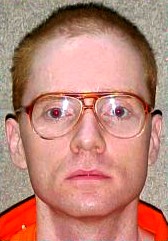 Robert Glen Jones
Murderer · USA · 1996
Defendant: Robert Glenn Jones (ADC#070566) · Co-defendant: Scott Nordstrom (ADC…
7 victims
Robert Glen Jones
Murderer · USA · 1996
Defendant: Robert Glenn Jones (ADC#070566) · Co-defendant: Scott Nordstrom (ADC…
7 victims
 Leslie Demeniuk
Murderer · USA · 2001
Leslie Demeniuk was a mother accused of murdering her twin 4-year-old sons, Jam…
2 victims
Leslie Demeniuk
Murderer · USA · 2001
Leslie Demeniuk was a mother accused of murdering her twin 4-year-old sons, Jam…
2 victims
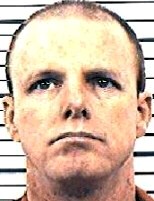 Earl Frederick
Murderer · USA · 1989
Earl Frederick was executed by lethal injection in Oklahoma on July 30, 2002. ·…
2 victims
Earl Frederick
Murderer · USA · 1989
Earl Frederick was executed by lethal injection in Oklahoma on July 30, 2002. ·…
2 victims
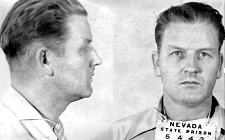 Owen Caudle Butner
Murderer · 1947
Owen Caudle Butner was executed by asphyxiation-gas in Nevada on February 10, 1…
1 victim
Owen Caudle Butner
Murderer · 1947
Owen Caudle Butner was executed by asphyxiation-gas in Nevada on February 10, 1…
1 victim
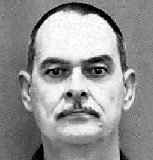 Larry Romine
Murderer · USA · 1981
Larry Romine, 45, was convicted for the shotgun slayings of his parents, Roy Le…
2 victims
Larry Romine
Murderer · USA · 1981
Larry Romine, 45, was convicted for the shotgun slayings of his parents, Roy Le…
2 victims
- Gender
- male
- Country
- USA
- Location
- Brooklyn, New York, USA
- Date of birth
- October 8, 1983
- Age at first offence
- 20
- Characteristics
- convicted rapist
- Victim profile
- Mark Fisher, 19
- Method of murder
- Shooting
- Date(s) of murder
- October 11, 2003
- Years active
- 2003
- Date of arrest
- December 21, 2004
- Status
-
Life imprisonment
Sentenced to 25 years to life in prison on October 19, 2005
Case record: John Giuca
Background
John Giuca was born October 1983. He was an American man who studied criminal justice at John Jay College of Criminal Justice and occasionally worked as a film and TV extra. He lived at the 3 story family home in Prospect Park, Brooklyn, while studying criminal justice.
Giuca’s mother, Doreen Quinn Giuliano, met Giuca’s biological father, John Sr., when she was 18. The couple separated 3 years later. At 23 she met her current husband of over 20 years, Frank Giuliano, and together they built up a small construction business.
Doreen and Frank built up a small construction business and later invested in real estate, becoming landlords of some Brooklyn properties during the New York real-estate boom of the 1990s. They had a son, Matthew, in 1987, who was John Giuca’s half-brother.
Giuca’s friends included Albert Cleary, also a college student, and 17 year old Antonio Russo, a strongly built high school dropout who wore his hair in dreadlocks. At Russo and Giuca’s trial, the prosecution alleged that Giuca was the leader of a gang. Giuca’s supporters said he was simply a young man with friends from a variety of backgrounds.
Giuca had a prior firearms-related matter: at age 17 he pleaded guilty to a charge of firing a pistol in a street confrontation. He later said this was because fighting the charge could have resulted in 15 years imprisonment even if he had been acquitted on other charges. The material also described that prior to the murder, Giuca, then 17, had been written up for an incident he said was benign (lighting firecrackers on a Brooklyn street), and that after Giuca’s arrest in 2004 unnamed witnesses came forward claiming the incident had been gunplay; Giuca pleaded guilty to firearms charges in connection with that incident, saying he feared 15 years might be added to his sentence.
The offence
John Giuca was convicted in the death of 19 year old Mark Fisher. Fisher was 19 years old at the time of his death.
Fisher was from a New Jersey suburb and was a star football player at Fairfield University. Those who knew him remembered Fisher as determined, warm-hearted and modest; he was popular with fellow students and teachers.
On Oct. 11, 2003, Fisher took his first unsupervised trip to the city with three other young men from Fairfield. In an Upper East Side bar he met a girl he knew from the university. Fisher got on well with a friend she was with and separated from his male companions, finally ending up in the company of the two young women (who had missed their train), Albert Cleary and Giuca, who neither of the women knew.
After a bar refused entry to some of them, an unsuccessful attempt was made to get Fisher to take a cab home. The women were invited by Cleary to wait for the morning train at his family home, but because Fisher was not invited they were reluctant to go. One later said she did not want to leave Fisher as he was visibly inebriated and not used to the city.
Giuca, whose parents were away, offered to let the women stay at his own family home, and all five took a cab to the house in Prospect Park, where an impromptu party was joined by several others, including Antonio Russo. Cleary later said Russo’s presence had prompted him to warn Fisher that there might be trouble.
According to testimony, shortly after arriving Russo said "Hey, yarmulke" to Fisher, who was not Jewish. The girl who Fisher knew from Fairfield said it seemed the other men didn’t like Fisher, a 6'5" athlete, being paid so much attention by the women.
When the party ended Fisher and the two women fell asleep on sofas. Police responding to reports of gunfire at 6:30 AM found Fisher’s body two blocks away from Giuca's house. He had been shot dead.
The later conviction and trial description included robbery and criminal possession of a firearm, and the material described that the felony murder rule was applied at trial, allowing a person to be held responsible for a murder committed in the course of a felony or by being complicit to the felony, regardless of their intent.
The later sentencing-related material also said Fisher had been shot in the heart, lungs, liver and esophagus by a .22-caliber Ruger pistol and that the body was found on the sidewalk outside, before a row of well-tended Victorian homes in Brooklyn. Another description said Fisher’s body was discovered near the curb of Argyle Road and noted that the blanket was the property of Doreen Giuliano, later described as having been given to Fisher by Doreen’s son to keep him warm against the night chill.
Investigation
Giuca said he last saw Fisher sitting on the sofa draped in a blanket. Giuca said he had fallen asleep after the party ended and that he had no knowledge of the murder.
Giuca and Russo quickly became the focus of police suspicions, Giuca's house was searched and he was repeatedly stopped and frisked.
Fisher’s family was unhappy with the way the murder of their son was being investigated and felt that left to themselves, some officials were minded to have it 'swept under the carpet'. Under pressure to get results in the high profile case, police announced witnesses were being uncooperative.
The material described extensive media attention leading up to the 2005 Democratic Primary for District Attorney that frequently highlighted the investigation into the death of Mark Fisher and much of it was critical of the District Attorney's Office for a failure to apprehend the killers.
Arrest
Russo was arrested on November 19, 2004. Giuca was arrested on December 21, 2004.
After Giuca and Russo were arrested, two other men were tried and acquitted on charges of intimidating a witness in the case. One was convicted of perjury.
Trial
Criminal trial and jury structure
Giuca and Russo were tried together, but there were two separate juries.
The felony murder rule was described as allowing a person to be held responsible for a murder committed in the course of a felony or by being complicit to the felony, regardless of their intent.
Prosecution arguments and evidence
Lead prosecutor Anna-Sigga Nicolazzi told the court that Giuca's fantasies about being a crime boss had led him to form a "pathetic" gang called the 'Ghetto Mafia' and orchestrate the murder of Fisher. Nicolazzi said the murder "defied common sense", but may have been motivated by a desire to boost the reputation of the gang, and resentment toward Fisher.
The prosecution accused Giuca of giving Russo a gun and said he probably brought Fisher to Russo and participated in beating Fisher.
Prosecution evidence included witnesses' accounts of what Russo had allegedly said about his own and Giuca's involvement in the murder, and witnesses' accounts of what Giuca had allegedly said about his own and Russo's part in the murder.
Cleary testified that hours after the body was discovered Giuca had told him "We may have had something to do with that." According to Cleary, Giuca said he had led Fisher out the house to where Russo was waiting with a gun to rob him, but when Fisher put up a fight Russo had shot him dead.
The material also included a description that the prosecution asked for maximum penalty for second-degree murder convictions.
In closing-related narrative, the material quoted an Assistant D.A. stating:
"This case begins, continues, and ends with John Giuca," stated Assistant D.A. Anna-Sigga Nicolazzi, during her closing remarks. "All roads in this case lead back to this defendant. If it were not for this defendant, Mark Fisher would still be alive today."
Defence arguments
Giuca pleaded not guilty and did not give evidence at the trial.
Giuca’s defence attorney, Sam Gregory, told the court that if Russo had committed the murder, it was without Giuca's knowledge, participation, or approval, and that prosecution witnesses had given untruthful and contradictory testimony.
Gregory said Cleary had earlier given evidence before a grand jury without ever mentioning Giuca being angry about an incident when Fisher sat on a table.
The defence also said Cleary, who had been convicted of an unrelated assault, considered himself to be a 'tough guy' and suggested that Cleary could have told Russo where to find the gun that was used to kill Fisher.
Giuca's defence attorney told the court Giuca had not aided Russo, but under pressure to get results in the case, police had made Cleary and Giuca's ex-girlfriend give false testimony about Giuca having confessed to involvement in the murder.
Gregory dismissed the evidence of a former cellmate of Giuca at Rikers Island who said Giuca had admitted a role in the murder as a fabrication aimed at winning leniency from the authorities.
In addition, the material said Giuca’s counsel Lloyd Epstein argued that Giuca did not receive a fair trial because Allo failed to disclose his connection and knowledge of people in the case.
Giuca’s lawyers said that "Allo's failure to disclose his personal knowledge of Giuca disqualified him as a juror regardless of whether he acquired this knowledge before or during the trial, or both."
Verdict
After three hours of deliberation, a jury found Giuca guilty on charges of second-degree murder, robbery and multiple counts of criminal possession of a firearm.
The material described that the jury that heard the Russo case took two days to find him guilty.
The material also described that the verdict was returned in State Supreme Court in Brooklyn. It noted that Giuca had the maximum penalty possibility of 25 years to life. It also included a description of how Giuca responded at trial and comments made by his mother.
Giuca muttered obscenities and scowled at the jury in State Supreme Court in Brooklyn as it returned the verdict in the murder of the student, Mark Fisher, 19. As the jury returned the verdict, his mother Doreen Giuliano sat behind him and said: "He was set up." Moments after the jury was polled, she turned toward at least one of the detectives in the case and said: "I'm not going. I want to spit on him." Moments after the jury was polled, she asked detectives: "Feel good now?"
The material also included that the judge was Alan Marrus, in the context of the separate jury deliberation for Russo, which sent a note stating: "We, as the jury, need to sleep on it because some are a little undecided."
Sentencing
In October 2005 Giuca and Russo were each given a sentence of 25 years to life.
Another passage described the date was October 19, 2005.
The material quoted the judge addressing the courtroom and stating:
"This was a callous crime, and the defendants’ reactions were callous—brutal, callous, and shockingly senseless. So my sentence will be callous,"
Appeals
Giuca’s efforts for freedom involved his mother’s investigation into juror misconduct. Her actions were extensively featured in the media.
Juror investigation by Doreen Giuliano
Doreen Giuliano investigated members of the jury. By her account, she recalled a friend of her son's had said he recognized a shaven headed man on the jury.
Using the alias, “Dee Quinn,” Giuliano rented an apartment close to his own, transformed her appearance, and established a close relationship with a juror named Jason Allo. Giuliano secretly recorded their conversations. After nearly a year, she collected audio of Allo allegedly talking of his biased attitudes towards Giuca and connections to the case that should have disqualified him from serving on the jury. Evidence obtained by Giuliano was used to appeal Giuca's conviction.
Appeal decision
A legal brief was filed by Giuca’s attorney Lloyd Epstein arguing Giuca did not receive a fair trial because Allo failed to disclose his connection and knowledge of people in the case.
The Appellant Division 2nd Department denied the request for a hearing to review evidence of juror misconduct against Allo.
In November 2010 a panel of four judges ruled that even if alleged statements the former juror had made to Giuliano were true, it was not grounds for overturning Giuca's murder conviction.
On May 14, 2013, Federal Judge Frederic Block denied Giuca’s federal habeas petition. Giuca remained in prison for the rest of his life.
Outcome
Giuca was sentenced to 25 years to life in prison on October 19, 2005. Giuca maintained his innocence and a further appeal was described as pending in the material.
Russo and Giuca were sentenced to 25 years to life.
Aftermath
After Giuca's sentencing, a number of people wearing T-shirts bearing the slogan "Free John Giuca" handed out pamphlets outside the courthouse.
The pamphlets claimed only a handful of around 150 people subpoenaed to testify before a grand jury had been called to testify in the trial and said Giuca had not led a gang.
A supporters’ narrative stated injuries to Fisher’s body indicating a left-handed assailant, the location of Fisher's body, and details of 911 calls alerting the police, all implicated a crucial prosecution witness in the murder of Fisher.
The material stated that Russo and Giuca were brought to trial 6 weeks before the election. It also stated that Giuca supporters pointed to a case in which courts determined prosecutorial misconduct on behalf of the Brooklyn DA.
Other details
People and relationships
Doreen Quinn Giuliano was Giuca’s mother. Frank Giuliano was Giuca’s stepfather. John Sr. was Giuca’s biological father. Matthew was Giuca’s half-brother.
Michael Fisher and Nancy Fisher were Mark Fisher’s parents.
Albert Cleary testified and was described as Cleary’s roommate in one narrative and as someone who offered a place to stay for others before a train. Antonio Russo was described as a strongly built high school dropout.
Jason Allo was identified as a juror involved in the later juror-misconduct allegations. He said the allegations about him were not true.
Media and campaign
The material described appearances and coverage of Doreen Giuliano’s effort to free her son in outlets including Nightline, On the Case with Paula Zahn, The Early Show, Anderson Live, Vanity Fair, The New York Times, The Guardian, and the Sydney Morning Herald. It also said she was featured in online media including The Huffington Post and the Gothamist.
In addition, after sentencing, pamphlets outside the courthouse were distributed by people wearing "Free John Giuca" T-shirts.
Corrections and disputed elements
The material described that Russo and Giuca were described by prosecutors as members of a small-time street gang called the Ghetto Mafia, and also described that supporters said the gang was merely a loose group of tough kids hanging out.
Quotations
The material included additional quotations attributed to Doreen Giuliano:
"He was set up."
"I'm not going. I want to spit on him."
"Feel good now?"
It also included other quoted matter attributed to lead prosecutor Anna-Sigga Nicolazzi:
"pathetic"
"Ghetto Mafia"
"defied common sense"
It included a quoted remark attributed to Assistant D.A. Anna-Sigga Nicolazzi:
Nicknames and descriptors
The material described Mark Fisher as having been described by media as a "grid-kid" and as being involved in what tabloids called the “grid-kid slay”. It also described Giuca as being described by prosecutors as a leader of a "pathetic, fledgling" street gang.
Jail and facility details
After conviction, the material described that Giuca went to serve his sentence and that he was later moved to a less severe environment at Green Haven Correctional Facility, in Dutchess County, New York. It also described that he attended to prison library work landing a job in the prison library, working 30 hours a week and making $7 every two weeks.
The material also described recreation allowance of three hours a day and other conditions including that he double-bunked with a coke-addict burglar doing 12 to life, and that another friend was stabbed but survived.
Civil lawsuit
In October 2006, on the third anniversary of Mark Fisher’s death, the Fishers filed a civil lawsuit against Giuca and Russo. The material said they reportedly claimed that Hynes had held back crucial information in investigating Mark’s murder.
The material quoted Nancy Fisher:
"I won’t go away until I get answers," Nancy told the New York Post. "I know that, and Hynes knows that."
Supporters’ and defence-related legal commentary
The material included a quote attributed to Ezra B. Glaser:
"It virtually demands a reversal of the conviction," says Ezra B. Glaser, a legal adviser to Doreen. "He [Allo] knew what he did was improper."
The material also included a rhetorical question attributed to Epstein:
"What do I learn from the case?" Epstein asks rhetorically. "Sometimes a mother’s love will reveal things that the most diligent lawyers and investigators can never imagine."
Spotted an error, or have more information about this case?