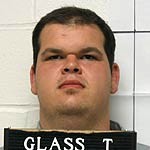
Travis Glass
Murderer Russell Ellwood
Murderer · USA · 1991
Russell Ellwood was a former taxi driver. Authorities suspected him of killing…
20 victims
Russell Ellwood
Murderer · USA · 1991
Russell Ellwood was a former taxi driver. Authorities suspected him of killing…
20 victims
 Robert Martines Perez
Murderer · USA · 1994
Name: Robert Martines Perez · Other name used in proceedings: Robert Martinez P…
15 victims
Robert Martines Perez
Murderer · USA · 1994
Name: Robert Martines Perez · Other name used in proceedings: Robert Martinez P…
15 victims
 Billy Frank Vickers
Murderer · USA · 1993
Billy Frank Vickers Vickers was executed by lethal injection in Texas on Januar…
14 victims
Billy Frank Vickers
Murderer · USA · 1993
Billy Frank Vickers Vickers was executed by lethal injection in Texas on Januar…
14 victims
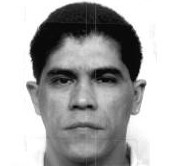 Javier Cruz
Murderer · USA · 1991
Javier Cruz was convicted of capital murder in October 1992 for strangling Loui…
2 victims
Javier Cruz
Murderer · USA · 1991
Javier Cruz was convicted of capital murder in October 1992 for strangling Loui…
2 victims
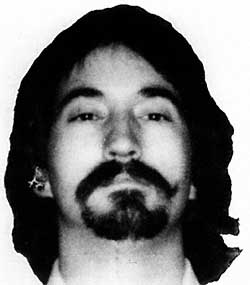 Billy Ray Waldon
Murderer · USA · 1985
Billy Ray Waldon (born 1952), also known as Billy Joe Waldon and Nvwtohiyada Id…
3 victims
Billy Ray Waldon
Murderer · USA · 1985
Billy Ray Waldon (born 1952), also known as Billy Joe Waldon and Nvwtohiyada Id…
3 victims
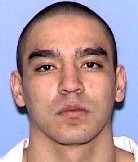 Robert Gene Garza
Mass murderer · USA · 2002
Robert Gene Garza (male; Hispanic; black hair; brown eyes; height 05'07"; weigh…
10 victims
Robert Gene Garza
Mass murderer · USA · 2002
Robert Gene Garza (male; Hispanic; black hair; brown eyes; height 05'07"; weigh…
10 victims
 Mark Anthony Duke
Mass murderer · USA · 1997
Mark Anthony Duke was 16 years old when he committed a capital offense. He resi…
4 victims
Mark Anthony Duke
Mass murderer · USA · 1997
Mark Anthony Duke was 16 years old when he committed a capital offense. He resi…
4 victims
 Clinton Lee Spencer
Murderer · USA · 1989
Clinton Lee Spencer was sentenced to death on December 27, 1990. About 9:00 p.m…
1 victim
Clinton Lee Spencer
Murderer · USA · 1989
Clinton Lee Spencer was sentenced to death on December 27, 1990. About 9:00 p.m…
1 victim
- Gender
- male
- Country
- USA
- Location
- Callaway County, Missouri, USA
- Date of birth
- J uly 25, 1979
- Age at first offence
- 22
- Characteristics
- kidnapping, child abuse
- Victim profile
- Steffini Wilkins (female, 13)
- Method of murder
- Ligature strangulation
- Date(s) of murder
- May 25, 2001
- Years active
- 2001
- Date of arrest
- Same day
- Status
-
Sentenced to death
Sentenced to death on February 25, 2003
Parties and roles
- Travis Glass — defendant; convicted of murdering thirteen year old Steffini Wilkins while in the process of kidnapping her.
- Steffini Wilkins — victim (thirteen years old).
- Elizabeth Campbell — Steffini’s mother; owned and ran a tavern in Hannibal called "Ole Milts".
- Michael King — friend of Glass; spoke with Glass in King’s driveway and later noticed the condition of Glass and an injury on his palm; helped replace a fuse in Glass’s car trunk.
- Sergeant Michael Lawzano — Hannibal Police; assigned to investigate Steffini’s disappearance.
- Corporal David Hall — criminal investigator for the Missouri Highway Patrol; examined the scene and seized hairs found on Steffini’s back.
- Trooper Scott Miller — Missouri Highway Patrol; went with Lawzano to Glass’s home.
- Sergeant Michael Platte — Missouri Highway Patrol; provided Miranda rights and conducted a second interview with Glass.
- Coroner — arrived at the scene, examined Steffini’s body, and determined she was deceased; ruled the cause of death.
- Corporal Holden — drove a cruiser in which Glass rode with Lawzano to the sheriff’s department.
- George Patre — Glass’s grandfather; provided permission for a search of his home.
- Wanetta Patre — Glass’s grandmother.
- Sandra Harding — co-worker with Glass (at Dura Automotive); provided information after being interviewed by Hall.
- Nicole Withrow — Harding’s daughter; was present during incidents involving Glass.
- Samantha Bramlett — Withrow’s daughter’s friend; was present during incidents involving Glass.
- Steffini Wilkins’ phone friend — a friend with whom Steffini talked by telephone from 10:40 p.m. until 11:15 or 11:30 p.m.
Timeline
- March 2001 — Elizabeth Campbell hired Travis Glass as a bartender at Ole Milts.
- May 24, 2001 — Elizabeth Campbell left for work at 8:30 p.m. and took her two younger sons to a babysitter while Steffini stayed home.
- May 25, 2001 (around 1:00 a.m.) — Michael King awoke to honking and flashing headlights from Glass’s car.
- May 25, 2001 (around 3:00 a.m.) — Elizabeth Campbell discovered Steffini was not in her room; she checked other rooms and then contacted the police.
- May 25, 2001 (early morning) — A fisherman spotted a female body on the Indian Access Road at the Salt River campground in Ralls County; law enforcement was contacted and an ambulance was called.
- May 25, 2001 (around 11:25 a.m.) — Sergeant Lawzano received consent from Glass to search his car.
- May 25, 2001 (about 1:32 p.m.) — Glass signed his first written statement.
- May 25, 2001 (around 3:00 p.m.) — Sergeant Platte explained Miranda rights to Glass, obtained a signed waiver, and Glass agreed to talk with Platte.
- May 25, 2001 (about 3:45 p.m.) — Platte asked Glass to write a statement containing the information about Steffini.
- May 25, 2001 (by 8:10 p.m.) — The third interview concluded; Glass was placed under arrest.
- July 5, 2001 — Corporal Hall received permission from George Patre to conduct a search of his home.
- February 25, 2003 — Travis Glass was sentenced to death.
Background
Travis Glass was convicted of murdering thirteen year old Steffini Wilkins while in the process of kidnapping her. Steffini was the daughter of Elizabeth Campbell, who owned and ran a tavern in Hannibal called "Ole Milts."
In March 2001, Campbell hired Glass as a bartender. During his employment, Glass went to Campbell’s home in Hannibal on at least three occasions. There were occasions when Steffini visited the bar during the day where Glass would talk to her and joke around with her, including calling her a “hottie.” Glass also spoke with Steffini on the telephone.
Approximately two weeks before Steffini’s murder, Campbell fired Glass.
The offence
On May 24, 2001, at 8:30 p.m., Campbell left for work and took her two younger sons to the babysitter while Steffini stayed home. That evening, Steffini talked with a friend on the phone from 10:40 p.m. until 11:15 or 11:30 p.m.
Meanwhile, at Ole Milts, Campbell saw Glass drinking beer. When he got up to leave, she told him to be sure to take his belongings that were behind the bar. Glass responded that he had his things and then turned to leave. Before exiting, he looked Campbell in the eye and gave her a “very snide sneer,” and walked out the door.
Glass left the bar in his car, a black Oldsmobile, between 11:10 and 11:15 p.m. Around 11:30 p.m., Campbell’s neighbor returned from work and noticed a black Oldsmobile parked in front of Campbell’s house.
Around 1:00 a.m. on May 25, 2001, Michael King awoke to the sound of Glass honking his car horn and flashing his headlights into King’s bedroom. King and Glass were friends, so King got dressed and went outside. When King got to the car, Glass asked King if he hated him. King got into the passenger side of the car, and they sat in King’s driveway smoking cigarettes and talking for about two hours. During this time, King noticed Glass was dirty and muddy. King also noticed a mark or injury on the palm of Glass’s hand. Before Glass left, he asked King to replace a fuse in the trunk. As King was working under the hood, King found a size D “flashlight battery” next to the windshield wipers.
When Campbell came home from work around 3:00 a.m., she did not find Steffini in her room, and she checked the other rooms but Steffini was not in the house. After making several calls to friends and family, Campbell contacted the police.
Investigation
Assignment and missing person discovery
Sergeant Michael Lawzano of the Hannibal Police was assigned to investigate Steffini’s disappearance.
Discovery of the body
During the early morning hours of May 25, 2001, a fisherman spotted a female body on the Indian Access Road at the Salt River campground in Ralls County. The nude body, later identified as the body of Steffini Wilkins, was lying face down in the grass with her head turned to the right. The fisherman contacted law enforcement, and an ambulance was called to the scene. Shortly thereafter, the coroner arrived, examined Steffini’s body, and determined she was deceased.
Steffini’s face appeared battered and bruised, and there was blood coming from out of her nose. Her body was covered in mud, dirt, and grass. There were muddy shoe prints in the middle of her back and along her shoulder blades. There was also a bra strap tied extremely tightly around her neck that cut about a half inch into her flesh.
An autopsy revealed abrasions on Steffini’s left cheek, right shoulder, lower neck, shoulder, breasts, upper and lower chest, lower abdomen, along her back, along her right left lower knee, and right lower leg. She also had multiple bruises on her face, swollen eyes, and a laceration above her right eyebrow. The linear abrasions on Steffini’s back were consistent with being dragged.
The autopsy also revealed multiple hemorrhages in the head, suggesting a blunt trauma injury such as being struck by a fist or object. Steffini had six linear abrasions on the right side of her neck that corresponded with the ligature from the bra strap tied around her neck, which suggested that the ligature had been moved. There were also hemorrhages in her kidney and appendix. In addition, there was a one-inch laceration to one of the folds of skin surrounding her vagina, suggesting blunt trauma to that area through penetration.
The age of the vaginal laceration was consistent with other bruises around that area and the other bruises on her body in that there was no evidence that healing had taken place.
The coroner ruled the cause of death as asphyxiation secondary to compression of the neck by a ligature. An injury of this type required continued pressure to cause death over a period of time, with 30 to 40 seconds to lose consciousness and from two to three minutes to cause brain death.
Scene evidence
Corporal David Hall examined the scene and seized hairs found on Steffini’s back. Other officers found a piece of bra strap up the roadway and noted several impressions in the mud near Steffini’s body. The officers also discovered several pieces of a broken flashlight in the parking lot and driveway area.
Sergeant Lawzano was also called to the scene. While Lawzano was investigating the scene at the Indian Camp Access area, his detectives were sent to Campbell’s home.
Lead to the vehicle and suspect identification
At Campbell’s home, detectives learned from Campbell’s neighbor that he had seen a black Oldsmobile at Campbell’s home the night before. Campbell informed officers that Glass was the only person she knew who drove a black Oldsmobile. After checking motor vehicle records, Lawzano confirmed that a 1996 black Oldsmobile was registered to Travis Glass.
Sometime before noon on May 25, 2001, Lawzano and Trooper Scott Miller went to Glass’s home, where a 1996 black Oldsmobile was parked in the driveway. When the officers arrived, Glass’s grandparents and uncle were outside, and the officers asked to speak to Glass. Glass came outside to speak with them, and Lawzano asked Glass if he had any information about Steffini’s disappearance.
Glass denied knowing anything about it, so Lawzano asked him if he had been to Steffini’s house. Glass denied having been there and gave an account of his whereabouts from the night before. Lawzano asked Glass about the clothes he had been wearing the night before, and Glass told him they were inside in the washer. Lawzano asked Glass if he would show him the clothes, and Glass did so. Another officer later observed sand on the clothes and in the bottom of the washing machine.
At 11:25 a.m., Lawzano asked for and received consent from Glass to search his car. Lawzano observed signs of a struggle on the hood and trunk of the car. He saw “very distinct” mud smears that appeared to come from small fingers being dragged across the trunk of the car. Lawzano asked Glass how the mud got on the car, and Glass responded that he did not know. Lawzano seized hairs on the hood and trunk of the car. At some point that day, officers seized a pair of blue jeans from the back of the car. What was later confirmed to be Steffini’s blood was found on the back of the front license plate and exterior of the car.
Movement to sheriff’s department and interviews
Lawzano then asked Glass to accompany him to the Marion County Sheriff’s Department to give a written statement, and Glass agreed. Neither Lawzano nor any other officer placed Glass under arrest or in handcuffs at that time. Glass and Lawzano rode to the station in a cruiser driven by Corporal Holden because Lawzano did not have a car and Glass’s car was still in the process of being searched. On the way to the station, the stop was made so Glass could go unattended into a convenience store to purchase cigarettes.
At the station, Glass gave three written statements over a period of hours. The first was given to Lawzano and was not preceded by a Miranda warning. The second statement was given to Sergeant Michael Platte after Glass had been given a Miranda warning and had signed a waiver of his Miranda rights. The third was given to Lawzano, who reminded him of his Miranda waiver prior to taking the statement. Glass was not placed under arrest prior to giving any of the statements.
Statements by the defendant (verbatim quotes included)
1) First written statement — to Sergeant Lawzano
After arriving at the station, Lawzano and Glass went over the verbal statement Glass had given earlier at his home. Glass asked Lawzano to write it out for him, after which Glass read it, agreed it was accurate, and signed it around 1:32 p.m.
In this first written statement, Glass admitted he went to Ole Milts bar, that he drank between 12 and 16 cans of beer, that he played darts for quite a bit, and then left between 11:00 and 11:30 p.m. He stated he knew Campbell owned the bar and that he knew Steffini through his having worked at the bar.
The statement also included Glass’s admission that he had been to Campbell’s home a few times while he worked for her, with the last time being three weeks prior. Glass mentioned he had e-mailed Steffini once two or three months prior to her disappearance, but that she had never responded to his e-mail. Glass stated that after he left the bar, he went to his friend Mike King’s house, talked with him in his car for two to three hours, then drove home and went to bed.
Lawzano asked if it was possible Glass went to Campbell’s home earlier that morning, and Glass responded: he did not remember being there, but that anything was possible because he was so intoxicated.
2) Second written statement — to Sergeant Platte (Miranda warning and waiver)
Sometime after noon, Sergeant Michael Platte arrived at the Marion County Sheriff’s Department and was told of Glass’s interview with Lawzano. Around 3:00 p.m., Platte explained Glass’s Miranda rights, asked if Glass understood, and Glass indicated he understood, signed a waiver of rights form, and agreed to talk with Platte.
Glass initially gave Platte the same story he told Lawzano. Platte asked about Steffini, and Glass stated she was a cheerleader who liked all kinds of sports. Glass described her as “all-right looking” ; and again denied going to Campbell’s home. Platte expressed disbelief and confronted Glass with several inconsistencies. Platte told Glass Steffini was still alive and was going to recover and “tell her story.” Platte then “posed a possible scenario” where Glass had been at the bar and, thinking Steffini would be home alone, decided to go to her house to “get closer to her.” Platte suggested maybe “things started happening” between them, but then maybe she changed her mind, and everything went to “hell in a handbasket.” Platte said if that was the case, then Glass needed to tell his story.
Glass responded “you’re right.”
Glass said when he left Ole Milts he decided to go see Steffini. Glass said he went to her home, knocked on the door, and a few minutes later Steffini answered wearing nothing but blue boxers and a bra. Glass stated he entered the house and they started kissing. Glass said she began to perform oral sex on him. Glass said when he tried to take it further, she started to scream that she was going to call her mom.
At that point, Glass said he put his hand on her mouth to try to quiet her down but that she went limp after a few minutes and he could not find her pulse. Glass said he picked her up and put her in his car to go find help. Glass said at that point she was totally nude except for her bra, which was pulled up to reveal her breasts. Glass stated he drove to the river access where her body was found. Glass stated that once they were there, Steffini started making wheezing noises like she was attempting to breathe. Glass said he picked her up out of his car and put her on the hood, but that in the process she fell to the ground several times. Glass said she made more sounds, so he set her down on the ground and left.
Glass denied penetrating her vagina with his penis or performing oral sex on her, and he stated he had only licked her breasts. Glass stated her clothing, with the exception of her bra, would all be found in the living room area.
At approximately 3:45 p.m., Platte asked Glass to write a statement containing the above information. Glass did so and drew a map of where he left her body.
Corporal Hall then “informed” Platte, so that Glass could hear, that Steffini had died. Upon hearing that, Glass told Platte to get a gun because he did not deserve to live.
3) Third written statement — to Sergeant Lawzano
After Glass’s interview with Platte, Lawzano took Glass outside to smoke some cigarettes. While they were outside, Glass said he wanted to tell Lawzano everything. Lawzano reminded Glass of his Miranda rights and then took Glass back into the interview room. Before re-entering the room, Lawzano served Glass with a search warrant for the car.
Glass reviewed the same details he had told Platte, but became emotional when Lawzano told him there were still some blanks in his story. Glass stated when Steffini was on the trunk of his car, she was gasping for breath and was blue in the face. Glass stated he “prayed to God, 'God forgive me for what I am about to do,'” then he “wrapped her bra strap around her throat” and choked her because she was “suffering bad.” He then set her on the ground and left for King’s home.
Lawzano wrote the statement for Glass, and Glass read it, agreed it was accurate, and signed it. The interview concluded at 8:10 p.m.
Glass was then placed under arrest and examined, with scratches on his upper right shoulder.
Sexual assault kits were taken from Glass and Steffini, including hair, saliva, and blood samples, but no evidence of seminal fluid was admitted at trial.
Forensic findings
- DNA material extracted from the blood found on Glass’s license plate, the jeans found in the backseat of Glass’s car, and a hair from Glass’s trunk were consistent with Steffini’s DNA profile and not Glass’s.
- Hair comparisons showed hairs found on Steffini’s back were consistent with Glass’s pubic hairs.
- A hair seized from the trunk of Glass’s car was found to be “similar in microscopic characteristics” to Steffini’s hair.
- Glitter particles found on Steffini’s bedspread, the license plate from Glass’s car, and the jeans seized from the back of Glass’s car all had the same physical characteristics, including having the same anomaly around the edges, indicating they came from the same cutter.
- Steffini had many products in her bedroom that contained glitter, including gel pens, fingernail polish, and body spray.
Evidence from Steffini’s room and home observations
Campbell noticed that Steffini’s underwear remained inside the jeans she had been wearing when Campbell left for work, and that one of the pant legs was inside out. Campbell testified Steffini did not ordinarily take her jeans off in that manner.
Other investigations and interviews
On July 5, 2001, Corporal Hall received permission from Glass’s grandfather, George Patre, to conduct a search of his home.
Glass was raised by his grandparents, George and Wanetta Patre, and had lived with them in their house from infancy. The home was built with doorways but no doors except the door to the bathroom, and there was no hallway. Residents had to walk through various rooms to reach others. Glass’s room had three doorways: one leading to a room containing a computer area, one leading to the living room, and one leading to another bedroom. All household members had joint access to Glass’s room for most purposes.
Hall limited the search to Glass’s room and the common computer area. In the computer area, officers seized various items including financial documents, papers, and receipts. In Glass’s room, officers seized paperwork, note paper, and financial receipts.
In one of these locations, Hall found a receipt and business card with Sandra Harding’s name on it. Hall interviewed Harding, and Harding told him about two separate occasions approximately a month before Steffini’s murder when Glass walked unannounced and uninvited into Harding’s home late at night. On each occasion, either Harding’s daughter, Nicole Withrow, or her daughter’s friend, Samantha Bramlett, were present. On one such occasion, Harding was not home, but her daughters (one fourteen and one fifteen) were. Harding told Hall she knew Glass because they had been co-workers at Dura Automotive.
While they were co-workers, Glass had been to Harding’s home, and during one of the walk-in incidents, he acted confused as to whether he was in his home.
At the penalty phase trial, the State introduced testimony from Withrow and Bramlett about the incidents as non-statutory aggravating factors.
Sentencing
Travis Glass was sentenced to death on February 25, 2003.
Outcome
Spotted an error, or have more information about this case?