Richard Tipton
Murderer Brian Kevin Rosenfeld
Murderer · USA · 1985
Brian Kevin Rosenfeld Brian Kevin Rosenfeld was sentenced to three concurrent l…
23 victims
Brian Kevin Rosenfeld
Murderer · USA · 1985
Brian Kevin Rosenfeld Brian Kevin Rosenfeld was sentenced to three concurrent l…
23 victims
 Russell Ellwood
Murderer · USA · 1991
Russell Ellwood was a former taxi driver. Authorities suspected him of killing…
20 victims
Russell Ellwood
Murderer · USA · 1991
Russell Ellwood was a former taxi driver. Authorities suspected him of killing…
20 victims
 Robert Martines Perez
Murderer · USA · 1994
Name: Robert Martines Perez · Other name used in proceedings: Robert Martinez P…
15 victims
Robert Martines Perez
Murderer · USA · 1994
Name: Robert Martines Perez · Other name used in proceedings: Robert Martinez P…
15 victims
 Billy Frank Vickers
Murderer · USA · 1993
Billy Frank Vickers Vickers was executed by lethal injection in Texas on Januar…
14 victims
Billy Frank Vickers
Murderer · USA · 1993
Billy Frank Vickers Vickers was executed by lethal injection in Texas on Januar…
14 victims
 Nathaniel Brazill
Homicide · USA · 2000
Nathaniel Brazill Nathaniel Brazill was an American. He was born September 22,…
1 victim
Nathaniel Brazill
Homicide · USA · 2000
Nathaniel Brazill Nathaniel Brazill was an American. He was born September 22,…
1 victim
 Jane Reth
Murderer · USA · 1988
Jane Reth was convicted of second-degree murder in the 1988 death of her husban…
1 victim
Jane Reth
Murderer · USA · 1988
Jane Reth was convicted of second-degree murder in the 1988 death of her husban…
1 victim
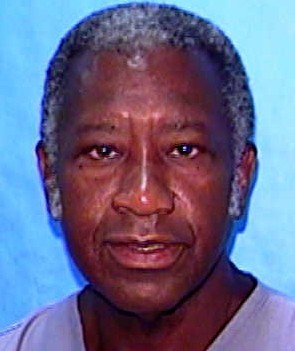 Freddie Lee Williams
Murderer · USA · 1980
Freddie Lee Williams was convicted and sentenced to death for the 11/07/80 murd…
1 victim
Freddie Lee Williams
Murderer · USA · 1980
Freddie Lee Williams was convicted and sentenced to death for the 11/07/80 murd…
1 victim
- Gender
- male
- Country
- USA
- Location
- Richmond, Virginia, USA
- Date of birth
- May 13, 1970
- Age at first offence
- 22
- Characteristics
- —
- Victim profile
- Douglas Talley , Douglas Moody, Louis Johnson, Bobby Long, Anthony Carter, Dorothy Armstrong, Curtis Thorne, and Linwood Chiles (competitors and suspected of treachery or other misfeance)
- Method of murder
- Shooting - St abbing with knife
- Date(s) of murder
- January-February 1992
- Years active
- 1992
- Date of arrest
- —
- Status
-
Sentenced to death
Sentenced to death, 1993
Case record: United States v. Richard Tipton
Background
Richard Tipton, also known as Whittey, was a defendant in federal capital-murder and drug-trafficking proceedings connected with the Richmond-area activities of a drug-trafficking conspiracy.
Tipton, along with James Roane and Cory Johnson, were described as principal “partners” in a substantial drug-trafficking conspiracy that lasted from 1989 through July of 1992. The conspiracy’s operations began in Trenton, New Jersey, where Johnson and Tipton—both from New York City—became members. In August of 1990, the conspiracy expanded its operations to Richmond, Virginia, where Roane joined the conspiracy in November of 1991. The Trenton-based operation ended on June 4, 1991, when police confiscated a large quantity of crack cocaine and firearms. In late 1991, the conspiracy’s operations expanded from the Central Gardens area of Richmond to a second Richmond area called Newtowne.
During the period of the conspiracy’s operation, its “partners,” including the appellants, obtained wholesale quantities of powdered cocaine from suppliers in New York City, converted it by “cooking” into crack cocaine, then packaged it, divided it among themselves, and distributed it through a network of 30-40 street-level dealers, “workers.” Typically, the appellants and other partners took two-thirds of the proceeds realized from street-level sales.
Over a short span in early 1992, Tipton, Cory Johnson, and Roane were implicated in the murders of ten persons within the Richmond area in relation to their drug-trafficking operation, including for reasons such as suspected treachery or other misfeasance, because victims were competitors in the drug trade, or because they had personally offended one of the “partners.”
The appellate proceedings were before the United States Court of Appeals for the Fourth Circuit. The consolidated cases involved multiple defendants:
- United States of America, Plaintiff-Appellee, v. Richard Tipton, a/k/a Whittey, Defendant-Appellant (Two Cases).
- Cory Johnson, a/k/a “O”, a/k/a “CO”, Defendant-Appellant.
- United States of America, Plaintiff-Appellant, v. Richard Tipton; Cory Johnson; James H. Roane, Jr., Defendants-Appellees.
The Fourth Circuit citation provided in the record was “90 F.3d 861.” The case was argued Dec. 7, 1994 and decided July 8, 1996. The opinion was written by Senior Judge PHILLIPS, with Chief Judge WILKINSON and Judge ERVIN joining.
The Fourth Circuit result was described as “Affirmed in part, vacated and remanded in part by published opinion.”
The offence
Drug-trafficking conspiracy and related counts
Following trial on a 33-count indictment, Tipton was convicted of multiple federal crimes arising out of concerted drug-trafficking activities, including capital murder counts and additional drug and enterprise-related counts.
Tipton was convicted of:
- conspiracy to possess cocaine base with the intent to distribute (21 U.S.C. § 846),
- engaging in a continuing criminal enterprise (CCE) (21 U.S.C. § 848(a)),
- eight counts of committing acts of violence (the eight killings charged under 21 U.S.C. § 848(e)) in the aid of racketeering activity (18 U.S.C. § 1959),
- two counts of using a firearm in relation to a crime of violence or a drug-trafficking crime (18 U.S.C. § 924(c)),
- two counts of possessing cocaine base with intent to distribute (21 U.S.C. § 841(a)(1)).
Tipton was charged with capital murder under 21 U.S.C. § 848(e) and 18 U.S.C. § 2 for eight killings:
- Douglas Talley
- Douglas Moody
- Louis Johnson
- Bobby Long
- Anthony Carter
- Torrick Brown
- Linwood Chiles
- Curtis Thorne
The jury convicted Tipton of six of the eight capital murders with which he was charged:
- Douglas Talley
- Dorothy Armstrong
- Bobby Long
- Anthony Carter
- Linwood Chiles
- Curtis Thorne
One of the other two § 848(e) charges was dismissed (Louis Johnson). The other resulted in acquittal (Moody).
Capital-murder killings implicated in the trial evidence
The record described an early 1992 set of killings tied to the drug-trafficking operation. The events involving victims named in the record and the specific participation described in the record included the following episodes relevant to Tipton’s convictions:
- January 4, 1992 — Douglas Talley: Tipton and Roane drove Douglas Talley to the south side of Richmond. Roane grabbed Talley from the rear while Tipton stabbed him repeatedly. The attack lasted three to five minutes and involved the infliction of eighty-four stab wounds to Talley’s head, neck, and upper body that killed him.
- January 13, 1992 — Douglas Moody: Tipton and Roane went to the apartment of Douglas Moody, a suspected rival in their drug-trafficking area. Tipton shot Moody twice in the back. After Moody fled by jumping through a window, both Tipton and Roane pursued. Roane, armed with a military-style knife retrieved from an apartment where the knife was kept for co-conspirator Curtis Thorne, caught up with Moody in the front yard and stabbed him eighteen times, killing him.
- January 14, 1992 — Peyton Johnson: Roane, Cory Johnson, and a third person retrieved a bag of guns they had left at an apartment earlier that day. Roane located Peyton Johnson at a tavern. Shortly after Roane left the tavern, Cory Johnson entered with another person and fatally shot Peyton Johnson with a semi-automatic weapon.
- January 29, 1992 — Louis Johnson: Roane pulled his car around the corner of an alley, got out, approached Louis Johnson, and shot him. Cory Johnson and co-conspirator Lance Thomas got out of Roane’s car and began firing at Louis Johnson. Louis Johnson died from some or all of these gunshot wounds.
- February 1, 1992 — Torrick Brown / Martha McCoy: Cory Johnson and Lance Thomas were told that Roane had gone to Torrick Brown’s apartment. Johnson and Thomas armed themselves with semi-automatic weapons and went to the apartment where they joined Roane outside. The three knocked on Brown’s door and asked Brown’s half-sister, Martha McCoy, if Brown was there. She summoned Brown to the door and Cory Johnson, Roane, and Thomas opened fire with semi-automatic weapons, killing Brown and critically wounding McCoy.
- February 1, 1992 — Dorothy Armstrong / Anthony Carter / Bobby Long: In late January 1992, after being threatened by Cory Johnson for not paying for a supply of crack cocaine, Dorothy Armstrong went to live with her brother, Bobby Long. On February 1, 1992, Cory Johnson learned from Jerry Gaiters the location of Long’s house. Thereafter, Tipton and an unidentified “young fellow” picked up Gaiters and Cory Johnson and were driven by Tipton to a house where the group obtained a bag of guns. After dropping off the unidentified third party, the group proceeded to Long’s house. Cory Johnson and Gaiters approached the house while Tipton waited in the car. When Long opened the door, Cory Johnson opened fire, killing both Dorothy Armstrong and Anthony Carter. Bobby Long fled out the front door but was fatally shot by Cory Johnson in the front yard.
- February 19, 1992 — Linwood Chiles / Curtis Thorne / Greene sisters: In early February 1992, Cory Johnson began to suspect that Linwood Chiles was cooperating with the police. On February 19, 1992, Johnson borrowed Valerie Butler’s automobile and arranged to meet with Chiles. That night, Chiles, Curtis Thorne, and sisters Priscilla and Gwen Greene met Cory Johnson and drove off together in Chiles’s station wagon. Chiles parked the car in an alley, and Tipton soon drove in behind it in another car, got out, and came up alongside the station wagon. With Tipton standing by, Cory Johnson told Chiles to place his head on the steering wheel and then shot Chiles twice at close range. Additional shots were fired, killing Thorne and critically wounding both Greene sisters. The autopsy report indicated that Thorne had been hit by bullets fired from two different directions.
Investigation
The conspiracy was tied to police intervention and firearms and crack cocaine seizures described in the record.
The appellate discussion also described the trial record as containing a large set of issues relating to jury selection, jury instructions, and the capital sentencing process, without altering the underlying conviction facts summarized for Tipton.
Trial
Tipton was tried to a jury on a 33-count indictment charging federal crimes including capital murder arising out of drug-trafficking activities.
After a penalty hearing on the capital murder counts, the jury recommended:
- Cory Johnson be sentenced to death on all seven murders of which he had been convicted.
- Tipton be sentenced to death for three of the six murders of which he was convicted: Talley, Chiles, and Thorne.
- Roane be sentenced to death for one of the three of which he was convicted: Moody.
The district court sentenced Johnson, Tipton, and Roane to death in accordance with the jury’s recommendations and imposed various terms of imprisonment for non-capital counts and for capital murder counts where death was not imposed.
Sentencing
Tipton was sentenced to death for three capital murder counts after the penalty phase in accordance with the jury’s recommendations. The record identified the death-sentenced victims as:
- Douglas Talley
- Linwood Chiles
- Curtis Thorne
In addition, the district court imposed various sentences of imprisonment upon Tipton for non-capital counts of conviction and for capital murder counts on which Tipton was convicted but were not given death sentences.
Execution stay and subsequent order
The district court refused to order execution of the death sentences on grounds that Congress had neither directly authorized the means of execution for death sentences under 21 U.S.C. § 848 nor properly delegated authority to the Attorney General to issue implementing regulations invoked by the Government. The district court therefore stayed execution of the death sentences until such time as Congress authorized the means of execution.
On cross-appeal, the Fourth Circuit vacated the district court’s order staying execution of the death sentences pending Congressional authorization of the means of execution and remanded for entry of appropriate orders for executions in accordance with regulation promulgated by the Attorney General.
The record described that effective on February 18, 1993, the Attorney General had promulgated regulations providing that, for death sentences imposed under § 848(e), execution would occur by intravenous injection of a lethal substance or substances in a quantity sufficient to cause death, codified at 28 C.F.R. § 26.3.
After Congress enacted the Federal Death Penalty Act of 1994, the record stated that legislation created new capital offences and included a general implementation provision in 18 U.S.C. § 3596 authorizing execution of any defendant sentenced to death pursuant to the chapter. It stated that this provision did not by its terms apply to death sentences imposed under § 848(e). The situation was described as continuing as before, with only the Attorney General’s regulations formally authorizing the means of execution for § 848(e) sentences.
Appeals
Tipton, along with Cory Johnson and James Roane, appealed challenging conviction and death sentences. The Government cross-appealed the district court’s stay of execution pending congressional authorization of means of execution.
The Fourth Circuit held that, except for double jeopardy concerns requiring vacatur of convictions for drug conspiracy violations under 21 U.S.C. § 846, it found no error requiring reversal or remand among the assigned issues and therefore affirmed convictions and death sentences in all other respects.
The Fourth Circuit stated:
- It vacated convictions and sentences on “the Count 1 conspiracy count under 21 U.S.C. § 846” and remanded for reasons given in Part III.G of the opinion.
- It vacated the district court’s order staying execution and remanded with instructions to enter appropriate orders for executions in accordance with regulation promulgated by the Attorney General.
Outcome
The Fourth Circuit affirmed in part, vacated and remanded in part. For Richard Tipton specifically:
- The record described affirmance of convictions and death sentences in all other respects.
- The record described vacatur of “their several convictions and sentences on the Count 1 conspiracy count under 21 U.S.C. § 846” for reasons stated in the opinion.
- The record described vacatur of the district court’s order staying executions and remand for appropriate execution orders consistent with the Attorney General’s regulation.
Other details
Victims named in the record
The record listed victims and the capital-murder counts under 21 U.S.C. § 848(e), including the victims charged and those for which Tipton was convicted:
- Douglas Talley
- Douglas Moody
- Peyton Johnson
- Louis Johnson
- Torrick Brown
- Dorothy Armstrong
- Anthony Carter
- Bobby Long
- Linwood Chiles
- Curtis Thorne
The record also included:
- Martha McCoy (critically wounded in the Brown episode)
- Priscilla Greene and Gwen Greene (critically wounded in the Chiles/Thorne episode)
- Valerie Butler (whose automobile was borrowed for the February 19, 1992 meeting arrangement)
- Jerry Gaiters
- Lance Thomas
- Curtis Thorne
- United States of America was described as the Plaintiff-Appellee / Plaintiff-Appellant in portions of the case caption included in the record.

Spotted an error, or have more information about this case?