Cory Johnson
Murderer Brian Kevin Rosenfeld
Murderer · USA · 1985
Brian Kevin Rosenfeld Brian Kevin Rosenfeld was sentenced to three concurrent l…
23 victims
Brian Kevin Rosenfeld
Murderer · USA · 1985
Brian Kevin Rosenfeld Brian Kevin Rosenfeld was sentenced to three concurrent l…
23 victims
 Russell Ellwood
Murderer · USA · 1991
Russell Ellwood was a former taxi driver. Authorities suspected him of killing…
20 victims
Russell Ellwood
Murderer · USA · 1991
Russell Ellwood was a former taxi driver. Authorities suspected him of killing…
20 victims
 Robert Martines Perez
Murderer · USA · 1994
Name: Robert Martines Perez · Other name used in proceedings: Robert Martinez P…
15 victims
Robert Martines Perez
Murderer · USA · 1994
Name: Robert Martines Perez · Other name used in proceedings: Robert Martinez P…
15 victims
 Billy Frank Vickers
Murderer · USA · 1993
Billy Frank Vickers Vickers was executed by lethal injection in Texas on Januar…
14 victims
Billy Frank Vickers
Murderer · USA · 1993
Billy Frank Vickers Vickers was executed by lethal injection in Texas on Januar…
14 victims
 Yuan Baojing
Murderer · China · 2003
Yuan Baojing (simplified Chinese: 袁宝璟; traditional Chinese: 袁寶璟) (1966 – March…
1 victim
Yuan Baojing
Murderer · China · 2003
Yuan Baojing (simplified Chinese: 袁宝璟; traditional Chinese: 袁寶璟) (1966 – March…
1 victim
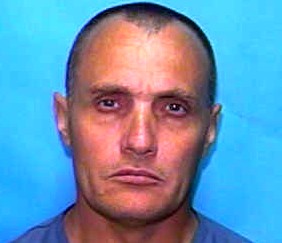 Mario Lara
Murderer · USA · 1981
Mario Lara · July 16, 1981 — A Miami police officer was dispatched to meet Fran…
2 victims
Mario Lara
Murderer · USA · 1981
Mario Lara · July 16, 1981 — A Miami police officer was dispatched to meet Fran…
2 victims
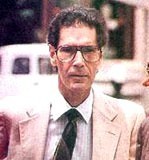 Robert Lee Bennett
??? · USA · 1968
Robert Lee Bennett Jr. operated in Atlanta, Georgia and Tampa, Florida for deca…
0 victims
Robert Lee Bennett
??? · USA · 1968
Robert Lee Bennett Jr. operated in Atlanta, Georgia and Tampa, Florida for deca…
0 victims
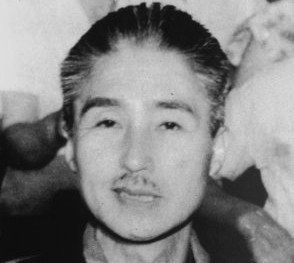 Sadamichi Hirasawa
Mass murderer · Japan · 1948
Sadamichi Hirasawa was a Japanese painter. He was also known as a tempera paint…
12 victims
Sadamichi Hirasawa
Mass murderer · Japan · 1948
Sadamichi Hirasawa was a Japanese painter. He was also known as a tempera paint…
12 victims
- Gender
- male
- Country
- USA
- Location
- Richmond, Virginia, USA
- Date of birth
- November 5, 1968
- Age at first offence
- 24
- Characteristics
- —
- Victim profile
- Louis Johnson, Bobby Long, Anthony Carter, Dorothy Armstrong, Curtis Thorne, Linwood Chiles, and Peyton Johnson (competitors and suspected of treachery or other misfeance)
- Method of murder
- Shooting - St abbing with knife
- Date(s) of murder
- January-February 1992
- Years active
- 1992
- Date of arrest
- —
- Status
-
Sentenced to death
Sentenced to death, 1993
Background
Cory Johnson was convicted in February 1993 in the Eastern District of Virginia for an array of criminal activity, including several capital murders, arising out of drug-trafficking operations in and near Richmond. He was sentenced to death for his crimes and received various terms of imprisonment for non-capital counts on which he was convicted.
Johnson and Richard Tipton, both from New York City, became members of a substantial drug-trafficking conspiracy that began in Trenton, New Jersey. The conspiracy lasted from 1989 through July of 1992. In August of 1990, the conspiracy expanded its operations to Richmond, Virginia, where James Roane joined the conspiracy in November of 1991. The Trenton-based operation came to an end on June 4, 1991 when police confiscated a large quantity of crack cocaine and firearms. In late 1991, the conspiracy’s operations expanded from the Central Gardens area of Richmond to a second area in Richmond called Newtowne.
During the period of the conspiracy, its “partners” obtained wholesale quantities of powdered cocaine from suppliers in New York City, converted it by “cooking” it into crack cocaine, packaged it, divided it among themselves, and distributed it through a network of 30-40 street level dealers, “workers.” Typically, the appellants and their other partners took two-thirds of the proceeds realized from street-level sales.
The offence
Johnson and the other “partners” were implicated in murders of ten persons within the Richmond area in early 1992. The killings were connected to the drug-trafficking operation and were described as occurring because victims were suspected of treachery or other misfeasance, because victims were competitors in the drug trade, or because victims had personally offended a “partner.”
January 4, 1992 — Douglas Talley
On January 4, 1992, Tipton and Roane drove Douglas Talley to the south side of Richmond. Roane grabbed Talley from the rear while Tipton stabbed him repeatedly. The attack lasted three to five minutes and involved the infliction of eighty-four stab wounds to Talley’s head, neck, and upper body that killed him.
January 13, 1992 — Douglas Moody
On the evening of January 13, 1992, Tipton and Roane went to the apartment of Douglas Moody. Tipton shot Moody twice in the back. After Moody fled by jumping through a window, Tipton and Roane pursued. Roane, armed with a military-style knife retrieved from an apartment where the knife was kept for co-conspirator Curtis Thorne, caught up with Moody in the front yard and stabbed him eighteen times, killing him.
January 14, 1992 — Peyton Johnson
On the night of January 14, 1992, Roane, Cory Johnson, and a third person retrieved a bag of guns left at an apartment earlier that day. Roane located Peyton Johnson, another rival drug dealer, at a tavern. Shortly after Roane left the tavern, Cory Johnson entered with another person and fatally shot Peyton Johnson with a semi-automatic weapon.
January 29, 1992 — Louis Johnson
On January 29, 1992, Roane pulled his car around the corner of an alley, got out of the vehicle, approached Louis Johnson whom Johnson thought had threatened him while acting as bodyguard for a rival dealer, and shot him. Cory Johnson and co-conspirator Lance Thomas then got out of Roane’s car and began firing at Louis Johnson. As Louis Johnson lay on the ground, either Cory Johnson or Thomas shot him twice at close range. Louis Johnson died from some or all of these gunshot wounds.
February 1, 1992 — Torrick Brown and Martha McCoy
On the evening of February 1, 1992, Cory Johnson and Lance Thomas were told that Roane had gone to the apartment of Torrick Brown. Johnson and Thomas armed themselves with semi-automatic weapons and went to the apartment where they joined Roane outside. The three knocked on Brown’s door and asked his half-sister, Martha McCoy, if Brown was there. McCoy summoned Brown to the door, and Cory Johnson, Roane, and Thomas opened fire with semi-automatic weapons, killing Brown and critically wounding McCoy.
Late January to February 1, 1992 — Dorothy Armstrong, Anthony Carter, and Bobby Long
In late January 1992, after being threatened by Cory Johnson for not paying for a supply of crack cocaine, Dorothy Armstrong went to live with her brother, Bobby Long. On February 1, 1992, Cory Johnson learned from Jerry Gaiters the location of Long’s house. Tipton and an unidentified “young fellow” picked up Gaiters and Cory Johnson. Tipton then drove the group to a house where they obtained a bag of guns. After dropping off the unidentified third party, the group proceeded to Long’s house. Cory Johnson and Gaiters approached the house while Tipton waited in the car. When Long opened the door, Cory Johnson opened fire, killing both Dorothy Armstrong and Anthony Carter. Bobby Long fled out the front door, but was fatally shot by Cory Johnson in the front yard.
February 19, 1992 — Linwood Chiles, Curtis Thorne, Priscilla Greene, and Gwen Greene
In early February 1992, Cory Johnson began to suspect that Linwood Chiles was cooperating with the police. On February 19, 1992, Johnson borrowed Valerie Butler’s automobile and arranged to meet with Chiles. That night, Chiles, Curtis Thorne, and sisters Priscilla and Gwen Greene met Cory Johnson and drove off together in Chiles’s station wagon. Chiles parked the car in an alley, and Tipton soon drove in behind it in another car, got out, and came up alongside the station wagon. With Tipton standing by, Cory Johnson told Chiles to place his head on the steering wheel and then shot Chiles twice at close range. Additional shots were fired, killing Thorne and critically wounding both Greene sisters. The autopsy report indicated that Thorne had been hit by bullets fired from two different directions.
Capital-murder allegations and group roles
Tipton was charged with capital murder for eight of the killings: Talley, Moody, Louis Johnson, Long, Carter, Armstrong, Thorne, and Chiles. Cory Johnson was charged with seven: Louis Johnson, Long, Carter, Armstrong, Thorne, Chiles, and Peyton Johnson. Roane was charged with three: Moody, Louis Johnson, and Peyton Johnson.
Investigation
Police confiscated a large quantity of crack cocaine and firearms on June 4, 1991, ending the Trenton-based operation of the conspiracy.
Trial
Capital murder convictions
The jury convicted Tipton of six of the eight capital murders charged under 21 U.S.C. § 848(e): Talley, Armstrong, Long, Carter, Chiles, and Thorne. One of the other two charges was dismissed (Louis Johnson), and the other resulted in acquittal (Moody).
The jury convicted Cory Johnson of all seven capital murders with which he was charged under 21 U.S.C. § 848(e): Louis Johnson, Long, Carter, Armstrong, Thorne, Chiles, and Peyton Johnson.
The jury convicted Roane of all three of the capital murders with which he was charged under 21 U.S.C. § 848(e): Moody, Peyton Johnson, and Louis Johnson.
Other convictions
Tipton was also convicted of conspiracy to possess cocaine base with the intent to distribute, engaging in a continuing criminal enterprise (“CCE”), eight counts of committing acts of violence in the aid of racketeering activity (the eight killings charged under § 848(e)), two counts of using a firearm in relation to a crime of violence or a drug-trafficking crime, and two counts of possessing cocaine base with intent to distribute.
Cory Johnson was also convicted of conspiracy to possess cocaine base with the intent to distribute, engaging in a CCE, eleven counts of committing acts of violence including the seven killings charged under § 848(e) in aid of racketeering activity, five counts of using a firearm in relation to a crime of violence or drug-trafficking offense, and two counts of possession of cocaine base with intent to distribute.
Roane was also convicted of conspiracy to possess cocaine base with the intent to distribute, engaging in a CCE, five counts of committing acts of violence including the three killings charged under § 848(e) in aid of racketeering activity, four counts of using a firearm in relation to a crime of violence or a drug-trafficking offense, and one count of possession of cocaine base with intent to distribute.
Penalty hearing recommendation
Following a penalty hearing on the capital murder counts, the jury recommended that Cory Johnson be sentenced to death on all of the seven murders of which he was convicted.
Sentencing
The district court sentenced Johnson, Tipton, and Roane to death in accordance with the jury’s recommendations pursuant to 21 U.S.C. § 848(l), and imposed various sentences of imprisonment upon each of the appellants for non-capital counts and for capital murder counts on which Tipton and Roane were convicted but were not given death sentences.
After the district court refused to order execution of the death sentences, it stayed execution until Congress had authorized the means of execution. When the defendants initially appealed, the Government cross-appealed the stay.
After the appellate proceedings under United States v. Tipton, the death sentences proceeded in accordance with regulations promulgated by the Attorney General.
Appeals
The case proceeded to direct appeals and later habeas corpus proceedings under 28 U.S.C. § 2255. The Eastern District of Virginia awarded summary judgment to the Government except for two claims raised by Roane; following discovery and an evidentiary hearing on Roane’s remaining claims, relief was granted on Roane’s Sixth Amendment ineffective assistance of counsel claim vacating Roane’s convictions and sentences relating to the murder of Douglas Moody. Roane’s claim of actual innocence of the Moody murder was denied. The Fourth Circuit later consolidated four separate appeals, including the Government’s appeal and cross-appeals, and Johnson and Tipton’s appeals.
Ineffective assistance of counsel (Roane) and district court vacatur reversed
In the Fourth Circuit decision decided August 9, 2004, the appellate court affirmed the rulings in favor of the Government in Nos. 03-25, 03-26, and 03-27 and reversed the award of relief to Roane in No. 03-13. The appellate decision reversed the vacatur of Roane’s convictions and sentences on Counts Five, Six, and Seven, concluding that Roane’s counsel was not constitutionally ineffective in investigating Roane’s potential alibi for the Moody murder.
Claims assessed against Johnson and Tipton
The Fourth Circuit decision addressed multiple issues raised by Johnson and Tipton in their § 2255 appeals, including:
- Challenges involving the jury-selection process and failure to object to peremptory challenges.
- Claims relating to their § 848 CCE convictions, including unanimity instructions and ineffective assistance claims tied to those issues.
- Claims of prosecutorial misconduct, including alleged perjured testimony and alleged Brady violations regarding certain witnesses.
- Challenges to the conduct of the habeas corpus proceedings, including standards for discovery and denial of requests to interview jurors.
- Additional ineffective assistance of counsel claims, including alleged failures to further investigate alleged gang activities, failure to present mitigating evidence regarding prison conditions, and various defense and mitigation-related claims.
- Johnson’s Eighth Amendment claim that he was mentally retarded and could not constitutionally be executed, and ineffective assistance claims related to that issue.
Other details
Victims listed
The case record listed victims including Douglas Talley, Douglas Moody, Peyton Johnson, Louis Johnson, Torrick Brown, Dorothy Armstrong, Anthony Carter, Bobby Long, Linwood Chiles, Curtis Thorne, and the Greene sisters Priscilla and Gwen Greene.
Notable evidentiary findings in Roane’s Moody-murder ineffective assistance litigation
During Roane’s habeas corpus litigation, the district court made findings of fact regarding trial representation and evidence implicating Roane in the Moody murder. It found testimony from Denise Berkley, Pepsi Greene, and Robert Davis credible, corroborated by physical evidence including the autopsy and crime scene video, and described Greene’s testimony as “particularly compelling.” It also addressed testimony from Gina Taylor that Roane was not involved, finding aspects of that evidence undermined. It further assessed an alibi involving Howard Johnson hotel records, testimony about Roane’s presence at the hotel, and the adequacy of trial counsel’s investigation.
The Fourth Circuit later reversed the district court’s vacatur, stating that Roane’s counsel’s performance was constitutionally reasonable and thorough, including steps taken to investigate potential alibi support.
Mentally retarded execution claim (Johnson)
In addressing Johnson’s claim that he was mentally retarded and could not constitutionally be executed, the appellate court referenced federal law barring carrying out a death sentence on a mentally retarded person. It described district court findings and trial evidence, including testimony by Dr. Dewey Cornell and a WAIS test administered on October 10, 1992 showing an IQ of 77, with discussion of Johnson’s arguments about IQ score inflation and earlier evidence offered during the penalty phase.
Procedural posture and appellate judgment
The Fourth Circuit decision concluded: “AFFIRMED IN PART AND REVERSED IN PART.”
Spotted an error, or have more information about this case?