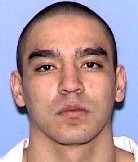
Robert Gene Garza
Mass murderer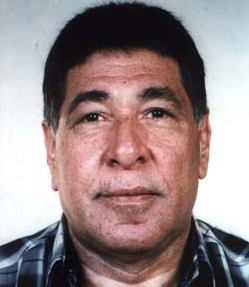 Gameel Al-Batouti
Mass murderer · USA · 1999
Gameel Al-Batouti (also rendered “Gamil ElBatouty” or “El Batouty” in U.S. offi…
216 victims
Gameel Al-Batouti
Mass murderer · USA · 1999
Gameel Al-Batouti (also rendered “Gamil ElBatouty” or “El Batouty” in U.S. offi…
216 victims
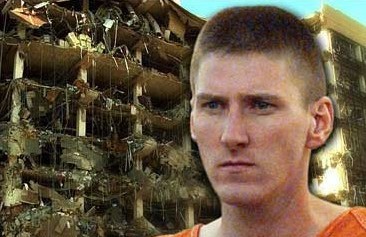 Timothy McVeigh
Mass murderer · USA · 1995
Timothy James McVeigh (April 23, 1968 – June 11, 2001) was a United States Army…
168 victims
Timothy McVeigh
Mass murderer · USA · 1995
Timothy James McVeigh (April 23, 1968 – June 11, 2001) was a United States Army…
168 victims
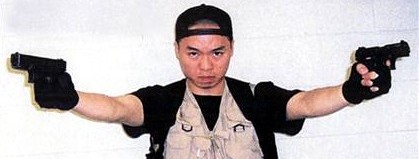 Seung-Hui Cho
Mass murderer · USA · 2007
Seung-Hui Cho was a mass murderer who shot and killed 32 people and wounded man…
32 victims
Seung-Hui Cho
Mass murderer · USA · 2007
Seung-Hui Cho was a mass murderer who shot and killed 32 people and wounded man…
32 victims
 Adam Lanza
Mass murderer · USA · 2012
Adam Lanza, 20, fatally shot twenty children and six adult staff members in a m…
27 victims
Adam Lanza
Mass murderer · USA · 2012
Adam Lanza, 20, fatally shot twenty children and six adult staff members in a m…
27 victims
 Eric Harris
Mass murderer · USA · 1999
Eric Harris committed suicide by gunshot to the roof of the mouth on April 20,…
13 victims
Eric Harris
Mass murderer · USA · 1999
Eric Harris committed suicide by gunshot to the roof of the mouth on April 20,…
13 victims
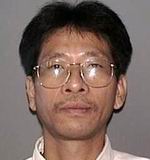 Jiverly Wong
Mass murderer · USA · 2009
December 8, 1967 — Jiverly Antares Wong was born. · late 1980s — Wong first cam…
13 victims
Jiverly Wong
Mass murderer · USA · 2009
December 8, 1967 — Jiverly Antares Wong was born. · late 1980s — Wong first cam…
13 victims
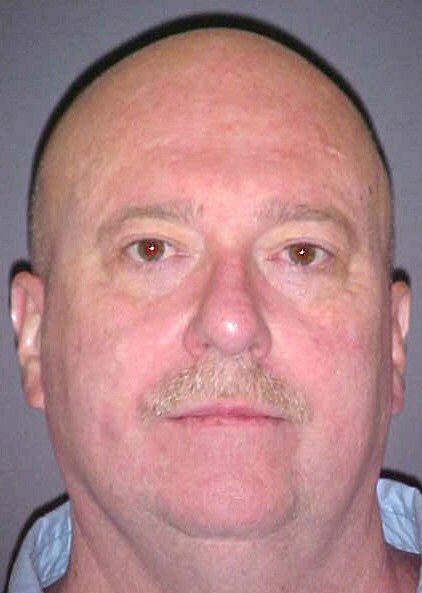 Jimmie Ray Slaughter
Murderer · USA · 1991
Jimmie Ray Slaughter was executed by lethal injection in Oklahoma on March 15,…
2 victims
Jimmie Ray Slaughter
Murderer · USA · 1991
Jimmie Ray Slaughter was executed by lethal injection in Oklahoma on March 15,…
2 victims
 Jessie Joe Patrick
Murderer · USA · 1989
Jessie Joe Patrick was convicted of capital murder and was executed by lethal i…
1 victim
Jessie Joe Patrick
Murderer · USA · 1989
Jessie Joe Patrick was convicted of capital murder and was executed by lethal i…
1 victim
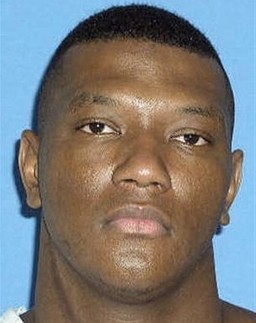 Ronald Ray Howard
Murderer · USA · 1992
Ronald Ray Howard faced execution in Texas for the murder of Department of Publ…
1 victim
Ronald Ray Howard
Murderer · USA · 1992
Ronald Ray Howard faced execution in Texas for the murder of Department of Publ…
1 victim
 Mary Jane Fonder
Murderer · USA · 2008
Mary Jane Fonder (born July 5, 1942) was an American criminal who murdered Rhon…
1 victim
Mary Jane Fonder
Murderer · USA · 2008
Mary Jane Fonder (born July 5, 1942) was an American criminal who murdered Rhon…
1 victim
 Arthur Hans Halvorsen
Murderer · USA · 1985
March 31, 1985 — Arthur Hans Halvorsen drank at a bar during the afternoon; he…
2 victims
Arthur Hans Halvorsen
Murderer · USA · 1985
March 31, 1985 — Arthur Hans Halvorsen drank at a bar during the afternoon; he…
2 victims
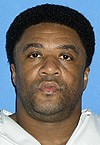 Lonnie Earl Johnson
Murderer · USA · 1990
Lonnie Earl Johnson was executed by lethal injection in Texas on July 24, 2007.…
2 victims
Lonnie Earl Johnson
Murderer · USA · 1990
Lonnie Earl Johnson was executed by lethal injection in Texas on July 24, 2007.…
2 victims
- Gender
- male
- Country
- USA
- Location
- Harris County, Texas, USA
- Date of birth
- May 15, 1982
- Age at first offence
- 20
- Characteristics
- drugs, robbery
- Victim profile
- Maria De La Luz Bazaldua Cobarrubias, Danitzene Lizeth Vasquez Beltran, Celina Linares Sanchez, Lourdes Yesenia Araujo Torres / Jimmy Edward Almendariz, 22; brothers Jerry Eugene Hidalgo, 24, and Ray Hidalgo, 30; half brothers Juan Delgado Jr., 32, and Juan Delgado III, 20; and Ruben Rolando Castillo, 32 (rival gang members)
- Method of murder
- Shooting
- Date(s) of murder
- September 5, 2002 / January 5, 2003
- Years active
- 2002–2003
- Date of arrest
- January 26, 2003
- Status
-
Executed
Executed by lethal injection in Texas on September 19, 2013
Case overview
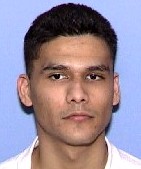
Robert Gene Garza (male; Hispanic; black hair; brown eyes; height 05'07"; weight 147) was a member of the Tri-City Bombers gang in Texas. He was sentenced to death and was executed by lethal injection in Texas on September 19, 2013.
Timeline
- 05/15/1982 — Robert Gene Garza was born (TDCJ number 999466).
- 09/05/2002 — Garza committed the shootings in Hidalgo County, Texas, that killed four Hispanic females by firing into their car.
- 12/18/2003 — Garza was sentenced to death.
- 12/17/2003 — Judgment was entered.
- 01/31/2007 — The Texas Court of Criminal Appeals affirmed the conviction and sentence of death for capital murder, but vacated the death sentence for engaging in organized criminal activity and remanded for resentencing.
- 09/10/2008 — The Texas Court of Criminal Appeals denied Garza’s application for state habeas relief.
- 09/15/2011 — The federal district court for the Southern District of Texas denied Garza’s petition for federal writ of habeas corpus.
- 08/27/2012 — The U.S. Court of Appeals for the Fifth Circuit denied Garza’s request for certificate of appealability.
- 02/19/2013 — The U.S. Supreme Court rejected Garza’s appeal when it denied his petition for a writ of certiorari off federal habeas.
- 09/19/2013 — Garza was executed by lethal injection in Texas.
Background
Garza was received into custody for the case on 12/18/2003 at age 20. He completed grade 08.
Garza was from Hidalgo County, Texas and had worked as a laborer. He had prior prison record #1090018 on a 2 year sentence from Hidalgo County for escape.
During the penalty phase of Garza’s trial, the jury heard information that Garza had:
- been ordered to the Hidalgo County Youth Village in February 1997,
- been ordered into the custody of the Texas Youth Commission for burglary of a habitation later that year, and
- been sent to the Texas Department of Correction (TDC) in February 2002 for escape.
Several Hidalgo County Sheriff’s Department employees testified about Garza’s attempted escape from county jail in April 2003.
The offence
Victims and fatal shooting
In Hidalgo County, Texas, Garza and co-defendants killed four Hispanic females by firing into their car.
The murders involved the victims:
- Maria De La Luz Bazaldua Cobbarubias
- Dantizene Lizeth Vasquez Beltran
- Celina Linares Sanchez
- Lourdes Yesenia Araujo Torres
The prosecution also addressed additional women at the bar and shooting site:
- Karla Espino Ramos (survived gunshot wounds to her arm and leg)
- Magda Torres Vasquez (was not physically injured; hid until the next day)
- Nora Rodriguez (manager of Garcia’s Bar; not related to J.C. Rodriguez)
The Texas Court of Criminal Appeals described the event in this way: the victims had been working at Garcia’s Bar in Donna, Texas and left near midnight. After Maria De La Luz Bazaldua Cobbarubias parked near the women’s trailer on Valley View Road, gunfire erupted. Witnesses saw two men wearing black repeatedly fire into the vehicle. Police recovered sixty-one spent shell cases. All but one of the women suffered gunshot wounds; four died: Cobbarubias, Beltran, Sanchez, and Torres. After riddling the victims’ car with bullets, the men got into the vehicle that had followed the women and sped away. The gunmen abandoned their vehicle a few miles away after it had run out of gas.
Capital murder counts and criminal street gang element
Garza was indicted for two capital felonies:
- Count one: knowingly or intentionally causing the deaths of Celina Linares Sanchez, Lourdes Yesenia Araujo Torres, Danitzene Lizeth Vasquez Beltran, and Maria De La Luz Bazaldua Cobbarubias by shooting them with a firearm during the same criminal transaction.
- Count four: knowingly or intentionally causing the death of the same four individuals by shooting them with a firearm during the same criminal transaction as a member of a criminal street gang.
The charge authorized conviction if the jury found that Garza either:
- shot the victims with a firearm, or
- acted with intent to promote or assist Mark Anthony Reyna, Guadalupe Guerra, and Ricardo Martinez in committing capital murder and did then and there solicit, encourage, direct, aid or attempt to aid Reyna, Guerra, and Martinez.
Investigation
Investigators recovered sixty-one spent bullet casings from the trailer park. The casings were of two different sizes: 9 millimeter and 7.76 x 39 millimeter.
Investigators impounded a white Chevrolet Blazer a few miles from the trailer park. The vehicle had paper plates, had no hubcaps, and had been reported stolen a few days earlier. A red bandana with white markings was recovered from the vehicle.
Witness testimony described two men wearing black:
- Juan Antonio Quintero testified he saw two people; the short person was holding a gun that “looked like a TEC-9,” and he thought one resembled Vasquez’s boyfriend, Jesse Munoz.
- Carlos Villarreal testified he saw two people; one between 5'10'' and 5'11'' and 160 pounds, and the other 5'8'' and 250 pounds.
The State introduced a booking sheet showing Garza was 5'11'' and 160 pounds.
The investigation pursued other tips and suspects, including:
- Abraham Martinez Tienda
- Juan Rudolfo Barrones
- Antonio Francisco Conteras
Investigators investigated Tienda, Barrones, and Conteras but found no evidence linking them to the shooting. The investigation also pursued tips received from the Crime Stoppers program but did not lead anywhere.
In January 2003, Abraham Osequera and Marco Antonio Mendez told investigators they believed TriCity Bombers (T.C.B.) members could be involved, including information pointing toward Jesus Carlos Rodriguez and Mark Anthony Reyna. J.A. Quintero and his aunt, Mercedes Quintero, also implicated the T.C.B. Additional T.C.B. members emerged as possible suspects including Garza, Rudolfo Medrano, Guadalupe Guerra, and Ricardo Martinez.
Arrest and statements
On 01/26/2003, Garza was taken to the Hidalgo County Sheriff’s Office. After receiving Miranda warnings and signing a waiver, Garza gave a statement describing his involvement in a “hit” that “resulted in the death of four Donna [wo]mans.”
In the statement, Garza explained the “hit was organized for us,” that someone left a four-door “Cutlas[s] or Regal” at Plaza Mall for use in the “hit,” and that he later received instructions that the “hit was to be carried out that day.”
Garza stated that at approximately 7:00 p.m., Martinez picked up Garza and Reyna in a four-door vehicle. Garza saw that Martinez had an AK-47, a TEC-9, and a nine-millimeter handgun in the trunk. They picked up a fourth person (“Manny”) and drove around Donna, then left Donna to pick up a “second vehicle” that had been stolen. Garza and Reyna got into the second vehicle and waited until they saw the vehicles coming, followed them to “a big house” or an “apartment complex.” Garza said Martinez and Manny got out and started shooting, that Manny “shot as he ran” and Martinez shot “as he [stood],” and that after the shooting they left and abandoned the four-door vehicle “in the middle of no[w]here.” Garza stated they left the weapons in the trash for later retrieval. He also stated: “A[p]parently Rocha was mad 'cause it wasn't done right.”
Garza later insisted the statement acknowledging participation was made under duress and improperly obtained.
Garza wrote and amended the statement. The record included this amended statement (admitted at the pre-trial hearing):
I am adding this to the statement just to make it clear that I did not com[mit] this crime. I only wrote what investigators told me, to get things I wanted. I wrote this statement to get a visit with my wife Jennifer M. Garza in person (contact visit). I got a meal, and I was in the hole like everybody else who got arrested with me on 1-24-03. But I wrote what they told me to write so they could also move me out of the hole to regular population. But I just want to make it clear I don't know nothing about the murders. I only write what investigators told me for my be[n]efits, in exchange. Now I know the [serious]sness of the whole situation and know that it was wrong to write what they told me to get these things that are not a[l]lowed in the jail.
In the pre-trial motion to suppress, Garza argued his statement was involuntary due to promises:
- he would be allowed to make telephone calls,
- he would be allowed a private contact visit with his pregnant wife, and
- he would be released from “the hole” to the general population.
At the motion to suppress hearing, Investigator Juan Sifuentes testified that he read Garza his rights, that Garza indicated he understood and signed a written waiver form, and that Sifuentes stated “No” when asked whether he promised telephone calls or a private contact visit in exchange for the statement. Sifuentes also testified he answered “No, huh-uh. That's - that's detention, and we don't have anything to do with that” regarding promises to move Garza from “the hole.”
Trial
Evidence about gang affiliation and tattoos
The jury heard testimony that the Tri-C.B. was a highly organized criminal street gang connected with murder, robbery, assault, burglary, and theft. Members identified themselves with red and black, often carried red bandannas, drove red cars, and wore red t-shirts. They used a hand symbol and tattoos for affiliation.
Detective Roberto Alvarez testified that photographs depicting Garza wearing red shirts and making the T.C.B. hand symbol confirmed gang affiliation, and that photographs of Garza’s tattoos showed:
- “Tri City Bomber” and the initials “T.C.B.” on his chest,
- “tri” and “city” and a bomb with a fuse on his right shoulder blade,
- “T.C.B.” on his right leg,
- the nickname “bones” and a skull on his right arm,
- and a small bomb on his left arm.
Over counsel’s objection, Garza was required to take off his shirt and display his tattoos to the jury.
Forensic evidence tying firearms
Firearms specialist Timothy Counce testified that a TEC-9 gun seized at Medrano’s grandparents’ house fired eighteen of the nine-millimeter cartridge casings found at the scene. Counce also testified he could not identify or eliminate three Chinese-manufactured SKS military assault rifles seized at Nicholas Montez’s residence as having fired the 7.76 x 39 millimeter casings; he stated the SKS rifles could appear to be AK-47 rifles to the untrained eye.
Victims’ workplace and ride
The Texas Court of Criminal Appeals described that on the evening of September 4, 2002, Maria De La Luz Bazaldua Cobbarubias worked at Garcia’s Bar as a barmaid and had left her job. She offered to give five coworkers a ride to the mobile home where they lived. Nora Rodriguez remained behind to close the bar.
Sentencing
A Hidalgo County jury found Garza guilty of capital murder. After the jury recommended capital punishment, the trial court sentenced Garza to death for each capital murder count. Judgment was entered Dec. 17, 2003.
The Texas Court of Criminal Appeals later:
- affirmed Garza’s conviction and death sentence for capital murder, and
- vacated the death sentence for engaging in organized criminal activity under Section 71.02 and remanded for resentencing.
Appeals
Texas Court of Criminal Appeals
Garza’s direct appeal was automatic. The Texas Court of Criminal Appeals affirmed the judgment of the trial court with respect to the conviction for capital murder and vacated the death sentence for organized criminal activity.
The court addressed Garza’s points of error:
- The evidence was factually sufficient to support the jury’s finding of guilt.
- The trial court did not err in denying Garza’s pre-trial motion to suppress his statement.
- Requiring Garza to display his tattoos did not violate the Fifth Amendment.
- Claims of ineffective assistance of counsel were overruled.
The court also addressed unassigned error regarding the propriety of the second death penalty for organized criminal activity under Section 71.02 and held capital punishment was not available under those circumstances for the organized criminal activity conviction. The court concluded the trial court erred to sentence Garza to death for organized criminal activity, affirmed conviction for capital murder and its death sentence, but vacated the death sentence for organized criminal activity and remanded for re-sentencing as a first-degree felony.
The Texas Court of Criminal Appeals delivered the opinion on January 31, 2007.
Federal habeas proceedings
In the U.S. Court of Appeals for the Fifth Circuit, Garza sought a certificate of appealability regarding claims his trial counsel rendered ineffective assistance.
On August 27, 2012, the U.S. Court of Appeals for the Fifth Circuit denied Garza’s request for a certificate of appealability.
On February 19, 2013, the U.S. Supreme Court rejected Garza’s appeal by denying his petition for a writ of certiorari off federal habeas.
Outcome
Garza’s legal outcome remained death by lethal injection. He was executed by lethal injection in Texas on September 19, 2013.
At execution, he smiled and blew a kiss to friends and relatives as they entered the death chamber. In a brief final statement, he thanked them for coming and told them he loved them, saying:
I know it's hard for you,
"It's not easy. This is a release. Y'all finally get to move on with your lives."
He took several deep breaths as a lethal dose of pentobarbital began flowing into his arms, began snoring, and movement stopped within less than a minute. He was pronounced dead 26 minutes later, at 8:41 p.m. CDT.
In earlier last-day appeals described in connection with the execution process, he filed his own last-day appeals to the high court, delaying his punishment by some two hours until the justices ruled.
Aftermath
Garza was described as the 12th condemned inmate executed in Texas that year.
Co-defendants listed in connection with the case included:
- M. Reyna
- G. Guerra
- R. Medrano
- A. Medrano
- J. Cordova
- J. Juarez
- M. Bocanegra
- S. Solis
- J. Martinez
- J. Ramirez
- H. Garza
- R. Saucedo
- R. Cantu
Other details
Names and identifiers
- Name: Robert Gene Garza
- TDCJ Number: 999466
- Date of Birth: 05/15/1982
- Age at offense: 20
- Date received: 12/18/2003
Court involvement and scheduling statements
A Media Advisory described Garza as scheduled for execution after 6 p.m. on September 19, 2012, and noted: “Robert Gene Garza scheduled for execution September 17, 2013” (as stated in the advisory material).
Statements about innocence and involvement
Garza insisted his police statement acknowledging participation was made under duress and improperly obtained. In statements described around death row, Garza said:
"I really didn't have anything to do with the scenario the state was providing," Garza told The Associated Press recently from death row.
He also said:
"I guess since we are gang members, they got me involved through the gang.
"I think they were just trying to close his case ... and they needed somebody."
In another statement, Garza said:
“My wife and son just left; they had come to visit me a little while ago,” Garza said.
He also said:
“Here I am talking about what I want her to do with my body after I die. It’s hard talking to her about it while my son is right there, and I know I won’t be able to be there for him.”
He stated:
“If I could go back and do it over, that is one aspect of my life that I would change,” Garza said.
He stated:
“I want to live.”
In statements about the Donna killings and the Edinburg massacre, Garza said:
“I didn’t kill anybody. I am here because of the actions of others,” Garza said.
“It was never proven that I fired a gun. I am here because someone gave them my name and it fit into the theory that the state presented, but it wasn’t true. I was convicted because I am a gang member.”
He also said:
“I would like to offer an apology, not because I did it but because this whole crime was senseless,” Garza said.
“Those women did not deserve to die like that in a senseless fashion.
“I would hope that the family forgives me because hate is a poison,” he said.
“If you keep it, it will eat you up from the inside.”
He asked in connection with clemency:
“What can be gained from my death, to protect society?” Garza asked.
“I have been here 10 years and haven’t hurt anyone. ... I feel that I can help reach those teens out there that look up to me and tell them that it’s not worth it. “I want to live.”
Spotted an error, or have more information about this case?