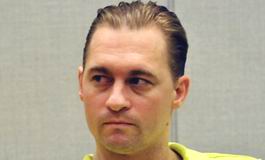
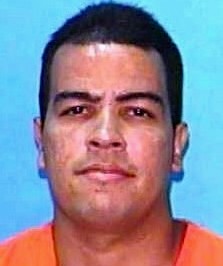
Leonard Gonzalez Jr.
Murderer Joshua Wayne Andrews
Murderer · USA · 2000
Joshua Wayne Andrews was a serial killer accused of killing several people in V…
5 victims
Joshua Wayne Andrews
Murderer · USA · 2000
Joshua Wayne Andrews was a serial killer accused of killing several people in V…
5 victims
 Leon Davis Jr.
Murderer · USA · 2007
Leon Davis Jr. was sentenced to death on April 29, 2011, for the execution-styl…
5 victims
Leon Davis Jr.
Murderer · USA · 2007
Leon Davis Jr. was sentenced to death on April 29, 2011, for the execution-styl…
5 victims
 Raymond Lee Oyler
Murderer · USA · 2006
Raymond Lee Oyler was convicted for starting the 2006 Esperanza fire in Riversi…
5 victims
Raymond Lee Oyler
Murderer · USA · 2006
Raymond Lee Oyler was convicted for starting the 2006 Esperanza fire in Riversi…
5 victims
 Terry Lee Hankins
Murderer · USA · 2000
Terry Lee Hankins was convicted by a jury of capital murder and was sentenced t…
5 victims
Terry Lee Hankins
Murderer · USA · 2000
Terry Lee Hankins was convicted by a jury of capital murder and was sentenced t…
5 victims
 Anthony Garcia
Murderer · USA · 2008
Anthony Garcia was a former doctor who was found guilty on all counts including…
4 victims
Anthony Garcia
Murderer · USA · 2008
Anthony Garcia was a former doctor who was found guilty on all counts including…
4 victims
 Jose Ignacio Monterrubio
Homicide · USA · 1993
Jose Ignacio Monterrubio was 17 years old when he and his older cousin Sixto Mo…
1 victim
Jose Ignacio Monterrubio
Homicide · USA · 1993
Jose Ignacio Monterrubio was 17 years old when he and his older cousin Sixto Mo…
1 victim
 Tommy Lee Waldrip
Murderer · USA · 1991
Tommy Lee Waldrip (51) was sentenced to death on November 4, 1994. Keith Lloyd…
1 victim
Tommy Lee Waldrip
Murderer · USA · 1991
Tommy Lee Waldrip (51) was sentenced to death on November 4, 1994. Keith Lloyd…
1 victim
 Robert Sartin
Homicide · United Kingdom · 1989
Robert Sartin was found to be unfit to stand trial and was being held in Moss S…
1 victim
Robert Sartin
Homicide · United Kingdom · 1989
Robert Sartin was found to be unfit to stand trial and was being held in Moss S…
1 victim
 Albert Milsom
Murderer · United Kingdom · 1896
Albert Milsom (33) was executed by hanging at Newgate Prison on June 9, 1896. ·…
1 victim
Albert Milsom
Murderer · United Kingdom · 1896
Albert Milsom (33) was executed by hanging at Newgate Prison on June 9, 1896. ·…
1 victim
- Gender
- male
- Country
- USA
- Location
- Beulah, Escambia County, Florida, USA
- Date of birth
- January 31, 1974
- Age at first offence
- 35
- Characteristics
- robbery, kidnapping, drug dealer
- Victim profile
- Byrd Billings, 66, and his wife, Melanie, 43
- Method of murder
- Shooting
- Date(s) of murder
- July 9, 2009
- Years active
- 2009
- Date of arrest
- July 12, 2009
- Status
-
Sentenced to death
Sentenced to death on February 17, 2011
Case overview
Leonard Patrick Gonzalez Jr. was convicted of two counts of first-degree murder and one count of home invasion robbery with a firearm involving the deaths of Byrd Starling Billings and his wife, Melanie Anne Billings (née Brock).
Status and appellate outcome
On February 17, 2011, the trial court followed the jury’s recommendation and sentenced Gonzalez to death for both murders. The trial court also imposed a life sentence for the armed home invasion robbery conviction to run concurrently with the two death sentences.
On April 10, 2014, Gonzalez’s convictions and sentences of death were affirmed on direct appeal by the Florida Supreme Court.
Timeline
- July 9, 2009 — Byrd Billings (66) and Melanie Billings (43) were shot to death in their Escambia County home on the evening of July 9, 2009.
- October 27, 2010 — Gonzalez’s murder trial began in Escambia County Circuit Court in Pensacola.
- October 28, 2010 — A jury found Gonzalez guilty of first-degree murder in the deaths of the Billings and home invasion robbery with a firearm; the penalty phase proceedings commenced the same day.
- December 9, 2010 — The trial court conducted a Spencer hearing.
- February 17, 2011 — The trial court sentenced Gonzalez to death for both murders.
- April 10, 2014 — The Florida Supreme Court affirmed Gonzalez’s convictions and sentences.
Background
Byrd Starling Billings divorced his second wife, Cynthia Reeve Billings, in January 1993. Four months later, he married Melanie Anne Billings (née Brock).
Melanie Billings had two biological children from previous relationships, Nicole “Nikki” (died in 2008) and Ashley Markham. Melanie was 17 years old when she gave birth to Ashley and 19 years old when she gave birth to Nikki. Byrd Billings reportedly had two biological children as well (not with Melanie Billings).
Before the couple’s murder, three of their adopted children had died. The Billings had a total of 16 children, including each other’s stepchildren and adoptive children. At the time of their death, Melanie Billings owned a used car lot and Byrd Billings had a company named Worldco Financial Services. Byrd Billings was also a used car dealer and former strip club owner.
The Billings were known for adopting children with special needs. Their home had 16 cameras located around the residence to help them observe their children.
In connection with the case, April Spencer testified as a registered nurse who lived on the Billings’ property and helped them with the children.
The offence
Gonzalez was charged with two counts of first-degree premeditated murder in the shooting deaths of Byrd and Melanie Billings in their Escambia County home on the evening of July 9, 2009. Gonzalez was also charged with armed home invasion robbery for this incident.
Seven men were charged with first-degree murder and home invasion robbery, and an eighth suspect was charged with being an accessory after the fact. Prosecutors alleged that Gonzalez recruited his father, Leonard Patrick Gonzalez Sr., and five others in the plot.
The suspects invaded the Billings’ home at three different entry points with the intent to steal a safe that purportedly contained $13 million. The men wore black clothing, masks, and gloves and were carrying firearms. Florence carried an AK–47, Stallworth and Thornton had shotguns, Coldiron had a .357 revolver, and Gonzalez carried a nine-millimeter automatic pistol. Three others—Leonard Gonzalez Sr., Gary Sumner, and Pamela Long–Wiggins—also had roles in the crimes.
Gonzalez and participants entered the home. During the home invasion, Gonzalez accosted Mr. Billings and demanded that Mr. Billings tell him where the money was located. When Mr. Billings replied that he did not have any money, Gonzalez fired a shot into the floor. Gonzalez repeated the same question and received the same response from Mr. Billings, then shot Mr. Billings in the leg. Gonzalez repeated the question again, received the same response, and shot Mr. Billings in the other leg.
Gonzalez then led the Billings into the master bedroom. Thornton and Florence testified consistently with the surveillance video. Florence’s account described that only Gonzalez was in the bedroom with the Billings when the shots were fired. Gonzalez then ordered the others to take the safe and leave.
After the murders, the group left in Gonzalez’s large red van and met with Sumner in the Explorer. The safe and guns were transferred to the Explorer. Gonzalez told Gonzalez Sr. and Coldiron to drive the large red van back to Gonzalez Sr.’s house in Pensacola. The participants removed black clothing and drove to a location where they had left Long–Wiggins’ red minivan before the crimes were carried out. Gonzalez, Sumner, and Stallworth drove the red minivan back to the Pensacola area. Thornton and Florence returned in the Explorer and met with the others in the red minivan at the Wal–Mart in Gulf Breeze. Both vehicles were then driven to Long–Wiggins’ antique store. The safe was left with Long–Wiggins in a storage area behind her store, and the guns were left with Long–Wiggins and Gonzalez. Gonzalez told Thornton and Florence to take the clothing worn during the crimes and burn all of it.
The safe taken from the Billings’ home was recovered unopened under a pile of bricks in the backyard of Long–Wiggins’ residence. Long–Wiggins’ fingerprints were found on a plastic bag covering the safe.
Victims
- Byrd Starling Billings (66) — shot five times: in both legs, the left cheek (exiting at the right side of the neck), and twice in the back of the head.
- Melanie Billings (43) — shot four times: once in the face, once in the head, and twice in the chest.
Both victims died of multiple gunshot wounds.
Investigation
The Billings had a surveillance system to monitor their nine adopted children with various disabilities. The surveillance system captured some events during the invasion, including the Billings being accosted in their living room and a view of Gonzalez’s red van parked outside the home. There was no camera in the Billings’ master bedroom where the fatal shots were fired.
Law enforcement obtained records for the phones used by Sumner and Gonzalez. An analysis showed forty-two contacts between them from July 2 through July 10, 2009. The records showed several phone calls on July 9, but none during the time that the crimes took place or immediately thereafter. There were also calls between 6:30 p.m. and 7 p.m. on July 9.
At trial, evidence also included a Wal–Mart security video placing Sumner, Stallworth, and Gonzalez inside the store on July 9 at 3:30 p.m., where they purchased a pair of boots.
A firearms examiner testified that the two bullets recovered from Mrs. Billings’ body were fired from a Springfield Armory nine-millimeter pistol that was found hidden in the springs under the cushion of the back seat of a vehicle owned by Long–Wiggins. Three other bullets and all ten bullet casings recovered at the residence were also fired from that nine-millimeter pistol.
Gonzalez’s DNA was found on the AK–47. Gonzalez was also included as a possible contributor of DNA found on one of the shotguns.
Gonzalez’s fingerprint was recovered from the interior of the back passenger side window of his red van.
Dan Blocker testified that Gonzalez, Gonzalez Sr., and Coldiron arrived at his business in Long–Wiggins’ red minivan on the day after the murders and that Gonzalez paid him with twenty dollars and told him, “If anyone asks, you haven't seen me.”
Arrest and charges (procedural)
Gonzalez and co-defendants were charged in connection with the July 9, 2009 deaths of Byrd and Melanie Billings and the home invasion robbery. The Florida Supreme Court described the charges as including two counts of first-degree premeditated murder and armed home invasion robbery with a firearm.
Trial
Proceedings and evidence
A jury found Gonzalez guilty on October 28, 2010, of first-degree murder in the deaths of the Billings and home invasion robbery with a firearm.
Gonzalez’s trial involved witness testimony and video surveillance footage. The trial court used statutory aggravators and mitigation instructions at the penalty phase proceedings.
Jury recommendation
The jury recommended death sentences for both murders by a vote of ten to two.
Defense and mitigation
Gonzalez limited his mitigation witnesses to his mother and his wife. Gonzalez’s defense indicated it was prepared to present school, military, and psychological reports, but Gonzalez instructed counsel not to present those records and told the court that he did not want them offered into evidence.
Gonzalez testified by reading a prepared statement and a “closing statement” after being cross-examined by the State. In these statements, Gonzalez professed his innocence and shock that he had been convicted.
Sentencing date within the trial
Sentencing
Sentences imposed
- Death sentences — Gonzalez received a death sentence for both murders.
- Robbery sentence — Gonzalez received a life sentence for the armed home invasion robbery conviction, to run concurrently with the two death sentences.
Aggravating factors found
The trial court found:
- prior violent felony conviction (based on the contemporaneous murders of the Billings and the 1992 robbery conviction);
- committed during the course of a robbery/pecuniary gain (merged);
- heinous, atrocious, or cruel (HAC).
Mitigating factors rejected and found
The trial court rejected all statutory mitigators.
The trial court rejected a nonstatutory mitigator based on disparate sentencing of Gonzalez’s codefendants, finding that disparity was due to Gonzalez being more culpable than his codefendants.
The trial court found three nonstatutory mitigators:
- Gonzalez was a businessman who served the community and performed volunteer service for which he had been commended (some weight);
- Gonzalez was a devoted husband and devoted father to his children and a father to all children, evidenced by community service (little weight);
- Gonzalez came from a broken home, suffered from depression and attention disorder, and was addicted to prescription medicine (little weight).
The court concluded that the “three sufficient aggravating circumstances” far outweighed the “insignificant and insufficient” mitigators and sentenced Gonzalez to death for both murders.
Verbatim statements and quotes (as provided)
“I didn't do it,” Patrick Gonzalez Jr. said after Judge Nickolas Geeker read the findings that led him to affirm the jury's recommendation.
Geeker said he supported a sentence of death for Gonzalez because he “was clearly the ringleader and the person who directed the other defendants” to the 2009 killings.
Ashley Markham later praised the death sentence, saying: “We witnessed the legal system working the way it was intended to.”
State Attorney Bill Eddins said after the sentencing: “This defendant had every opportunity.”
State Attorney Bill Eddins also said: “He had a good loving mother that provided him with love, support, direction and positive direction. He had loving wife that put up with his addiction to painkillers and his inability to make a living.”
He further said: “This man knew beyond every shadow of a doubt, how to respect people.”
He added: “He taught children to have respect for others and to have integrity.”
In closing argument during the trial, prosecutor John Molchan said: ‘Leonard Patrick Gonzalez is the man who had his hand on the gun and his finger on the trigger. He is the man who fired the shots that killed Mr and Mrs Billings,’
Defense attorney John Jay Gontarek argued: ‘The Billings deaths are tragic. It would be equally tragic if someone who really was innocent was sent to prison or even executed,"
Thornton testified that Gonzalez supplied the group with ninja-like garb and said: “He said it was money from money laundering for the Mexican mafia from selling heroin. He talked about a vault in the bedroom,'
Appeals
Direct appeal
The Florida Supreme Court had jurisdiction under the Florida Constitution and affirmed Gonzalez’s convictions and sentences.
Key procedural and legal issues discussed on appeal
The Florida Supreme Court discussed and rejected most claims of error raised by Gonzalez and addressed claims including:
- alleged improper prosecutorial comments during the guilt phase and closing argument issues;
- a trial court’s response to jury requests during deliberations, including a magnifying glass;
- the denial of a jury request during deliberations for transcripts;
- issues relating to aggravators in the penalty phase and evidence of a 1992 robbery conviction;
- penalty phase closing argument issues including an “imaginary script” comment;
- alleged errors in jury instructions including rejection of mercy considerations.
The court concluded that the errors that were identified did not warrant relief under the applicable standards.
Outcome of the appeal
Based on these conclusions, the Florida Supreme Court affirmed the convictions and sentences.
Outcome
Gonzalez was sentenced to death for the two counts of first-degree murder and received a life sentence for home invasion robbery with a firearm, to run concurrently with the two death sentences. The Florida Supreme Court affirmed the death sentences and other sentences on direct appeal.
Other co-defendants and case disposition details (as stated)
The Florida Supreme Court described that the full group of participants and accessory role included:
- Thornton and Florence, who turned themselves in and confessed; both entered guilty pleas to two counts of second-degree murder and were sentenced to concurrent split sentences;
- prosecutors described Gonzalez as planning and directing the crimes;
- a Spencer hearing occurred for Gonzalez.
The Florida Supreme Court also described the dispositions and sentences for several co-defendants in its explanation of sentencing and disparities, including:
- Donnie Stallworth — two consecutive life sentences for two counts first-degree murder and lengthy prison sentence for home invasion robbery with a firearm (effectively permanent life in prison);
- Wayne Coldiron — two consecutive life sentences for two counts first-degree murder and lengthy prison sentence for home invasion robbery with a firearm (effectively permanent life in prison);
- Frederick Thornton — resulting in two concurrent 40 year sentences for two counts second degree murder and concurrent 22-year sentence for one count of home invasion robbery with a firearm (totals 22 years in prison then 18 years probation);
- Rakeem Florence — resulting in two concurrent 45 year sentences for two counts second degree murder and concurrent 24-year sentence for one count of home invasion robbery with a firearm (totals 24 years in prison then 21 years probation);
- Gary Sumner — resulting in two concurrent 20-year sentences for two counts second-degree murder and concurrent 20-year sentence for one count of home invasion robbery with a firearm;
- Leonard Patrick Gonzalez Sr. — resulting in two concurrent 17.5 year sentences for two counts second degree murder and concurrent 17.5 year sentence for one count of home invasion robbery with a firearm;
- Pamela Long-Wiggins — jury conviction resulting in concurrent 28-year sentence and 12 sentence for two counts of accessory after the fact to a felony.
Long–Wiggins died on July 24, 2015 in prison. Leonard Patrick Gonzalez Sr. died on June 13, 2015 in prison.
Other details
Victim-related details
The murders occurred while nine adopted children were present in the home. Some accounts described that children were aged between 4 and 11, and that some children saw the invasion but were not hurt by the intruders.
Weapons and forensic details (as stated)
All bullets and shell casings recovered from the crime scene were nine millimeter. The Springfield Armory nine-millimeter pistol was found hidden in the springs under the cushion of the back seat of a vehicle owned by Long–Wiggins.
Family and case participants in related testimony
April Spencer testified about discovering the bodies in the master bedroom after Adrianna alerted her. Adrianna was instructed to go to Spencer’s trailer in a phone conversation with Ashley Markham. Markham received a missed call from her mother’s home phone number and returned the call; Jake answered the phone and was screaming incoherently. Markham asked for Jake to let her talk to mom or dad; Adrianna got on the phone and alerted Markham about what was happening in the house. Spencer entered through a side door and saw blood and bullet holes leading to the couple’s bedroom.

Spotted an error, or have more information about this case?