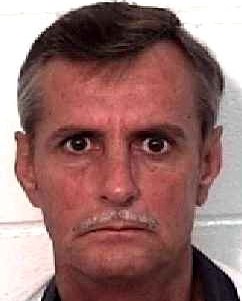
Tommy Lee Waldrip
Murderer Brian Kevin Rosenfeld
Murderer · USA · 1985
Brian Kevin Rosenfeld Brian Kevin Rosenfeld was sentenced to three concurrent l…
23 victims
Brian Kevin Rosenfeld
Murderer · USA · 1985
Brian Kevin Rosenfeld Brian Kevin Rosenfeld was sentenced to three concurrent l…
23 victims
 Russell Ellwood
Murderer · USA · 1991
Russell Ellwood was a former taxi driver. Authorities suspected him of killing…
20 victims
Russell Ellwood
Murderer · USA · 1991
Russell Ellwood was a former taxi driver. Authorities suspected him of killing…
20 victims
 Robert Martines Perez
Murderer · USA · 1994
Name: Robert Martines Perez · Other name used in proceedings: Robert Martinez P…
15 victims
Robert Martines Perez
Murderer · USA · 1994
Name: Robert Martines Perez · Other name used in proceedings: Robert Martinez P…
15 victims
 Billy Frank Vickers
Murderer · USA · 1993
Billy Frank Vickers Vickers was executed by lethal injection in Texas on Januar…
14 victims
Billy Frank Vickers
Murderer · USA · 1993
Billy Frank Vickers Vickers was executed by lethal injection in Texas on Januar…
14 victims
 Huang Hu
Frustrated murderer · China · 2002
Huang Hu was born in 1973 in Wuchuan, Guangdong, China. He died on January 3, 2…
0 victims
Huang Hu
Frustrated murderer · China · 2002
Huang Hu was born in 1973 in Wuchuan, Guangdong, China. He died on January 3, 2…
0 victims
 Wilbert Rideau
Murderer · USA · 1961
Wilbert Rideau (born February 13, 1942) was described by Life magazine in March…
1 victim
Wilbert Rideau
Murderer · USA · 1961
Wilbert Rideau (born February 13, 1942) was described by Life magazine in March…
1 victim
 James Homer Elledge
Murderer · USA · 1975
James Homer Elledge was executed by lethal injection in Washington on August 28…
2 victims
James Homer Elledge
Murderer · USA · 1975
James Homer Elledge was executed by lethal injection in Washington on August 28…
2 victims
 Wayne DuMond
Murderer · USA · 1972
Wayne Eugene DuMond (September 10, 1949 - August 31, 2005) was an American crim…
3 victims
Wayne DuMond
Murderer · USA · 1972
Wayne Eugene DuMond (September 10, 1949 - August 31, 2005) was an American crim…
3 victims
 Ernest Ingenito
Mass murderer · USA · 1950
Ernest Ingenito (1924–1995) was an American mass murderer who shot nine people,…
5 victims
Ernest Ingenito
Mass murderer · USA · 1950
Ernest Ingenito (1924–1995) was an American mass murderer who shot nine people,…
5 victims
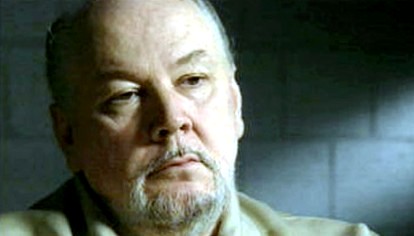 Richard Kuklinski
Serial killer · USA · 1949
Richard “Iceman” Kuklinski was sentenced to life in prison in 1988. He died in…
100 victims
Richard Kuklinski
Serial killer · USA · 1949
Richard “Iceman” Kuklinski was sentenced to life in prison in 1988. He died in…
100 victims
- Gender
- male
- Country
- USA
- Location
- Dawson County, Georgia, USA
- Date of birth
- 1946
- Age at first offence
- 45
- Characteristics
- kidnapping, rape
- Victim profile
- Keith Lloyd Evans, 23
- Method of murder
- Beating with a blackjack
- Date(s) of murder
- April 13, 1991
- Years active
- 1991
- Date of arrest
- Next day
- Status
-
Sentenced to death
Sentenced to death on November 4, 1994
Case record
Tommy Lee Waldrip (51) was sentenced to death on November 4, 1994.
Background
Keith Lloyd Evans was the State’s sole eyewitness at John Mark Waldrip’s first trial in 1990. At the time of Evans’s death, he was scheduled to testify at John Mark’s armed robbery retrial.
The offence
Waldrip was convicted of the malice murder of Keith Lloyd Evans and two counts of felony murder, kidnapping with bodily injury, aggravated battery, five counts of aggravated assault, theft by taking a motor vehicle, arson in the second degree, influencing a witness, concealing a death, possession of a firearm by a convicted felon, and two counts of possession of a firearm during commission of a felony.
The jury recommended the death penalty. The jury found as aggravating circumstances that:
- the murder was committed while the defendant was engaged in the commission of kidnapping with bodily injury or aggravated battery; and
- the murder was outrageously wanton, vile, horrible and inhuman in that it involved aggravated battery to the victim.
The jury was authorized to find that Waldrip murdered Keith Evans to prevent Evans from testifying against John Mark Waldrip at his armed robbery retrial in Forsyth County.
Investigation
On Saturday afternoon, two days before the retrial was scheduled to begin, Waldrip and his co-indictees, John Mark Waldrip and Howard Livingston, drove to Cleveland, Georgia and bought a used station wagon for $150. They returned the station wagon about a half hour later because it was overheating.
That evening, John Mark called Robert Garner, who was also scheduled to testify against John Mark at the retrial, and threatened to harm Garner if he testified.
At approximately 9:30 p.m., Waldrip and John Mark left Waldrip’s apartment in Waldrip’s wife’s Ford Tempo.
Sometime between 10:30 p.m. and midnight, the co-indictees met Evans at a highway crossing in Dawson County. After running Evans’s truck off the road, they shot at Evans through the windshield. Evans was hit with birdshot from a shotgun in the face and neck. Since Evans was still alive, the co-indictees drove Evans’s truck with Evans in the passenger seat to Hugh Stowers Road in Dawson County, where they beat him to death.
They buried Evans’s body in a shallow grave in Gilmer County and set Evans’s truck on fire. The fire was reported at approximately 12:30 a.m. Sunday morning.
A current insurance card for the Ford Tempo, belonging to Waldrip’s wife, Linda Waldrip, was found near the burned truck. Waldrip was interviewed on Sunday afternoon and denied any involvement in Evans’s disappearance. During the interview, Linda Waldrip was asked for her insurance card for the Ford Tempo and produced an expired card.
On Monday morning, Keith Evans was missing, and Garner refused to testify against John Mark. Garner subsequently informed the district attorney of the threats made against him, and John Mark was arrested and charged with influencing a witness.
Arrest and confessions
Waldrip was arrested on Tuesday.
On Thursday, Waldrip confessed to shooting and beating the victim and burning his truck. He then led authorities to Evans’s body and later to the shotgun used in the crimes.
The following day, Waldrip gave a conflicting statement contending that John Mark and Livingston murdered the victim and burned his truck, and that he was merely a bystander. Waldrip gave a third statement in which he related that all three co-indictees participated in the crimes.
Trial
Competency trial
Waldrip raised seven claims of error relating to his competency trial.
- The trial court did not abuse its discretion in denying Waldrip’s second motion for change of venue in the competency trial based on contention that change of venue from Dawson County to Hall County was insufficient to avoid excessive pretrial publicity.
- The trial court did not abuse its broad discretion in limiting the scope of voir dire at the competency trial by prohibiting questions of a technical or legal nature, or questions requiring jurors to prejudge the case.
- Waldrip’s contention that the State improperly placed his character in issue during the competency trial by referring to his prior criminal history was without merit.
- Waldrip’s contention that the prosecutor misled the jury at the competency trial by asking Waldrip’s former attorney why she delayed notifying the trial court that Waldrip required psychiatric treatment was not preserved for appellate review because Waldrip failed to renew his motion for mistrial after a curative instruction.
- Waldrip’s contention that the trial court should have sua sponte rebuked the prosecutor and issued a curative instruction under OCGA 17-8-75 when the psychologist referred to himself as the “judge’s witness” was without merit.
- Waldrip’s contention that the trial court erred by repeatedly allowing the State to refer to the pending charges against him at the competency trial was without merit.
- Waldrip’s contention that the prosecutor improperly commented on his exercise of his Fifth and Sixth Amendment rights during the competency trial was procedurally defaulted based on failure to object.
Voir dire
Waldrip contended the trial court committed reversible error in failing to excuse prospective jurors Larue Davis, Perry Gant, and Margaret Lynch because of bias.
Larue Davis
- Waldrip argued Davis should have been excused because she stated repeatedly she considered the death penalty appropriate for a defendant convicted of murder and could not think of mitigating circumstances.
- The prosecutor objected to Waldrip’s question asking Davis whether she could think of mitigating circumstances, and the objection was sustained.
- Davis stated she would put her own feelings aside and follow the court’s instructions. Davis stated she felt “confident” she would not arbitrarily vote to impose the death penalty and would consider the evidence presented in accordance with the trial court’s instructions. She consistently responded that she would weigh evidence in mitigation and consider seriously the option of a life sentence.
- Waldrip also argued Davis’s misunderstanding of parole eligibility impaired her ability to serve as a juror. Davis’s responses indicated the possibility of parole was not an overriding concern that would lead her to automatically vote for death upon conviction.
Perry Gant
- Waldrip argued Gant should have been excused for bias; the trial court relied in large part on Gant’s demeanor, noting his assurances that he could follow the court’s instructions and decide the case solely on the evidence were immediate and unequivocal.
- The appellate review found no abuse of discretion in qualifying Gant.
Margaret Lynch
- Lynch initially stated the death penalty was appropriate for murder committed with anger, hatred, or premeditation.
- Lynch later stated that even when these factors were present, she would consider evidence in mitigation and the option of a life sentence.
- The appellate review found no error in qualifying Lynch.
Guilt phase
Waldrip argued multiple evidentiary and procedural issues during the guilt phase.
- Waldrip argued the trial court erred in admitting hearsay testimony by Robert Garner and Thomas Hitchcock under the exception for statements of a co-conspirator.
- Evidence at trial showed that on Saturday evening before the victim’s murder, John Mark called Garner at the Forsyth County jail and threatened him with harm if he testified at John Mark’s armed robbery retrial. Garner testified John Mark interrupted the conversation because appellant was talking to him, indicating appellant was present when the threats were made.
- Hitchcock testified that a week before John Mark’s retrial was scheduled to begin, John Mark telephoned him at the Forsyth County jail and asked Hitchcock to notify him when Garner arrived at the jail; Hitchcock stated he called John Mark several times during the week at appellant’s residence.
- The court addressed prima facie conspiracy evidence, confrontation clause issues, and other related arguments.
- Waldrip argued the State improperly placed his character in issue by eliciting testimony from Officer Steve Hawkes that Waldrip was arrested two days after the victim’s disappearance for violating probation on a prior unrelated offense. The appellate review found no error.
- Waldrip contended venue in Dawson County was improper for concealing the death because the victim was buried in Gilmer County. The appellate review found venue was supported beyond a reasonable doubt under the applicable venue principles for a vehicle traveling through counties.
- Waldrip contested whether the instruction on voluntary intoxication was burden-shifting; the issue had been decided adversely to him in a prior decision.
- Waldrip argued the trial court erred in admitting autopsy photographs; the appellate review found the photographs admissible and not duplicative.
- Waldrip argued the State did not violate Brady v. Maryland by failing to disclose GBI reports containing statements by his son Paul Waldrip and results of lie detector tests administered to Paul; the appellate review found no Brady violation.
- Waldrip challenged admission of an expired automobile insurance card belonging to Linda Waldrip; the appellate review found it admissible under the “independent source” exception.
- Waldrip argued the trial court erred in denying additional funds to pay the defense psychologist; the appellate review found no error.
Penalty phase
In the penalty phase, Waldrip raised issues including:
- whether a prosecutor objection ruling constituted an improper comment on Waldrip’s failure to testify; the appellate review found no merit and treated the issue as waived.
- whether the trial court erred in admitting copies of Waldrip’s prior guilty pleas in aggravation; the appellate review found no error.
- whether the aggravating circumstances could both be found by the jury; the appellate review found the aggravators could overlap and both could be found.
- whether the evidence supported the aggravators; the appellate review found it did.
- whether the death sentence was disproportionate to life sentences received by his co-indictees, including arguments about Waldrip’s age, non-violent behavior history, and severe mental illness; the appellate review found no disproportionality.
- whether the death sentence was imposed as a consequence of passion, prejudice, or arbitrary factor; the appellate review found it was not.
- whether comparable cases supported the death sentence; the appellate review found support.
Sentencing
The jury recommended death, and Waldrip was sentenced to death on November 4, 1994.
The trial court also imposed sentences on other counts, including:
- count 3, kidnapping with bodily injury: life imprisonment
- count 5, aggravated assault: twenty years to run concurrent with count 3
- count 10, theft by taking a motor vehicle: twenty years to run concurrent with count 3
- count 12, arson in the second degree: ten years to run consecutive to count 3
- count 13, influencing a witness: five years to run consecutive to count 2
- count 14, concealing a death: to twelve months to run concurrent with count 3
- count 16, possession of a firearm by a convicted felon: to five years to run concurrent with count 3
- count 19, possession of a firearm during commission of a felony: to five years to run consecutive to count 13
- count 20, possession of a firearm during commission of a felony: to five years to run concurrent with count 19
The felony murder convictions stood vacated by operation of law under OCGA 16-1-7.
Appeals
Waldrip filed a motion for new trial on November 16, 1994, and an amended motion for new trial on September 1, 1995, which was denied on November 28, 1995.
Waldrip filed a notice of appeal on December 4, 1995. The case was docketed in the Court on July 30, 1996 and was orally argued on October 22, 1996.
The Georgia Supreme Court affirmed Waldrip’s conviction and death sentence.
The appellate disposition included:
- discussion of competency trial claims,
- discussion of guilt-phase evidentiary and venue claims,
- discussion of penalty-phase challenges to admission of prior guilty pleas, aggravating circumstances, proportionality, arbitrariness, and comparable cases.
Reconsideration was denied on April 3, 1997.
Outcome
The Georgia Supreme Court affirmed Waldrip’s conviction and sentence.
Other details
People and roles mentioned
- Keith Lloyd Evans: victim; worked as a clerk in the store at the time of the robbery; became the scheduled witness at the retrial.
- John Mark Waldrip: Waldrip’s son; convicted and sentenced to life imprisonment; his conviction was affirmed on direct appeal; he was charged with influencing a witness.
- Howard Livingston: co-indictee; sentenced to life imprisonment; in July 1997, the state Supreme Court overturned Livingston’s conviction.
- Robert Garner: scheduled to testify at the armed robbery retrial; received threats from John Mark; refused to testify against John Mark.
- Thomas Hitchcock: witness who received calls from John Mark regarding Garner’s arrival.
- Hugh Stowers Road: location where Evans was beaten to death.
- Officer Steve Hawkes: testified regarding Waldrip’s arrest for violating probation.
- Larue Davis, Perry Gant, Margaret Lynch: prospective jurors discussed on voir dire.
- Judge Girardeau: presided at the Dawson Superior Court proceedings.
- HINES, Justice: the justice who authored the decision (HINES, Justice).
- Lydia J. Sartain: District Attorney.
- Lee Darragh: Assistant District Attorney.
- Michael J. Bowers: Attorney General.
- Wesley S. Horney: Assistant Attorney General.
- J. Richardson Brannon and Charlotta Norby: for appellant.
Additional facts and procedural notes
- The jury could have inferred a common design to prevent John Mark from being convicted for armed robbery by eliminating material witnesses who would testify against him; the conspiracy encompassed John Mark’s threats against Garner.
- Garner did not testify at John Mark’s 1990 armed robbery trial. Shortly before the retrial was scheduled to begin, Garner gave a statement to police implicating himself and John Mark in the armed robbery and agreed to testify against John Mark.
- Appellant filed a special plea of incompetency; a jury trial was held in September 1994 in Hall County pursuant to a change of venue; the jury found Waldrip competent to stand trial on September 16, 1994.
- After venue was changed as unopposed, Waldrip was tried before a jury in Gwinnett County and sentenced to death for malice murder on October 26, 1994.
- The State gave notice of intent to seek the death penalty on May 20, 1991.
- Appellant was indicted during the February 1991 term of the Dawson County grand jury.
- This Court granted interim review in the case and rendered a decision on June 27, 1994.
- Waldrip’s competency trial was held in 1995.
- The crimes occurred on April 13, 1991.
- John Mark’s retrial for armed robbery did not take place.
- After Waldrip’s convictions, John Mark and Livingston were convicted in separate trials. John Mark’s conviction and life sentence were affirmed on direct appeal; Livingston received a life sentence and his appeal was pending.
Spotted an error, or have more information about this case?