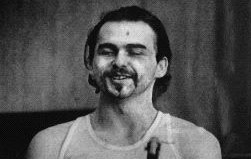
Daniel Remeta
Spree killer Bobby Joe Maxwell
Spree killer · USA · 1978
Name: Bobby Joe Maxwell Sex: M Race: B Type: T Motive: PC-nonspecific Method of…
11 victims
Bobby Joe Maxwell
Spree killer · USA · 1978
Name: Bobby Joe Maxwell Sex: M Race: B Type: T Motive: PC-nonspecific Method of…
11 victims
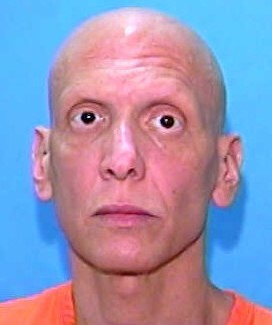 Manuel Pardo
Spree killer · USA · 1986
Manuel Pardo, Jr. was a former police officer who was convicted of nine counts…
9 victims
Manuel Pardo
Spree killer · USA · 1986
Manuel Pardo, Jr. was a former police officer who was convicted of nine counts…
9 victims
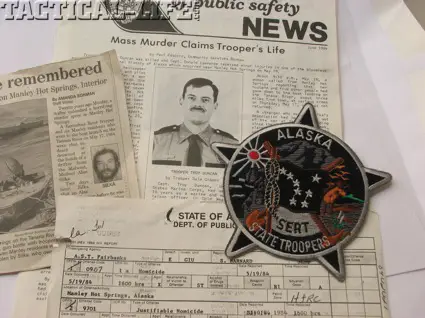 Michael Alan Silka
Spree killer · USA · 1984
Michael Alan Silka was killed during a shoot-out with the police on May 19, 198…
9 victims
Michael Alan Silka
Spree killer · USA · 1984
Michael Alan Silka was killed during a shoot-out with the police on May 19, 198…
9 victims
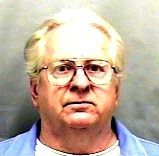 Allen Leroy Anderson
Spree killer · USA · 1976
Allen Leroy Anderson was a 34-year-old vagrant with a long record of felony arr…
8 victims
Allen Leroy Anderson
Spree killer · USA · 1976
Allen Leroy Anderson was a 34-year-old vagrant with a long record of felony arr…
8 victims
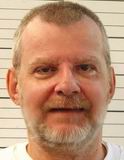 Stephen Michael West
Murderer · USA · 1986
Stephen Michael West was sentenced to death in 1987. A jury in Union County fou…
2 victims
Stephen Michael West
Murderer · USA · 1986
Stephen Michael West was sentenced to death in 1987. A jury in Union County fou…
2 victims
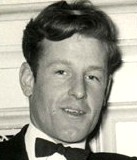 Brian Field
Murderer · United Kingdom · 1968
Brian Field was convicted of the murder, rape, and strangling of 14-year-old bo…
1 victim
Brian Field
Murderer · United Kingdom · 1968
Brian Field was convicted of the murder, rape, and strangling of 14-year-old bo…
1 victim
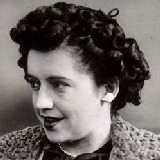 Evelyn Dick
Murderer · Canada · 1944
Evelyn Dick was born to Donald MacLean and Alexandra MacLean on October 13, 192…
2 victims
Evelyn Dick
Murderer · Canada · 1944
Evelyn Dick was born to Donald MacLean and Alexandra MacLean on October 13, 192…
2 victims
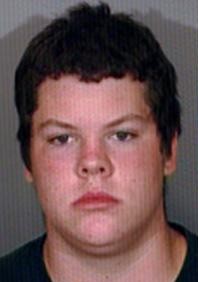 James Meyer
Homicide · USA · 2006
James Meyer was 15 years old at the time he pleaded guilty to first-degree arso…
1 victim
James Meyer
Homicide · USA · 2006
James Meyer was 15 years old at the time he pleaded guilty to first-degree arso…
1 victim
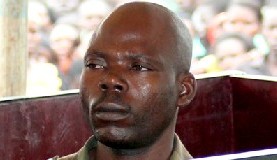 Patrick Okot
Mass murderer · Uganda · 2013
March 5, 2013 — Gunmen attacked Mbuya barracks to steal arms. · February 4, 201…
10 victims
Patrick Okot
Mass murderer · Uganda · 2013
March 5, 2013 — Gunmen attacked Mbuya barracks to steal arms. · February 4, 201…
10 victims
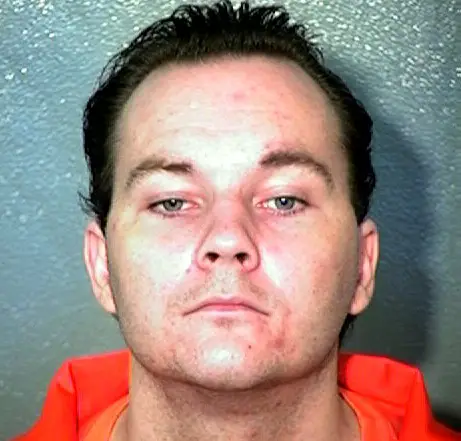 Steven Newell
Murderer · USA · 2001
Steven Newell was known to Elizabeth Byrd because he had dated Elizabeth’s sist…
1 victim
Steven Newell
Murderer · USA · 2001
Steven Newell was known to Elizabeth Byrd because he had dated Elizabeth’s sist…
1 victim
- Gender
- male
- Country
- USA
- Location
- Kansas/Arkansas/Florida, USA
- Date of birth
- 1958
- Age at first offence
- 27
- Characteristics
- robbery, kidnappings, abduction
- Victim profile
- Mehrle Reeder, 60; Linda Marvin, 42; Larry McFarland, 27; Glenn Moore, 55, and John R. Schroeder, 29
- Method of murder
- Shooting
- Date(s) of murder
- February 1985
- Years active
- 1985
- Date of arrest
- February 13, 1985
- Status
-
Executed
Executed by electrocution on March 31, 1998 in Florida
Case identification
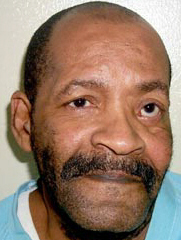
Daniel Remeta
STATUS
Remeta was executed by electrocution in Florida on March 31, 1998.
Timeline
- December 1984 — Daniel Remeta and Lisa Dunn met at a party in Traverse City, Michigan.
- January 27, 1985 — Remeta used a .357 Magnum to commit a service station robbery at Copemish in northwest Michigan.
- February 8, 1985 — Mehrle “Chet” Reeder, a 60-year-old convenience store clerk in Ocala, Florida, was murdered during a robbery.
- February 10, 1985 — Remeta and a companion robbed and abducted Camillia Carroll, a convenience store cashier in Waskom, Texas, and shot her five times; Carroll survived and later testified at Remeta’s Florida trial.
- February 11, 1985 — Linda Marvin, a 42-year-old grocery store clerk in Mulberry, Arkansas, was shot 10 times and was dead at the scene.
- February 13, 1985 — A car in which Remeta was traveling was pulled over near the Levant interchange; Thomas County Undersheriff Ben Albright was shot twice. Later that day, Remeta and his companions abducted two men at a grain elevator, made them lie face down in the roadway, and each was shot in the back of the head and killed; the violence ended in a gun battle at an abandoned farmyard where Remeta and others were wounded and James Hunter was captured.
- May 1985 — Remeta pleaded guilty to three murders, two kidnappings, and two other shootings.
- July 1985 — Remeta was sentenced to five life prison terms.
- May 1986 — The Florida trial commenced.
- June 1986 — Remeta was convicted of Reeder’s murder and sentenced to death.
- July 1987 — The Kansas Supreme Court unanimously threw out the verdict against James Hunter and ordered a new trial.
- January 1988 — Hunter was tried again in Hays, Kansas, and a jury acquitted him on all seven charges.
- September 1992 — A jury found Lisa Dunn “not guilty” on all seven counts.
- December 1993 — The Arkansas capital murder charge against Dunn was dropped when she pleaded guilty to one count of hindering apprehension or prosecution.
- March 24, 1998 — A telephonic hearing occurred regarding Remeta’s federal habeas request for a stay of execution.
- March 25, 1998 — An emergency application was filed in the Tenth Circuit seeking vacation of a purported stay order.
- March 27, 1998 — The Marion County Circuit Court denied Remeta’s requested relief after a Huff hearing.
- March 30, 1998 — Remeta downed his last meal, consisting of two 44-ounce Icees, and awaited the 7 a.m. execution.
- March 31, 1998 — Remeta was executed by electrocution; he was pronounced dead at 7:12 a.m. EST.
Other details
Prior background and personal circumstances
Daniel Remeta had served prison time for burglary in Michigan. Court testimony indicated both of Remeta’s parents were impoverished alcoholics who neglected their five children. As a young teen, he was arrested for crimes that included stealing bicycles, breaking windows and shoplifting. Remeta was sent to reform school, but escaped. Remeta was 40 at execution.
Remeta and Lisa Dunn were from Traverse City, Michigan. The account stated that Remeta made Dunn feel guilty about the privileged upbringing she had enjoyed compared to the poverty he had endured. Dunn’s high school counselor described Dunn as a gifted student who became rebellious in her junior and senior years yet kept a grade-point average above 3.0 on a 4.0 scale.
The account stated Remeta and Dunn met at a party in December 1984 and lived together within a week. It stated Remeta was accused of breaking car windows during a drunken rampage in which he beat Dunn. Dunn and their friend Mark Walter, 18, bailed Remeta out of jail. Walter was described as an average achiever who graduated from Suttons Bay High School, worked for Frigid Food Products and was well-liked, and Remeta would later say Walter was “no angel.”
Remeta and his companions left northwest Michigan in late January 1985 for a trip involving drugs, alcohol and murder. Dunn brought a gun stolen from her father. Dunn later testified she thought she needed the .357 Magnum because two men had raped her the previous year. When Dunn gave the gun to her boyfriend to look at, Remeta kept it and gave the gun a name: “Susie.”
Arrest and investigation narrative facts included in the record
A Kansas sheriff following Remeta’s car on the highway noticed suspicious activity and signaled for him to pull over. When an officer approached, one of Remeta’s companions exited the passenger side and shot the sheriff twice. Remeta and his companions fled the scene and went to a grain elevator, where they abducted two men after stealing their truck, made them lie face down in the roadway, and killed them with gunshots to the back of the head. The truck was later chased into a farmyard by Kansas authorities and a shootout occurred, in which one companion was killed and the other injured.
Crime spree across multiple states (people, places, and victim counts)
Florida (Ocala convenience store)
Mehrle “Chet” Reeder was murdered on February 8, 1985 during a robbery of a convenience store in Ocala, Florida. An autopsy revealed four gunshot wounds: one to the stomach, one to the upper chest, and two to the head, all made by a .357 Magnum gun. Remeta was extradited to Florida in response to an indictment charging him with the murder. Remeta was found guilty by the jury of first-degree murder for the Ocala robbery and was sentenced to death.
Remeta received two consecutive life sentences for Kansas homicides and pled guilty to charges of homicide and aggravated robbery against the Stuckey’s store clerk, according to the Florida court summary quoted in the record.
Texas (Waskom convenience store cashier)
On February 10, 1985, Remeta and one companion entered a convenience store in Waskom, Texas, robbed the cashier Camillia Carroll at gunpoint, abducted her to a location two to three hundred feet from the store, and shot her five times with the .357 Magnum used in the Ocala shooting. Carroll lived and testified at Remeta’s Florida trial.
Remeta objected to Carroll’s testimony at trial on relevancy and other grounds, including that it was not relevant to any material fact in issue, was relevant solely to prove bad character or propensity, was not necessary to the state’s case, and was not sufficiently similar to modus operandi and identity. A stipulation of fact was presented that one of the bullets recovered from Carroll’s body was fired by the gun which had killed the Ocala convenience store clerk two days earlier and was found three days later in close proximity to Remeta.
Arkansas (Mulberry grocery store)
Linda Marvin, a 42-year-old grocery store clerk in Mulberry, Arkansas, was shot 10 times with a .22-caliber pistol and was dead at the scene, according to one narrative portion of the case material. Remeta later was extradited to Arkansas, convicted of Linda Marvin’s murder, and was sentenced to death.
Kansas (Grainfield/Stuckey’s; Levant grain elevator; Atwood farmyard)
A series of Kansas events included:
- A Stuckey’s gas station manager was shot and killed with the same .357 Magnum gun. The narrative described the manager as Larry D. McFarland.
- A car carrying Walter, Dunn and Remeta bumped a curb as it pulled into a Wichita restaurant on February 12, 1985, and later on February 13 Remeta and his friends picked up a hitchhiker, James C. Hunter Jr.
- The account described a robbery at Stuckey’s Restaurant just off I-70 at Grainfield in northwest Kansas with the manager Larry McFarland present and shot to death after the till amount was handed over.
- Thomas County Undersheriff Ben Albright was patrolling Interstate 70 in northwest Kansas and later was shot twice by a man who was part of the group traveling in the red and blue car. The narrative stated Albright would survive, though his wounds ended his law enforcement career.
- The grain elevator abductions involved two men: Rick Schroeder (listed as 29 of Levant) and Glenn Moore (listed as 55 of Colby). The narrative stated these men were forced to lie face down and each was shot in the back of the head and killed with the same .357 magnum.
- The violence ended in a gun battle with police in an unoccupied farmhouse in Atwood, Kansas, with Hunter captured and Remeta and Dunn wounded.
Additional named individuals included Maurice Christie, Fred Sager, Mark Eibert, Mark Conboy, Sgt. Dennis Brown, Reserve Officer Kenneth Dible, and Wesley Moore (who testified about seeing his father alive for the last time).
Charges, pleas, sentences (as stated in the record)
Kansas pleas and sentences
Remeta pled guilty in Kansas in May 1985 to three murders, two kidnappings and two other shootings. The Florida court summary quoted in the record stated he pled guilty to charges of homicide and aggravated robbery against the Stuckey’s store clerk and received two consecutive life sentences. It also stated he pled guilty to the killings of the grain elevator employees and received two consecutive life sentences with no eligibility for parole for eighty-five years.
The Kansas narrative stated Remeta was sentenced to five life prison terms in July 1985.
Arkansas and Florida capital sentences
The Florida narrative stated Remeta was sentenced to death in both Arkansas and Florida, and sentenced to life for the Kansas murders.
The Florida court summary quoted in the record stated Remeta was convicted and sentenced to death in Florida for the Ocala murder and was later extradited to Arkansas where he was tried and convicted of murder there, receiving the death penalty.
Trial and evidence (Florida)
Florida trial conduct and jury verdict
The Florida trial commenced in May 1986. The defense counsel waived Remeta’s presence during preliminary questioning of the jury venire after consulting with Remeta in a holding cell outside the courtroom.
The state filed a notice of intent to offer evidence of other crimes, wrongs, or acts pursuant to section 90.404(2), Florida Statutes (1985). At trial, the state was allowed to introduce the testimony of Camillia Carroll over Remeta’s objection.
The state presented a stipulation that one bullet recovered from Carroll’s body was fired by the gun that killed the Ocala convenience store clerk two days earlier and was found three days later in close proximity to Remeta.
The Florida court summary quoted in the record stated the state also presented statements made by Remeta which the trial court found to have been freely and voluntarily made. A Kansas Bureau of Investigation agent interviewed Remeta at Remeta’s request and related that Remeta admitted involvement in both of the convenience store clerks’ shootings while implicating his deceased companion as the triggerman in both incidents.
The summary stated Remeta told a newspaper reporter that he and his friends robbed the Ocala convenience store because they needed money and that he was the only one who planned the robbery, and that he admitted sole possession of the .357 Magnum revolver at the time of the Ocala murder. The summary also stated Remeta offered alternative explanations for killing the victim, including that he “just liked to kill people” and that he “just didn’t care.”
In a different interview with a television reporter, Remeta stated: “[L]ike Florida, they ain’t got no witnesses. Anytime I seen a witness, I took him out, or at least shot him.”
The summary stated Remeta first stated he had committed the Ocala murder, but later changed his story to implicate his companion as the triggerman.
The summary stated videotaped portions of Remeta’s testimony in other court proceedings were presented, in which he stated he had possession of the gun used in the Ocala murder while in Kansas. The summary also stated Carroll testified it was Remeta who had the gun at the Texas convenience store robbery.
Remeta’s defense theory included an attempt to establish that his accomplice possessed the murder weapon and was the triggerman in the Ocala murder.
The jury found Remeta guilty of first-degree murder for the Ocala robbery.
Penalty phase and aggravating and mitigating factors
During the penalty phase, Remeta introduced testimony of his mother, an expert clinical psychologist, and several social workers who had known Remeta since his childhood. The state presented evidence of appellant’s prior convictions, including pleas of guilty to Kansas crimes of first-degree murder and aggravated robbery. It also presented portions of a videotaped interview in which the appellant admitted executing two hostages so they would not cause trouble.
The jury recommended the death sentence and the trial judge imposed the death penalty, finding that four statutory aggravating factors clearly outweighed four mitigating factors.
Appeals
Florida Supreme Court and United States Supreme Court
Remeta v. State, 522 So.2d 825 (Fla. 1988), affirmed Remeta’s conviction and sentence on direct appeal. The United States Supreme Court denied certiorari in Remeta v. Florida, 488 U.S. 871 (1988).
State post-conviction and habeas
Remeta filed a motion for state post-conviction relief pursuant to Florida Rules of Criminal Procedure 3.850 and a state habeas petition with the Florida Supreme Court. Following an evidentiary hearing, the trial court denied the Rule 3.850 motion. The Florida Supreme Court consolidated the Rule 3.850 appeal and habeas petition, affirmed the trial court’s denial of the motion for post-conviction relief, and denied the habeas petition in Remeta v. Dugger, 622 So.2d 452 (Fla. 1993).
Federal habeas and certiorari denials
Remeta petitioned the federal district court for the Middle District of Florida for habeas corpus relief under 28 U.S.C. § 2254. In 1994, the district court denied the petition after finding claims were either procedurally barred or not entitled to relief. The federal appellate court upheld the denial in Remeta v. Singletary, 85 F.3d 513 (11th Cir. 1996). The United States Supreme Court denied certiorari review on March 24, 1997 in Remeta v. Singletary, 117 S. Ct. 1320 (1997).
Marion County Circuit Court proceedings and appeal steps in 1998
On February 18, 1998, Remeta’s CCRC attorney filed a motion to withdraw from representation; the Marion County Circuit Court denied the motion and Remeta appealed. On March 6, 1998, the court affirmed the denial of the motion to withdraw: Remeta v. State, No. 92,411, slip op. at 2 (Fla. March 11, 1998).
On March 18, 1998, Remeta filed a Petition for Writ of Habeas Corpus in the United States District Court for the District of Kansas, seeking to challenge the seven Thomas County, Kansas convictions and seeking a stay of the Florida execution scheduled for March 31, 1998.
The State of Florida filed a Motion to Dismiss for Lack of Jurisdiction regarding the requested stay. A telephonic hearing was held on March 24, 1998. On March 25, 1998, an Emergency Application was filed in the Tenth Circuit Court of Appeals seeking vacation of the lower court’s order purportedly staying execution. The Tenth Circuit ordered Remeta to respond by 1 o’clock on March 26, 1998, and subsequently issued an order vacating the purported stay.
On March 24, 1998, Remeta filed an Emergency Motion to Vacate Judgment and Sentence and Request for Evidentiary Hearing and Stay of Execution in the Marion County Circuit Court. The State of Florida filed a Response on March 25, 1998. A Huff hearing was held that same afternoon and an order from Judge Carven D. Angel was entered on March 27, 1998 denying Remeta’s requested relief. Notice of Appeal was given, and the appeal followed.
Outcome
Daniel Remeta was executed by electrocution in Florida on March 31, 1998.
Remeta did not make a final statement. He was pronounced dead at 7:12 a.m. EST.
Aftermath
Remeta’s final statement as read by a spiritual adviser
Remeta’s spiritual adviser read a statement afterward from Remeta that encouraged the public to tell his story so young people would not waste their lives.
“For past actions and events there is genuine remorse and even greater sorrow that none of it can be undone,”
“I would give 1,000 lifetimes to undo past deeds . . . If this death brings comfort to the friends and family of those harmed and initiates a real healing process then justice is truly served.”
Quotes attributed to officials and others
Colby Police Chief Randall Jones stated: “I could care less what Daniel Remeta says 13 years later.” Jones also stated: “What lasts with me was how he was the day he took lives here in Kansas.”
Dunn’s “battered-woman syndrome” defense was described in the material as a defense in which she said that because she was abused by Remeta she was not responsible for her actions.
Witness and participant statements preserved in the record (as quoted)
In the Florida electrocution narrative, Remeta had previously been described as having said: “I want them to pull the switch,” and “I'm not afraid. Death is only as ugly as you make it.”
In the Kansas trial narrative, Remeta testified: “I just closed my eyes and waited for another shot,” was attributed to Ben Albright later, and Remeta also testified about needing a different vehicle and that he shot men “more or less to show the cops behind us that the people they were chasing weren't just playing.”
Remeta said: “I love you, Danny,” was attributed to Dunn, and Remeta responded: “I love you, too.”
Hunter told officers he was innocent, “just a hitchhiker.”
Remeta said: “I don't need no hostages and I don't need no witnesses,” and he also stated that he gave the gun “Susie.”
Remeta’s statement included: “Dungeons and Dragons,” a fantasy board game he enjoyed had a lot to do with the slayings.
Additional quotations involving Remeta’s statements in the record
Remeta’s letter included: “If I don't try for the death penalty I'll die in some prison, this is why I'm trying to get extradited.” Remeta’s other letter included: “I'm gonna try for the death penalty if I can.”
Remeta stated in interviews: “I want them to pull the switch,” and “I'm not afraid.
Remeta told the reporter: “I want them to pull the switch,” and “I'm not afraid.
Spotted an error, or have more information about this case?