Christopher Carrera
Murderer Russell Ellwood
Murderer · USA · 1991
Russell Ellwood was a former taxi driver. Authorities suspected him of killing…
20 victims
Russell Ellwood
Murderer · USA · 1991
Russell Ellwood was a former taxi driver. Authorities suspected him of killing…
20 victims
 Robert Martines Perez
Murderer · USA · 1994
Name: Robert Martines Perez · Other name used in proceedings: Robert Martinez P…
15 victims
Robert Martines Perez
Murderer · USA · 1994
Name: Robert Martines Perez · Other name used in proceedings: Robert Martinez P…
15 victims
 Billy Frank Vickers
Murderer · USA · 1993
Billy Frank Vickers Vickers was executed by lethal injection in Texas on Januar…
14 victims
Billy Frank Vickers
Murderer · USA · 1993
Billy Frank Vickers Vickers was executed by lethal injection in Texas on Januar…
14 victims
 Steven Wright
Serial killer · United Kingdom · 2006
Steven Gerald James Wright was a British serial murderer, also known as the Suf…
5 victims
Steven Wright
Serial killer · United Kingdom · 2006
Steven Gerald James Wright was a British serial murderer, also known as the Suf…
5 victims
 Eric Edgar Cooke
Serial killer · Australia · 1959
Eric Edgar Cooke (25 February 1931 – 26 October 1964) was an Australian serial…
8 victims
Eric Edgar Cooke
Serial killer · Australia · 1959
Eric Edgar Cooke (25 February 1931 – 26 October 1964) was an Australian serial…
8 victims
 Noble Mays
Murderer · USA · 1979
Noble Mays had been convicted once for burglary and once for assault, which was…
1 victim
Noble Mays
Murderer · USA · 1979
Noble Mays had been convicted once for burglary and once for assault, which was…
1 victim
 Frances Newton
Murderer · USA · 1987
Frances Elaine Newton (April 12, 1965 – September 14, 2005) was executed by let…
3 victims
Frances Newton
Murderer · USA · 1987
Frances Elaine Newton (April 12, 1965 – September 14, 2005) was executed by let…
3 victims
 Hugo Schenk
Serial killer · Austria · 1883
Hugo Schenk was executed by hanging on April 22, 1884. · April 22, 1884 — Hugo…
6 victims
Hugo Schenk
Serial killer · Austria · 1883
Hugo Schenk was executed by hanging on April 22, 1884. · April 22, 1884 — Hugo…
6 victims
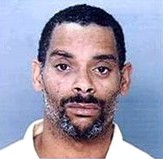 Juan Covington
Serial killer · USA · 1998
Juan Covington was an American serial killer in Philadelphia, Pennsylvania. Cov…
3 victims
Juan Covington
Serial killer · USA · 1998
Juan Covington was an American serial killer in Philadelphia, Pennsylvania. Cov…
3 victims
- Gender
- male
- Country
- USA
- Location
- Brownsville, Texas, USA
- Date of birth
- 1980
- Age at first offence
- 18
- Characteristics
- robbery, drugs
- Victim profile
- Jason Sexton, 14; Ricardo Mata, 18; and Roberto Medrano, 18
- Method of murder
- Shooting
- Date(s) of murder
- April 25, 1998
- Years active
- 1998
- Date of arrest
- —
- Status
-
Imprisoned
Sentenced to 15 years in prison in January 2004
Background
Christopher Carrera was a defendant in a Texas capital murder case involving the April 1998 killings of three Brownsville teenagers.
The offence
Carrera was indicted for capital murder by intentionally and knowingly killing three individuals by shooting them with a firearm during the same criminal transaction. The three named victims were Jason Sexton, Ricardo Mata, and Roberto Medrano.
The record indicated that on April 25, 1998, Carrera and Ricky Hernandez, also known as “El Boy,” were riding around in a maroon Mustang GT automobile most of the day. Around 9:00 p.m. they came abreast three other young men in a dark brown Camaro. After passing each other a couple of times, the Camaro slowed down and one of the individuals asked Ricky and Carrera if they had any beer or knew where they could get some “mota” (marijuana). Ricky asked them to follow their car since he knew where to get some beer. Carrera drove off and the others followed. Eventually, Carrera turned onto a dirt road near the airport and into a darkened area. As they drove on the dirt road, Ricky exhibited a gun and told Carrera to stop because he wanted to “A rip them off.”
Carrera told police he replied “No!” but stopped the car anyway. Carrera said he sat in the car while Ricky walked back to the Camaro. The driver of the Camaro got out of the car and talked to Ricky, then raised his hands and dropped to the ground as Ricky shot him. Carrera heard additional shots and heard Ricky yell to one of the individuals not to run, and Carrera proceeded to shoot the other two occupants of the Camaro. Carrera told the detective taking his statement that he had seen all of this through his rear view mirror while sitting in the car. Carrera stated he did not know why Ricky had shot the occupants of the Camaro and that Ricky had just laughed when he got back in the car.
The opinion also noted that Carrera was tried under the law of parties. It stated that the indictment did not allege that Carrera conspired with another, and it did not allege that the killings were committed in the course of committing or attempting to commit a robbery or any other felony offense. It further noted that a second count in the indictment was dropped at a previous trial.
Investigation
After the shootings, Ricky ran back to the Mustang and Carrera sped off. Carrera said he called his girlfriend, Cindy Medrano, and then drove over to her house. When Carrera and Ricky arrived at Cindy’s house, Ricky’s girlfriend was also there. The record reflected Cindy’s testimony that Carrera appeared to be mad and would not talk much to her.
After spending some time with the girls, Ricky and Carrera left and went to a bar where they drank late into the night. At the bar, Ricky began bragging to those in the bar that he had killed three individuals. A witness at the bar testified that, while he did not believe Ricky, Ricky did brag about the shootings.
After the murders, tips received by police caused police to have a juvenile officer bring Carrera, Cindy, and Ricky’s girlfriend from high school to the police station for questioning. All three were questioned separately and released. Because Carrera’s and the girls’ statements were inconsistent, police decided to question Carrera again the next day.
When police arrived at the school the next day, they were informed that Carrera had unexpectedly withdrawn and was no longer in school. Police asked Carrera’s family, and the family told police that Carrera had gone to San Antonio to live with his brother and look for work. Police located Carrera at the address given by his family.
After being questioned again, Carrera agreed to and did give police the statement that was admitted into evidence. The opinion stated that Carrera did not testify.
Trial
Proceedings and charge
Carrera was indicted alone and charged with killing three individuals—Jason Sexton, Ricardo Mata, and Roberto Medrano—by shooting them with a firearm, with all murders committed during the same criminal transaction. The trial court assessed his punishment at life in prison after a jury found him guilty of capital murder.
The opinion emphasized that no allegation in the indictment charged conspiracy or that the killings occurred in the course of committing or attempting to commit a robbery or any other felony offense. It explained that the jury-charge application paragraph authorized conviction if the jury found that Carrera conspired with Ricky Hernandez to rob the victims, that pursuant to said conspiracy Ricky Hernandez murdered the three victims while in the course of committing or attempting to commit robbery, and that Carrera aided and assisted Ricky Hernandez in committing or attempting to commit the robbery when the shootings occurred.
The opinion stated that no objections were made to the court’s charge or the state’s argument on the jury-instruction portion described. It also stated that on appeal Carrera did not complain about that portion of the charge, although it was “obvious” that he was convicted on theories not charged in the indictment. The opinion cited authority stating that conviction under theories not charged in the indictment was fundamental error requiring reversal.
Defense and challenged jury instructions
The opinion stated that the trial judge gave the jury an instruction that addressed “mere presence” and “flight.” It noted that defense counsel’s sole defense was that Carrera was merely present at the time of the killings.
After the state rested, Carrera’s counsel made the following statement to the court:
“I believe the State's evidence, at best, is not most favorable to the State and shows that the defendant was merely present at the scene. It shows that he fled the scene. The court will instruct the jury in a few minutes from now that mere presence alone is not enough or even flight from the scene is insufficient to sustain a conviction as a party to the offense.”
The court overruled Carrera’s motion for instructed verdict and gave the jury the following charge:
“You are further instructed that the mere presence alone, of the defendant, Christopher Carrera , at the scene of the murders, if any, or even flight from the scene without more, is sufficient to sustain a conviction as a party to an offense and mere knowledge that an offense is about to be committed will not make Christopher Carrera a party to the offense; nor will knowledge that an offense is being committed, or has been committed, nor will his failure to give alarm, his silence or inaction make him a party to the offense, and if you should find from the evidence beyond a reasonable doubt that Ricky Hernandez did in the course of committing or attempting to commit robbery, shoot Ricardo Mata, Roberto Moreno or Jason Sexton with a firearm in the course of the same criminal transaction and that the defendant, Christopher Carrera was present, but you further find from the evidence, or you have a reasonable doubt thereof, that the defendant, Christopher Carrera , did not, with intent to promote or assist the commission of the robbery, if any, solicit, encourage, aid or attempt to aid Ricky Hernandez in committing such robbery, if any, then you will find the defendant, Christopher Carrera not guilty of Capital Murder. ( emphasis added)”
The state argued that the erroneous charge did not rise to egregious error because both parties in their closing statements informed the jury that mere presence alone was not sufficient to make one a party to the offense. The opinion stated that while defense counsel did make such a statement, the state did not. The opinion ruled the state’s argument was without merit because the argument had to be disregarded under instructions that jury statements of counsel not supported by evidence or not in harmony with the law stated by the court were to be wholly disregarded. The opinion included the court’s instruction:
“You are instructed that the statements of counsel made during the course of the trial or during argument, if not supported by evidence, or statements of law made by counsel, if not in harmony with the law as stated to you by the Court in these instructions, are to be wholly disregarded.”
The opinion concluded the court’s instructions were “obviously erroneous and harmful,” and it held that “mere presence has never been sufficient to make one a party to the offense.” It cited Oaks v. State and Valdez v. State for that proposition.
The opinion further stated it had to determine whether the error constituted egregious harm because error was not preserved at the trial level, and it held the charge constituted egregious error which deprived Carrera of a fair and impartial trial.
Appeals
Carrera appealed to the Court of Appeals, Thirteenth District of Texas at Corpus Christi, Number 13-00-723-CR. The case captioned “Chritopher Carrera, Appellant, V. The State of Texas, Appelle On appeal from the 197th District Court of Cameron County, Texas.”
Court of appeals decision
The opinion was by Justice Chavez, with Justices Dorsey and Yañez. The opinion stated that a jury found Carrera guilty of capital murder and the trial court assessed his punishment at life in prison. The court of appeals stated it reversed and remanded the case due to fundamental errors in the charge to the jury.
The opinion was delivered and filed on the 6th day of June, 2002.
Sentencing
After the jury found Carrera guilty of capital murder, the trial court assessed his punishment at life in prison. Carrera later “sentenced to 15 years in prison in January 2004” for his participation in the triple murder.
Outcome
The Court of Appeals reversed and remanded the case due to fundamental errors contained in the charge to the jury.
Other details
Additional suspect and later arrest narrative
The case record also described a later development involving Mexican authorities. Mexican authorities arrested 25-year-old Ricardo “Ricky” Hernandez, also known as “El Boy,” in connection with the alleged capital murder of three teens. The record stated that Hernandez was accused of shooting 14-year-old Jason Sexton and 18-year-olds Roberto Moreno and Ricardo Mata with a 9mm pistol on April 25, 1998, on Minnesota Road. Police Chief Carlos Garcia confirmed that he was contacted by Mexican authorities regarding Hernandez’s arrest.
The record stated Hernandez was handed over to local authorities at 8:25 p.m. Monday night at the B&M International Bridge. The record included Garcia’s remark:
“That's the person that we've been after for close to 10 years,” said Garcia.
The record said Hernandez would undergo fingerprinting identification and photo line-ups to ensure positive identification. It also stated that Hernandez would be charged with unlawful flight to avoid prosecution, a federal charge. The record noted that after the killing of the three teens, police detectives reported that the boys were found shot dead on Minnesota Road inside a white Chevrolet Camaro. It also stated police believed Hernandez killed them in an attempted failed robbery and fled to Matamoros.
The record stated that Hernandez traveled in a Ford Mustang with then-18-year-old Christopher Carrera while they raced the Camaro occupied by the three boys down Billy Mitchell Boulevard. It also stated that Carrera was sentenced in January 2004 to 15 years in prison for his participation in the triple murder. The record added that the boys then drove up to the Mustang and asked Carrera and Hernandez if they had any marijuana for sell. It stated both told the boys to drive into Minnesota Road.
The record included that Hernandez’s last known address was at 1195 Chilton St., according to the Brownsville Crime Stoppers Web site. It stated that Hernandez was 16 and a student at Perkins’s Middle School when he allegedly killed the three boys.
Persons and relationships mentioned
The record named Cindy Medrano as Carrera’s girlfriend and described her testimony. It also mentioned Ricky Hernandez’s girlfriend as present at Cindy’s house. The opinion noted the driver of the Camaro got out of the car, raised his hands, and dropped to the ground as Ricky shot him.
Spotted an error, or have more information about this case?